
Selecting the right pulley set for a Yamaha Aerox V1 requires balancing mechanical compatibility, material durability, and your specific riding habits. Because the Continuously Variable Transmission (CVT) dictates how engine power reaches the rear wheel, choosing a compatible pulley set ensures smooth acceleration and prevents premature belt wear. To make an informed decision, you must evaluate physical dimensions, ramp designs, and material specifications against your daily commuting needs.
An ill-fitting transmission component can lead to severe engine vibration, belt slippage, or even permanent damage to the crankshaft. By focusing on verified specifications and understanding how minor adjustments to the CVT components alter performance, you can select a pulley set that maintains reliability while optimizing your scooter’s power delivery.
Verifying Exact Fitment for the Aerox V1
Before purchasing any aftermarket transmission component, you must verify that the pulley set is engineered specifically for the Yamaha Aerox V1. The CVT architecture of this specific scooter model relies on precise clearances within the crankcase. Checking the manufacturer’s fitment list and cross-referencing OEM part numbers is the most reliable way to confirm compatibility before disassembly.
Products mentioned in this guide
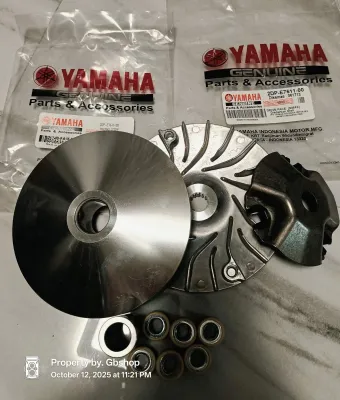
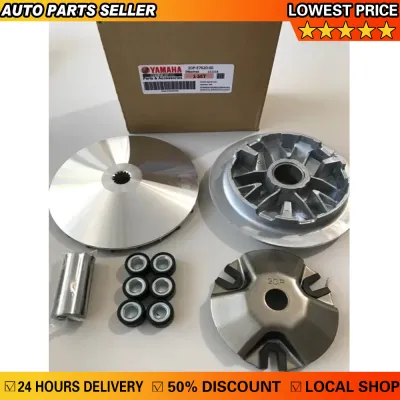
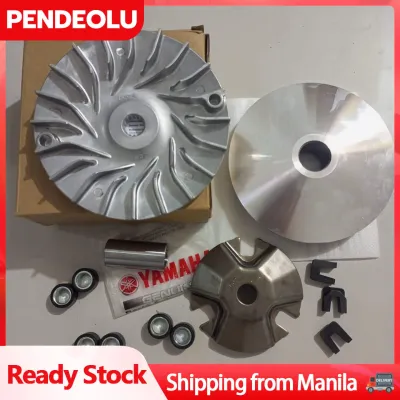
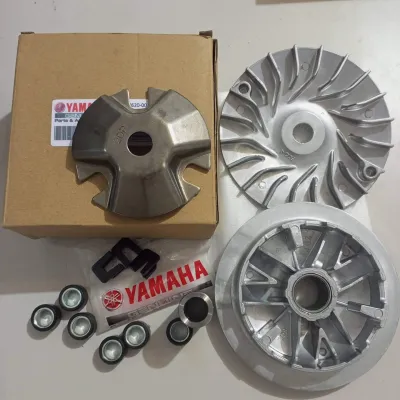
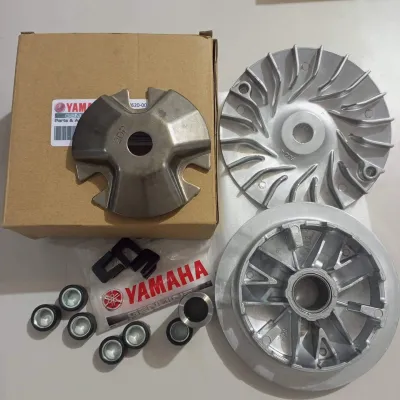

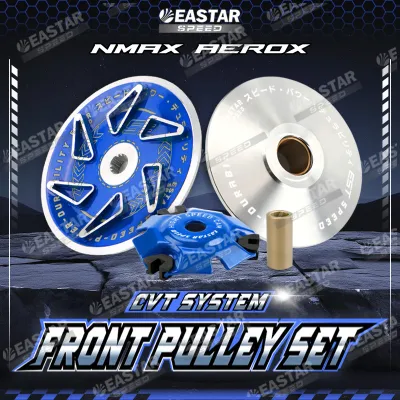

Prices are valid at publication and may change. Please refer to the product page for the latest price.
Physical dimensions must match your stock components exactly to prevent mechanical interference. You need to verify the spline count on the crankshaft interface, the outer diameter of the variator boss, and the overall diameter of the pulley face. Even a minor discrepancy of a fraction of a millimeter can prevent the pulley from seating fully, leading to loose components or stripped crankshaft threads during operation.
Avoid using universal pulley sets or parts labeled for generic scooter engines. While some components may look similar, differences in face angles or boss lengths can alter the belt alignment. Misaligned belts experience rapid wear, generate excessive heat, and can snap unexpectedly, leaving you stranded and potentially damaging the internal CVT housing.
Decoding Key Pulley Specifications and CVT Dynamics
Understanding how pulley geometry interacts with the drive belt allows you to predict how a new pulley set will alter your scooter’s behavior. The angle of the pulley face directly influences how the belt travels up and down the pulley. A modified face angle can change the effective gear ratio, altering how quickly the transmission transitions from low-speed torque to high-speed cruising.

Another critical factor is the design of the roller weight ramp tracks inside the variator. The curvature and length of these ramps dictate how smoothly and at what engine speed the roller weights slide outward. Steeper ramp angles generally keep the transmission in a lower gear ratio longer, which increases engine RPM during initial acceleration, while smoother curves provide a more linear transition.
Roller weights work in tandem with these ramp tracks to control the shifting behavior. Lighter roller weights require higher engine speeds to push the pulley faces together, resulting in quicker throttle response and better low-end acceleration. Conversely, heavier roller weights shift the pulley sooner at lower engine RPM, which can lower cruising speeds’ operating RPM and potentially improve fuel economy on flat roads.
Evaluating Material Quality and Machining Precision
Durability in a CVT system depends heavily on the materials used and the precision of the manufacturing process. Standard pulley sets are typically made from cast aluminum alloys, which offer a balance of lightweight performance and heat dissipation. Upgraded aftermarket options often use high-pressure die-cast or CNC-machined aluminum alloys designed to withstand higher thermal loads and mechanical stress.
When evaluating a pulley set, closely inspect the surface finish of the ramp tracks where the roller weights slide. These tracks must be perfectly smooth and free of casting defects, rough edges, or machining burrs. Any surface imperfection in the ramps will cause rapid wear on the roller weight outer shells, leading to flat spots that hinder smooth shifting.
Additionally, check the overall balance of the variator assembly. An unbalanced pulley spinning at thousands of revolutions per minute introduces unwanted vibrations into the crankshaft, which can accelerate wear on the engine bearings and oil seals. High-quality manufacturing is typically indicated by clean, uniform machining marks and a precise fit between the variator boss and the center bushing.
Matching Pulley Characteristics to Your Riding Needs
Your choice of pulley specifications should align with your daily riding environment and typical payload. For riders navigating the dense, stop-and-go traffic common in urban areas of the Philippines, a setup that enhances low-to-mid-range acceleration is highly practical. This is often achieved through slightly lighter roller weights and ramp designs that keep the engine responsive at lower road speeds.
If your daily route involves long highway stretches, carrying a pillion passenger, or climbing steep uphill roads, your transmission needs will differ. Uphill riding and heavy loads require a setup that prevents the transmission from upshifting too early, which would bog down the engine. For flat highway cruising, maintaining a configuration that allows the belt to reach the outer edge of the pulley face helps keep engine RPM lower at sustained speeds.
For many riders, retaining stock specifications or choosing a replacement pulley set that closely mirrors the original equipment remains the most sensible choice. Original specifications are engineered by the manufacturer to deliver a balanced compromise between acceleration, top speed, fuel efficiency, and component longevity under a wide range of operating conditions.
Installation Boundaries and Safety Checks
Working on your scooter’s CVT system requires specific tools and a strict adherence to safety protocols. To safely remove the variator nut and clutch assembly, you must use a dedicated variator holding tool or a flywheel holder. Avoid using makeshift tools or jamming screwdrivers into the pulley fins, as this can easily chip the aluminum casting or bend the crankshaft.
Before installing a new pulley set, perform a thorough inspection of your existing drive belt. Measure the belt’s width using a caliper to ensure it is within the service limit specified in your owner’s manual. Look closely for any signs of cracking between the cogs, fraying cords along the edges, or surface glazing caused by excessive heat. Installing a new pulley set with a worn or damaged belt can lead to immediate performance issues or belt failure.
Always use a calibrated torque wrench to tighten the variator nut to the exact torque specification listed in the Yamaha service manual. Under-tightening can cause the nut to back off during operation, resulting in catastrophic damage to the crankshaft splines, while over-tightening can strip the threads. If you do not have the proper tools, or if you feel unsure about clearances and component alignment, stop the installation and have the work completed by a qualified motorcycle mechanic.
Community discussion
Share your experience or ask a question. Comments are reviewed before publication.