
The Yamaha YTX 125 is a highly popular utility motorcycle in the Philippines, widely relied upon for daily commuting, business deliveries, and tricycle operations. Because these motorcycles are frequently subjected to heavy loads, stop-and-go traffic, and challenging road conditions, their mechanical components experience significant wear and tear. Among these critical components, the clutch cable plays a vital role in ensuring smooth power transmission and precise gear shifts. A worn, stretched, or poorly fitted clutch cable can lead to a stiff lever pull, difficulty shifting gears, or even sudden cable breakage that can leave you stranded on the road. Selecting a reliable replacement requires a clear understanding of your motorcycle’s specific requirements, a careful comparison of available options, and a strict adherence to safety and installation guidelines.
Understanding Yamaha YTX Clutch Cable Compatibility
To ensure a successful replacement, you must first understand the exact specifications of the clutch cable designed for the Yamaha YTX 125. While the YTX platform is known for its straightforward and robust engineering, minor design updates across different production years can occasionally result in subtle variations in cable length, bracket mounting points, or routing paths. Assuming that any standard motorcycle clutch cable will fit your YTX can lead to frustrating installation issues, such as a cable that is either too short to route safely or too long to adjust properly.
The most reliable way to verify compatibility is to locate the original equipment manufacturer (OEM) part number. This number is typically printed in white or silver ink directly onto the black outer vinyl sleeve of the factory-installed cable. However, because the cable is exposed to engine heat, road grime, and weather, this printed number often fades or becomes unreadable over time. If the number is no longer visible on the cable itself, you can find the correct part number by consulting the official Yamaha YTX 125 parts catalog or by referencing the owner’s manual that came with your motorcycle.
Products mentioned in this guide
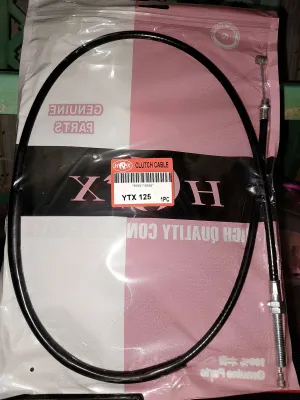
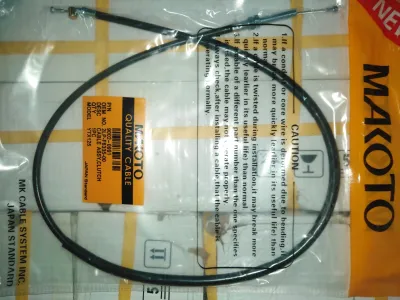
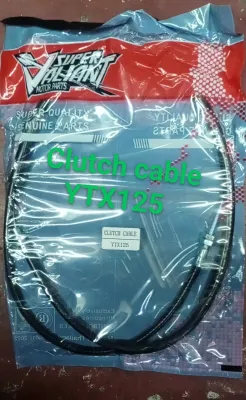
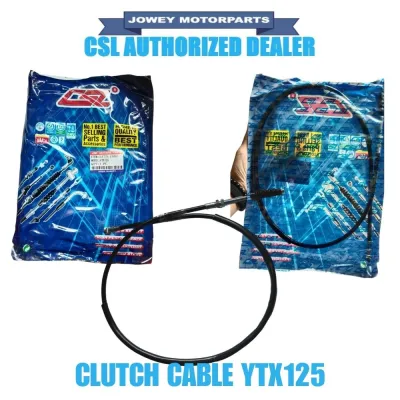
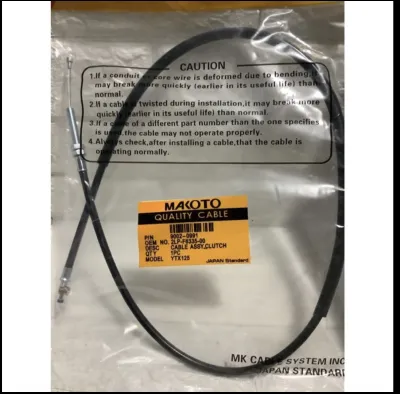
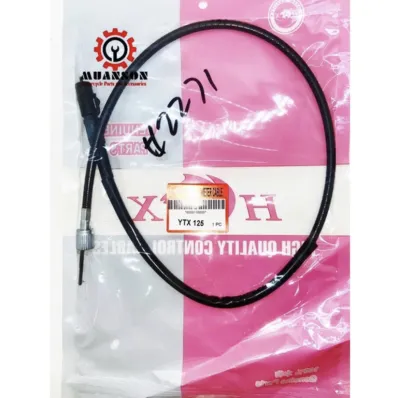
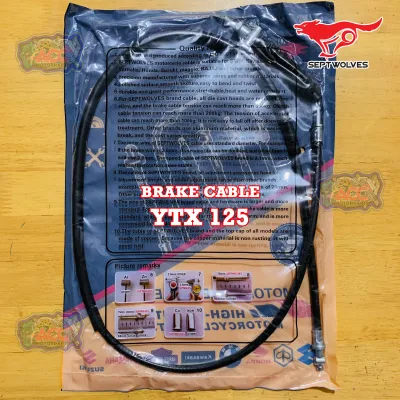
Prices are valid at publication and may change. Please refer to the product page for the latest price.
When purchasing a replacement cable, especially from aftermarket manufacturers, you must verify several critical physical dimensions against your original cable. These dimensions include the total length of the inner steel wire, the length of the outer protective housing, the diameter of the cylindrical metal barrels (or nipples) at both ends, and the thread pitch of the inline adjuster. The barrel at the handlebar end must fit snugly into the clutch lever slot without binding or having excessive play, while the engine-end barrel must align perfectly with the clutch release arm on the crankcase. Measuring these components with a caliper or comparing the old and new cables side-by-side before installation is a highly recommended practice to prevent compatibility errors.
OEM vs. Aftermarket: Evaluating Your Options
When shopping for a replacement clutch cable for your Yamaha YTX, you will generally choose between genuine OEM parts and aftermarket alternatives. Genuine Yamaha replacement parts are manufactured to the exact specifications of the original component, ensuring a perfect fit and restoring the original lever feel. These OEM cables utilize high-grade inner steel wires that resist stretching and are housed within a sleeve lined with low-friction materials, such as Teflon, to minimize resistance. While genuine parts may carry a higher price tag than aftermarket options, they offer the highest level of reliability and consistency, making them the preferred choice for riders who prioritize hassle-free maintenance.

On the other hand, the Philippine aftermarket offers a wide variety of budget-friendly alternatives. Selecting a reputable aftermarket brand requires looking for manufacturers with an established history of producing control cables and positive feedback from local motorcycle mechanics. High-quality aftermarket cables often match or closely approach the performance of OEM parts by using similar multi-strand steel wires and durable outer casings. These options are particularly appealing for high-mileage riders or fleet operators who need to manage maintenance costs without compromising on safety.
However, riders must exercise caution when encountering unbranded, generic, or unusually cheap clutch cables. These low-cost alternatives often compromise on material quality to reduce manufacturing costs. They may use single-strand or low-tensile steel wires that stretch rapidly under the tension of daily use, requiring frequent adjustments and leading to premature fraying. Furthermore, cheap cables often lack internal low-friction liners, resulting in a stiff, heavy lever pull that can cause hand fatigue during long rides. The outer vinyl sleeves of these substandard cables are also more prone to cracking when exposed to the intense tropical sun and heavy rains common in the Philippines, allowing water to enter and rust the inner wire.
Key Quality Indicators to Check Before Buying
Before finalizing your purchase of a clutch cable, conducting a thorough physical inspection can help you identify a high-quality product and avoid substandard components. Start by examining the inner wire itself. A reliable clutch cable features a multi-strand steel wire that is tightly wound and completely uniform along its entire length. Gently flex the cable to ensure that the inner wire slides smoothly within the outer housing without any catching, grinding, or resistance. The outer housing should be flexible yet firm enough to resist collapsing or kinking when bent along the motorcycle’s routing path.
Next, closely inspect the connection points at both ends of the cable. The metal barrels cast onto the ends of the inner wire are subject to intense shear forces every time you pull the clutch lever. In high-quality cables, these barrels are securely soldered or crimped with precision, showing no signs of loose wire strands, cracks, or excess solder buildup. Any visible gaps between the wire and the barrel, or any misalignment of the terminal, are clear indicators of poor manufacturing quality and represent potential failure points where the cable could snap under tension.
Additionally, check for the presence of essential protective features designed to extend the cable’s lifespan. A reliable clutch cable should include durable rubber boots at both the handlebar and engine ends. These boots act as seals, preventing water, dust, and road grit from entering the housing and causing internal corrosion or binding. The metal end caps (or ferrules) on the outer housing should be securely attached and made of corrosion-resistant materials. Finally, inspect the threaded adjuster nuts and brackets; the threads should be clean, sharp, and free of burrs, allowing for smooth manual adjustments during installation and subsequent maintenance.
Where to Source Reliable Clutch Cables in the Philippines
Sourcing your replacement clutch cable from trustworthy channels is essential to avoid counterfeit parts and ensure you receive a durable component. The most reliable option is to visit an authorized Yamaha 3S (Sales, Service, and Spare Parts) dealership or an official Yamaha service center. Purchasing directly from these authorized outlets guarantees that you are getting a genuine OEM part designed specifically for your YTX 125. Dealership staff can also assist you in verifying the correct part number using your motorcycle’s chassis or engine number, eliminating any guesswork.
If an authorized dealership is not nearby, reputable independent motorcycle parts stores are excellent alternatives. Many established local shops have built strong reputations within their communities by supplying high-quality, reliable parts to tricycle drivers and daily commuters. These shops often stock both genuine Yamaha parts and trusted aftermarket brands. When buying from an independent retailer, look for shops that offer clear return or exchange policies in case the cable does not fit your specific model year, and ask the shop mechanics for their recommendations based on local road experience.
For riders who prefer the convenience of online shopping, navigating ecommerce platforms requires a cautious approach. To minimize the risk of purchasing counterfeit or low-quality cables, always look for sellers with verified badges, such as official store status, which indicate a track record of reliable service. Carefully read through the customer reviews, paying close attention to photos and feedback uploaded by other Yamaha YTX owners. Avoid listings that feature generic product descriptions, lack clear brand labeling, or have suspiciously low prices compared to established market rates.
Installation Boundaries and Safety Checks
Installing a new clutch cable is a critical task that directly affects the safety and control of your motorcycle. Because the clutch system regulates power delivery from the engine to the rear wheel, a poorly installed or incorrectly adjusted cable can lead to dangerous situations, such as the clutch failing to disengage when stopping or slipping while accelerating. Before beginning the installation, always refer to your Yamaha YTX owner’s manual for specific instructions, torque values, and routing diagrams. If you lack the necessary tools, mechanical experience, or confidence to perform this task safely, it is highly recommended to have the cable installed by a qualified motorcycle mechanic.
Proper routing of the clutch cable is essential to ensure smooth operation and prevent premature wear. The cable must follow the exact path designated by the manufacturer, running smoothly along the frame without any sharp bends, kinks, or pinch points. Ensure that the cable does not come into direct contact with hot engine components, particularly the exhaust pipe, which can melt the outer vinyl sleeve and damage the internal liner. After routing the cable, turn the handlebars fully from left to right to verify that the cable does not pull tight, bind, or interfere with the steering column, wiring harnesses, or suspension movement.
Once the cable is properly routed and connected, you must adjust the clutch lever free play to the specification outlined in your owner’s manual. Typically, this free play should be measured at the tip of the clutch lever and should fall within a specific range, such as 10 to 15 millimeters. Adjusting the free play is done using the inline adjuster near the handlebar lever or the adjuster nuts at the engine bracket. Too little free play keeps constant tension on the clutch mechanism, leading to clutch slippage, accelerated wear of the clutch plates, and loss of power. Conversely, too much free play prevents the clutch from disengaging fully, making gear shifts difficult, causing the motorcycle to creep forward when stopped in gear, and accelerating wear on the transmission gears.
Frequently Asked Questions (FAQ)
How often should a Yamaha YTX clutch cable be replaced?
A Yamaha YTX clutch cable does not have a fixed replacement interval based solely on mileage or time; instead, its lifespan depends heavily on riding conditions, maintenance habits, and environmental exposure. You should conduct regular visual inspections of the cable as part of your routine maintenance. Immediate replacement is necessary if you observe physical signs of wear, such as frayed steel strands near the lever or engine terminals, cracks in the outer vinyl housing, or torn rubber protective boots. Additionally, if the clutch lever becomes increasingly stiff to pull, fails to return smoothly, or if you experience inconsistent clutch engagement despite proper adjustment, the cable should be replaced promptly to prevent sudden failure on the road. Regularly lubricating the cable with a designated motorcycle control cable lubricant can significantly extend its service life.
Can I use a universal clutch cable for my YTX?
While universal or generic clutch cables are widely available and may seem like a convenient quick fix, using them on a Yamaha YTX is generally not recommended. Universal cables require you to cut the wire to length and attach solderless or screw-on nipples, which are inherently less secure than the factory-cast terminals found on model-specific cables. These temporary connections are highly prone to slipping or snapping under the high tension required to operate the clutch. Furthermore, matching the exact outer housing length, inner wire travel, and adjuster thread pitch of the YTX using a generic cable is extremely difficult. To ensure safe, reliable, and predictable transmission operation, always choose a clutch cable specifically designed and labeled for the Yamaha YTX 125.
Community discussion
Share your experience or ask a question. Comments are reviewed before publication.