
Navigating the daily commute on busy roads requires constant focus, quick decision-making, and reliable access to navigation tools. For riders in the Philippines, finding a reliable motorcycle phone holder is not about chasing a single, universally ideal product, but rather about selecting a system that matches your specific vehicle’s mounting points, provides robust mechanical locking, dampens high-frequency engine vibrations, and withstands sudden tropical downpours. A secure phone mount serves as a critical link between your mobile device and your motorcycle, ensuring that your navigation remains visible without compromising your safety or distracting you from the unpredictable flow of stop-and-go traffic.
Selecting the ideal motorcycle accessory from the vast array of parts available requires a clear understanding of your daily route, your vehicle’s front-end geometry, and the physical limits of your smartphone. Whether you ride a compact underbone, a versatile scooter, or a standard manual motorcycle, the mount you choose must handle the unique stresses of local road conditions. From pothole-ridden asphalt to sudden monsoon rains and intense midday heat, your phone holder must perform reliably day after day. This guide breaks down the essential factors, mounting styles, and safety considerations to help you make an informed decision for your daily commute.
Key Factors for Stop-and-Go Traffic and Local Road Conditions
Daily commuting in major metropolitan areas across the Philippines presents a unique set of physical and environmental challenges that rapidly expose the weaknesses of low-quality motorcycle accessories. In stop-and-go traffic, riders frequently need to check navigation paths, monitor traffic alerts, and occasionally detach their devices during quick stops. Consequently, a phone holder must offer an optimal visibility angle that does not require the rider to look too far down from the road ahead. Quick-release mechanisms, such as spring-loaded clamps or one-click locking systems, are highly advantageous because they allow you to secure or retrieve your phone in seconds, reducing exposure to opportunistic theft during brief halts.
Products mentioned in this guide

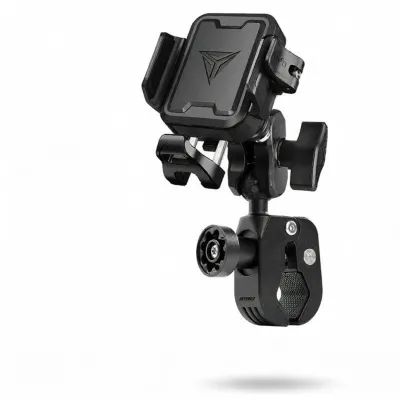
Prices are valid at publication and may change. Please refer to the product page for the latest price.
The tropical climate introduces severe environmental stressors that can degrade both the phone holder and the smartphone itself. High humidity and sudden, torrential downpours require mounting systems that either protect the device entirely or allow for rapid transition to a waterproof setup. Conversely, riding under the intense midday sun can cause smartphones to overheat rapidly, especially when enclosed in unventilated cases. Direct sunlight also creates severe glare, meaning the mount must feature a highly adjustable ball joint or tilt mechanism to allow the rider to angle the screen away from direct reflections while maintaining a clear view of the map.
Furthermore, the physical layout of typical commuter vehicles, such as underbone motorcycles and automatic scooters, limits the available space on the handlebars. Unlike larger touring bikes with exposed tubular handlebars, many popular commuter scooters feature fully plastic-cladded handlebars with minimal exposed metal. This design constraint requires riders to carefully assess the clearance around their instrument clusters, brake reservoirs, and control switches. The chosen mount must not obstruct the rider’s view of the speedometer, nor should it interfere with the free movement of the steering column or the operation of the brake levers.
Mount Types and Handlebar Compatibility
Understanding the front-end geometry of your motorcycle is the first step in selecting a compatible mounting system. For motorcycles with exposed, tubular handlebars, clamp-style mounts are the standard and most versatile option. These mounts typically feature a metal or high-strength composite ring that clamps directly onto the handlebar tube, secured by hex bolts or thumb screws. The primary advantage of clamp-style mounts is their robust grip strength and high degree of adjustability, allowing riders to position the phone centrally or offset to one side. When selecting a clamp mount, it is vital to verify the outer diameter of your handlebars, as standard sizes generally range from 22mm to 28.6mm, requiring the use of specific rubber or plastic shims to prevent slipping.

For automatic scooters and underbone motorcycles with cladded handlebars, mirror stem mounts offer an elegant and highly secure alternative. These mounts attach directly to the threaded post of your side mirror, utilizing the existing mirror mounting hole to create a rigid anchor point. Mirror stem mounts are particularly beneficial because they elevate the phone closer to the rider’s natural line of sight, reducing the need to look down. However, because they are attached to a single, relatively thin metal rod, they can be susceptible to low-frequency vibrations from the engine, making the choice of a rigid, well-engineered stem arm crucial for screen readability.
Fork stem mounts represent another specialized option, primarily suited for sportbikes or sport-touring motorcycles that feature a hollow steering stem nut. These mounts expand inside the steering stem tube, providing a clean, centered mounting position that does not clutter the handlebars. While highly secure, fork stem mounts position the phone lower down, which may require the rider to tilt their head further to view navigation. When choosing between these mounting styles, riders must also weigh the trade-offs between permanent, bolt-on options that require tools to remove and tool-free, quick-clamp designs. While tool-free designs offer convenience, they are also easier for thieves to detach from the motorcycle when parked in public spaces.
Phone Security, Vibration Damping, and Weather Protection
The primary duty of any motorcycle phone holder is to keep your expensive device firmly attached to the vehicle, regardless of road surface quality. Mechanical clamps, which use a screw-tightened or spring-tensioned jaw mechanism to grip the sides of the phone, generally offer the highest level of security. Many premium mechanical clamps feature a secondary manual lock that prevents the jaws from opening accidentally due to road impacts. In contrast, silicone strap systems, which stretch over the corners of the phone, are highly flexible and cost-effective but can degrade over time when exposed to UV radiation and ozone, leading to material fatigue and potential failure.
A critical but often overlooked aspect of phone security is protecting the internal components of your smartphone, specifically the delicate optical image stabilization (OIS) systems found in modern phone cameras. The high-frequency vibrations generated by single-cylinder motorcycle engines, common in commuter scooters and underbones, can travel up the frame and into the phone mount. Over time, these continuous micro-vibrations can physically degrade the tiny springs and electromagnets that suspend the camera lens, leading to permanent focus issues and blurry photos. To mitigate this risk, riders should look for mounting systems that incorporate dedicated vibration dampening modules. These modules use engineered elastomer inserts to absorb high-frequency resonance before it reaches the device.
Weather protection presents a classic trade-off between shielding your phone from rain and preventing it from overheating. Enclosed waterproof cases offer comprehensive protection against heavy downpours and road grime, making them ideal for riding during the rainy season. However, because these cases are sealed, they trap the heat generated by the phone’s processor and battery, which is further exacerbated by direct sunlight, often causing the phone to shut down due to thermal overload. Open-frame designs, on the other hand, allow maximum airflow to keep the phone cool but expose the device directly to the elements. For most commuters, an open-frame design paired with a water-resistant smartphone, or a mount that allows for the quick installation of a temporary rain cover, provides the most balanced solution for year-round riding.
Conditional Shortlist: Matching Mount Features to Your Commute
To simplify your selection process, it is helpful to match specific mount features to your primary riding conditions, vehicle type, and device specifications. If your daily commute involves riding through heavy seasonal rains and unpredictable monsoons, your priority should be an enclosed, waterproof case system. Look for cases that feature a touch-compatible front membrane, secure latching clips, and an integrated mounting plate that connects rigidly to your chosen base. Ensure the case has built-in shock-absorbing foam inserts to keep the phone pressed firmly against the screen membrane, which helps maintain touch sensitivity even when wet.
For riders who carry large smartphones or use thick, heavy-duty protective cases, an adjustable mechanical clamp with wide clearance is the most suitable choice. When evaluating these mounts, check the manufacturer’s specifications for maximum width, height, and depth compatibility. The clamp arms should have deep, rubber-lined hooks that can securely wrap around the edges of a thick case without slipping. Avoid mounts that require you to remove your protective case every time you ride, as this adds unnecessary inconvenience to your daily routine and leaves your phone vulnerable when detached.
If you ride a popular automatic scooter with crowded, plastic-covered handlebars, focus your search on mirror stem or fork stem adapters. These adapters bypass the lack of exposed handlebar space by utilizing existing structural points on your vehicle. Before purchasing, measure the diameter of your mirror stem or the inner diameter of your steering stem tube to ensure a secure fit. Regardless of the category that fits your profile, always verify current stock, manufacturer warranties, and specific vehicle fitment guides from authorized dealers to ensure you are purchasing a genuine, compatible accessory.
Installation Safety and Pre-Ride Checks
Proper installation is just as important as choosing the right mount; an incorrectly installed phone holder poses a significant safety hazard to both your device and your riding safety. When installing a handlebar clamp, always verify the exact diameter of your handlebar tube and use the correct rubber or plastic shims provided by the manufacturer. These shims not only ensure a tight, non-slip fit but also act as an initial barrier against vibration transfer. Tighten all mounting bolts evenly using the correct tools, taking care not to overtighten and strip the threads, especially when mounting to aluminum handlebars or delicate mirror stems.
If you plan to run a charging cable from your motorcycle’s battery or USB port to your phone, you must observe strict safety boundaries to prevent electrical hazards or mechanical interference. Route the cable carefully along the existing wiring harness of the motorcycle, ensuring it has enough slack to accommodate the full range of steering motion from lock to lock. Secure the cable with UV-resistant zip ties, keeping it far away from moving steering components, sharp metal edges, and hot engine or exhaust parts that could melt the insulation. If you are unfamiliar with your vehicle’s electrical system, consult the original-vehicle instructions or seek qualified professional installation to avoid draining your battery or causing a short circuit.
Finally, establish a strict pre-ride routine to ensure your mounting system remains secure over time. Before every ride, perform a quick manual shake test of the phone holder to check for any play or loosening of the mounting base. Road vibrations, temperature fluctuations, and daily use can gradually loosen bolts and joints. Keep a small set of hex keys or the appropriate adjustment tools in your under-seat storage, and make it a habit to check and retighten all fasteners periodically. By taking these simple precautions, you can enjoy a safe, reliable, and distraction-free commute every day.
Frequently Asked Questions (FAQ)
Can I use a regular car phone mount on my motorcycle?
Using a standard car phone mount on a motorcycle is highly discouraged due to the vastly different environmental and physical demands of the two riding conditions. Car mounts are designed for a climate-controlled cabin and rely heavily on suction cups or adhesive pads attached to smooth glass or plastic surfaces. These mounting methods cannot withstand the intense, high-frequency vibrations, wind resistance, and sudden impacts encountered on a motorcycle. Furthermore, car mounts lack the mechanical locking mechanisms and weather-resistant materials required to prevent your phone from ejecting when riding over potholes or during sudden downpours.
Will a motorcycle phone holder damage my phone's camera?
Yes, mounting a modern smartphone directly to a motorcycle without proper vibration mitigation can cause permanent damage to the camera’s optical image stabilization (OIS) system. The high-frequency vibrations produced by motorcycle engines, particularly single-cylinder commuter engines, are transmitted directly through the frame and handlebars into the mount. These vibrations degrade the delicate mechanical gyroscopes and springs that keep your camera lens stable. To protect your device, it is highly recommended to install a dedicated vibration dampener module between the mounting base and the phone holder to absorb these damaging frequencies.
Is it legal to use a phone mount while riding in the Philippines?
Yes, it is legal to use a phone mount while riding in the Philippines, provided you comply with the regulations set by the Land Transportation Office (LTO) and the Anti-Distracted Driving Act. The law permits the use of mobile devices for navigation purposes, but the phone must be securely mounted in a position that does not obstruct your direct line of sight to the road. Generally, the mount should be positioned below or in line with the motorcycle’s instrument panel. You must program your destination before starting your journey; operating or touching the phone while the vehicle is in motion or stopped at a red light is strictly prohibited and subject to penalties.

Community discussion
Share your experience or ask a question. Comments are reviewed before publication.