
Staying hydrated while riding a motorcycle in the tropical climate of the Philippines is a practical necessity. High humidity and intense heat make carrying water essential, whether you are navigating daily city traffic or embarking on a long weekend ride. A universal motorcycle cup holder offers a convenient way to keep a water bottle, flask, or insulated cup within arm’s reach. However, choosing the right one requires looking beyond the “universal” label to ensure the accessory actually fits your specific motorcycle, remains secure under heavy vibration, and does not interfere with your control of the vehicle.
Understanding Universal Fitment and Motorcycle Compatibility
The term “universal” in motorcycle accessories means the product is designed to adapt to a wide range of common configurations, but it does not guarantee an instant fit out of the box. Most handlebars on standard motorcycles, cruisers, and adventure bikes have an outer diameter of 22 millimeters (7/8 inch) or 25.4 millimeters (1 inch). Some larger touring bikes or custom cruisers feature thicker 32-millimeter (1-1/4 inch) bars. Before purchasing any cup holder, you must measure your handlebar diameter using a caliper or a flexible measuring tape to confirm compatibility with the clamp’s specified range.
To accommodate these varying diameters, manufacturers of universal cup holders typically include plastic or rubber shims. These shims serve a dual purpose: they fill the gap between a smaller handlebar and a larger clamp, and they provide a high-friction surface that prevents the mount from rotating under the weight of a full bottle. When installing, you must verify that the shims are seated evenly and that the clamp can be tightened completely without stripping the threads or pinching electrical wiring running along the bars.
Products mentioned in this guide
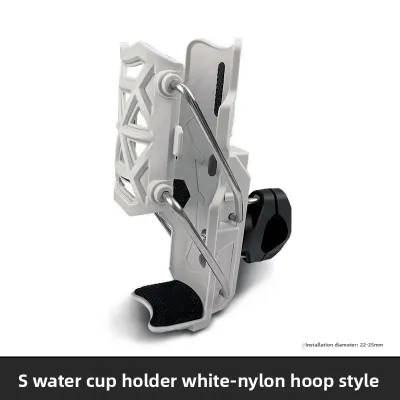
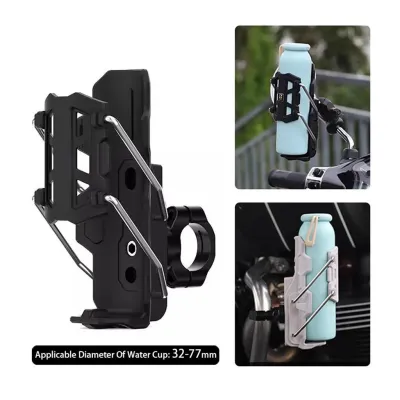
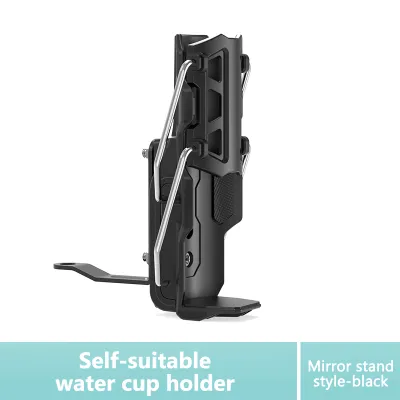
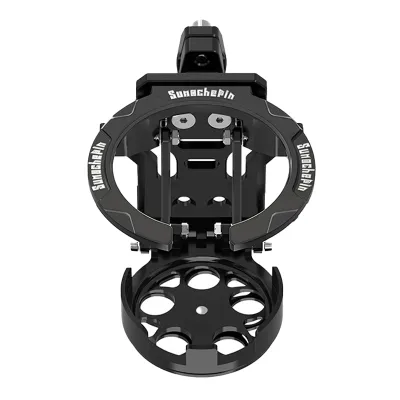
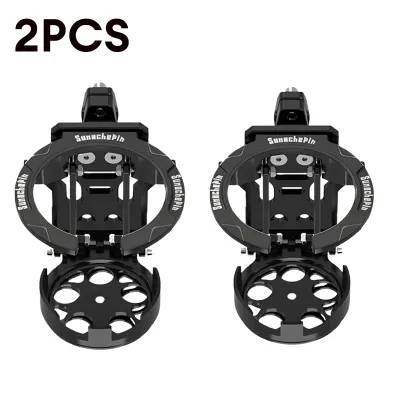
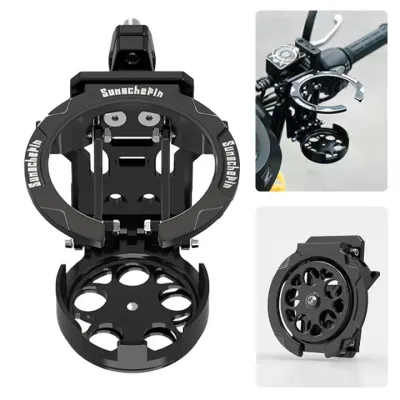
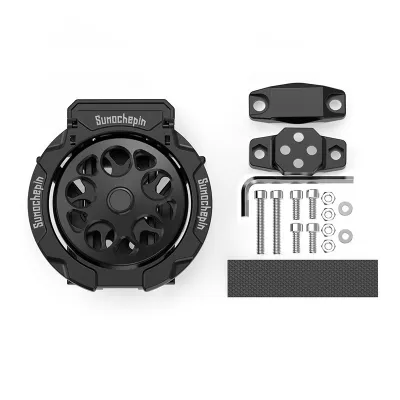
![[🇵🇭 Stock&COD] Universal Foldable Motorcycle Water Bottle Holder Cnc Water Cage Cup Holder Rack](https://img.lazcdn.com/g/p/edf539ac139e493acd00c6d4427c59f5.jpg_400x400q80.jpg_.webp)
Prices are valid at publication and may change. Please refer to the product page for the latest price.
For motorcycles with fully enclosed handlebars, such as many underbones, scooters, and maxi-scooters popular in local cities, standard handlebar clamps cannot be used. On these models, the cup holder must mount to an alternative location, such as the mirror stem or an accessory crossbar. Mirror stems generally have a diameter of 8 millimeters or 10 millimeters, requiring a specialized bracket that slips under the mirror’s mounting bolt.
Clearance is another critical factor that defines true compatibility. A cup holder must be positioned so that it does not block your view of the instrument cluster, speedometer, or side mirrors. Furthermore, you must ensure that the holder and the bottle do not press against clutch cables, front brake lines, throttle housings, or wiring harnesses, as constant rubbing can wear down protective sleeves over time.
In addition to physical clearance, you must consider the routing of your control cables during steering movements. A cup holder mounted too close to the triple clamp can pinch or pull throttle cables when the handlebars are turned fully to one side. This can cause the engine speed to rise unexpectedly or prevent the throttle from snapping shut, presenting an immediate safety hazard that must be checked before every ride.
Main Mounting Types for Motorcycle Cup Holders
Handlebar clamp mounts are the most robust and common mounting systems available. They utilize a metal or high-strength polymer ring that wraps directly around the exposed metal of your handlebars. Because they attach to the strongest structural part of the steering assembly, they offer excellent stability and can support heavier insulated metal flasks. The primary limitation is the physical space required on the handlebar, which must be free of switches, phone mounts, and GPS brackets.

Mirror stem mounts are designed specifically for scooters and underbone motorcycles where the handlebars are encased in plastic fairings. The mount consists of a flat metal bracket with a hole that slides over the threaded portion of the side mirror stem before it is screwed into the control perch. While this design solves the problem of limited handlebar space, mirror stems are thinner and more prone to flexing. Consequently, these mounts typically have lower weight limits and are more susceptible to engine idle vibrations.
The constant vibration transmitted through a mirror stem can also cause the mirror itself to loosen over time if the bracket is not installed correctly. When using a mirror stem mount, it is vital to ensure the mirror’s locknut is fully tightened against the bracket. Additionally, because the drink sits higher up and closer to your face on a mirror mount, wind resistance at highway speeds will exert more leverage on the assembly, making it less suitable for heavy, oversized flasks.
Frame or crash bar mounts are an excellent alternative for adventure motorcycles, dual-sport bikes, and large cruisers equipped with engine guards or crash bars. These clamps are designed to fit thicker tubing, usually ranging from 25 millimeters to 32 millimeters. Mounting the cup holder lower on the frame keeps the handlebars clean and lowers the center of gravity of the carried liquid. However, this position requires a longer reach to grab your drink, which means you should only access the bottle when the motorcycle is fully stopped.
Key Features to Evaluate Before Buying
The intense tropical sun and heavy seasonal rains in the Philippines place extreme stress on motorcycle accessories. When evaluating cup holders on online marketplaces, look for products that explicitly list UV-resistant polymers, marine-grade aluminum, or rust-resistant stainless steel hardware. Cheap, non-UV-treated plastics will quickly become brittle and crack under constant sun exposure, while low-grade steel screws will rust after a few heavy downpours.
Another essential design feature to check is the presence of drainage holes at the bottom of the cup holder. During the monsoon season, a solid-bottomed cup holder will quickly collect rainwater, creating a pool that can cause mold growth or rust your bottle’s exterior. A proper drainage system allows water to flow through freely, keeping the holder dry and clean even during torrential rains.
A motorcycle cup holder must hold your beverage securely over potholes, speed bumps, and rough provincial roads. Look for designs that feature adjustable mechanical claws, heavy-duty drawstring pouches, or integrated bungee cords that wrap over the top of the bottle. Some models use flexible rubber fingers inside a rigid basket to grip containers of various diameters, which helps prevent the bottle from bouncing out when riding over uneven pavement.
When comparing options on e-commerce platforms, prices can range from under ₱200 for basic plastic models to over ₱1,500 for premium aluminum or fabric-pouch designs. Do not rely solely on the lowest price; instead, read customer reviews to verify how the mount performs under real-world riding conditions. Pay close attention to feedback regarding clamp slippage, screw stripping, and whether the holder can accommodate local bottle sizes, such as standard 500ml water bottles or larger insulated flasks.
Safety, Installation, and Vibration Checks
Before taking your motorcycle out on the road with a newly installed cup holder, you must perform a comprehensive safety check. With the motorcycle on its center stand, slowly turn the handlebars all the way to the left and then all the way to the right. This “lock-to-lock” test ensures that the cup holder, mount, and bottle do not contact the fuel tank, front fairings, windshield, or tank bag. Any contact can restrict your steering sweep, which is highly dangerous during low-speed maneuvers or emergency swerves.
Motorcycle engines produce high-frequency vibrations that can easily loosen mounting screws over time. To prevent your cup holder from falling off mid-ride, check the manufacturer’s instructions regarding the use of thread-locking compounds. Applying a small drop of medium-strength (blue) thread-locker to the metal screws can prevent them from backing out due to engine buzz. Additionally, ensure that the rubber or foam pads included with the kit are properly installed inside the clamp to absorb vibration and protect your handlebar’s finish.
A pre-ride inspection should always include a quick physical check of the cup holder’s mounting tightness. Simply grab the holder and give it a firm wiggle to ensure the clamp has not migrated or loosened. Over time, the rubber shims can compress or degrade due to heat, which reduces their gripping force and can cause the holder to rotate downward when a heavy bottle is inserted.
If your motorcycle’s layout does not easily accommodate a universal mount, or if the installation instructions suggest drilling into fairings or modifying control perches, stop immediately. Modifying structural components or control assemblies without professional guidance can compromise the safety of your vehicle. In such cases, consult a qualified motorcycle mechanic to find a safe, custom mounting solution that preserves the integrity of your bike’s controls.
Condition-Based Shortlist: Matching Holder Types to Riding Needs
For daily riders navigating congested urban areas, a compact, lightweight handlebar or mirror-stem mount is highly suitable. Look for low-profile designs that do not widen the profile of your handlebars, allowing you to filter through traffic safely. Quick-access fabric pouches with drawstring closures are excellent for city riding, as they can hold a standard water bottle securely and fold flat when not in use.
Riders who spend hours on provincial highways require a cup holder that can support large, heavy insulated flasks to keep drinks cold in the heat. For this scenario, a heavy-duty aluminum handlebar clamp or a crash-bar mount is ideal. Look for models with robust mechanical retention systems or deep baskets that prevent tall flasks from tipping over or slipping out at highway speeds.
If your rides take you on unpaved roads, gravel trails, or through areas with frequent potholes, maximum security is the top priority. Choose a cup holder with a rigid, full-enclosure basket and an active locking mechanism, such as a top-securing bungee strap or a screw-tightened clamp arm. Avoid simple gravity-fit or open-claw designs, as the violent vertical movements of off-road riding will easily eject a bottle from an unsecured holder.
Frequently Asked Questions (FAQ)
Can I mount a cup holder on a motorcycle with clip-on handlebars?
Sportbikes with low, clip-on handlebars present a unique challenge because there is virtually no open space on the bars themselves. Standard clamps will not fit. Instead, look for specialized mounts that attach to the steering stem hole (using an expanding stem plug) or brackets that mount directly to the front brake clutch reservoir cap. These alternative mounting points keep the cup holder centered and clear of the fairings during tight turns.
How do I prevent my drink from spilling due to engine vibration?
Engine vibration can cause open cups or poorly sealed bottles to splash liquid onto your controls, which can be slippery and potentially damage electrical switches. To prevent this, always use fully sealed bottles, travel mugs with locking lids, or insulated flasks with screw-on caps. Additionally, look for cup holders that feature integrated rubber dampening fingers or foam liners, which help isolate the container from the high-frequency buzz of the engine.
Community discussion
Share your experience or ask a question. Comments are reviewed before publication.