
Commuting on a motorcycle during the Philippine rainy season is a masterclass in endurance. A sudden afternoon downpour can turn a routine ride along EDSA or Commonwealth Avenue into a freezing, stressful ordeal within minutes. To stay dry, comfortable, and safe, a standard casual jacket will not suffice. Finding a reliable women motorcycle raincoat requires balancing absolute waterproof protection against oppressive tropical humidity. The ideal gear must offer a tailored fit that prevents wind-flapping, features high-visibility elements for dark, rain-slicked roads, and comfortably accommodates your daily clothing or protective riding armor underneath.
Quick Guide: Core Needs for Tropical Wet-Weather Riding
Daily riding during the southwest monsoon, or habagat, presents a unique environmental challenge. Standard rainwear designed for colder climates often fails in the Philippines because it ignores the intense combination of heavy rainfall and high ambient humidity. A commuter raincoat must provide a high level of waterproofing without transforming into a personal sauna. If the fabric cannot breathe, sweat buildup will leave you just as wet on the inside as the rain would from the outside.
In addition to managing moisture, motorcycle-specific rain gear must account for riding ergonomics. A proper women’s cut is not merely an aesthetic choice; it is a critical safety and comfort feature. Standard unisex gear is often oversized in some areas and restrictive in others, leading to loose fabric that flaps violently at speed or tight spots that restrict your range of motion. High-visibility elements are also non-negotiable, as torrential downpours dramatically reduce the visibility of motorcyclists to larger vehicles.
Products mentioned in this guide
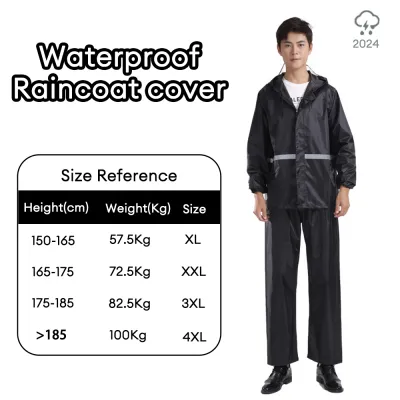
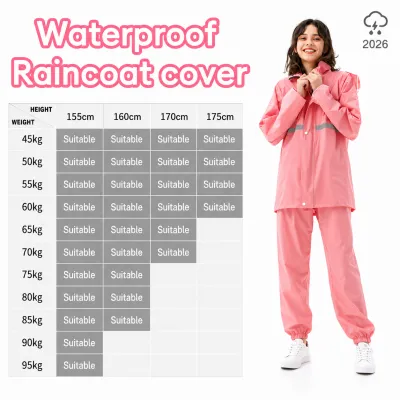
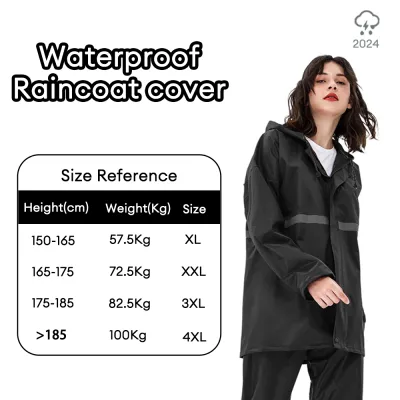
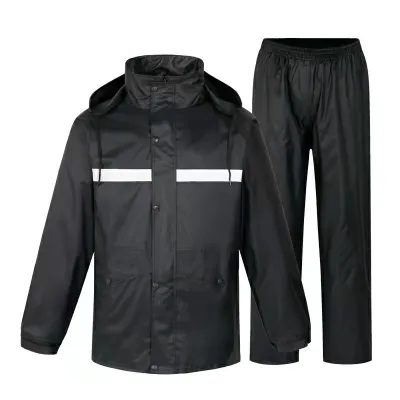
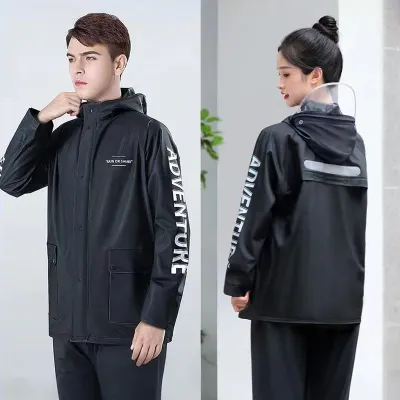
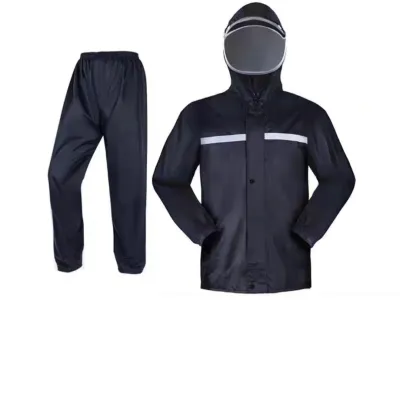
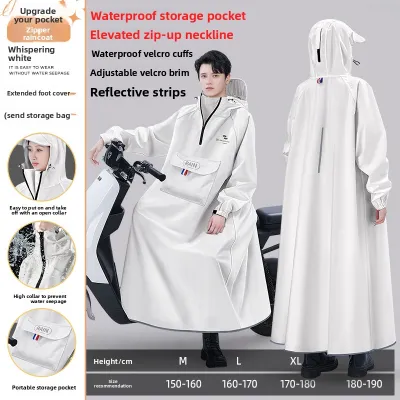
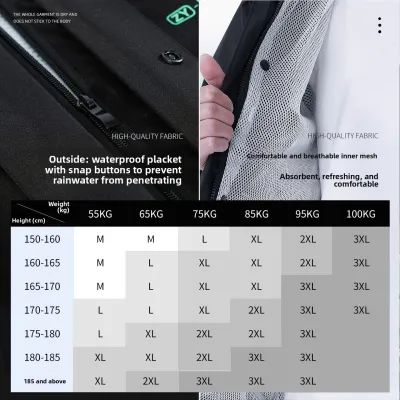
Prices are valid at publication and may change. Please refer to the product page for the latest price.
This guide focuses on structural and material evaluation criteria rather than a static list of specific brands. By understanding these core technical requirements, you can confidently assess any product you find on e-commerce platforms or in local motorcycle accessory shops, ensuring your investment keeps you dry and safe through multiple rainy seasons.
Essential Features for Heavy Downpours and High Humidity
When evaluating a women motorcycle raincoat, the material construction and seam design determine whether you stay dry or get soaked. Water resistance is typically measured by a hydrostatic head rating, which indicates how much water pressure a fabric can withstand before leaking. For daily commuting in heavy tropical downpours, look for manufacturer specifications indicating a rating of at least 5,000mm to 10,000mm. However, even the highest-rated fabric will fail if the seams are not constructed properly.

Standard stitching creates thousands of tiny needle holes that act as direct pathways for water under wind pressure. To prevent this, quality motorcycle rainwear utilizes taped or welded seams. Taped seams feature a hot-melt waterproof tape applied over the interior stitching, while fully welded seams use heat or radio waves to fuse the fabric panels directly together. Before purchasing, always inspect the interior of the garment to verify that the seams are completely sealed and free of peeling or gaps.
To combat the high humidity and heat of the Philippines, the raincoat must incorporate effective ventilation. Completely non-breathable materials, such as cheap polyvinyl chloride (PVC) or heavy rubberized nylon, trap body heat and perspiration. Look for raincoats that feature mechanical ventilation, such as mesh-lined back vents, underarm eyelets, or zippered pit vents protected by storm flaps. Advanced rain gear may also utilize breathable membrane technologies that allow microscopic sweat vapor to escape while blocking larger water droplets from entering.
Material durability is another critical factor. At commuting speeds of 40 to 60 km/h, the force of wind-driven rain can easily penetrate thin, cheap plastics. The outer shell must be constructed from high-density polyester or nylon, often rated by denier (such as 70D or higher) or thread count (such as 190T or 210T). This ensures the fabric resists tearing from road debris and maintains its structural integrity against strong winds, rather than clinging tightly to your body and restricting movement.
Why Women-Specific Cuts Matter for Riding Comfort and Safety
Historically, female riders have had to rely on unisex rain gear, which is typically designed around male proportions. Simply choosing a smaller size of a men’s raincoat often leads to a poor fit that compromises safety. A dedicated women’s cut is engineered to accommodate female anatomy, ensuring that the gear performs optimally while you are in the active riding position.
One of the primary differences lies in torso and sleeve proportions. Women generally have shorter torsos relative to their height compared to men. A unisex jacket that fits across the shoulders will often be too long in the torso, causing the fabric to bunch up at the stomach when seated. Conversely, if you size down, the sleeves may be too short, causing the cuffs to pull back and expose your wrists to cold wind and rain when you reach for the handlebars. A women-specific cut ensures the jacket hem remains secure without riding up, keeping your lower back fully protected.
Furthermore, proper hip and thigh room is essential for comfort on the saddle. Women’s raincoats are tailored with a natural flare at the hips to prevent the lower hem from binding or pulling tight when you mount your motorcycle. This is especially important for daily commuters who wear corporate skirts, dresses, or bulky protective riding pants underneath the rain gear. If the hips are too tight, the tension puts immense strain on the main zipper, which can lead to premature failure or water seepage through the zipper teeth.
To ensure a customized fit, high-quality rainwear features multiple adjustable secure points. Look for jackets with adjustable waist straps, Velcro wrist cuffs, and snap-button sleeve adjusters. These features allow you to cinch the excess fabric tight against your body. Eliminating loose, flapping fabric reduces wind drag and rider fatigue, prevents water from wicking up your sleeves, and ensures that the protective material does not snag on your motorcycle’s handlebars, mirrors, or controls.
Comparing Rain Gear Styles for Your Daily Commute
Choosing the right style of rain gear depends on your daily commute distance, your motorcycle type, and how quickly you need to transition from riding to an office environment. Each style offers distinct trade-offs regarding protection, convenience, and safety.
Two-Piece Rain Suits (Jacket and Pants)
Two-piece rain suits consist of a separate waterproof jacket and matching pants. This configuration is widely considered the most versatile and protective option for daily commuters, especially those traveling longer distances or riding on high-speed thoroughfares.
- Best for: Long commutes, highway riding, and maximum overall protection.
- Pros: Offers excellent mobility, allows you to wear just the jacket during light drizzles, and provides a secure fit that minimizes wind resistance.
- Cons: Takes longer to put on and take off compared to a poncho, and requires ensuring a generous overlap at the waist to prevent water from pooling and seeping through the waistband.
When using a two-piece suit, always pull the jacket hem down completely over the pants waistband. Look for jackets with an adjustable drawcord at the bottom hem to seal out wind-driven water that can spray upward from the front wheel.
One-Piece Rain Suits
One-piece rain suits, often referred to as riding overalls, offer a continuous waterproof barrier from the collar down to the ankles. This design completely eliminates the waist gap, making it virtually impossible for water to seep in at the midsection.
- Best for: Extreme weather, heavy monsoon downpours, and long-distance highway riding.
- Pros: Superior waterproof integrity with zero risk of waist leaks, and excellent wind resistance.
- Cons: Highly cumbersome to put on and take off, especially in tight spaces like an office restroom, and difficult to wear over bulky corporate attire or thick riding boots.
While one-piece suits provide unmatched protection during a severe storm, the effort required to wiggle into them on the side of the road when a sudden downpour starts makes them less practical for short, stop-and-go city commutes.
Rain Ponchos and Scooter Aprons
Rain ponchos and specialized scooter aprons are popular among urban riders due to their low cost and extreme ease of use. They can be thrown over your head in seconds without needing to remove your shoes or boots.
- Best for: Very short, low-speed city trips on underbone motorcycles or scooters.
- Pros: Highly portable, inexpensive, and exceptionally fast to put on over any type of clothing.
- Cons: Extremely dangerous at moderate to high speeds, offers no protection for the lower legs against side spray, and lacks structural durability.
Safety Warning: You should explicitly avoid using loose, traditional ponchos at highway speeds. The loose, billowing fabric acts like a parachute, catching the wind and severely destabilizing your motorcycle. More critically, loose fabric can easily drape over your exhaust pipe and melt, block your headlight, or become tangled in your motorcycle’s moving parts—such as the rear wheel, chain, or belt drive—presenting an immediate and severe crash hazard.
Visibility and Safety Features for Wet, Low-Light Roads
Riding in the rain significantly increases your risk on the road. Wet asphalt reduces tire traction, braking distances are extended, and car drivers have their vision obscured by rain-splattered windows and fogged-up mirrors. Therefore, your raincoat must actively work to make you as visible as possible.
Avoid buying solid black or dark grey raincoats. Instead, prioritize high-visibility colors such as neon yellow, bright orange, or high-contrast pink. Additionally, ensure the raincoat features high-quality reflective piping or panels. These reflective elements should be strategically placed across the upper back, shoulders, chest, and lower legs. This positioning aligns perfectly with the headlight beams of following and oncoming vehicles, ensuring you remain visible even in low-light, heavy-mist conditions.
Another critical area to examine is the hood design. Many casual raincoats feature large hoods that are meant to be worn under or over a helmet. However, a bulky hood worn under a helmet can create uncomfortable pressure points, compromise the helmet’s snug safety fit, and block your peripheral vision when checking your blind spots. A hood worn over a helmet can catch the wind like a sail. The safest option is a raincoat with a hood that can be completely detached or rolled up and zipped into the collar. Alternatively, choose a jacket with a high, stiff, fleece-lined collar that seals snugly against the base of your helmet, keeping water from running down your neck without the need for a hood.
Finally, pay attention to the seat area of the rain pants. When vinyl motorcycle seats get wet, they become incredibly slick. During sudden braking, you can easily slide forward, compromising your control over the handlebars. Look for rain pants that feature textured, non-slip silicone grips or reinforced fabric panels on the seat area to help keep you securely planted on your saddle.
Care and Maintenance to Prevent Mold in Humid Climates
The hot, humid climate of the Philippines is the perfect breeding ground for mold, mildew, and bacteria. If you fold up a damp raincoat and stuff it into your motorcycle’s under-seat storage compartment or a dark closet, it will quickly develop a foul odor and begin to degrade. Proper care is essential to preserve the waterproof coatings and extend the lifespan of your gear.
Always air-dry your rain gear completely after every ride. Hang the jacket and pants on wide, padded hangers in a well-ventilated, shaded indoor area or a covered balcony. Never expose your rainwear to direct, harsh tropical sunlight for extended periods. The intense ultraviolet (UV) rays can dry out and crack polyurethane waterproof coatings, melt the adhesive backing on sealed seams, and degrade elastic components.
When the gear becomes dirty from road grime, oil, and mud, consult the manufacturer’s care label before cleaning. Hand washing is generally the safest method. Use a sponge or soft microfiber cloth with cool water and a mild, non-detergent soap specifically formulated for technical outerwear. Never use standard laundry detergents, fabric softeners, or bleach. Standard detergents contain surfactants that clog the breathable pores of technical fabrics and strip away the durable water repellent (DWR) outer coating, while bleach will permanently damage the synthetic fibers and seam tapes.
Once the gear is completely dry, store it in a cool, dry place with good air circulation. Avoid leaving it tightly compressed inside its carrying pouch for months at a time, as tight creases can eventually cause the waterproof membrane to crack along the fold lines. Hanging the suit in a closet with a moisture absorber is the ideal way to keep it fresh and ready for the next downpour.
Frequently Asked Questions (FAQ)
Can I use a standard hiking rain jacket for motorcycle commuting?
While a standard hiking rain jacket is designed to keep you dry while walking, it is not engineered to withstand the unique forces of motorcycle riding. Hiking jackets typically lack the wind-blocking density required to prevent water from being forced through the fabric at 50 km/h. They also lack the necessary abrasion resistance to protect you from road grit, and their loose cuts will flap violently at speed. Furthermore, hiking jackets rarely feature the specialized cuff seals, high-visibility reflective placements, and elongated rear hems needed to keep a rider dry and visible on the road.
How do I keep raincoat pants from riding up my legs while riding?
Raincoat pants riding up your shins is a common frustration that allows water to pour directly into your boots. To prevent this, look for rain pants that feature wide, adjustable Velcro straps or heavy-duty snap closures at the ankles, allowing you to secure the hem tightly around your footwear. If your pants do not have these features, you can use aftermarket elastic boot straps or stirrups. These loop under the sole of your boot and clip to the hem of the pants, keeping the waterproof material pulled down securely over your ankles regardless of your knee bend angle on the motorcycle.

Community discussion
Share your experience or ask a question. Comments are reviewed before publication.