
Selecting the best air and cabin filters for your Hyundai Accent in the Philippines requires matching the exact model year, engine type, and driving conditions to the filter’s physical specifications. Because the Accent has gone through multiple generations in the local market—most notably the fourth-generation (RB) and fifth-generation (HC) models—there is no single “universal” filter that fits every variant. To maintain engine performance and ensure clean cabin air under hot, humid, and dusty tropical conditions, you must prioritize filters that meet or exceed Original Equipment Manufacturer (OEM) standards.
Operating a vehicle in dense urban traffic or along unpaved provincial roads exposes both the engine and the passenger cabin to high concentrations of particulate matter. The engine air filter prevents abrasive dust from entering the combustion chamber, while the cabin air filter purifies the air entering the ventilation system. Choosing the correct replacement involves verifying part dimensions, understanding material differences, and knowing when to perform a manual inspection or seek professional assistance.
Identifying the Exact Filter Specifications for Your Accent
To ensure a proper fit, you must first locate the exact specifications for your Hyundai Accent’s model year and engine configuration. The most reliable source for this information is your vehicle’s owner’s manual, which lists the recommended OEM part numbers and physical dimensions. Alternatively, you can find the Vehicle Identification Number (VIN) on the plate located on the driver-side dashboard or the door pillar. Providing this VIN to an authorized dealership or checking it against official parts databases will yield the precise part numbers required for your specific vehicle.
Products mentioned in this guide
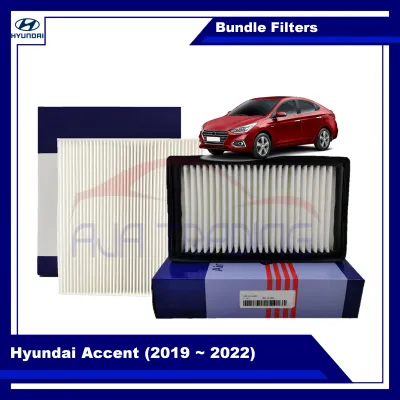
Prices are valid at publication and may change. Please refer to the product page for the latest price.
It is critical to distinguish between the engine air filter and the cabin air filter, as they serve entirely different systems and are housed in separate locations. The engine air filter is located under the hood inside a sealed plastic airbox near the engine intake. The cabin air filter is situated inside the passenger compartment, typically behind the glove box assembly. These filters are not interchangeable in shape, size, or material composition.
Relying solely on the general model name “Hyundai Accent” when purchasing replacements often leads to incompatible parts. For example, a fourth-generation Accent (RB series, produced from 2011 to 2017) uses different filter dimensions compared to the fifth-generation Accent (HC series, produced from 2018 onward). Furthermore, variants equipped with the 1.4-liter gasoline engine frequently require different airbox configurations than those with the 1.6-liter CRDi diesel engine. Always verify the exact model year, engine displacement, and fuel type before finalizing a purchase.
What to Look for in a High-Quality Engine Air Filter
A high-quality engine air filter must balance two competing demands: trapping microscopic debris and allowing a steady volume of clean air to reach the engine. When evaluating replacement options, inspect the density and pleat design of the filter media. High-quality filters feature deep, evenly spaced pleats that maximize the surface area available for filtration. This design prevents premature clogging and ensures consistent airflow, which is vital for maintaining fuel efficiency and engine power.

The sealing gasket is another critical component to inspect. The perimeter of the filter should feature a flexible, high-density rubber or polyurethane gasket. This seal must fit snugly against the edges of the airbox housing to prevent unfiltered air from bypassing the filter media. A stiff, brittle, or poorly molded gasket can warp under engine heat, creating gaps that allow abrasive dust to enter the cylinders, leading to premature engine wear.
When choosing between OEM-style paper replacements and high-flow aftermarket options, consider your typical driving environment. Standard OEM-style filters utilize specialized paper or synthetic fiber blends that offer excellent filtration efficiency for daily commuting. High-flow aftermarket filters, often made of washable cotton gauze or multi-layered synthetic mesh, allow higher airflow but may require specialized cleaning kits and regular oiling. For most standard driving needs in the Philippines, high-quality disposable paper or synthetic filters provide the most reliable protection without the risk of sensor contamination from over-oiled reusable media.
Regularly checking the condition of your engine air filter can prevent performance issues. Observable signs of a failing or clogged filter include dark gray or black discoloration of the filter media, visible accumulation of leaves, insects, or dust in the pleats, and physical warping of the filter frame. If you notice engine hesitation, a drop in fuel economy, or a dusty smell when accelerating, inspect the engine air filter immediately.
Choosing the Right Cabin Air Filter for Dust and Odor Control
The cabin air filter plays a direct role in passenger comfort and health by removing airborne pollutants before they enter the vehicle’s interior. Standard particulate cabin filters are designed to trap dust, pollen, and road debris. For drivers frequently navigating congested urban areas with heavy exhaust emissions, an activated carbon cabin filter is highly recommended. These filters feature an integrated layer of treated charcoal that chemically adsorbs harmful gases, soot, and unpleasant odors, providing a significantly cleaner cabin environment.
Structural integrity is essential for preventing air bypass within the heating, ventilation, and air conditioning (HVAC) system. Look for cabin filters with rigid plastic or heavy-duty cardboard frames that resist warping under pressure. The filter edges should have a secure sealing strip to ensure all incoming air is forced through the filtration media rather than escaping around the sides of the housing.
In the tropical climate of the Philippines, where the air conditioning system runs almost continuously, a restricted cabin filter can severely impact HVAC performance. As dust and humidity accumulate on the filter media, airflow through the dashboard vents decreases, forcing the blower motor to work harder to cool the cabin. This restriction not only reduces passenger comfort but also increases electrical strain on the blower motor, potentially leading to premature component failure and costly repairs.
Inspecting and Replacing Your Filters Safely
Regular inspection of both the engine and cabin air filters allows you to assess their actual condition rather than relying solely on mileage intervals. To inspect the filters, find a well-lit work area and carefully remove them from their housings. Hold the filter up to a light source; if light cannot penetrate the pleats due to heavy dust accumulation, the filter is saturated and must be replaced. Check for physical damage, such as torn media, separated seams, or mold growth, which can occur in high-humidity environments.
While manufacturers provide general replacement intervals, you should adjust these schedules based on your specific driving conditions. If you frequently drive in heavy stop-and-go traffic, near construction sites, or on unpaved rural roads, your filters will accumulate debris much faster. In these severe environments, inspecting the filters every six months and replacing them as soon as visible loading occurs is highly recommended to protect your vehicle’s systems.
Replacing these filters is generally a straightforward process that requires minimal tools. For most Hyundai Accent models, the engine airbox is secured by simple metal tension clips that can be released by hand, while the cabin filter housing behind the glove box is accessed by removing plastic retaining pins or pressing side tabs. Before starting, consult your owner’s manual to understand the specific clip mechanisms and orientation of the filter, paying close attention to the “Air Flow” direction arrow printed on the cabin filter frame.
Always prioritize safety and recognize the limits of do-it-yourself maintenance. Before opening any housing, ensure the engine is completely turned off, the ignition key is removed, and the parking brake is engaged. If you encounter brittle plastic housing tabs, stripped screw fasteners, or components that resist normal removal force, stop the process immediately. Forcing these parts can crack the airbox or HVAC housing, leading to expensive repairs. If you are unsure of the procedure or encounter resistance, consult a qualified automotive technician to complete the replacement safely.
Where to Buy and How to Verify Filter Authenticity
Purchasing genuine or high-quality aftermarket filters requires careful selection of retail channels, especially when shopping on e-commerce platforms. To avoid counterfeit products, prioritize official brand stores, authorized distributors, or highly rated sellers with verified customer feedback. Review the seller’s return policy to ensure you can return the item if it does not match your vehicle’s specifications upon physical inspection.
When your order arrives, perform a thorough physical inspection of the packaging and the product before installation. Genuine filters are typically packaged in sturdy, high-quality boxes featuring clear, crisp printing, accurate part numbers, and official branding. Check for security features such as holographic seals, QR codes that link to official verification pages, and consistent font alignment on the filter frame. Counterfeit filters often exhibit blurry printing, misspelled words, or flimsy packaging.
Price comparison is a highly effective tool for identifying potential counterfeits. While aftermarket filters offer a cost-effective alternative to dealership parts, prices that are suspiciously low should raise immediate red flags. For context, a genuine Hyundai Accent engine or cabin filter typically ranges from ₱500 to ₱1,200 depending on the model year and retailer. If you encounter listings priced significantly below this range, such as ₱100 or less, the product is highly likely to be a low-quality counterfeit that lacks proper filtration media and structural integrity. Investing in verified, mid-range to premium filters ensures long-term protection for your engine and air conditioning system.
Frequently Asked Questions (FAQ)
Can I wash and reuse my Hyundai Accent's engine air filter?
Standard OEM-style paper or synthetic engine air filters are designed for single-use and must be disposed of when dirty. Attempting to wash these filters with water or cleaning solvents will destroy the delicate fiber structure, ruin the filtration efficiency, and potentially allow harmful debris into your engine. Only filters explicitly labeled as washable and reusable should be cleaned, and they must only be serviced using the manufacturer’s approved cleaning kits and instructions.
How do I know if my cabin air filter is causing weak AC airflow?
A severely clogged cabin air filter restricts the volume of air passing into your vehicle’s ventilation system. Observable symptoms include noticeably weak airflow from the dashboard vents even when the fan speed is set to high, increased blower motor noise as it struggles against the restriction, and persistent musty odors inside the cabin. Before assuming your air conditioning system has a mechanical failure, perform a quick visual inspection of the cabin filter.
Will using an aftermarket filter void my Hyundai warranty?
Using a high-quality aftermarket filter that meets or exceeds OEM specifications does not automatically void your vehicle’s warranty. Under standard consumer protection principles, a manufacturer cannot deny a warranty claim unless they can prove that the aftermarket part directly caused the failure. To protect your warranty, always ensure the aftermarket filter is certified for your specific Hyundai Accent model year and keep all purchase receipts for your maintenance records.

Community discussion
Share your experience or ask a question. Comments are reviewed before publication.