
Finding a suitable phone mount for a motorcycle equipped with a canopy or sidecar roof requires balancing accessibility, structural safety, and screen visibility. Unlike standard motorcycles, a canopy-equipped vehicle introduces unique overhead frames, support struts, and altered wind dynamics that directly affect where and how you can securely mount a mobile device. The most effective setup is not a universal product but rather a configuration that matches your specific canopy design, protects your device from intense road vibrations, and ensures your line of sight remains completely unobstructed during daily commutes or delivery routes.
Evaluating Your Canopy Structure and Mounting Zones
Before purchasing any mounting hardware, you must thoroughly evaluate the physical layout and structural limits of your motorcycle’s canopy or sidecar roof. Many aftermarket canopies and local sidecar frames utilize lightweight, thin-walled metal tubing or fiberglass supports designed primarily to hold up the lightweight roof material, not to bear heavy concentrated clamping forces. Applying a heavy-duty metal clamp to a hollow, thin-gauge strut can easily crimp, bend, or crack the support structure, compromising the integrity of the entire roof assembly. Always inspect the material thickness and consult the canopy manufacturer’s specifications to determine if the frame can safely handle the weight and clamping pressure of an accessory mount.
Clearance is another critical factor when planning your installation. You must verify that the phone mount, when fully assembled with your device in place, does not interfere with the full range of motion of your handlebars. Turn the handlebars completely from lock to lock to ensure the mount does not strike the canopy support poles, windshield, or your own body. Additionally, consider your head movement and natural riding posture; the mount should never position the phone where it could become a physical hazard in the event of a sudden stop or collision.
Products mentioned in this guide
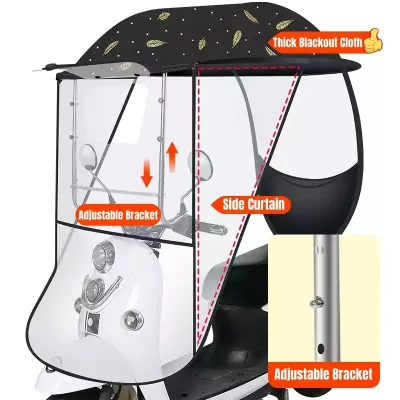
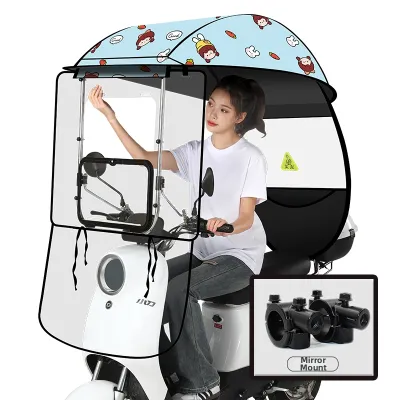
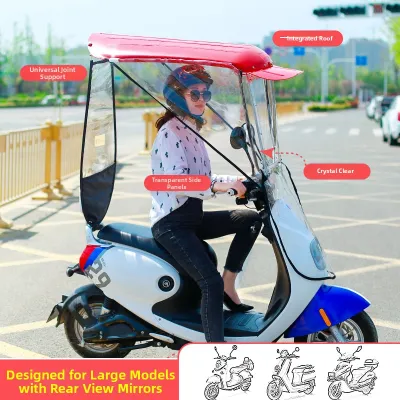
![🔥🔥🔥[HOT] 2026 Upgrade Bold Motorcycle Awning Electric Car Canopy Rainproof and Windproof UV Sunscreen awning](https://img.lazcdn.com/g/p/20dcc093a67d233c2571457e22953949.png_400x400q80.png_.webp)
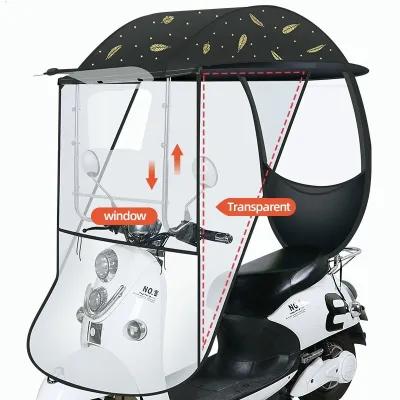
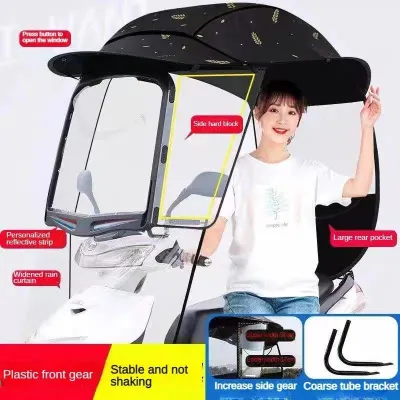
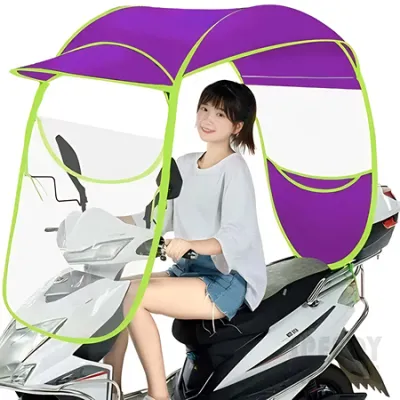

Prices are valid at publication and may change. Please refer to the product page for the latest price.
Finally, pay close attention to visibility, glare, and potential blind spots. A canopy and its associated support pillars already alter your forward and peripheral vision. Placing a phone screen directly in your line of sight might block your view of pedestrians, oncoming traffic, or road hazards. Furthermore, the angle of the canopy roof can trap sunlight or reflect light off the windshield, creating severe screen glare that makes navigation maps difficult to read. You will need to test various angles during different times of the day to find a position that minimizes reflections while keeping your eyes focused on the road.
Comparing Mounting Positions for Canopy-Equipped Motorcycles
Selecting a mounting position involves weighing the trade-offs between stability, protection from the elements, and ease of viewing. Different zones on your motorcycle offer distinct advantages and challenges when paired with an overhead canopy structure.

Handlebar and Mirror Stem Mounts
Utilizing the handlebars or the mirror stems remains one of the most common approaches for securing a phone, even on canopy-equipped motorcycles. These mounting points are highly accessible, allowing you to easily view navigation prompts and interact with the device when safely parked. Because handlebars and mirror mounts attach directly to the motorcycle’s primary control structures, they generally offer high stability and a wide variety of compatible aftermarket clamping options.
However, the presence of a canopy can introduce significant spatial limitations in this area. Support poles rising from the front forks or fairing often run close to the handlebars, severely restricting the space available for a traditional clamp. If the mount is too bulky, it can restrict your steering clearance or block your view of critical instrument clusters, such as the speedometer, fuel gauge, or turn signal indicators. Before finalizing this position, verify your handlebar diameter using a caliper and check that the mount’s arm does not obstruct access to your brake fluid reservoir or control switches.
Dashboard and Fairing Mounts
Mounting your phone directly to the dashboard or front fairing offers a low-profile alternative that keeps the device shielded from direct wind blast. This position is particularly advantageous on canopy-equipped motorcycles because it positions the phone well below the roofline and away from the lateral support struts, reducing the risk of physical interference during tight turns.
Despite these benefits, dashboard installations present unique installation challenges. Many motorcycle dashboards are constructed from textured plastics that do not readily accept adhesive mounts, often requiring you to drill holes to secure a mechanical bracket. Before undertaking any drilling, you must verify what lies directly beneath the plastic panel; accidentally puncturing the main wiring harness, instrument cluster electronics, or brake lines can cause severe damage and safety hazards. Additionally, depending on the slope of your canopy’s front edge or windshield, a dashboard-mounted phone may suffer from restricted viewing angles or increased glare from the overhead structure.
Canopy Strut and Windshield Mounts
For riders seeking an eye-level viewing experience, utilizing the vertical canopy struts or the windshield frame can be highly tempting. This positioning places the phone closer to your natural line of sight, making it easier to follow GPS directions without looking down away from the road. It also frees up valuable handlebar space for other controls or accessories.
However, mounting directly to these structures carries substantial structural and operational risks. Canopy struts, especially on lightweight or local sidecar setups, are prone to high-frequency vibrations transmitted from the engine and the road surface. These vibrations are often amplified as they travel up the thin support poles, resulting in a shaky screen that is difficult to read and highly damaging to sensitive phone components. Furthermore, clamping accessories directly to acrylic or polycarbonate windshields can induce localized stress concentration, leading to spiderweb cracks or complete windshield failure over time. Always review the canopy manufacturer’s guidelines before attempting to clamp any hardware to these secondary structures.
Key Features for Phone Security and Device Protection
Riding a motorcycle with a canopy in tropical environments presents a harsh operating environment characterized by intense engine vibrations, rough road surfaces, and high humidity. To safeguard your mobile device from physical damage and internal component failure, you must prioritize specific hardware features when selecting a mount.
First and foremost, look for a mount equipped with a dedicated vibration dampening system. Modern smartphones feature highly sensitive camera modules with optical image stabilization (OIS) and closed-loop autofocus systems. The high-frequency vibrations generated by motorcycle engines—particularly single-cylinder engines common in underbone models and tricycles—can quickly degrade and permanently destroy these delicate mechanical camera parts. A quality vibration dampener uses rubber or silicone isolators to absorb these destructive frequencies, decoupling the phone from the chassis vibration.
The locking mechanism itself must be robust enough to withstand sudden impacts from potholes, speed bumps, and uneven road surfaces. While magnetic mounts offer convenient quick-attachment, they are generally unsuitable for motorcycle use unless paired with a secondary mechanical lock. Mechanical clamps that physically grip the sides or corners of the phone, or proprietary twist-lock systems that secure the phone case directly to the mount base, provide a high level of security. Ensure the locking mechanism features a manual safety lock to prevent accidental release while riding.
Weather and UV resistance are also critical considerations, even when riding under a canopy. While a canopy or sidecar roof provides excellent protection against direct overhead sunlight and vertical rainfall, it does not create a dry microclimate. Side winds, road spray from passing vehicles, and splashing water from puddles can easily saturate your device. Furthermore, the high ambient humidity typical of tropical climates can penetrate non-sealed mounts and phone ports. Opt for mounts constructed from corrosion-resistant materials like marine-grade aluminum, stainless steel, and UV-stabilized plastics, and consider using an IP-rated waterproof enclosure or pouch during heavy downpours to prevent water ingress.
Installation Safety and Pre-Ride Inspection Checklist
Proper installation is just as important as selecting the right hardware. When mounting your phone holder, always refer to the manufacturer’s torque specifications to avoid over-tightening. Applying excessive torque to clamps positioned on hollow canopy tubes, plastic fairings, or aluminum handlebars can strip the threads, crush the underlying material, or cause micro-fractures that lead to sudden structural failure while riding. If you are unsure of the correct torque or lack the proper tools, consult a qualified professional to complete the installation.
Carefully plan the routing of any USB charging cables running from your motorcycle’s battery or accessory port to the phone mount. The cable must be routed loosely enough to allow the handlebars to turn fully in both directions without binding, stretching, or pulling on the connectors. Secure the cable along existing wiring harnesses using UV-resistant zip ties, keeping it far away from hot engine components, sharp metal edges on the canopy frame, and moving steering parts that could pinch or sever the wire, creating an electrical short circuit.
Before every ride, perform a quick but thorough safety inspection of your mounting setup. Conduct a manual shake test by firmly grasping the mount and checking for any play, loose bolts, or shifting parts. Inspect the rubber grips, silicone bands, and locking joints for signs of dry rot, cracking, or wear caused by UV exposure and humidity. If you notice any structural deformation, cracking, or stress marks on your canopy frame near the mounting zone, immediately stop using the mount and seek professional assistance to evaluate the damage.
Frequently Asked Questions (FAQ)
Can I clamp a phone mount directly onto a thin canopy support pole?
Clamping a phone mount directly onto a thin canopy support pole is generally not recommended unless the pole is specifically rated for accessory loads. Thin-walled metal tubing, fiberglass, or plastic struts can easily crush, bend, or crack under the concentrated clamping pressure required to keep a phone mount stable. This damage can compromise the structural integrity of the entire canopy roof, leading to failure at high speeds or during windy conditions. Always verify the material thickness and consult the canopy manufacturer’s guidelines before applying any clamp pressure to the support frame.
Does a canopy eliminate the need for a waterproof phone mount?
No, a canopy does not eliminate the need for a waterproof phone mount or device protection. While an overhead roof blocks direct vertical rain and some sunlight, it offers no protection against lateral wind-blown rain, road spray from other vehicles, or splashing water from puddles. Additionally, the high humidity levels common in tropical environments can still affect exposed electronic devices. To help protect your phone during sudden downpours, it is highly recommended to use a mount with a high IP rating or a dedicated waterproof enclosure.

Community discussion
Share your experience or ask a question. Comments are reviewed before publication.