
Upgrading a Honda XRM 125 engine with a 4-valve head or a high-quality valve kit is a significant mechanical modification that fundamentally changes how the engine breathes, processes fuel, and delivers power. As one of the most popular underbone motorcycles in the Philippines, the Honda XRM 125 is highly regarded for its utility and fuel efficiency. However, riders looking to extract more performance from this reliable workhorse often find themselves limited by the stock cylinder head’s airflow capacity.
Choosing the right upgrade path requires a clear understanding of your performance goals, mechanical capabilities, and budget. Whether you want to restore factory-level reliability with an OEM-spec valve kit or completely transform your engine’s power band with an aftermarket four-valve head, each option carries specific technical requirements. This guide will walk you through the mechanical differences between these setups, help you evaluate the available upgrade kits, and outline the critical safety boundaries you must respect during installation.
Understanding the XRM 125 Engine and 4-Valve Upgrades
The stock Honda XRM 125 engine utilizes a single overhead camshaft (SOHC) configuration with a simple two-valve cylinder head—one intake valve and one exhaust valve. This design is optimized for daily commuting, delivering excellent low-to-mid-range torque and outstanding fuel economy. At lower engine speeds, the relatively small cross-sectional area of a two-valve setup keeps the velocity of the incoming air-fuel mixture high, promoting efficient combustion and responsive throttle feel during stop-and-go city riding.
Products mentioned in this guide
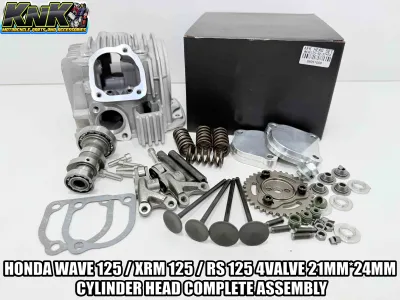
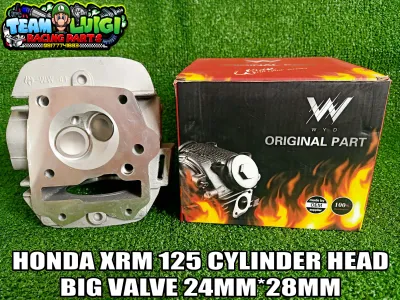
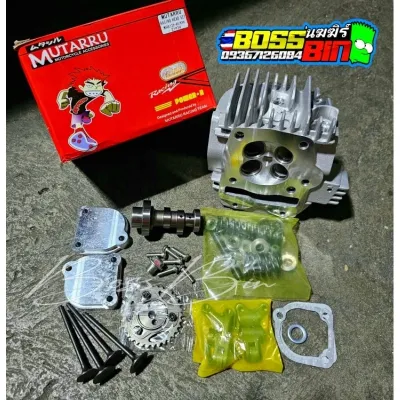
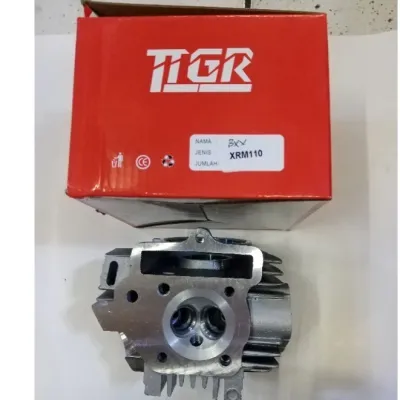
Prices are valid at publication and may change. Please refer to the product page for the latest price.
However, as engine speeds rise, a two-valve head eventually reaches a physical limit known as volumetric choking. Because there is only one intake valve, the physical opening is not large enough to admit the volume of air-fuel mixture required to sustain high-RPM power. A four-valve cylinder head addresses this limitation by replacing the single large intake and exhaust valves with two smaller valves each. Even though the individual valves are smaller, their combined surface area is larger, allowing for a much higher volume of airflow at high RPM.
When deciding on an upgrade, balance your performance expectations against your typical riding conditions in the Philippines. For a daily commuter navigating congested urban streets, the stock two-valve configuration is often more practical because it preserves the low-end torque needed for quick acceleration from a standstill. A complete four-valve conversion shifts the engine’s power band higher up the RPM range, making it ideal for dedicated track racing or high-performance highway cruising, but potentially sacrificing some low-end tractability if not tuned correctly.
It is also essential to distinguish between a standard valve replacement and a complete cylinder head conversion. A valve replacement is a maintenance task where you swap out worn valves within your existing two-valve head to restore lost compression and factory performance. A cylinder head conversion is a major structural modification that replaces the entire top end of the engine with an aftermarket head casting designed to accommodate a four-valve train, requiring a completely different camshaft, rocker arms, and piston.
Types of XRM 125 Valve Kits and Cylinder Heads
When planning an upgrade or rebuild for your Honda XRM 125, the market offers three primary paths. Selecting the right option depends on whether your goal is restoring factory reliability, achieving marginal durability improvements, or maximizing high-RPM power.

Standard OEM Replacement Valve Kits
For riders whose primary goal is restoring factory specifications, a standard OEM replacement valve kit is the most sensible choice. Over thousands of kilometers of daily use, valves are subjected to intense heat and mechanical wear, leading to valve recession, pitting, or worn guides. These issues cause compression loss, hard starting, and a noticeable drop in power.
When sourcing a standard replacement kit, verify the exact part numbers against the official Honda service manual for your specific model year. The Honda XRM 125 has undergone several updates, including transitions from carbureted fuel systems to electronic fuel injection (Fi). Do not rely on generic online marketplace listings; minor variations in valve stem length, face diameter, or keeper groove position can cause severe engine damage.
Additionally, a proper top-end rebuild requires replacing the valve stem seals and inspecting the valve guides for lateral play. Installing new valves into worn guides causes uneven seating, which rapidly destroys the new seals and leads to oil consumption, carbon buildup, and compression loss.
Aftermarket Performance Valve Kits
If you want to retain your stock two-valve cylinder head but require components that withstand higher thermal and mechanical stresses, aftermarket performance valve kits offer a durable middle ground. These kits typically use advanced materials like EV8 stainless steel, stellite-faced alloys, or lightweight titanium, which offer superior resistance to heat oxidation and mechanical fatigue.
When evaluating aftermarket performance valves, verify the manufacturer’s material specifications and heat-treatment claims on the product packaging. Avoid unbranded kits that make vague promises of increased horsepower. High-quality performance valves maintain structural integrity under the extreme temperatures of modified engines, but they do not inherently increase airflow on their own.
To realize performance gains from upgraded valves in a stock head, pair them with supporting modifications. This typically includes professional cylinder head porting to smooth out the intake and exhaust tracts, a high-lift camshaft to increase valve opening duration, and upgraded valve springs that handle increased acceleration forces without causing valve float.
Complete 4-Valve Cylinder Head Conversions
For riders seeking maximum performance from their Honda XRM 125, a complete four-valve cylinder head conversion is the ultimate upgrade. This modification replaces the entire stock cylinder head assembly with an aftermarket casting engineered to house a dual-intake and dual-exhaust valve configuration, dramatically increasing high-RPM breathing capacity.
Because this conversion alters the engine’s top-end geometry, it requires a comprehensive suite of matching components. A complete kit must include a specialized four-valve camshaft, compatible rocker arms, heavy-duty valve springs, and a modified piston featuring four valve relief pockets. Attempting to run a four-valve head with a stock two-valve piston results in immediate, catastrophic contact between the valves and the piston crown.
Before committing to a specific aftermarket four-valve head, research the long-term availability of replacement wear items. Because these heads are proprietary aftermarket designs, standard Honda OEM valve seals, guides, and valves will not fit them. Ensure that the manufacturer or local distributor offers dedicated replacement valve kits and seals for that specific head model to allow for future routine maintenance.
Key Factors When Selecting an Upgrade Kit
Selecting the right valve kit or cylinder head conversion for your Honda XRM 125 requires evaluating several technical and logistical factors. To avoid purchasing incompatible or low-quality parts, use a structured approach when browsing online marketplaces or visiting local motorcycle shops in the Philippines.
First, verify exact engine code compatibility. The Honda XRM 125 engine platform has subtle variations across different generations, particularly between older carbureted models and newer fuel-injected (Fi) versions. These variations affect cylinder head bolt spacing, oil passage locations, temperature sensor mounting threads, and intake manifold flange angles. Always cross-reference your motorcycle’s engine number and model year with the kit manufacturer’s official compatibility documentation.
Second, assess all material and performance claims. Do not rely on marketing buzzwords or enthusiastic seller descriptions on e-commerce platforms. Instead, look for detailed technical specifications, such as valve head diameters, stem diameters, overall length, and the specific metal alloys used. Reputable aftermarket manufacturers provide clear, verifiable specifications, allowing you to make an informed decision based on engineering data rather than hype.
Third, evaluate seller authorization and return policies. High-performance engine components operate under extreme stress, making product quality and authenticity paramount. Prioritize purchasing from authorized dealers or official brand stores on online marketplaces to ensure you receive genuine parts. Check the seller’s warranty terms and return policies so you have recourse if a component arrives with manufacturing defects.
Finally, consider the total cost of the build rather than just the price of the valve kit or cylinder head. A successful upgrade requires supporting modifications and consumables, including high-quality top-end gaskets, specialized assembly lube, fresh engine oil, and potentially a new camshaft, piston, or fuel tuning system. If you do not possess the specialized tools and mechanical expertise required, factor in the cost of professional labor from a qualified motorcycle mechanic.
Installation Requirements and Safety Boundaries
Disassembling and modifying a motorcycle engine’s cylinder head carries significant mechanical and safety risks. Incorrect assembly can lead to catastrophic engine failure, rear-wheel lockup while riding, or severe personal injury. If you do not have formal mechanical training or access to the original vehicle service manual, we strongly recommend having the installation performed by a qualified professional mechanic.
If you choose to perform the installation yourself, work in a clean, dust-free environment and use the correct specialized tools. A calibrated torque wrench is mandatory for tightening the cylinder head bolts; incorrect torque can warp the cylinder head, blow the head gasket, or strip the threads in the engine crankcase. You will also need a dedicated valve spring compressor to safely install the springs, a feeler gauge set to adjust valve clearances, and a piston ring compressor.
One of the most critical steps during the installation of a four-valve head or an aftermarket camshaft is checking the valve-to-piston clearance. This must be verified physically using the ‘clay method’ before starting the engine. Place a small strip of modeling clay on the piston crown, temporarily assemble the cylinder head with the gasket, and manually rotate the engine crankshaft by hand for two full revolutions. Disassemble the head and measure the compressed clay thickness to ensure it meets the minimum clearance specifications.
Always establish clear stopping conditions during assembly. If you encounter any unusual resistance when rotating the engine manually by hand, stop immediately. Do not attempt to force the engine to turn, and do not use the electric starter. If clearances are out of specification, if parts do not align, or if the manufacturer’s instructions are missing, halt the installation and consult a professional mechanic to prevent permanent damage.
Once the engine is assembled, follow the specific kit manufacturer’s recommended break-in procedures. Before starting the engine for the first time, perform a manual compression test or a cylinder leak-down test to verify that the new valves seal perfectly against their seats. Change the engine oil after the initial warm-up cycle to flush out assembly debris, and re-check the valve clearances after the first few hours of operation to account for component settling.
Frequently Asked Questions (FAQ)
Does a 4-valve head upgrade require ECU remapping or a larger carburetor?
Yes, significantly increasing your engine’s airflow capacity with a four-valve head upgrade requires adjusting the fuel delivery system. If you do not supply additional fuel to match the increased volume of air entering the combustion chamber, the engine will run dangerously lean. A lean air-fuel mixture causes extreme combustion temperatures, which can quickly lead to burned valves, a melted piston, or engine seizure. For carbureted Honda XRM 125 models, you must install larger carburetor jets or upgrade to a larger carburetor. For fuel-injected (Fi) models, you will need an aftermarket programmable ECU or fuel controller to adjust the injection map. Always follow the cylinder head manufacturer’s tuning recommendations or seek professional dyno tuning to ensure a safe air-fuel ratio.
Can I reuse my stock valve springs and retainers with an aftermarket valve kit?
No, you should not reuse stock valve springs and retainers with a high-performance aftermarket valve kit unless the manufacturer explicitly states they are compatible. Performance valves often have different weights or stem designs than stock valves, and they are frequently paired with high-lift camshafts that increase valve travel. Stock valve springs are only calibrated to handle the mild lift and duration of the factory camshaft. If you pair stock springs with aggressive aftermarket components, the springs may suffer from ‘valve float’ at high RPM, meaning they cannot close the valves quickly enough to keep up with the camshaft. This can result in catastrophic contact between the valves and the piston crown. Always use the matching heavy-duty valve springs, retainers, and keepers recommended by the aftermarket kit manufacturer to ensure reliable operation.
Community discussion
Share your experience or ask a question. Comments are reviewed before publication.