
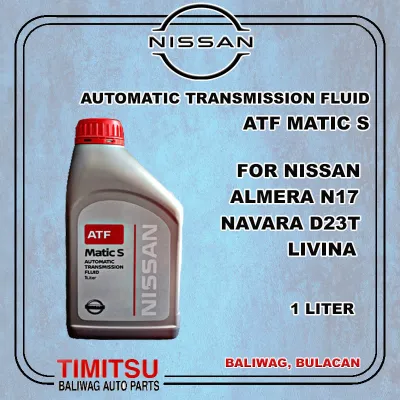
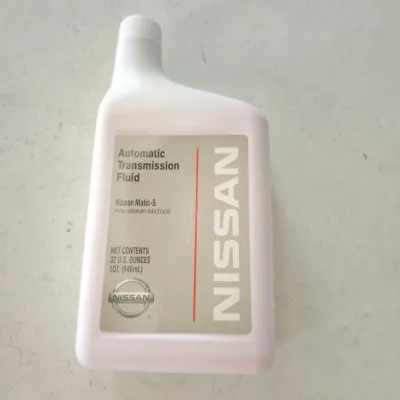
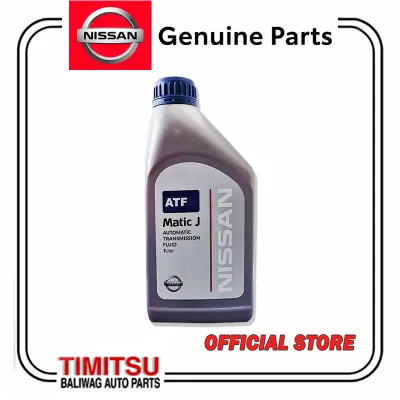
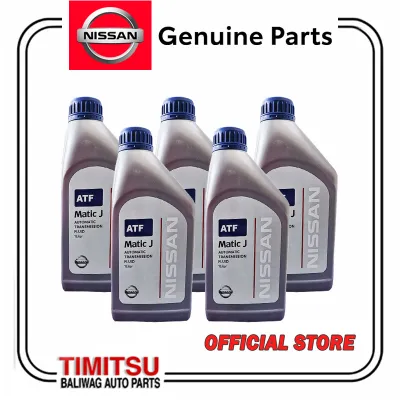
To choose the correct ATF transmission fluid for a Nissan Navara in the Philippines, you must first identify your vehicle’s model generation and match its specific automatic transmission fluid specification—typically Nissan Matic J for older models like the D40, or Nissan Matic S for newer models like the D23 and NP300. Using the wrong fluid can cause severe mechanical issues, including gear slippage, torque converter shudder, and catastrophic transmission failure. Because the Navara utilizes a traditional stepped automatic transmission, standard automatic transmission fluid (ATF) is required, and you must never use Continuously Variable Transmission (CVT) fluid.
Navigating the local market requires a clear understanding of these technical requirements, especially given the demanding driving conditions in the Philippines. High ambient temperatures, prolonged idling in heavy metropolitan traffic, and demanding terrain like steep mountain passes put immense thermal stress on your transmission. Selecting a high-quality fluid that matches your vehicle’s specifications is the single most important step in preserving the lifespan of your gearbox.
Understanding Nissan Navara Transmission Fluid Requirements
The Nissan Navara has been a popular midsize pickup truck in the Philippine market for decades, spanning multiple generations. The older Navara D40 generation, which typically features a 5-speed automatic transmission, was factory-filled with Nissan Matic J fluid. In contrast, the newer Navara NP300 and D23 generations, equipped with a 7-speed automatic transmission, require Nissan Matic S fluid. These fluids are formulated with different viscosity profiles and additive packages designed specifically for the internal clutches and hydraulic pressures of their respective gearboxes.
Products mentioned in this guide
![[4 LITERS] Nissan Matic S ATF (Automatic Transmission Fluid) - Nissan Terra ATF - [NP300 2016 - 2024] Nissan Calibre ATF - [2013 - 2024 N17] Nissan Almera ATF - Nissan Urvan ATF - Genuine Nissan Auto Parts](https://img.lazcdn.com/g/p/5a760e286e143d3bb77ca324770fb029.jpg_400x400q80.jpg_.webp)
Prices are valid at publication and may change. Please refer to the product page for the latest price.
To verify the exact fluid requirement for your specific truck, always consult your vehicle owner’s manual or look for identification labels under the hood. On some older models, the transmission dipstick cap itself may have the required fluid specification stamped directly onto the metal or plastic. For newer 7-speed models that feature a sealed transmission system without a traditional dipstick, you must rely strictly on the owner’s manual or consult an authorized Nissan service center to verify the specification before purchasing any fluid.
Using an incorrect or incompatible fluid in your Navara’s transmission can lead to severe mechanical consequences. The transmission relies on precise frictional characteristics to engage and disengage clutches smoothly. If the fluid’s friction modifiers do not match the factory specifications, you may experience gear slipping, delayed engagement, severe torque converter shudder, and localized overheating. Over time, this thermal and physical stress will degrade the clutch material, leading to premature transmission failure and incredibly costly rebuilds.
It is also critical to clarify that the Nissan Navara uses a traditional stepped automatic transmission with planetary gears and a torque converter. It does not use a Continuously Variable Transmission (CVT). CVT fluids are engineered with entirely different frictional properties to prevent metal-on-metal slippage between belts and pulleys. Introducing CVT fluid into a stepped automatic transmission will cause immediate and catastrophic internal damage, rendering the vehicle inoperable.
Key Specifications to Check on ATF Labels
When shopping for aftermarket transmission fluids, you must learn to read the technical labels on the back of the bottle. Do not rely solely on the marketing claims on the front label. Instead, look for an explicit statement of compatibility, such as “Meets or exceeds Nissan Matic S” or “Approved for Nissan Matic J.” These statements indicate that the fluid manufacturer has formulated the product to match the physical and chemical properties required by Nissan’s original equipment manufacturer (OEM) standards.

Be highly cautious of fluids that carry vague “multi-vehicle” or “universal” labels without listing specific OEM standards. While some high-quality multi-vehicle fluids are indeed compatible with a wide range of specifications, you must verify that your exact required standard (Matic J or Matic S) is explicitly listed on the product’s official Technical Data Sheet (TDS). If a product claims to be universal but does not explicitly mention Nissan Matic standards in its documentation, avoid using it in your Navara.
The automatic transmissions used in the Nissan Navara, largely manufactured by Jatco, are highly sensitive to viscosity and friction modifier profiles. Viscosity determines how easily the fluid flows through the complex hydraulic valve body at various temperatures, while friction modifiers ensure the clutches grip and release without slipping or chattering. A fluid with the wrong viscosity index can cause sluggish shifting when the vehicle is cold, or fail to provide adequate film strength when the transmission reaches high operating temperatures.
If you find a fluid at a local auto parts store and the physical bottle does not provide a detailed list of compatible specifications, use your smartphone to search for the product’s online Technical Data Sheet. Reputable lubricant manufacturers publish detailed technical documents for every product they sell. These data sheets list every OEM specification the fluid meets, as well as its physical properties like kinematic viscosity at 40°C and 100°C, viscosity index, and pour point, allowing you to make an informed decision.
Evaluating ATF Options Available in the Philippines
When choosing an automatic transmission fluid in the Philippines, you generally have two main paths: purchasing genuine OEM fluids or opting for reputable aftermarket alternatives. Both options have distinct advantages and trade-offs that you should consider based on your budget, vehicle warranty status, and driving habits.
Genuine OEM Nissan Fluids
Genuine Nissan ATF, such as Nissan Matic S or Nissan Matic J, represents the safest and most straightforward choice for Navara owners. Because these fluids are formulated under the direct supervision of the vehicle manufacturer, they guarantee absolute compatibility with the seals, clutches, and electronic controls of your transmission. Using OEM fluids eliminates any guesswork and ensures your transmission performs exactly as the engineers intended.
In the Philippines, genuine Nissan fluids can be purchased directly from the parts counters of authorized Nissan dealerships. They are also available through certified automotive parts distributors specializing in Japanese vehicles. While OEM fluids offer complete peace of mind, they generally carry a significant price premium compared to aftermarket alternatives. Additionally, availability can sometimes be limited in provincial areas, requiring you to plan your maintenance intervals in advance.
Reputable Aftermarket Alternatives
For owners looking for more cost-effective options or those who require high-performance fluids for demanding conditions, reputable aftermarket brands offer excellent alternatives. Well-known global lubricant manufacturers—such as Mobil, Castrol, Motul, Valvoline, and Shell—produce high-quality transmission fluids designed to meet or exceed Nissan Matic specifications. These products are widely distributed across the Philippines and are often more accessible than OEM fluids.
Before purchasing any aftermarket fluid, you must cross-reference its technical specifications to ensure it explicitly supports Nissan Matic J or Matic S. Many of these premium aftermarket options are fully synthetic formulations. Fully synthetic fluids offer distinct advantages over conventional or semi-synthetic options, particularly in the tropical Philippine climate. They provide superior thermal stability, which prevents the fluid from breaking down under the extreme heat generated by heavy stop-and-go traffic in metro areas or during heavy-duty towing and off-roading.
Safe Purchasing and Verification Practices
The Philippine automotive market has a known presence of counterfeit lubricants and car care products. Because automatic transmissions are highly sensitive to fluid quality, putting counterfeit or substandard fluid into your Navara can result in sudden transmission failure. Protecting yourself requires adopting strict purchasing and verification habits.
Always source your transmission fluid from authorized service centers, established local automotive supply chains, or official brand flagship stores on reputable online marketplaces. Avoid buying from unverified third-party online sellers who offer prices that seem too good to be true. If a premium synthetic fluid is being sold at a fraction of its normal retail price, there is a high probability that the product is counterfeit, expired, or repackaged.
When you receive the fluid, conduct a thorough physical inspection of the packaging before opening it. Look for tamper-evident seals under the cap, intact plastic shrink wraps, and high-quality label printing. Reputable brands print clear batch codes, manufacturing dates, and sometimes holographic anti-counterfeit labels on their bottles. If the printing is blurry, the labels are misaligned, or the safety seal is loose or missing, do not use the fluid and return it to the seller immediately.
Pay close attention to the manufacturing or packaging date stamped on the bottle. While transmission fluid has a relatively long shelf life when stored in sealed containers, it can degrade if it has been sitting in a hot warehouse or exposed to direct sunlight for more than five years. Ensure you are purchasing relatively fresh stock to guarantee that the chemical additives and friction modifiers are fully active and effective.
Never purchase or use unbranded, bulk-packaged, or generic transmission fluids that do not come in original, factory-sealed consumer packaging. Some low-end repair shops may offer to fill your transmission from unmarked drums or generic containers to save money. Politely decline these offers and insist on seeing the original bottles, or supply your own verified fluid to ensure your Navara’s transmission is protected.
Maintenance, Inspection, and Replacement Guidelines
Regular maintenance and timely fluid replacement are essential to keeping your Nissan Navara’s transmission operating smoothly. Over time, transmission fluid loses its lubricating properties, accumulates microscopic wear debris from the clutches, and oxidizes due to heat. Establishing a routine inspection schedule allows you to identify potential issues before they escalate into major mechanical failures.
For Navara models equipped with a transmission dipstick, you should inspect the fluid level and condition at least once every six months. To perform a correct check, park the vehicle on a flat, level surface, engage the parking brake, and let the engine idle until it reaches normal operating temperature. With the engine still running, pull the dipstick out, wipe it clean with a lint-free cloth, reinsert it fully, and pull it out again to read the level. The fluid level should fall within the designated “Hot” range on the dipstick markings.
While checking the level, evaluate the physical condition of the fluid on the dipstick. Healthy ATF is typically bright red or pinkish in color and has a relatively neutral, oily smell. If the fluid has turned a dark brown or black color, or if it emits a distinct, acrid burnt odor, it indicates that the fluid has severely oxidized and must be replaced immediately. If you notice a milky, pinkish-white appearance, this indicates water or engine coolant contamination—often caused by a leaking internal transmission cooler inside the radiator—which requires immediate professional intervention and towing.
Your driving habits and local environment dictate how often you should replace your transmission fluid. Under normal driving conditions, fluid replacement intervals can be relatively long. However, most driving in the Philippines falls under the “severe” category due to high ambient humidity, intense summer heat, frequent short trips, and prolonged idling in traffic. If you use your Navara for frequent towing, carrying heavy payloads, off-roading, or navigating flooded streets during the monsoon season, you should replace your transmission fluid every 40,000 to 50,000 kilometers.
When it comes to replacement, you can choose between a standard drain-and-fill or a complete machine flush. A drain-and-fill involves draining the fluid from the transmission pan and replacing it with fresh fluid. This method only replaces about 30% to 50% of the total fluid volume, as a significant portion remains trapped inside the torque converter and cooler lines, but it is generally safer for older, high-mileage transmissions. A machine flush uses specialized equipment to exchange almost 100% of the fluid, but it should only be performed by qualified professionals who follow original-vehicle instructions to avoid damaging internal seals. Always consult a qualified transmission specialist to determine the safest and most effective service method for your Navara’s specific mileage and mechanical condition.
Frequently Asked Questions (FAQ)
Can I mix different brands of ATF if they meet the same Nissan specification?
It is highly recommended that you avoid mixing different brands or formulations of automatic transmission fluid, even if they both claim to meet the same Nissan specification. Different lubricant manufacturers use proprietary additive packages, detergents, and synthetic base oils to achieve their performance targets. Mixing these distinct chemical formulations can cause additive clashes, potentially altering the fluid’s friction characteristics, reducing its thermal stability, or causing premature foaming. If you decide to switch from one compliant brand to another, it is best to perform a complete fluid exchange rather than simply topping up your existing fluid.
Is it safe to use CVT fluid in a Nissan Navara automatic transmission?
No, it is absolutely not safe to use CVT fluid in a Nissan Navara’s stepped automatic transmission. Continuously Variable Transmissions (CVTs) and traditional automatic transmissions operate on completely different mechanical principles. CVT fluids are specifically formulated to provide high steel-on-steel friction to prevent the drive belt or chain from slipping on the pulleys. If you put CVT fluid into a traditional automatic transmission like the Navara’s, the fluid will prevent the internal clutch packs from engaging correctly, leading to severe slippage, extreme heat generation, and rapid, catastrophic destruction of the transmission’s internal components.
Community discussion
Share your experience or ask a question. Comments are reviewed before publication.