
The Yamaha NMAX V2 is one of the most popular automatic scooters in the Philippines, serving as a daily workhorse for city commuters and a reliable tourer for weekend riders. Finding the right brake pad for your NMAX V2 depends on your daily riding environment, budget, and performance expectations. Because the local climate brings heavy tropical downpours, high humidity, and intense stop-and-go traffic, your choice of brake pad directly affects your stopping power, rotor wear, and overall safety on the road.
Rather than searching for a single universal winner, you should select a brake pad based on its material composition and how well it matches your typical riding conditions. Commuters navigating congested metropolitan streets need different friction characteristics than riders who frequently traverse steep mountain passes or carry heavy pillion loads. By evaluating the material types, verifying brand authenticity, and understanding the safety requirements of your braking system, you can make an informed decision that keeps your scooter stopping safely.
Defining the Best Brake Pad for Your Riding Style
Your daily riding routine is the most critical factor when choosing new brake pads for your NMAX V2. The stop-and-go traffic of major Philippine cities demands a brake pad that performs consistently at lower operating temperatures. In these congested urban environments, you are constantly applying light to moderate pressure to navigate tight spaces, filter through lanes, and react to sudden stops.
Products mentioned in this guide
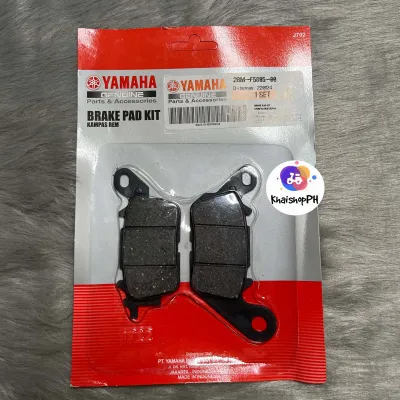
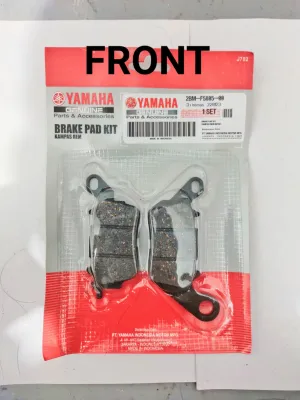
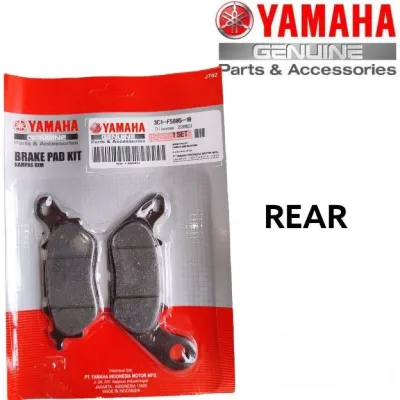
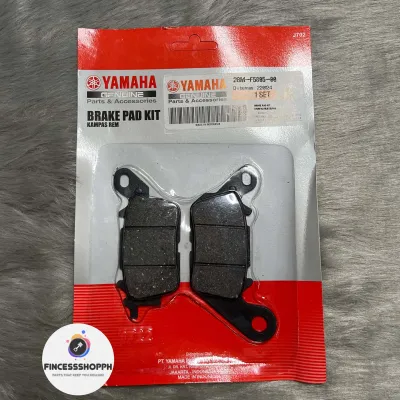
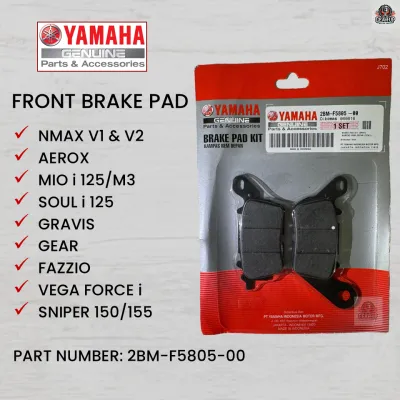
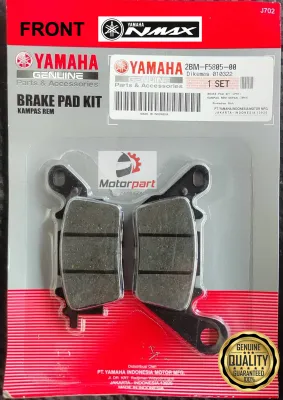
![[KV] Yamaha NMAX V1/V2 REAR BRAKE PAD /DISC PAD B6H-F5805-00](https://img.lazcdn.com/g/p/68ec4591efe11c7a7a251c1e7cc8f587.jpg_400x400q80.jpg_.webp)
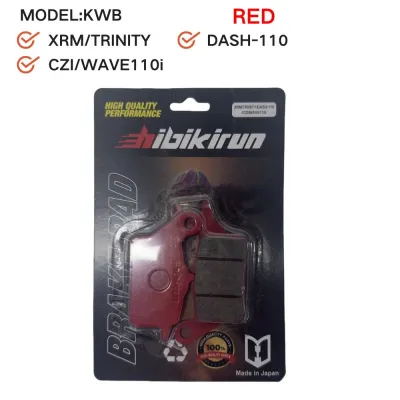
Prices are valid at publication and may change. Please refer to the product page for the latest price.
For this style of daily commuting, prioritizing a compound with a smooth initial bite and low noise is highly practical. You want a brake pad that does not require a warm-up period to achieve its full stopping potential. Additionally, choosing a compound that generates minimal brake dust helps keep your wheels clean and prevents premature wear on your caliper seals in dusty road conditions.
The tropical climate of the Philippines also introduces unique environmental challenges that affect your braking system. Heavy monsoon rains and localized flooding require a brake pad material that can quickly shed water and maintain friction when wet. If your daily commute involves riding through deep puddles or sudden downpours, you need a compound that does not suffer from a delayed response when you pull the brake lever.
Furthermore, many NMAX V2 owners use their scooters for commercial purposes, such as delivery services, or frequently carry a pillion passenger. This added weight significantly increases the kinetic energy that your brakes must convert into heat during deceleration. If your scooter regularly carries heavy loads, your brake pads will experience much higher operating temperatures, making fade resistance a primary safety consideration.
Conversely, if you use your NMAX V2 for long-distance touring, highway cruising, or aggressive riding through winding provincial roads, your brakes will experience much higher operating temperatures. Sustained hard braking down steep descents, such as those found on popular riding routes like the Marilaque Highway, generates intense heat, which can cause inferior brake pads to suffer from brake fade—a dangerous condition where stopping power rapidly decreases.
For high-heat scenarios, you must prioritize compounds designed for high heat dissipation and fade resistance. These pads maintain their friction coefficient even when temperatures rise, ensuring predictable stopping power when you need it most. However, these high-performance materials often require a brief warm-up period to reach their optimal operating temperature and can cause faster wear on your brake rotors.
To make the right choice, use a simple decision framework based on your primary riding environment. If your mileage is mostly accumulated during low-speed city commutes, prioritize organic or semi-metallic compounds that offer quiet operation and long rotor life. If your rides consist of high-speed touring, heavy passenger loads, or frequent mountain travel, look for sintered or high-performance metallic compounds that resist heat fade.
Comparing Brake Pad Materials for the NMAX V2
Brake pads are categorized by the materials used to create their friction linings, and each type presents distinct trade-offs in performance, durability, and wear. Understanding these material categories allows you to look past marketing claims and evaluate how a pad will actually behave on your NMAX V2.

Organic or Non-Asbestos Organic (NAO) brake pads are manufactured using a blend of fibers, rubbers, and high-temperature resins. These pads are known for providing a very smooth, progressive initial bite, making them highly predictable for casual riding. They operate quietly and are exceptionally gentle on your brake rotors, which helps extend the lifespan of your expensive OEM discs.
However, organic pads have clear limitations in demanding environments. They wear down relatively quickly under heavy use and are highly susceptible to brake fade when subjected to high temperatures. In the wet and humid conditions common during the Philippine monsoon season, organic pads can absorb moisture, losing some of their initial bite until they dry out, and they tend to produce more visible brake dust.
Semi-metallic brake pads represent a balanced middle ground, combining organic materials with metallic fibers like steel, iron, or copper. This mixture improves heat dissipation and durability compared to pure organic pads, making them a highly versatile option for general use. They offer a stronger initial bite and maintain their stopping power across a wider temperature range.
The trade-off for this improved performance is a slight increase in brake noise and accelerated rotor wear. Semi-metallic pads are also harder than organic pads, meaning they require slightly more lever pressure to achieve the same initial bite when cold. For most NMAX V2 riders who split their time between city streets and open highways, semi-metallic compounds offer an excellent balance of cost and capability.
Sintered or metallic brake pads are produced by fusing metallic particles together under high pressure and temperature. These pads are engineered for high-performance applications, offering strong stopping power, high heat resistance, and durability in wet or muddy conditions. They do not fade easily, making them highly reliable for heavy loads and steep descents.
Despite their performance advantages, sintered pads are highly abrasive and will wear down your brake rotors much faster than organic or semi-metallic options. They can also produce more noise, especially when wet, and require heat to build up before they deliver their maximum friction potential. Because formulations vary significantly between manufacturers, always check the product packaging and manufacturer specifications for the exact material compound rather than assuming performance based on brand name alone.
Evaluating OEM vs. Aftermarket Brake Pad Brands
When shopping for NMAX V2 brake pads in the Philippines, you will encounter a choice between Original Equipment Manufacturer (OEM) parts and a wide array of aftermarket brands. Evaluating these options requires looking at reliability, safety certifications, and overall value rather than relying on subjective online rankings.
OEM brake pads, packaged in official Yamaha branding, are the baseline standard for your scooter. These pads are specifically engineered to match the weight, speed capabilities, and rotor material of the NMAX V2. Choosing OEM pads guarantees perfect physical compatibility, predictable stopping performance, and standard durability under normal riding conditions, making them a highly reliable and stress-free choice.
If you decide to explore aftermarket brands, verifying product authenticity is your most critical task. The local market has a high prevalence of counterfeit parts, particularly on online marketplaces and in unauthorized physical shops. Genuine aftermarket pads from reputable manufacturers will feature high-quality packaging, clear holographic security labels, and printed batch numbers or friction rating codes directly on the backing plate.
When purchasing from online marketplaces, always look for official flagship stores or highly rated, authorized distributors to avoid counterfeit products. Be wary of prices that seem too good to be true, as counterfeit pads often use inferior bonding agents that can fail under thermal stress. Inspect the physical pad for any signs of poor manufacturing, such as uneven friction material, rough edges, or loose backing plates.
Look for recognized safety certifications and friction ratings on the packaging, such as the SAE friction code (typically represented by two letters, like “HH”, which indicates a high friction coefficient at both low and high temperatures). Avoid unbranded, suspiciously cheap brake pads that lack clear material specifications or manufacturer contact information. Using substandard or counterfeit brake components poses a severe safety risk, as the friction material can delaminate from the backing plate under hard braking, leading to sudden brake failure.
To assess the true value of a brake pad, do not look solely at the upfront purchase price in Philippine Pesos (₱). A very cheap pad that wears out in a few months or severely grooves your brake rotor is far more expensive in the long run than a premium pad. Consider the total cost of ownership, balancing the initial price against the expected lifespan of the pad, the preservation of your brake rotors, and the consistency of your stopping power.
Critical Compatibility and Safety Checks
Brake components are safety-critical systems, and installing the wrong part can have catastrophic consequences. Before purchasing any brake pad, you must verify its exact compatibility with your specific NMAX V2 setup. While the NMAX V2 has standard factory specifications, aftermarket modifications or regional model variations can affect fitment.
One common point of confusion among local riders is the difference between NMAX V1 and NMAX V2 brake pads. The V2 model features updated caliper designs and mounting configurations that are not interchangeable with the older V1 components. Always double-check the product description and label to ensure the pads are explicitly rated for the V2 model year to avoid purchasing incompatible parts.
Additionally, the NMAX V2 is equipped with an Anti-lock Braking System (ABS) on both the front and rear wheels. The ABS system relies on precise sensor readings from the rotor ring to detect wheel lockup and modulate brake pressure. Installing poorly manufactured aftermarket pads that do not fit perfectly within the caliper can cause physical interference with the ABS sensor or sensor ring, leading to system errors or complete ABS failure.
Always cross-reference the brake pad’s part number and physical dimensions with your scooter’s model year, caliper type, and mounting pin configuration. The front and rear calipers on the NMAX V2 use completely different pad shapes, so you must ensure you are buying the correct set for the specific end of the motorcycle you are servicing. Never attempt to force a brake pad into a caliper if the mounting holes or backing plate dimensions do not align perfectly.
If you have installed aftermarket calipers, such as multi-piston upgrades, the standard NMAX V2 brake pads will no longer fit. In such cases, you must consult the aftermarket caliper manufacturer’s documentation to identify the correct replacement pad profile. If you are ever unsure about compatibility or pad shape, consult your motorcycle’s owner’s manual or seek assistance from a qualified mechanic before making a purchase.
Before installing new pads, you must thoroughly inspect the condition of your brake rotors. Check the rotors for deep grooves, warping, or a lip along the outer edge, which can prevent the new pads from making full contact. Use a micrometer or vernier caliper to measure the rotor thickness and compare it to the minimum thickness limit stamped on the rotor itself; if the rotor is worn past this limit, it must be replaced immediately to ensure safe braking performance.
Proper Installation and Bedding-In Procedures
Installing brake pads requires precision, cleanliness, and the correct tools. If you do not have experience working on motorcycle braking systems, lack a torque wrench, or do not feel completely confident in your mechanical skills, you should have the installation performed by a qualified professional mechanic at a reputable service center.
During installation, the caliper pistons must be pushed back to accommodate the thicker profile of the new pads. Before doing this, clean the exposed piston walls thoroughly with dedicated brake cleaner to prevent dirt, road grime, and brake dust from being forced past the caliper seals, which can cause the pistons to stick or leak brake fluid. Ensure that no grease, oil, or copper paste comes into contact with the friction material of the new pads or the surface of the brake rotor.
Once the new pads are installed and the caliper is securely bolted to the fork leg or swingarm using the manufacturer’s specified torque values, you must perform a proper bedding-in (burnishing) procedure. Bedding-in is the process of mating the flat surface of the new brake pad to the microscopic imperfections of the brake rotor. This process transfers an even, microscopic layer of friction material from the pad to the rotor surface, which is essential for achieving optimal stopping power and preventing brake noise.
To bed in your new pads safely, find a quiet, flat road with minimal traffic. Accelerate your NMAX V2 to moderate speed, then apply the brakes with smooth, progressive pressure to slow the scooter down to a walking pace; do not bring the scooter to a complete stop during these initial cycles. Repeat this process several times, allowing the brakes to cool slightly between runs. Avoid sudden, hard emergency braking or dragging the brakes continuously during the first few dozen kilometers, as this can glaze the pads, permanently reducing their friction capabilities.
Frequently Asked Questions (FAQ)
How often should I replace the brake pads on my NMAX V2?
There is no fixed mileage interval for replacing brake pads, as wear rates depend heavily on your riding style, daily traffic conditions, passenger load, and the pad material compound. Riders who commute daily through congested city traffic will wear out their pads much faster than those who primarily ride on open highways.
To determine when to replace your pads, perform regular visual inspections of the caliper. Most brake pads feature a wear indicator groove cut into the friction material; when the pad has worn down close to the bottom of this groove, or if the friction material is less than two millimeters thick, it is time for a replacement. Additionally, listen for high-pitched squealing noises or a metallic grinding sound when braking, and pay attention to any sudden reduction in braking feel or lever responsiveness.
Can I mix different brake pad brands or materials on the front and rear?
Yes, you can use different brake pad brands or material compounds on the front and rear calipers of your NMAX V2, as long as each set is fully compatible with its respective caliper. The front and rear brakes of a motorcycle handle different weight transfers and braking loads during deceleration, with the front brake providing the majority of your stopping power.
However, you must ensure that the friction characteristics of the front and rear pads are balanced to maintain predictable handling. For example, installing an extremely aggressive, high-friction sintered pad on the rear caliper while keeping a worn, low-friction organic pad on the front can lead to premature rear-wheel lockup, especially on wet roads. To maintain a safe and balanced braking feel, it is generally recommended to use similar material compounds on both ends or to prioritize the higher-friction compound on the front caliper where it is most effective.
Community discussion
Share your experience or ask a question. Comments are reviewed before publication.