
Selecting the right brake shoes for your Rusi Passion motorcycle is one of the most critical maintenance decisions you will make. Because your safety on the road depends entirely on your ability to stop reliably, choosing a replacement part requires a methodical approach rather than relying on unverified brand popularity. In the Philippines, where daily commutes often involve navigating heavy stop-and-go traffic, sudden downpours, and flooded streets, your braking system faces severe environmental stress. A mismatched or poorly constructed brake shoe can lead to premature wear, reduced stopping power, or catastrophic brake failure.
To find the most reliable option for your scooter, you must focus on exact dimensional compatibility, verified friction material specifications, and strict adherence to safety standards. While many aftermarket brands claim universal fitment, subtle differences in manufacturing tolerances can compromise your braking efficiency. By understanding how to evaluate both Original Equipment Manufacturer (OEM) parts and reputable aftermarket alternatives, you can make an informed decision that keeps you safe on every journey.
Verifying Exact Compatibility for the Rusi Passion
Before you begin browsing different brands or visiting local motorcycle parts shops, you must establish the precise technical baseline for your Rusi Passion. Motorcycle drum brakes rely on exact physical contact between the expanding brake shoes and the inner wall of the wheel hub’s brake drum. Even a millimeter of deviation in shoe width, curvature, or mounting point placement can prevent the brakes from engaging fully or cause them to drag constantly, leading to dangerous overheating.
Products mentioned in this guide
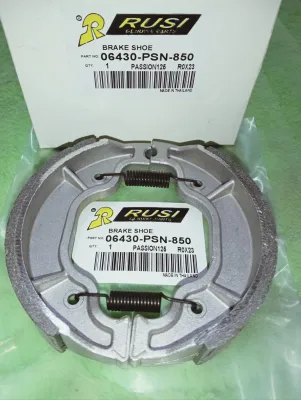
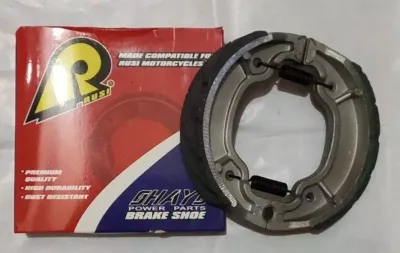
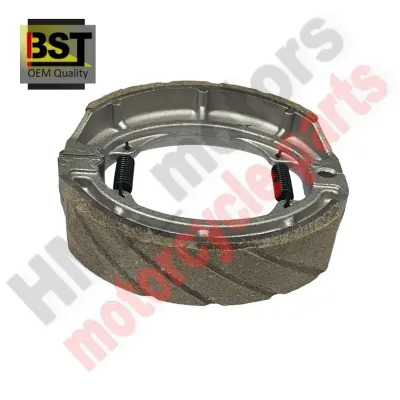
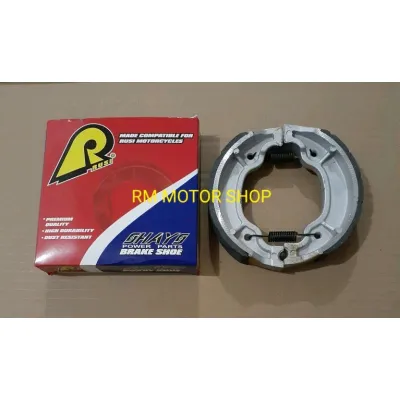
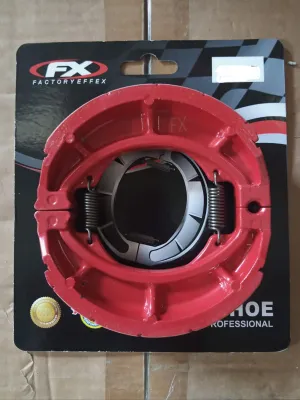
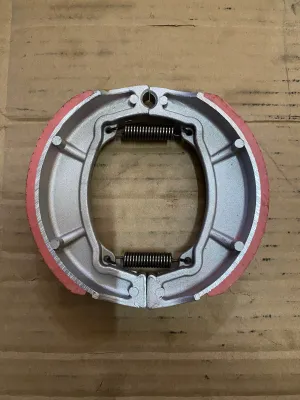
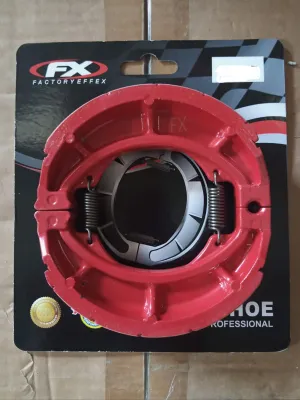
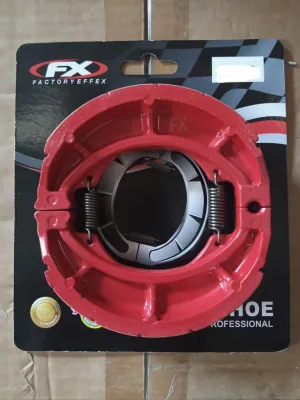
Prices are valid at publication and may change. Please refer to the product page for the latest price.
Your first step should always be to consult your Rusi Passion owner’s manual or contact an authorized Rusi dealer to locate the exact original equipment part number. This part number serves as your primary reference point when cross-referencing aftermarket options. Because Rusi models occasionally undergo minor design updates or component sourcing changes during production runs, relying solely on the model name “Passion” may not guarantee a perfect match. Confirming your scooter’s specific model year and engine displacement (such as the Passion 125) is essential to avoid purchasing parts intended for a different variant.
If your motorcycle has high mileage or has undergone previous repairs, you should also measure the physical wear components before buying new shoes. Use a vernier caliper to measure the inner diameter of the rear brake drum. Every brake drum has a maximum wear limit cast onto the hub itself; if the drum has worn beyond this limit, installing new brake shoes will not restore proper braking force. Additionally, check the thickness of the backing plate and inspect the mounting pins and camshaft interface for any signs of ovaling or structural deformation that could prevent the new shoes from seating correctly.
Comparing OEM and Aftermarket Brake Shoe Options
When shopping for replacement brake shoes, you will generally choose between OEM parts sourced directly through Rusi’s distribution network and aftermarket alternatives produced by third-party manufacturers. OEM brake shoes offer the most straightforward path to a successful repair. These parts are manufactured to match the exact specifications, metal alloy composition, and friction coefficient determined by the vehicle designer. Choosing OEM components guarantees physical fitment, maintains the original braking feel, and ensures you do not inadvertently void any active vehicle warranties.

Aftermarket brake shoes, on the other hand, present a wider variety of choices and are often highly accessible in local retail shops. Reputable aftermarket manufacturers design their products to meet or exceed OEM standards, sometimes offering specialized friction compounds tailored for specific riding conditions, such as wet-weather performance or high-durability urban commuting. However, navigating the aftermarket requires a cautious eye. You must look for brands that explicitly label their packaging with compatibility for the Rusi Passion and provide clear disclosures regarding their material composition and manufacturing standards.
The primary risk in the aftermarket lies in unbranded, counterfeit, or low-quality imitation parts. In the Philippine motorcycle market, it is common to encounter exceptionally cheap brake components sold in plain packaging or under unfamiliar labels. You should treat prices that fall significantly below the standard market rate for reputable brands as a major red flag. Budgeting a few hundred ₱ for certified safety components rather than risking cheap, unbranded alternatives is essential. These low-cost options often compromise on the quality of the backing plate metal or use inferior adhesives to bond the friction material, posing a severe risk of the lining delaminating from the shoe during hard braking.
Evaluation Criteria for Brake Shoe Materials and Build Quality
Evaluating the physical build quality of a brake shoe is essential to ensuring long-term reliability and safety. The friction material bonded to the metal shoe is the most critical component of the assembly. For small-displacement scooters like the Rusi Passion, friction linings are typically composed of organic or semi-metallic compounds. Organic linings offer a softer, quieter brake engagement and are gentle on the brake drum, making them highly suitable for daily city riding. Semi-metallic linings incorporate fine metallic fibers, providing enhanced heat dissipation and longer wear life under demanding conditions, though they may cause slightly faster drum wear.
When holding a candidate brake shoe, closely inspect the bond line where the friction material meets the aluminum or alloy shoe table. The adhesive layer must be completely uniform, with no visible gaps, bubbles, or peeling edges. Any separation between the lining and the metal backing is a sign of poor manufacturing quality and can lead to the lining shearing off entirely under the heat and pressure of braking. If the shoe design uses rivets to secure the lining, ensure that the rivets are perfectly flush or recessed below the wear limit of the friction material to prevent them from scoring the inner surface of your brake drum.
Furthermore, examine the overall finish of the metal backing plate. High-quality brake shoes feature clean, smooth castings without sharp burrs or rough edges that could bind against the brake panel or camshaft. The kit should also include new, high-tensile return springs. Reusing old, fatigued springs is a common mistake; worn springs may fail to pull the brake shoes away from the drum when you release the brake lever, causing the brakes to drag, overheat, and wear out prematurely. Ensure the replacement springs match the thickness and tension of the original components.
Safety Boundaries and Installation Requirements
Working on your motorcycle’s braking system carries a high level of responsibility. Before attempting to replace your brake shoes, you must understand the safety boundaries of DIY maintenance. If you lack the proper tools, a stable workspace, or a clear understanding of the service manual instructions, you should always have the installation performed by a qualified motorcycle mechanic. A mistake during reassembly—such as installing a spring backward or failing to secure the brake anchor rod—can lead to immediate wheel lockup while riding.
A critical step in the replacement process is inspecting the condition of the brake drum itself. Over time, road grit, dust, and worn friction material can score the inner surface of the drum, creating deep grooves or an out-of-round shape. If you install new, flat brake shoes into a heavily scored or warped drum, the shoes will only contact the high spots of the drum surface. This drastically reduces your contact patch, resulting in extremely poor stopping power until the shoes wear down to match the grooves. If the drum is warped or worn beyond its service limit, you must replace the wheel hub or wheel assembly to ensure your safety.
Once the new brake shoes are installed, proper adjustment and bedding-in are required to achieve optimal performance. Adjust the brake cable tension so that the brake lever has the manufacturer-specified amount of free play before the shoes begin to engage. After installation, avoid sudden, aggressive braking for the first few kilometers. Instead, perform a series of gentle, controlled stops from moderate speeds to gradually bed-in the new friction material. This process allows the microscopic peaks of the new shoe lining to mate perfectly with the drum surface, maximizing friction and preventing localized overheating. If you experience a spongy lever feel, persistent squealing, or a dragging wheel, stop riding immediately and consult a professional mechanic.
Actionable Purchasing and Verification Checklist
To ensure you receive genuine, high-quality brake shoes that are safe for road use, follow a structured purchasing process. Counterfeit motorcycle parts are a persistent issue, and safety-critical components like brakes are prime targets for imitation. By purchasing only from authorized Rusi dealerships, established local motorcycle supply shops, or verified official brand stores on reputable online marketplaces, you significantly reduce the risk of buying substandard parts.
Before you finalize your purchase or open the product packaging, use this verification checklist to confirm you have the correct component:
- Verify the Part Number: Cross-reference the part number printed on the product box with the number listed in your Rusi Passion owner's manual or confirmed by an authorized dealer.
- Inspect the Packaging: Genuine parts from reputable brands feature high-quality packaging with clear, legible printing, holographic security seals, and detailed manufacturer contact information.
- Check the Contents: Open the box (if permitted by the seller) to confirm that the kit includes both brake shoes and a fresh set of return springs.
- Examine the Friction Material: Look for a consistent texture and color across the lining, and verify that there are no cracks, chips, or separation along the bond line.
- Review the Return Policy: Ensure the retailer offers a clear return or exchange policy specifically covering safety-critical components, allowing you to return the part if you discover a physical mismatch during disassembly.
By taking these precautions and prioritizing technical compatibility over low prices, you can confidently select brake shoes that will provide reliable stopping power and keep your Rusi Passion operating safely on the road.
Community discussion
Share your experience or ask a question. Comments are reviewed before publication.