
Choosing the right cabin filter for your Toyota Wigo depends on your daily driving environment, budget, and sensitivity to airborne irritants. Because this compact hatchback is a popular choice for both bustling city commutes and provincial highway trips in the Philippines, the ideal filter type varies by driver. Standard particulate filters offer excellent airflow and affordability, activated carbon filters excel at neutralizing exhaust odors in heavy traffic, and high-efficiency filters provide maximum particle capture for sensitive passengers. To make the best choice, you must balance filtration performance with the physical capabilities of your car’s air conditioning system.
Understanding Cabin Filter Types and Filtration Specs
To select the right cabin filter, you first need to understand the materials and technologies available. The cabin air filter is your HVAC system’s primary defense against outside pollutants, and choosing the wrong type can affect both air quality and cooling performance.
Standard particulate filters are typically made of non-woven synthetic fibers or paper. These filters capture larger airborne particles such as road dust, pollen, mold spores, and small debris. They are highly cost-effective, widely available, and offer minimal resistance to airflow. If you primarily want to keep your air conditioning vents clean and prevent dust from settling on your dashboard, a standard filter is a reliable and budget-friendly choice.
Products mentioned in this guide
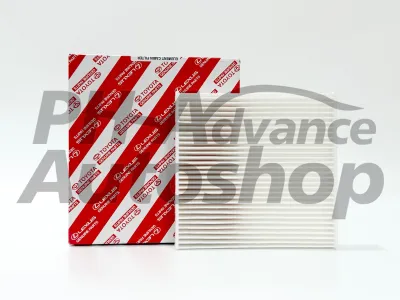
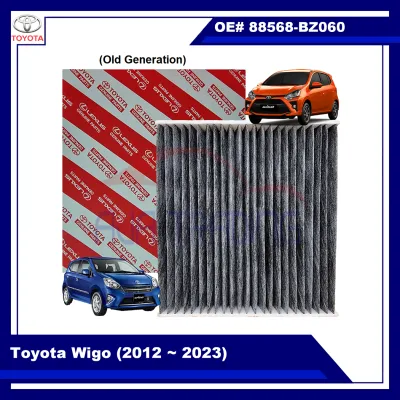
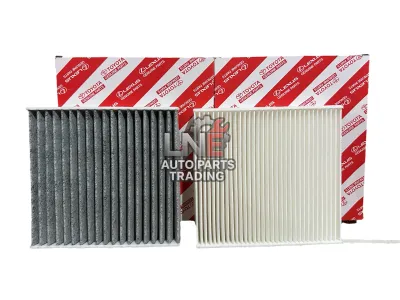
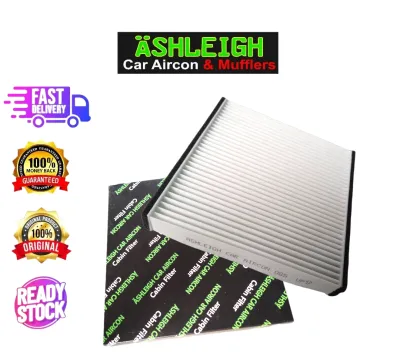
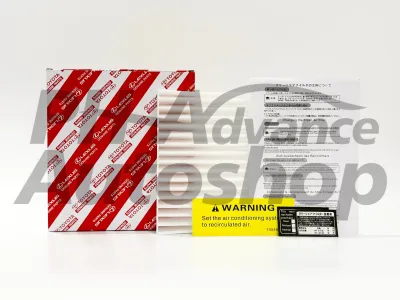
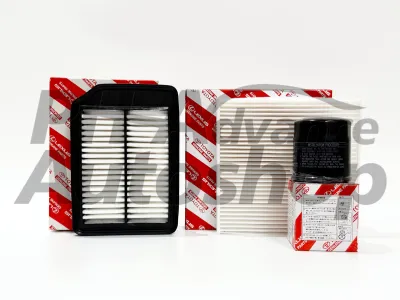
Prices are valid at publication and may change. Please refer to the product page for the latest price.
Activated carbon filters feature an extra layer of treated charcoal embedded within the filtration media. This carbon layer works through adsorption, trapping gases, fumes, and unpleasant odors on a microscopic level. When you are stuck in heavy traffic or driving through areas with industrial emissions, an activated carbon filter helps keep the cabin smelling fresh by neutralizing harmful exhaust gases.
High-efficiency particulate air (HEPA) or high-efficiency aftermarket filters are designed to capture much smaller particles, including fine soot, smoke, and microscopic allergens. While they offer the cleanest possible cabin air, they feature a much denser weave. In a compact car like the Toyota Wigo, this density can restrict airflow, putting extra strain on the compact blower motor and potentially reducing the cooling efficiency of your air conditioning in hot, humid weather.
Key Specifications to Check Before Buying
Before purchasing any cabin filter, you must verify its physical compatibility and performance specifications. Relying solely on a generic product label can lead to a filter that does not fit or one that compromises your vehicle’s ventilation system.

Physical dimensions and shape are the most critical factors. The Toyota Wigo has undergone several design updates across different model years and generations. A filter designed for an older model may not fit the housing of a newer generation. Always measure your existing filter’s length, width, and thickness, or consult your owner’s manual to confirm the exact dimensions before buying. A filter that is even slightly too large will buckle and allow unfiltered air to bypass the element, while a filter that is too small will leave gaps.
Airflow resistance must be balanced against filtration efficiency. Your Wigo’s heating, ventilation, and air conditioning (HVAC) system relies on a small blower motor designed to push air through a specific level of resistance. Installing an excessively dense filter can restrict this airflow, forcing the blower motor to work harder. Over time, this can lead to premature wear of the motor, increased cabin noise, and a noticeable drop in cooling performance—a significant concern under the intense tropical sun.
Be skeptical of arbitrary marketing claims, such as “multi-layer” or “7-stage” filtration, which often serve as marketing buzzwords rather than standardized performance ratings. Instead of counting layers, look for reputable manufacturers that specify their filtration materials and provide clear compatibility guidelines for your specific Wigo model year.
Matching the Filter to Your Driving Conditions and Budget
Your daily driving routine and local environment should dictate which filter type offers the best value. There is no single option that suits every driver, so matching the filter to your typical routes is the most practical approach.
For drivers who primarily use their Wigo in provincial areas, coastal roads, or open highways with light traffic, a standard particulate filter is usually sufficient. In these environments, the air is relatively free of concentrated exhaust fumes, meaning the odor-absorbing benefits of activated carbon are less necessary. A standard filter will keep road dust and pollen out of your cabin while maximizing airflow to keep you cool at a very low cost, typically requiring only a small investment of a few hundred ₱.
If your daily commute involves navigating heavy city traffic, bumper-to-bumper congestion, or smog-heavy metropolitan areas, upgrading to an activated carbon filter is highly recommended. The added cost is justified by the significant reduction in exhaust smells and chemical fumes entering the cabin. This upgrade makes long hours in traffic much more comfortable and less fatiguing.
For allergy sufferers, asthma patients, or families traveling with young children, a high-efficiency filter might seem like the obvious choice. However, you must weigh the benefits of cleaner air against the potential reduction in AC airflow. If you choose a high-efficiency option, monitor your air conditioning closely to ensure it can still cool the cabin effectively during the hottest hours of the day.
Installation Checks and Replacement Intervals
Replacing a cabin filter is a straightforward task that most vehicle owners can perform themselves, but it requires attention to detail to avoid damaging the HVAC housing or compromising filtration.
To locate the cabin filter housing in your Toyota Wigo, you typically need to open and gently remove the glove box compartment. Behind it, you will find a rectangular plastic cover securing the filter tray. When removing the old filter, pay close attention to its orientation. Most filters feature an arrow printed on the side. This arrow indicates either the direction of “AIR FLOW” (which points downward toward the blower fan) or simply “UP.” Always refer to the markings on the new filter and your vehicle’s documentation to ensure correct installation, as installing a filter upside down can restrict airflow and cause the media to collapse.
Perform a visual inspection of the old filter to determine if it needs replacement. While a light layer of grey dust is normal, a filter clogged with leaves, heavy debris, or showing signs of black mold and moisture damage must be replaced immediately. In the humid climate of the Philippines, moisture can easily trap bacteria in the filter media, leading to musty odors inside the car.
If you notice a sudden drop in cooling performance, weak airflow from the vents, or an unusual whining noise from the blower motor after installing a new filter, remove it immediately. These are signs of excessive airflow restriction. If the symptoms persist after reinstalling a standard filter, stop and consult a qualified automotive technician to inspect your HVAC system for underlying issues.
Frequently Asked Questions (FAQ)
Can I wash and reuse my Toyota Wigo cabin filter?
No, you should not wash or reuse a standard or activated carbon cabin filter. These filters are made of paper or delicate synthetic fibers that lose their structural integrity and electrostatic charge when exposed to water or cleaning chemicals. Washing an activated carbon filter will also wash away or saturate the charcoal layer, rendering it useless. Trying to clean them with compressed air can tear the microscopic fibers, allowing dust to pass through. Safe maintenance requires disposing of the old filter and replacing it with a new one.
Will a thicker or higher-grade filter damage my Wigo's air conditioning?
A thicker or denser filter will not immediately damage your air conditioning system, but it can cause long-term strain on the blower motor if the airflow resistance is too high. Because the Toyota Wigo is a compact car with a smaller HVAC system, it is sensitive to changes in air restriction. If you install a high-efficiency filter, monitor your vehicle for reduced airflow, increased blower noise, or a struggle to keep the cabin cool. If you notice these signs, revert to a standard or moderately rated carbon filter to protect your blower motor from premature failure.

Community discussion
Share your experience or ask a question. Comments are reviewed before publication.