
Selecting the right cordless grease gun for automotive maintenance requires balancing power, precision, and compatibility with your existing tool ecosystem. Unlike manual lever-action grease guns, a cordless model delivers consistent pressure and flow with the pull of a trigger, allowing you to focus on holding the coupler securely to the grease fitting. This is especially valuable when working in tight spaces under a vehicle or servicing a motorcycle swingarm where room to pump a manual handle is virtually non-existent.
To make an informed decision, you must evaluate your vehicle’s specific lubrication points, understand how to read manufacturer specifications, and match the tool’s features to your typical maintenance environment. In tropical climates like the Philippines, where high humidity and dusty road conditions can accelerate grease contamination and wear on suspension components, having a reliable and efficient lubrication tool is essential for preserving your vehicle’s longevity.
Identifying Your Vehicle Lubrication Requirements
Before purchasing any cordless grease gun, assess the specific vehicles you plan to maintain and the frequency of their service intervals. A motorcycle enthusiast performing occasional swingarm or steering head lubrication has vastly different tool requirements than an owner of a 4×4 pickup truck who frequently navigates muddy terrain and needs to service multiple chassis grease points.
Products mentioned in this guide
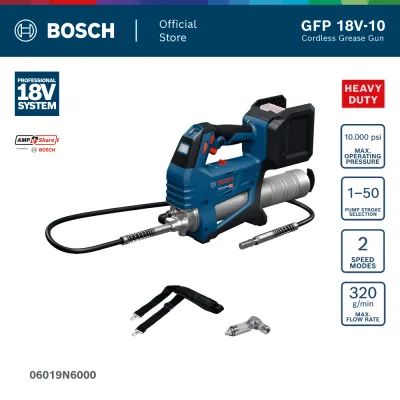
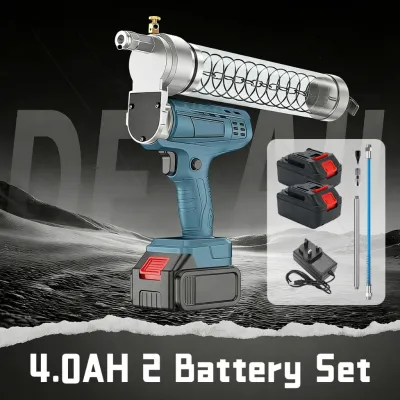
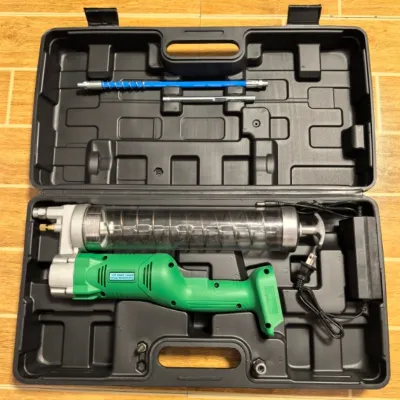
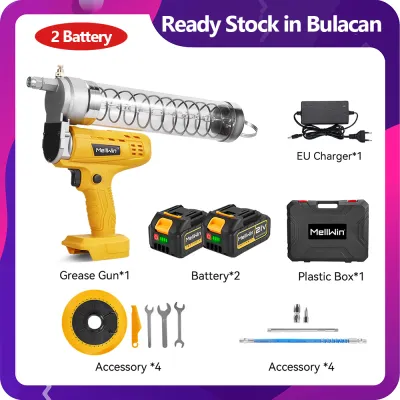
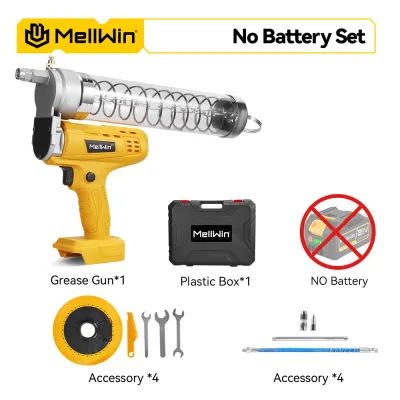
Prices are valid at publication and may change. Please refer to the product page for the latest price.
Motorcycle maintenance typically demands high precision and lower grease volumes. Over-lubricating delicate motorcycle pivot points can damage sensitive rubber dust seals, leading to premature component failure. For these tasks, a lightweight tool with a highly sensitive variable speed trigger is ideal to prevent pushing too much grease into a small cavity.
In contrast, passenger cars, SUVs, and light trucks feature larger suspension and steering components, such as ball joints, tie rod ends, and drive shaft u-joints. These parts often require higher pressure to force out old, contaminated grease and replace it with fresh lubricant. If you regularly drive on unpaved roads or through flooded areas during the rainy season, frequent chassis lubrication becomes a necessity to prevent rust and binding.
You must also identify the specific grease formulations recommended by your vehicle’s manufacturer, such as lithium complex or molybdenum disulfide grease. Ensure the cordless grease gun you select is compatible with the viscosity and loading style of these lubricants, whether you prefer using pre-packaged cartridges or bulk-loading from a tub.
Finally, consider your physical workspace constraints. If you perform maintenance on a driveway or in a compact home garage, maneuvering a bulky tool while lying on a creeper can be challenging. A cordless grease gun with a stable, upright design and a long, flexible hose allows you to set the tool on the ground while you guide the coupler with both hands.
Reading Product Labels for Critical Specifications
When comparing cordless grease guns on an online marketplace or at a local hardware store, understanding how to interpret the technical specifications on the product label is crucial. The two most critical performance metrics to look for are the maximum operating pressure and the flow rate.

Maximum operating pressure, typically measured in pounds per square inch (psi) or bar, indicates the tool’s ability to push grease through clogged or rusted fittings. For standard automotive maintenance, a tool capable of delivering at least 5,000 to 10,000 psi is generally sufficient to clear stubborn blockages without stalling the motor.
Flow rate, usually expressed in ounces or grams per minute, determines how quickly the tool dispenses grease. Many advanced cordless models feature dual-flow or variable-speed settings, allowing you to switch between high-flow mode for filling large cavities quickly and high-pressure mode for clearing tight, restricted joints.
Battery system compatibility is another major consideration for cordless operation. Most manufacturers offer grease guns as part of their existing 12-volt, 18-volt, or 20-volt battery platforms. If you already own cordless drills or impact wrenches from a specific brand, purchasing a “tool-only” version that shares the same battery and charger can save you a significant amount of money and help you save ₱ on professional garage fees.
Examine the included accessories listed on the packaging. A high-quality cordless grease gun should come with a flexible, high-pressure hose—ideally 30 to 36 inches in length—to reach deeply recessed grease points. Additionally, check if the tool includes a heavy-duty coupler that grips the zerk fitting tightly to prevent grease bypass under high pressure.
Lastly, verify the supported loading mechanisms. Most versatile models offer three-way loading: standard cartridge loading, suction loading directly from a grease tub, or bulk loading via a filler pump. Cartridge loading is the cleanest and most convenient method for DIY mechanics, while bulk loading is more cost-effective for heavy users but requires careful handling to avoid introducing dirt into the grease barrel.
Aligning Tool Features with Specific Maintenance Scenarios
To get the most value out of your investment, match the specific features of the cordless grease gun to your primary maintenance scenarios rather than simply buying the most powerful model available.
For light-duty motorcycle tasks, prioritize maneuverability and weight distribution. A heavy 18-volt grease gun can quickly become fatiguing to hold with one hand while trying to align a coupler in a cramped engine bay. A compact 12-volt model offers a lighter overall weight and a smaller footprint, making it much easier to handle during intricate service procedures.
For heavy-duty car, SUV, or light truck maintenance, prioritize robust construction and high-pressure capabilities. Stiff suspension joints on a lifted 4×4 or commercial utility vehicle require substantial force to accept new grease. A tool with a high-output motor and a reinforced hose is essential to withstand the backpressure generated during these demanding tasks.
If you need a single tool to handle both light-duty motorcycles and heavy-duty trucks, look for cross-scenario compatibility features. A grease gun with an adjustable dial that limits the maximum grease output per trigger pull is highly valuable. This feature prevents accidental over-lubrication on delicate components while still allowing you to deliver high volumes when servicing large truck chassis.
Consider upgrading the standard coupler to a locking, lever-action coupler if the tool does not already include one. A locking coupler clamps securely onto the zerk fitting, hands-free, which is incredibly helpful when you need to guide a long hose around hot exhaust pipes or sharp suspension edges under a vehicle.
Operating Safely and Maintaining the Tool
Operating a cordless grease gun safely requires adhering to proper mechanical procedures and maintaining the tool to prevent premature wear or personal injury. Because these tools operate under extreme pressure, safety must always be your primary concern.
Before every use, perform a thorough pre-operation check. Inspect the high-pressure hose for any signs of wear, such as cracks, cuts, bulges, or leaks. Ensure the coupler jaws are clean and free of debris, and check the battery contacts for any signs of corrosion or moisture, which can be prevalent in humid tropical environments.
Always follow the manufacturer’s user manual for safe pressure relief procedures. If a grease fitting is blocked and grease fails to flow, the hose remains under intense pressure even after you release the trigger. Never attempt to unscrew the coupler or hose while the system is pressurized; use the tool’s pressure relief valve or follow the manual’s instructions to safely bleed off the pressure first to avoid high-pressure injection injuries.
Proper storage is vital to maintain tool readiness and prevent grease separation. Store the grease gun horizontally in a cool, dry place, away from direct sunlight and extreme heat. High ambient temperatures can cause the oil to separate from the thickener in the grease cartridge, leading to messy leaks and reduced lubrication effectiveness.
Recognize clear stop conditions during operation. Cease using the tool immediately if you hear unusual grinding noises from the motor, notice grease leaking from the hose connections, or experience coupler slippage off the zerk fitting. If the tool stalls or becomes excessively hot to the touch, disconnect the battery and consult the troubleshooting section of your user manual or seek assistance from a qualified professional.
Frequently Asked Questions (FAQ)
Can I use standard manual grease cartridges in a cordless model?
Yes, most cordless grease guns are designed to accept standard 14-ounce (or equivalent metric) grease cartridges, but you must always verify the exact dimensions and cartridge compatibility in your tool’s user manual. Additionally, check the configuration of the rubber follower seal inside the barrel; some models require you to flip or adjust the seal depending on whether you are using a cartridge or bulk-loading grease to ensure a proper vacuum seal.
How do I prevent airlocks when loading a new grease cartridge?
To prevent airlocks, follow the manufacturer’s specific priming sequence when loading a new cartridge. Typically, this involves inserting the cartridge, threading the barrel back onto the pump head loosely (leaving a turn or two unthreaded), releasing the plunger rod to push grease upward, and depressing the air bleeder valve to let trapped air escape. Once you see grease begin to seep from the bleeder valve or the loose threads, tighten the barrel completely, run the tool until a steady stream of grease flows from the coupler, and stop immediately if the motor strains without grease emerging.
Community discussion
Share your experience or ask a question. Comments are reviewed before publication.