
Finding the right Duhan raincoat for daily motorcycle commuting during the intense rainy season in the Philippines requires balancing absolute water resistance, rider safety, and daily practicality. When sudden afternoon downpours flood city streets and reduce visibility to near zero, your rain gear is the only barrier between a dry, focused ride and a soaked, shivering commute. Rather than searching for a single universal model, the key is identifying how different Duhan designs match your specific route, riding speed, and existing safety gear. By evaluating key construction details, material specifications, and fitment options, you can select a model that keeps you dry and safe throughout the wettest months of the year.
Core Criteria for Evaluating Duhan Rain Gear
To ensure a raincoat can withstand prolonged heavy downpours, you must first understand how manufacturer waterproof ratings translate to real-world riding conditions. Many premium rain garments feature a hydrostatic head rating, typically measured in millimeters, such as 5,000mm, 10,000mm, or higher. This rating indicates the height of a water column the fabric can support before moisture begins to penetrate. For daily commuting in tropical storms, look for models that explicitly state a high waterproof rating on their product labels or official specifications. Keep in mind that wind pressure at highway speeds significantly increases the force of water hitting your chest and shoulders, meaning a higher rating is essential for faster commutes.
Beyond the fabric itself, the seams are the most common failure points where water can seep through. Even the most waterproof material will fail if the needle holes from stitching are left exposed. When inspecting a Duhan raincoat, turn the garment inside out to verify the presence of fully taped or heat-sealed seams. These seams are reinforced with a waterproof polyurethane tape applied under high heat, sealing the tiny punctures made during the sewing process. Avoid garments that only feature standard stitching without this internal barrier, as they will inevitably leak during sustained exposure to heavy rain.
Products mentioned in this guide
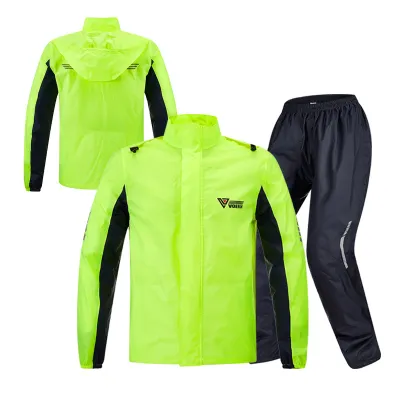
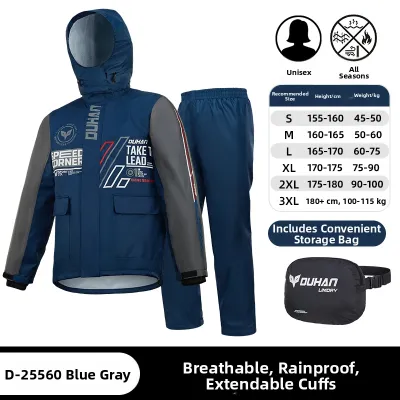
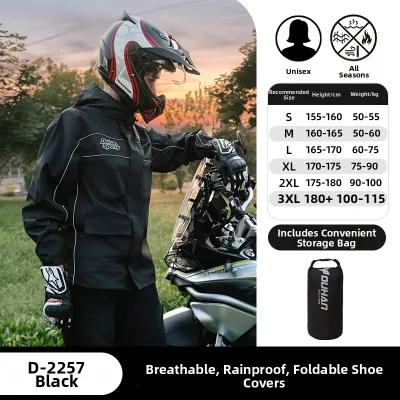
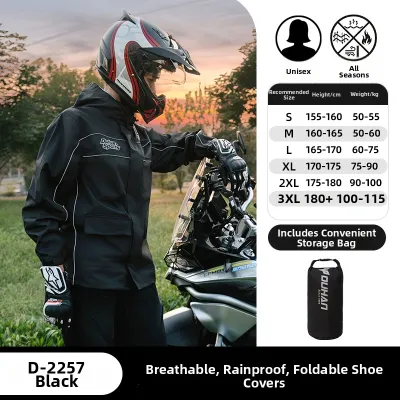
Prices are valid at publication and may change. Please refer to the product page for the latest price.
The thickness and durability of the outer shell material also play a critical role in long-term performance. Commuting daily with a backpack, mounting and dismounting your motorcycle, and dealing with wind flap can quickly wear down thin, lightweight fabrics. Look for heavy-duty polyester or nylon shells, often reinforced with a polyurethane (PU) or polyvinyl chloride (PVC) backing. A thicker outer shell not only resists abrasion from daily wear but also prevents the fabric from flapping violently at higher speeds, which can cause rider fatigue and accelerate material degradation.
Two-Piece Suits vs. Ponchos: Matching Coverage to Your Commute
Choosing between a two-piece rain suit (jacket and pants) and a quick-deploy rain poncho depends heavily on your typical riding speeds and route characteristics. For riders who frequently travel on open highways, bypasses, or elevated expressways, a two-piece suit is highly recommended. At sustained speeds, wind resistance becomes a major factor; a loose poncho will catch the wind like a sail, creating dangerous drag, destabilizing your motorcycle, and allowing water to blow upward under the hem. A two-piece suit fits snugly against the body, minimizing wind resistance and ensuring complete leg coverage from the waist down to your boots.

Conversely, if your daily commute consists entirely of low-speed, stop-and-go city traffic on congested urban streets, the convenience of a quick-deploy option might seem appealing. However, even in slow traffic, a standard poncho offers minimal protection for your lower legs and feet, leaving them exposed to road spray from passing vehicles. A two-piece suit, while taking slightly longer to put on during a sudden downpour, provides a secure, wind-proof fit with zippered closures and elasticated waistbands that keep water out even when you are stopped at intersections or wading through shallow street flooding.
Storage footprint and portability are also crucial considerations for daily commuters. If your motorcycle has limited under-seat storage or lacks a top box, a bulky, heavy-duty two-piece suit can be challenging to carry. Lightweight, packable two-piece models often come with dedicated storage pouches that can easily fit inside a standard backpack or a compact tail bag. When selecting a model, compare the packed dimensions against your available storage space, keeping in mind that heavier, more durable materials will naturally occupy more room but offer superior protection against torrential rains.
Essential Visibility Features for Stormy Rides
Riding in heavy rain drastically reduces visibility for all road users, making high-visibility features a non-negotiable safety requirement for daily commuters. When choosing a Duhan raincoat, carefully verify the placement, width, and quality of the reflective striping. Effective rain gear should feature wide, retroreflective bands across the upper back, along the outer sleeves, and around the lower legs or ankles. This strategic placement ensures that you remain visible to drivers approaching from behind, from the sides at intersections, and from oncoming traffic, even when heavy rain and road spray obscure the view.
The color of the raincoat itself is another critical factor in staying safe on wet roads. While dark colors like black or navy blue may look sleek, they blend into the dark, wet asphalt and grey storm clouds, making you nearly invisible to other motorists. Opting for high-visibility color options, such as neon yellow, bright green, or high-contrast orange, significantly increases your visual signature. If you prefer a darker primary color for aesthetic reasons, ensure the model features extensive, high-contrast reflective panels that cover a large percentage of the garment’s surface area.
Additionally, pay close attention to the design of the hood and collar. A poorly designed hood can bunch up uncomfortably under your helmet, causing pressure points, or it can block your peripheral vision when you turn your head to check blind spots. Look for models with detachable or rollaway hoods that can be neatly tucked into the collar when not in use. The collar itself should rise high enough to cover your neck completely, sealing the gap beneath your helmet’s chin guard without interfering with the helmet straps or restricting your head movement.
Pre-Purchase Checks and Fitting Over Riding Gear
Before finalizing your purchase, it is essential to inspect the physical design of the raincoat’s entry points to ensure water cannot find its way inside. Look for heavy-duty front zippers protected by wide storm flaps that secure with hook-and-loop fasteners or snap buttons. This double-closure system prevents wind-driven rain from forcing its way through the zipper teeth. Similarly, check the cuffs of the sleeves and the ankles of the pants; they should feature adjustable closures, such as elastic bands, hook-and-loop straps, or zippers, allowing you to seal them tightly over your riding gloves and boots.
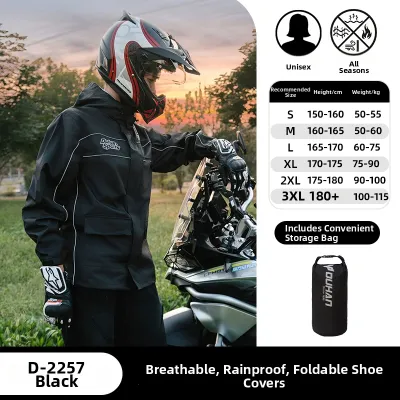
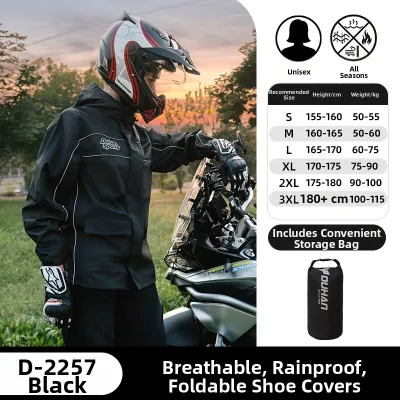
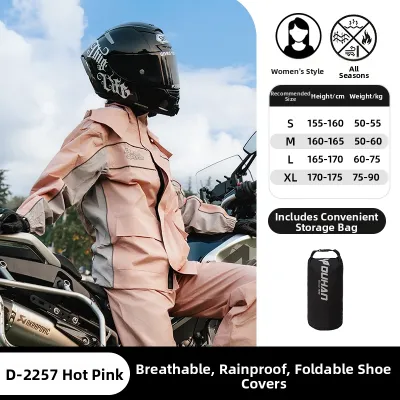
Sizing is one of the most common mistakes riders make when buying rain gear. A raincoat must be sized to fit comfortably over your existing riding gear, including bulky armored jackets, elbow guards, back protectors, and thermal layers. If you buy your standard clothing size, the raincoat may be too tight, restricting your range of motion, straining the seams, and making it difficult to control your motorcycle safely. It is highly recommended to measure yourself while wearing your full riding gear, then consult the manufacturer’s specific sizing chart, often sizing up by one or two sizes to ensure a comfortable, non-restrictive fit.
Finally, evaluate the options across different ₱ price tiers and verify the authenticity of the product before buying. High-quality motorcycle rain gear is an investment in your safety and comfort, so be cautious of extremely cheap imitations found on online marketplaces. Look for authorized retailers or official brand stores to ensure you are purchasing a genuine Duhan product. Genuine models typically feature superior stitching, durable seam tape, and robust zippers that carry manufacturer warranties, providing peace of mind that your gear will perform reliably when the storm hits.
Frequently Asked Questions (FAQ)
How do I clean and maintain my raincoat to preserve its waterproofing?
To maintain the waterproof integrity of your raincoat, always check the internal care label for specific washing instructions, approved detergents, and temperature limits. Avoid using harsh chemical detergents, fabric softeners, or bleach, as these can strip away the durable water repellent (DWR) coating on the outer fabric and degrade the internal seam tape. Instead, hand wash the garment using a mild, technical gear cleaner or a gentle soap, and rinse it thoroughly with cool water. Never place the raincoat in a mechanical dryer; instead, hang it to air-dry completely in a shaded, well-ventilated area away from direct sunlight, which can damage the synthetic materials and adhesive backings.
Can I use a standard rain poncho for high-speed highway riding?
Using a standard rain poncho for high-speed highway riding is highly discouraged due to significant safety risks. At highway speeds, the loose fabric of a poncho acts like a sail, catching the wind and creating severe aerodynamic drag that can destabilize your motorcycle and compromise your control. The flapping fabric can also distract you, block your mirrors, or worse, become entangled in the motorcycle’s moving parts, such as the rear wheel or drive chain. For sustained speeds above city limits, always choose a fitted two-piece rain suit that remains secure against your body and provides full, wind-proof coverage.
What should I do if the seams start leaking after regular use?
If you notice water seeping through the seams after regular use, start by inspecting the inside of the garment for signs of peeling seam tape, delamination, or visible needle holes. If the raincoat is relatively new, consult the manufacturer or the authorized retailer where you purchased it to check if the issue is covered under warranty. For minor wear on older garments, you can apply a specialized, flexible seam sealer designed for polyurethane-coated fabrics to restore the waterproof barrier. However, if the fabric backing is peeling extensively or the material itself has worn thin, the garment has reached the end of its usable lifespan and should be replaced to ensure your safety on the road.
Community discussion
Share your experience or ask a question. Comments are reviewed before publication.