
Finding a reliable Gille half-face helmet in the Philippines requires balancing your daily commuting budget with essential safety standards and tropical comfort. As one of the highly visible gear brands on local roads, Gille offers a variety of open-face options designed to handle the intense heat, sudden downpours, and congested traffic of urban areas. Choosing the right model involves understanding how different price tiers translate to material quality, verifying mandatory safety seals like the Import Commodity Clearance (ICC) sticker, and ensuring a snug fit that protects your head during an impact. By focusing on structural integrity and practical features rather than aesthetic appeal alone, you can secure a helmet that fits your budget while providing dependable protection on every ride.
When shopping for a half-face helmet, riders often prioritize convenience and ventilation over the full coverage of a closed-face model. While open-face designs inherently lack chin protection, they offer an expanded field of vision and superior airflow, making them highly popular among daily scooter riders and underbone commuters. To make an informed purchase, you must evaluate how the helmet’s shell construction, visor quality, and retention systems align with your specific riding environment and budget constraints.
Mapping Gille Half-Face Helmet Price Tiers to Your Riding Needs
Understanding the local market structure helps you set realistic expectations for what a Gille half-face helmet can deliver at different price points. In the Philippines, these helmets generally fall into three distinct budget categories, each offering a different balance of materials, weight, and comfort features. By identifying where your budget lies, you can avoid overpaying for unnecessary aesthetics or underinvesting in critical safety components.
Products mentioned in this guide
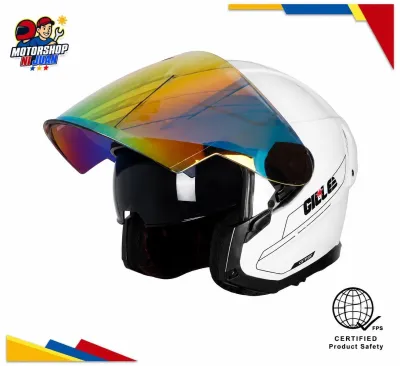
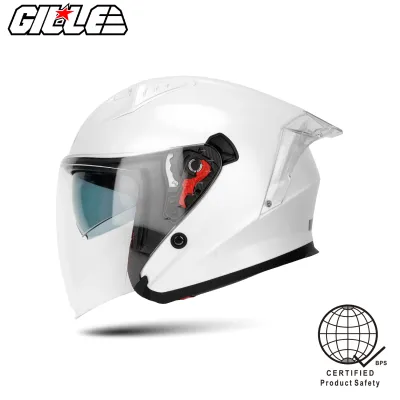
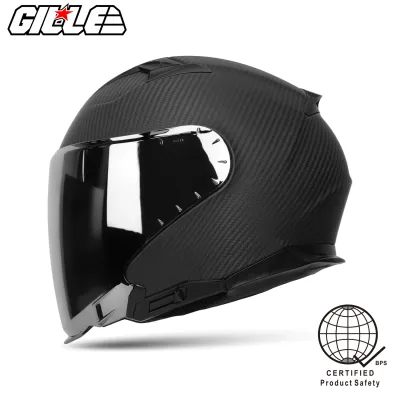
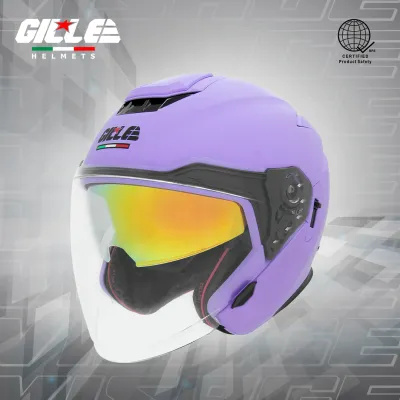
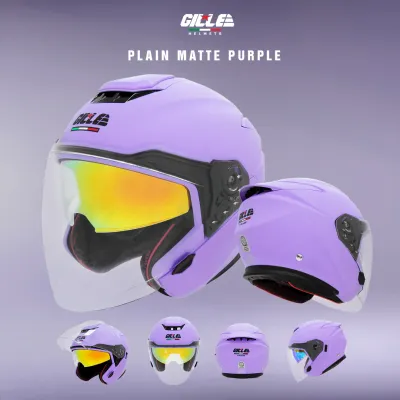
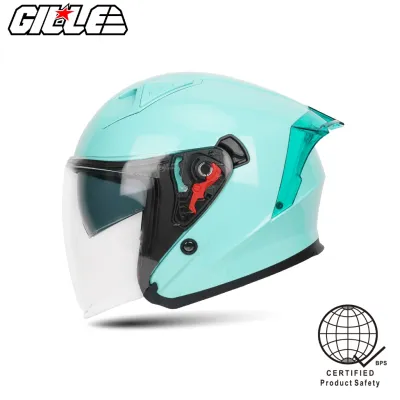
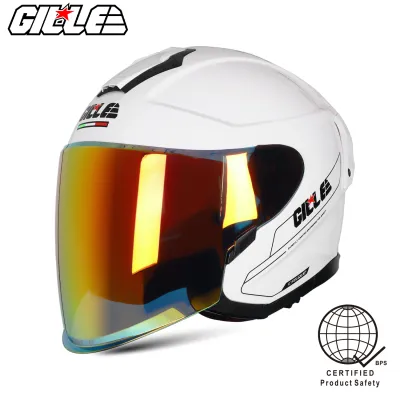
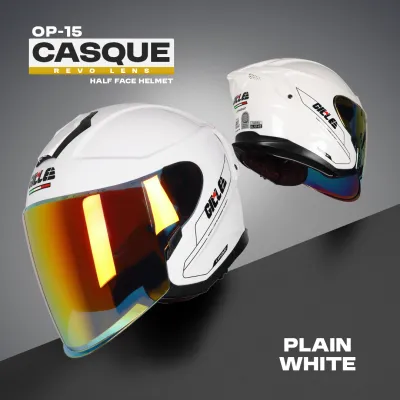
Prices are valid at publication and may change. Please refer to the product page for the latest price.
Entry-level options typically sit below ₱2,000. In this price bracket, helmets are almost exclusively constructed from standard Acrylonitrile Butadiene Styrene (ABS) plastic. While ABS is tough and impact-resistant, it tends to be heavier and thicker to achieve the necessary safety ratings, which can lead to neck fatigue during longer rides. The interior padding in this tier is usually basic, offering standard foam that may compress permanently over time, and the ventilation systems often rely on simple, non-adjustable plastic vents.
Mid-range helmets generally range from ₱2,000 to ₱3,500. This tier represents the sweet spot for most daily commuters, featuring refined ABS blends or lightweight polycarbonate shells. Polycarbonate offers higher impact resistance per unit of thickness, allowing manufacturers to design slightly lighter shells with better aerodynamics. You will also find dual-visor systems in this range, which include a drop-down inner sun shield to protect your eyes from intense tropical glare without requiring a visor swap. The interior liners are typically removable, washable, and made from moisture-wicking fabrics that help manage sweat.
Upper-tier half-face options are priced above ₱3,500. These models utilize advanced polycarbonate composites or highly engineered shell designs that optimize weight distribution. The aerodynamic profiling is significantly improved, reducing wind drag and lift when riding at higher speeds on radial roads or provincial highways. Additionally, these premium models feature optical-grade, distortion-free visors with advanced scratch-resistant coatings, highly efficient multi-port ventilation channels, and plush, antimicrobial liners that retain their shape after multiple washes.
Choosing between these tiers involves weighing the trade-offs of weight, ventilation, and noise reduction. A cheaper helmet may save you money upfront, but the increased wind noise and less efficient airflow can make daily rides in high humidity uncomfortable. Investing in a mid-range or premium model generally yields a quieter, cooler, and lighter riding experience, which directly reduces rider fatigue and improves overall road alertness.
Verifying Safety Certifications and Legal Compliance
No matter how stylish or affordable a helmet is, its primary function is to protect your head in the event of a crash. In the Philippines, riding with a non-compliant helmet can result in heavy fines under Republic Act No. 10054, also known as the Motorcycle Helmet Act of 2009. Therefore, your first step before purchasing any Gille half-face helmet must be to verify its legal compliance and structural safety certifications.

Every legitimate helmet sold in the Philippines must bear a genuine Import Commodity Clearance (ICC) sticker or a Philippine Standard (PS) mark. For imported brands like Gille, the ICC sticker is the standard proof of compliance. This sticker features a unique serial number and holographic security elements that make it difficult to replicate. You should inspect the sticker closely to ensure it is firmly adhered to the shell, has sharp, clear printing, and does not show signs of being peeled off another helmet.
In addition to local certifications, reputable helmets carry international safety ratings such as the United States Department of Transportation (DOT) FMVSS 218 standard or the European Economic Commission (ECE) 22.05 or 22.06 certifications. These standards subject helmets to rigorous testing, including shock absorption, penetration resistance, and retention system strength. A genuine Gille helmet will typically have these international certification codes printed or decaled clearly on the rear of the outer shell beneath the clear coat.
To spot counterfeit helmets or fake safety markings, look for physical red flags on the helmet itself. Counterfeit products often feature poorly printed stickers, misaligned brand decals, or safety labels that can be easily scratched off with a fingernail. If the price of the helmet seems too good to be true compared to authorized retail listings, or if the seller cannot provide official documentation, the safety certifications are likely fraudulent.
Finally, always inspect the retention system, which is the strap and buckle assembly that keeps the helmet secured to your head during an impact. Most half-face helmets use a micrometric quick-release buckle for convenience, while some sportier models may use a double-D ring system. Ensure the buckle is made of high-quality, corrosion-resistant metal or heavy-duty reinforced plastic, and check that the stitching securing the strap to the helmet shell is thick, uniform, and free of loose threads.
Evaluating Fit, Visor Mechanics, and Daily Comfort
A helmet can only protect you effectively if it fits your head correctly and remains comfortable throughout your ride. Because head shapes vary widely, you should never buy a helmet based solely on the size label of your previous gear. Taking the time to measure your head and physically test the helmet’s fit is crucial for long-term comfort and safety.
To find your correct size, use a soft measuring tape wrapped horizontally around your head, about one inch above your eyebrows and ears. Compare this measurement to the manufacturer’s specific sizing chart. When trying on the helmet, it should feel snug all the way around your head without creating painful pressure points on your forehead or temples. The cheek pads should press firmly against your cheeks, pushing them slightly upward, but not so tightly that you risk biting the inside of your mouth when speaking.
Perform a quick physical check to verify the fit before finalizing your purchase. With the chin strap securely fastened, shake your head side to side; the helmet should move with your skin rather than sliding independently. Next, try to roll the helmet off your head by pulling upward and forward from the rear base of the shell. If the helmet slips forward significantly or comes off, the sizing is too large or the retention system is adjusted incorrectly.
Visor mechanics play a major role in daily usability, especially when dealing with the unpredictable weather of the Philippines. The visor should operate on a smooth, positive-locking ratchet system that allows you to keep it partially open for extra ventilation during slow traffic or heavy rain. Check that the visor offers a tight seal against the helmet’s rubber gasket when fully closed to prevent rainwater from leaking onto your face. Look for visors labeled with UV protection to shield your eyes from intense tropical sunlight.
Given the hot and humid climate of the Philippines, interior lining features are non-negotiable for daily comfort. Look for a Gille helmet with a fully removable and washable inner liner. Sweat, hair oils, and road dust quickly accumulate inside the helmet, leading to bacterial growth, unpleasant odors, and skin irritation if left uncleaned. Liners made from moisture-wicking, hypoallergenic fabrics help pull sweat away from your skin and dry quickly, keeping you cool and comfortable during long midday rides.
Purchasing Safely and Avoiding Counterfeit Products
The popularity of Gille helmets in the Philippines has unfortunately made the brand a target for counterfeiters and unauthorized sellers. Buying a fake helmet puts your safety at extreme risk, as counterfeit shells are often made of cheap, brittle plastics that shatter upon impact rather than absorbing energy. To protect your investment and your life, you must follow strict purchasing strategies.
Always prioritize buying from authorized physical dealers, official brand showrooms, or verified flagship stores on major e-commerce platforms. Authorized sellers can provide an official receipt, which is essential for validating any manufacturer warranties or return policies. If you are purchasing online, look for the platform’s official mall or preferred seller badges, and read through customer reviews to verify that previous buyers received authentic products in original packaging.
Be highly suspicious of common red flags when browsing online marketplaces or physical roadside shops. A suspiciously low price—such as a helmet listed at half the standard retail price of authorized dealers—is the most common indicator of a counterfeit product. Other red flags include missing original packaging, helmets shipped without a branded Gille box or protective fabric dust bag, and sellers who refuse to show clear photos of the ICC sticker or the inner EPS liner.
Before finalizing your transaction, clarify the seller’s return and exchange policies. Because proper fit is critical for safety, you need the option to exchange the helmet if you discover a sizing issue or a manufacturing defect upon delivery. A reputable seller will have a clear, fair return policy and will be willing to answer detailed questions about the helmet’s authenticity, manufacturing date, and certification details.
Frequently Asked Questions (FAQ)
Can I use a half-face helmet for long-distance touring?
While you can legally use a certified half-face helmet for long-distance touring in the Philippines, it is not the most comfortable or protective option for highway speeds. Half-face helmets lack chin protection, leaving your lower face vulnerable to flying debris, insects, and gravel kicked up by other vehicles. Additionally, the open design exposes you to significant wind noise and turbulence, which can cause rider fatigue over several hours of continuous riding. If you choose to use a half-face helmet for long trips, it is highly recommended to wear supplementary gear such as a protective face mask or balaclava, riding goggles to shield your eyes from dust, and earplugs to minimize wind noise.
How often should I replace my helmet?
You should generally replace your helmet every three to five years from the date of purchase, or within five to seven years from its manufacturing date, even if it has never been involved in an accident. Over time, the internal Expanded Polystyrene (EPS) foam liner—which is responsible for absorbing impact energy—gradually degrades due to exposure to sweat, hair oils, cosmetics, UV rays, and temperature fluctuations. Furthermore, you must replace your helmet immediately after any significant drop or impact, even if there is no visible damage to the outer shell. The EPS liner is designed to compress and deform once to absorb shock, and it cannot provide adequate protection in a subsequent impact.
Are tinted visors legal for night riding in the Philippines?
Under Land Transportation Office (LTO) guidelines, using heavily tinted, smoked, or iridium visors during night-time riding is illegal and highly dangerous due to severely reduced visibility. These visors block a significant amount of ambient light, making it difficult to spot road hazards, potholes, pedestrians, and unlit vehicles on dark roads. If you ride frequently during both day and night, the most practical solution is to use a helmet with a dual-visor system, which features a clear outer visor for night riding and a drop-down inner sun shield for daytime use. Alternatively, you can carry a spare clear visor to swap out before the sun goes down.
Community discussion
Share your experience or ask a question. Comments are reviewed before publication.