
Selecting the right Lingdu dashcam for Philippine roads requires matching the device’s hardware specifications directly to your daily driving environment. Whether you are navigating the dense, stop-and-go gridlock of EDSA or traversing poorly lit provincial highways, a generic camera setup may fail to capture critical details like license plates or sudden lane cut-offs. To make an informed decision, you must look past broad marketing claims and evaluate concrete technical indicators such as lens aperture, sensor resolution, heat tolerance, and power delivery.
Quick Guide: Matching Lingdu Dashcam Specs to Your Daily Route
To simplify your selection process, it helps to categorize your driving habits into distinct scenarios. Urban commuters who spend hours in heavy city traffic require different features compared to long-distance drivers who frequently travel rural routes after dark. By identifying your primary driving environment, you can target the specific hardware specifications that will provide reliable, usable footage when you need it most.
For daily city driving, your primary concerns are capturing wide-angle views of adjacent lanes and ensuring the camera remains active while parked on busy streets. A dashcam with a wide field of view and a reliable parking mode is essential here. Conversely, provincial driving demands superior low-light performance to handle unlit roads and high-contrast situations, such as oncoming high beams. This requires a camera with a large physical sensor and high dynamic range capabilities.
Products mentioned in this guide
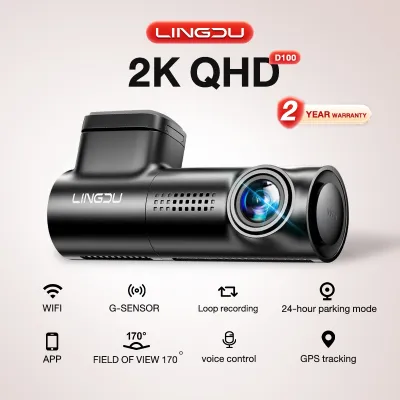
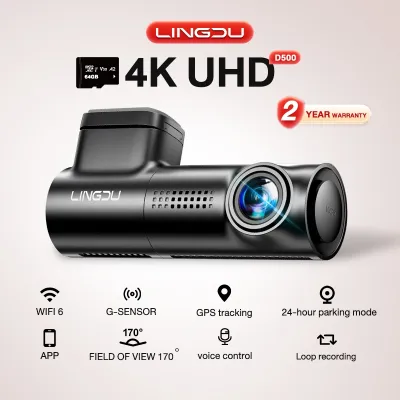
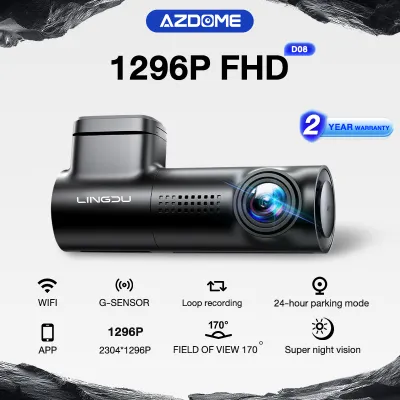
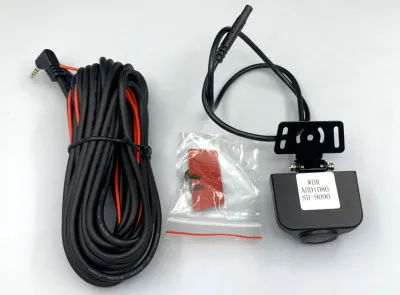
Prices are valid at publication and may change. Please refer to the product page for the latest price.
Before purchasing any Lingdu dashcam from an online marketplace or local retailer, you should establish a baseline of acceptable specifications. Look for a minimum resolution of 1080p (Full HD) at 30 frames per second, an aperture of f/1.8 or wider, and a diagonal field of view between 130 and 170 degrees. These baseline specifications ensure that the recorded video retains enough detail for insurance claims or traffic dispute resolutions.
Relying solely on promotional terms like “Super Night Vision” or “Ultra HD” can be misleading. Manufacturers often use these labels across their entire product range, regardless of the actual hardware inside. To ensure you are getting a high-performing unit, always verify the specific image sensor model and lens materials listed in the technical specifications sheet rather than relying on catchphrases.
Navigating Heavy Traffic: Features for EDSA and Urban Congestion
Driving through highly congested urban corridors like EDSA, C-5, or Taft Avenue presents unique challenges that require specific dashcam capabilities. In these environments, side-swipes, sudden motorcycle cut-offs, and pedestrian crossings are common occurrences. To capture these incidents clearly, your dashcam must have a wide-angle lens that covers multiple lanes of traffic without introducing excessive fish-eye distortion.

A lens with a diagonal field of view of approximately 140 to 150 degrees is generally ideal for urban driving. This angle is wide enough to capture the front fenders of your vehicle and adjacent lanes, which is crucial for proving fault in merge disputes. While wider angles exist, they often stretch the edges of the frame, making license plates in neighboring lanes difficult to read.
In stop-and-go traffic, your dashcam’s loop recording and G-sensor settings must be properly configured. Loop recording ensures the camera continuously writes over the oldest footage when the memory card is full, preventing recording gaps. However, frequent sudden braking in heavy traffic can trigger the G-sensor, which automatically locks the current video file to prevent it from being overwritten. If the G-sensor sensitivity is set too high, your memory card will quickly fill up with locked, non-overwritable files, eventually stopping new recordings. Adjusting the G-sensor to a “low” or “medium” sensitivity setting is highly recommended for city driving.
Urban parking also introduces the risk of hit-and-run incidents or vandalism. To protect your vehicle when parked, consider a Lingdu model that supports a dedicated parking mode. This feature allows the camera to record continuously at a lower frame rate or trigger recording when it detects motion or physical impact.
Implementing a parking mode safely requires a dedicated hardwire kit rather than relying on the standard cigarette lighter adapter. Hardwiring connects the dashcam directly to your vehicle’s fuse box, allowing it to draw power even when the engine is turned off. Because electrical modifications carry inherent safety risks, you must consult your vehicle’s original manual and seek professional installation from a qualified automotive technician to avoid voiding your vehicle’s warranty or causing electrical fires.
Driving in the Dark: Night Vision and Resolution for Provincial Roads
Once you leave the major metropolitan areas, road conditions in the Philippines change dramatically. Many provincial highways and barangay roads lack streetlights, making night driving highly hazardous. To capture clear footage under these conditions, your dashcam must possess exceptional low-light sensitivity, which depends heavily on the physical size of the image sensor and the lens aperture.
The lens aperture determines how much light reaches the image sensor. It is represented by an f-number, such as f/1.6 or f/2.0; a smaller number indicates a larger opening that lets in more light. For poorly lit provincial roads, prioritize models with an aperture of f/1.8 or wider. A larger aperture allows the sensor to capture clearer images in near-total darkness without relying on digital amplification, which introduces visual noise and blur.
Resolution is another critical factor, but higher numbers do not always translate to better night performance. While a 4K resolution dashcam provides incredibly sharp images during the day, it packs more pixels onto the same small sensor surface. This means each individual pixel is smaller and captures less light, which can lead to grainy or dark footage at night. For rural driving, a high-quality 2K (1440p) sensor often strikes the best balance between daytime clarity and low-light sensitivity.
Oncoming traffic on narrow provincial roads frequently uses high beams, which can blind both you and your dashcam. To combat this glare, look for a dashcam equipped with Wide Dynamic Range (WDR) or High Dynamic Range (HDR) technology. These features combine multiple exposures of the same frame to balance out extremely bright areas (like oncoming headlights) and dark areas (the unlit road ahead), ensuring that license plates remain legible even when hit by direct light.
Verifying Authentic Specifications and Model Compatibility
With numerous dashcam models available on various e-commerce platforms, verifying the authenticity of a product’s specifications is crucial before making a purchase. Unscrupulous sellers may list inflated specifications or use confusing model names to mimic higher-end units. To protect your investment, always cross-reference the model number found on the retail listing with the manufacturer’s official global website.
One common industry practice to watch out for is “interpolated” resolution. Some budget dashcams use a low-resolution sensor (such as 720p) and use software to stretch the video to 1080p or 4K. This results in a large file size but a blurry, pixelated image that cannot capture fine details. To avoid this, check the product specifications for the exact model of the image sensor (such as those from Sony Starvis or OmniVision) and verify its native resolution online.
You must also verify the power requirements of the specific Lingdu model you choose. Most dashcams operate on 5V power delivered via a USB cable from a 12V cigarette lighter adapter. If you plan to use a hardwire kit for parking mode, ensure the kit is compatible with your vehicle’s fuse types (such as Micro2, Mini, or ATO fuses) and matches the input voltage of the dashcam.
Before finalizing your purchase, review your vehicle’s documentation to identify the location of the fuse box and any manufacturer-specific guidelines regarding auxiliary electronics. If your vehicle features advanced driver assistance systems (ADAS) mounted near the rearview mirror, ensure the dashcam’s placement does not obstruct these sensors or violate local road safety regulations regarding windshield obstructions.
Adapting to the Tropical Climate: Heat Resistance and Maintenance
The tropical climate of the Philippines presents a harsh environment for any dashboard-mounted electronic device. Cars parked under the direct sun in Manila or provincial areas can easily reach internal cabin temperatures exceeding 60°C. This extreme heat can cause cheap dashcams to malfunction, bloat their internal batteries, or detach from the windshield entirely.
When selecting a Lingdu dashcam, check the manufacturer’s stated operating and storage temperature ranges. Models that utilize a supercapacitor instead of a traditional lithium-ion battery are highly recommended for tropical climates. Supercapacitors are significantly more resistant to high temperatures, do not pose a swelling or explosion risk, and provide enough temporary power to safely save the current recording when the vehicle is turned off.
Mounting your dashcam securely requires careful consideration of your windshield’s window tint. Many vehicles in the Philippines feature heavy ceramic or metallic window tints, which can be damaged by strong adhesives or suction cups. To prevent damage, use an electrostatic sticker on the glass first, then apply the dashcam’s adhesive mount directly to the sticker. This allows for easy removal without tearing or bubbling your expensive window tint.
High cabin temperatures also accelerate the degradation of microSD cards. Continuous writing in a hot environment subjects the memory card to extreme thermal stress, which can lead to silent recording failures. To prevent this, you must use a high-endurance microSD card specifically rated for dashcam use and format it regularly through the camera’s menu system.
Frequently Asked Questions (FAQ)
Do I need a dual-channel Lingdu dashcam for provincial driving?
A dual-channel (front and rear) setup is highly beneficial for provincial driving, as tailgating and rear-end collisions are common on narrow, two-lane rural roads. A rear-facing camera provides valuable context in the event of an accident, showing if a vehicle behind you was following too closely or attempting an unsafe overtake. However, installing a dual-channel system requires routing a long cable through your vehicle’s headliner or floor panels to the rear window. This process must be done carefully to avoid interfering with side-curtain airbags. If you prefer a simpler installation with lower power draw, a high-quality single-channel front camera remains a highly effective baseline defense.
Can I use a standard microSD card, or do I need a high-endurance one?
You should never use a standard microSD card in a dashcam, especially in a hot tropical climate. Standard cards, such as those designed for smartphones or cameras, are built for occasional read and write cycles and will quickly fail under the constant, high-bitrate write demands of continuous loop recording. High-endurance cards utilize specialized flash memory designed to withstand thousands of write cycles and operate reliably in extreme temperatures. While high-endurance cards may cost a few hundred pesos (₱) more than standard cards, they prevent catastrophic data loss. Always consult your Lingdu dashcam manual to verify the maximum supported storage capacity (typically 128GB or 256GB) and the required speed class (usually Class 10, U3, or V30) to ensure smooth, uninterrupted recording.

Community discussion
Share your experience or ask a question. Comments are reviewed before publication.