
Choosing the right rain gear for daily motorcycle commuting in the Philippines requires balancing waterproof reliability, high visibility, and practical ease of use. While Motowolf offers various rain protection options, selecting the ideal setup depends on your specific route, riding duration, and storage capacity. For riders facing long daily commutes along major thoroughfares, a two-piece rain suit provides the most comprehensive protection against heavy downpours and high-speed wind. Conversely, short-distance city riders might prioritize the rapid deployment of a specialized poncho, provided they manage the associated safety risks. To make an informed decision, you must evaluate the structural design, material specifications, and fit of each model to ensure you stay dry and safe throughout the wet season.
Essential Features to Check Before Buying
When riding through a tropical depression or a sudden afternoon monsoon, your raincoat is the only barrier between you and the elements. The first line of defense is the material composition and seam construction. Look for raincoats constructed from high-density polyester or nylon fabrics coated with a durable waterproof layer, such as polyurethane. Ensure the model you select features fully taped or heat-sealed seams on the inside, which cover the needle holes made during manufacturing. Additionally, a breathable inner mesh lining is highly recommended for the Philippine climate; it prevents the outer waterproof shell from sticking to your skin or riding jacket, reducing the humid, clammy feeling during warm-weather downpours.
Visibility drops dramatically during heavy rain, making active safety features a critical consideration for any commuter. Standard dark-colored raincoats blend into the gray, misty background, rendering you virtually invisible to other motorists. Opt for rain gear that incorporates high-visibility colors, such as neon yellow, bright orange, or vibrant green, especially on the upper torso and shoulders. Beyond the base color, strategically placed retroreflective strips are essential for low-light and nighttime riding. These strips should be positioned across the back, chest, and sleeves to catch the headlights of surrounding vehicles from multiple angles, ensuring you remain visible even when heavy rain distorts a driver’s windshield.
Products mentioned in this guide
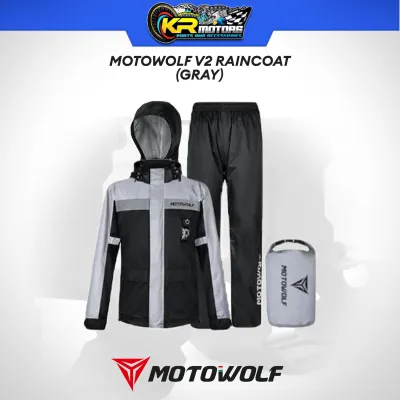
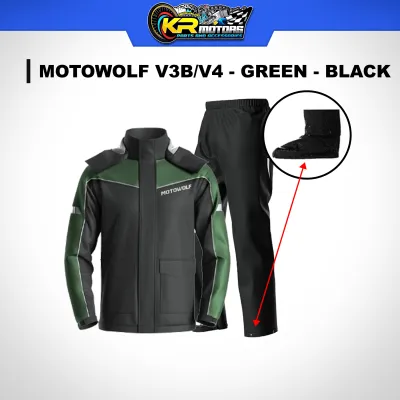
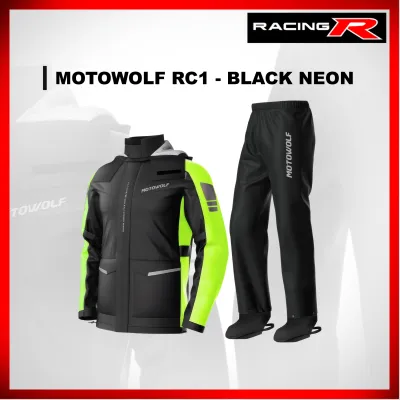
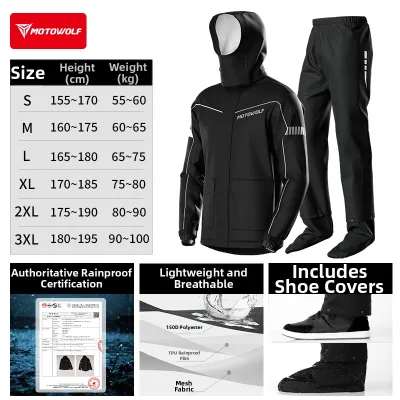
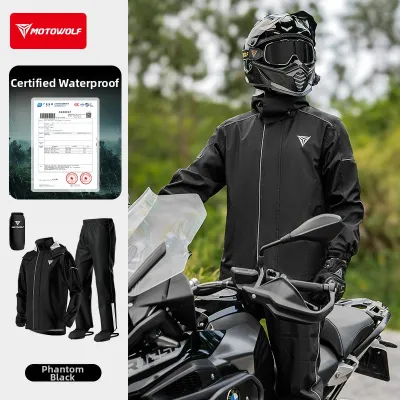
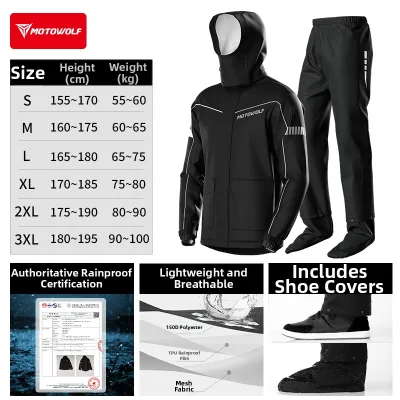
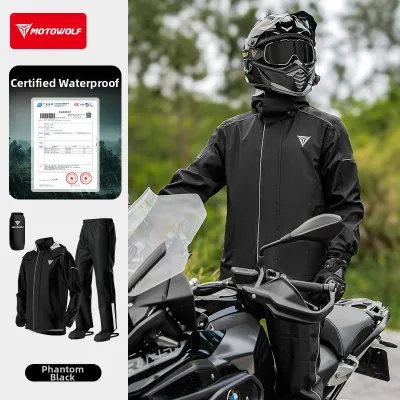
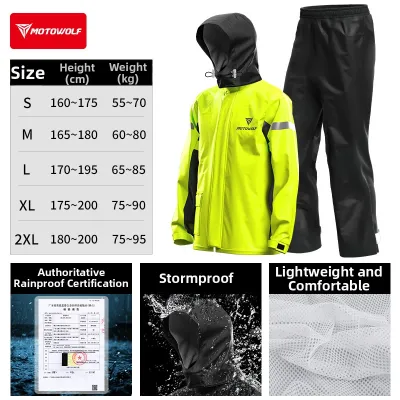
Prices are valid at publication and may change. Please refer to the product page for the latest price.
The physical design of the closures and openings determines how well the raincoat keeps out wind-driven water. A high collar that extends up to the chin is vital for preventing water from running down your neck from the base of your helmet. Look for double-flap zipper closures, where a wide storm flap folds over the main zipper and secures with hook-and-loop fasteners or snap buttons to block wind-driven rain. Adjustable cuffs on the sleeves and ankles are equally important; they allow you to seal the garment tightly around your gloves and riding boots, preventing water from creeping upward due to wind pressure. Finally, if the model includes a hood, verify that it is either thin enough to fit comfortably under your helmet without affecting its safety fit, or fully detachable so it does not flap behind you and catch the wind while riding.
Comparing Motowolf Raincoat Styles for Daily Commutes
Motorcycle rain gear is generally divided into two primary categories: two-piece rain suits consisting of a separate jacket and pants, and single-piece rain ponchos or capes. Each style serves a distinct purpose and comes with specific trade-offs regarding protection, convenience, and storage. Understanding how these designs perform under different riding conditions will help you select the most practical option for your daily route.

While some riders prefer the absolute protection of a full suit, others prioritize the speed of putting on a single-piece cover when a sudden downpour begins. Balancing these factors requires looking at your average travel speed, the typical duration of your commute, and how much storage space you have available on your motorcycle, whether in a top box, under-seat compartment, or backpack.
Two-Piece Rain Suits (Jacket and Pants)
For the dedicated daily commuter facing long distances or highway travel, a two-piece rain suit is widely considered the standard for reliable wet-weather protection. By separating the jacket and pants, this design allows for a more tailored fit that closely hugs the body. This snug fit is crucial when riding at higher speeds, as it minimizes wind resistance and prevents the fabric from ballooning or flapping violently. Flapping fabric not only causes rider fatigue over long distances but can also degrade the waterproof coating over time due to constant friction.
The separate pants offer superior protection for the lower body, particularly the crotch and thigh areas where water naturally pools on a motorcycle seat during a ride. Because the pants pull up high over the waist and the jacket drapes well below the beltline, this overlapping design creates a highly effective barrier against water ingress, even when you are leaned forward in an active riding posture. Additionally, many two-piece models feature adjustable waist straps and leg gussets, allowing you to customize the fit to prevent water from pooling in the folds of the fabric.
The primary trade-off with a two-piece suit is the time and effort required to put it on and take it off. When a sudden storm hits, you must find a safe place to pull over, remove your shoes or navigate wide-opening pant legs, and pull on both garments before you get soaked. Furthermore, two-piece suits are inherently bulkier and heavier than ponchos, requiring more dedicated storage space in your top box or backpack. Despite these minor inconveniences, the unmatched wind resistance, durability, and complete dryness they provide make them the preferred choice for riders with commutes exceeding thirty minutes or those who frequently travel on open highways.
Rain Ponchos and Capes
Rain ponchos and capes offer a highly convenient, lightweight alternative for riders who prioritize quick deployment and easy storage. Designed as a single, loose-fitting garment, a poncho can be pulled over your head in a matter of seconds when a sudden shower begins, allowing you to resume your journey with minimal delay. Because of their generous, flowing cut, many ponchos can easily drape over a medium-sized backpack, keeping your personal electronics, laptop, and work documents dry without the need for individual waterproof bag covers.
However, the very design that makes ponchos convenient also introduces significant safety and performance limitations, particularly at higher speeds. The loose, open-bottom structure of a poncho allows wind to get underneath the fabric, causing it to flap violently and balloon outward. This ballooning effect can severely restrict your peripheral vision, block your side mirrors, and create sudden aerodynamic drag that compromises your stability on the road. More critically, loose fabric running near the lower half of the motorcycle poses a severe safety hazard, as it can easily become entangled in the rear wheel, chain drive, or hot exhaust pipe, potentially leading to mechanical damage or a serious accident.
For these reasons, rain ponchos are best suited for short, low-speed urban commutes, sudden light showers, or riders operating small scooters with limited under-seat storage. If you choose to use a poncho, it is vital to secure any loose fabric around your waist or legs using external straps or bungees to prevent it from flapping. For any commute that involves speeds above 40 km/h or travel along open, wind-swept roads, a two-piece suit remains the far safer and more effective option.
Ensuring Proper Fit and Sizing Over Riding Gear
Selecting the correct size for a motorcycle raincoat is vastly different from buying standard casual wear. Because your rain gear must fit comfortably over your daily clothing and, more importantly, your protective riding gear, you cannot rely on your usual shirt or jacket size. A raincoat that is too tight will restrict your movement, strain the seams, and potentially tear at the armpits or crotch when you mount your motorcycle. Conversely, a raincoat that is too large will flap excessively in the wind, creating drag and allowing water to pool in the loose folds of the fabric.
To find the right fit, always consult the manufacturer’s specific sizing charts, which are often calibrated to account for underlying clothing. When measuring yourself, do so while wearing your typical riding gear, including your padded mesh jacket, elbow guards, and knee protectors. If you fall between two sizes on the chart, it is generally advisable to opt for the larger size to ensure you have sufficient room for layering, especially during cooler rainy days. Look for models that feature adjustable waist straps, elasticated cuffs, and gusseted shoulders, as these allow you to cinch down excess material once the raincoat is on, maintaining a streamlined profile.
Before heading out into a storm, perform a full range-of-motion test with your new rain gear fully zipped up over your riding clothes. Sit on your motorcycle in your standard riding posture and reach for the handlebars. Ensure that the sleeves do not pull back too far, exposing your wrists, and that the back of the jacket does not pull tight against your shoulders, restricting your ability to steer or turn your head to check your blind spots. Stand up, sit down, and lift your legs as if mounting the bike to verify that the pants offer enough room in the crotch and thighs without binding or pulling down at the waist.
Caring for Your Raincoat to Maintain Waterproofing
Proper maintenance is essential to preserve the waterproof integrity and extend the lifespan of your rain gear. The high humidity and frequent rainfall of the Philippine wet season create an environment where damp gear can quickly develop mold, mildew, and unpleasant, musty odors. After every wet ride, never fold your wet raincoat and stuff it directly into a top box or under-seat compartment. Instead, hang it up on a wide, plastic hanger in a well-ventilated indoor area away from direct sunlight and heat sources. Allow both the exterior shell and the inner mesh lining to dry completely before storing the garment.
When the raincoat inevitably accumulates road grime, mud, or oil splatters, it must be cleaned gently to avoid damaging the delicate waterproof membrane and seam tape. Refer to the care label on your specific garment for manufacturer instructions. As a general rule, hand-washing is the safest method. Use a soft microfiber cloth or a gentle sponge with lukewarm water and a mild, non-detergent soap. Avoid using standard laundry detergents, bleach, fabric softeners, or harsh chemical solvents, as these substances can strip away the durable water-repellent coating on the fabric’s exterior and cause the internal seam tape to peel away.
Once clean and dry, store your rain gear properly to prevent physical damage. Fold the jacket and pants neatly, avoiding sharp creases that can weaken the waterproof coating over time, and place them in a breathable storage bag. Keep the gear stored in a cool, dry place away from direct sunlight, as prolonged exposure to ultraviolet rays can degrade the synthetic fabrics and cause the waterproof lining to crack. Additionally, ensure the storage area is free from sharp objects, tools, or heavy items that could puncture or abrade the fabric while in transit.
Purchasing Safely from Authorized Channels
Due to the high demand for reliable riding gear during the rainy season, counterfeit Motowolf products are common on various online marketplaces and physical retail shops. Counterfeit raincoats often look identical to genuine models in photos but are typically constructed from inferior materials with poorly sealed seams, leading to rapid water penetration during actual use. To ensure you receive genuine gear that offers the promised level of protection, always purchase from official brand stores or authorized local distributors.
When shopping on e-commerce platforms, look for sellers with official mall badges or verified distributor status. Take the time to read recent buyer reviews, paying close attention to user-uploaded photos of the packaging and the product itself. Genuine Motowolf rainwear is delivered in high-quality, branded packaging and features distinct holographic security tags, clear product labels, and robust hardware, such as branded zippers and snaps. Be skeptical of listings offering prices that are significantly lower than the average market rate, as these are often indications of counterfeit goods.
Additionally, verify the seller’s return and exchange policies before finalizing your purchase. Because proper fit is critical for safety and comfort, you want the flexibility to exchange the raincoat for a different size if the initial fit over your riding gear is not ideal. Purchasing from reputable, authorized channels not only guarantees product authenticity but also ensures you have access to customer support and valid warranty claims should you encounter any manufacturing defects, such as peeling seam tape or faulty zippers.
Frequently Asked Questions (FAQ)
Can I use a regular raincoat instead of a motorcycle-specific one?
Using a standard pedestrian raincoat for motorcycle commuting is highly discouraged due to safety and functional limitations. Regular raincoats are not designed to withstand the high wind pressures experienced while riding, which can force water through standard zippers and lightweight fabrics within minutes. Furthermore, pedestrian raincoats lack the tailored fit required for a riding posture, often ballooning in the wind, blocking your mirrors, or catching on moving parts of the motorcycle. Motorcycle-specific rain gear is engineered with heavy-duty, wind-resistant materials, secure double-flap closures, and extensive reflective elements to ensure both dryness and safety on the road.
How do I clean my Motowolf raincoat without damaging the waterproof coating?
To clean your raincoat safely, hand-wash it using lukewarm water and a mild, non-detergent soap or a specialized technical fabric cleaner. Gently wipe down the exterior with a soft sponge or microfiber cloth to remove road grime, then rinse thoroughly with clean water to ensure no soap residue remains. Never machine wash, tumble dry, dry clean, or use bleach on your rain gear, as the mechanical agitation and harsh chemicals will strip the water-repellent coating and delaminate the internal seam tape. Always hang the garment to air-dry completely in a shaded, well-ventilated area before folding it for storage.
What should I do if the raincoat seams start leaking?
If you notice water seeping through the seams of an older or heavily used raincoat, inspect the interior to locate the source of the leak. Over time, the heat-sealed seam tape can begin to peel or crack due to wear and folding. For minor leaks, you can apply a specialized flexible seam sealer or waterproof repair tape designed for outdoor gear, following the product’s application instructions carefully. However, if the leakage is widespread or the fabric’s waterproof membrane has degraded entirely, it is time to replace the rain gear to ensure you remain fully protected during your daily commute.

Community discussion
Share your experience or ask a question. Comments are reviewed before publication.