
The ideal oil drain pan for a motorcycle depends on your bike’s specific crankcase capacity, ground clearance, and how you plan to store and transport the used oil. For most standard motorcycles and underbone bikes in the Philippines, a pan with a capacity of 2 to 5 liters is highly practical, providing a safe buffer for typical oil volumes of 0.8 to 1.5 liters. Choosing between lightweight, chemically resistant high-density polyethylene (HDPE) plastic and heavy-duty steel or aluminum depends on your workspace setup and how often you perform maintenance.
Determining the Correct Capacity for Your Motorcycle
Before purchasing an oil drain pan, you must verify the exact oil capacity of your motorcycle’s engine. This information is located in your motorcycle owner’s manual or stamped directly on the engine crankcase near the oil fill cap. Relying on general estimates can lead to unexpected overflows, especially if your bike has an external oil cooler or a larger oil filter that holds additional volume.
Once you have identified the exact manufacturer-specified volume, add a safety margin of at least 20% to 30% to determine your minimum pan capacity. When hot oil first drains from the crankcase, it does not flow in a slow, controlled trickle; it often surges out under gravity, creating waves and splashes. A pan that is filled to its absolute brim is incredibly difficult to move without spilling oil onto your garage floor or driveway.
Products mentioned in this guide
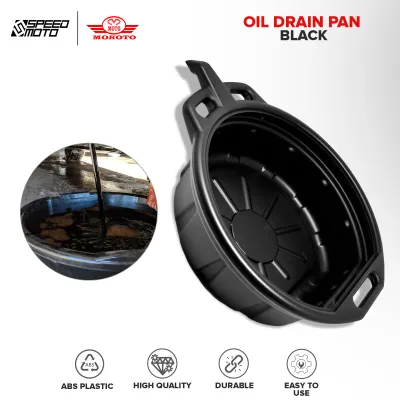
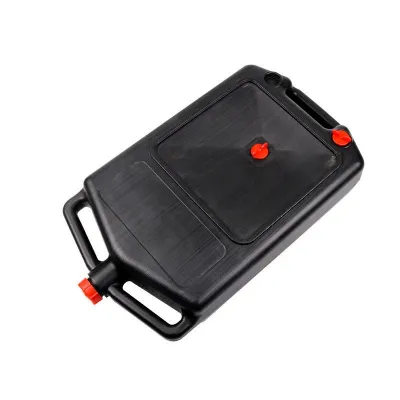
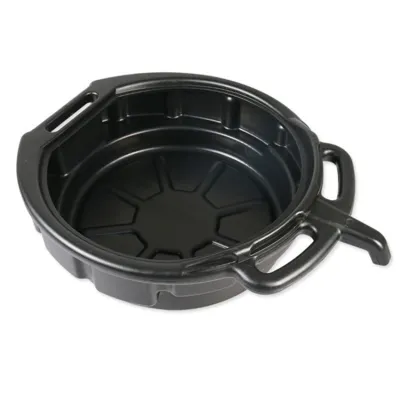
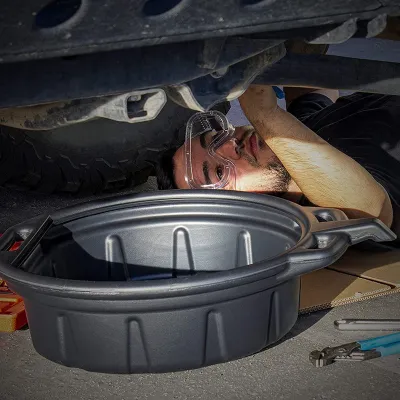
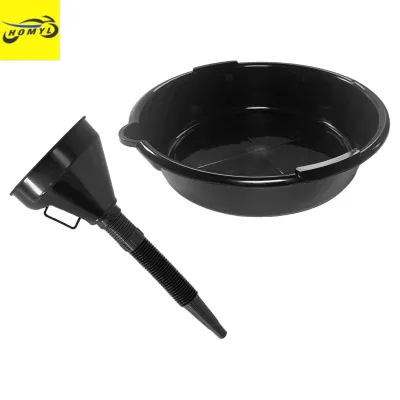
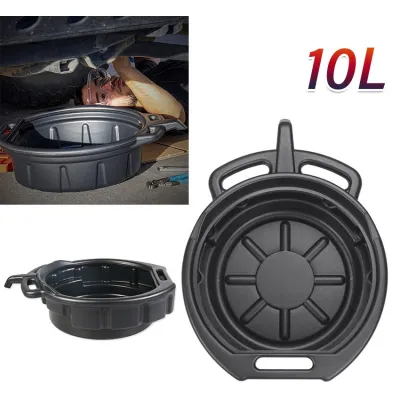
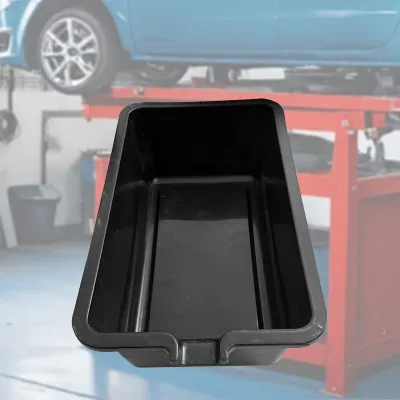
Prices are valid at publication and may change. Please refer to the product page for the latest price.
Ground clearance is another critical factor when selecting a pan. Many motorcycles, particularly cruisers, scooters, and lowered underbone models, have very limited space beneath the drain plug. Measure the distance from the ground to the bottom of your engine oil pan or exhaust pipes before buying. A low-profile oil drain pan ensures you can slide the container underneath without needing to prop the motorcycle up on unstable blocks, which poses a severe safety hazard.
Comparing Materials: Plastic vs. Metal Drain Pans
Choosing the right material for your oil drain pan involves balancing durability, weight, and how often you plan to use the tool. High-density polyethylene (HDPE) plastic is the most common material choice for DIY enthusiasts. This plastic is highly valued because it is lightweight, chemically resistant to motor oil and additives, and generally affordable. However, while modern plastics are resilient, they can degrade over time if left exposed to direct tropical sunlight or stored in high-temperature environments, which can eventually lead to cracking under stress.

Metal drain pans, typically constructed from galvanized steel or aluminum, offer exceptional durability and heat resistance. They can easily withstand the high temperatures of freshly drained engine oil without warping or softening. The trade-off is that metal pans are significantly heavier and can be prone to rusting if stored in humid coastal areas of the Philippines. Additionally, rough metal edges can scratch delicate garage floor coatings or tile surfaces if dragged across the floor.
To decide between these materials, evaluate your specific workspace and maintenance habits. If you perform oil changes occasionally and store your tools in a covered cabinet, a lightweight plastic pan is highly practical and cost-effective. If you run a busy home workshop, frequently work on multiple vehicles, or require a pan that can withstand rough handling on concrete surfaces, a heavy-duty metal pan provides the long-term durability needed for frequent use.
Key Design Features for Mess-Free Oil Changes
A well-designed oil drain pan does more than just catch oil; it simplifies the entire cleanup and recycling process. One of the most important features to look for is an integrated pour spout. A molded spout allows you to pour the used oil cleanly into a transport container without it running down the side of the pan. Pans that feature a secondary venting hole are even more efficient, as they allow air to enter the container while pouring, preventing the glugging and splashing that often leads to messy spills.
To prevent spills while moving a full pan, look for designs that incorporate anti-splash lips or raised, inward-curving edges. These structural features act as physical barriers, keeping the liquid contained even if the oil sloshes as you slide the pan out from under the motorcycle. Some advanced models also feature built-in baffles or textured bottoms that help break the momentum of moving liquid.
Finally, secure handling is essential when dealing with hot engine oil. Look for pans with ergonomic handles or dedicated grip zones that remain slip-resistant even if they come into contact with a small amount of oil. Having a firm, balanced grip reduces the risk of dropping the pan, protecting you from potential burns and saving you from a difficult cleanup process on your driveway or garage floor.
Safe Handling, Cleaning, and Oil Disposal
Safety should always be your top priority when performing motorcycle maintenance. After draining the oil, allow both the engine oil and the drain pan to cool to a safe temperature before attempting to move or clean the equipment. Hot oil can cause severe skin burns, and handling a hot plastic pan can cause the material to soften and warp, increasing the risk of structural failure and spills.
When cleaning your oil drain pan, use mild degreasers or dish soaps that are safe for the specific material of your pan. Avoid using harsh chemical solvents, such as chlorinated brake cleaners or acetone, on plastic pans, as these substances can rapidly degrade the polymer structure, leading to premature cracking and leaks. For metal pans, ensure they are thoroughly dried after washing to prevent rust formation, especially in humid tropical climates.
Proper disposal of used motor oil is critical for protecting the environment. Never pour used oil down household drains, into soil, or into storm sewers. In the Philippines, you should store the used oil in a sealed, labeled container and transport it to an authorized recycling center, a local waste management facility, or a participating automotive service station that accepts hazardous waste. Responsible disposal prevents toxic chemicals from contaminating local water supplies and ecosystems.
Frequently Asked Questions (FAQ)
Do I need a special oil drain pan for a motorcycle?
While you do not strictly need a motorcycle-specific oil drain pan, standard automotive pans can sometimes be too tall to fit under a motorcycle’s low chassis. Motorcycle-specific pans or low-profile utility pans are designed with a lower height to slide easily beneath exhaust pipes and frame rails. Additionally, because motorcycles hold less oil than cars, a smaller, more compact pan is much easier to maneuver and pour without spilling.
Can I use the same drain pan for my car and motorcycle?
Yes, you can use the same drain pan for both vehicles, provided the pan’s height is low enough to clear your motorcycle’s ground clearance. However, keep in mind that a large-capacity car pan will have a much wider surface area. When you drain a relatively small volume of motorcycle oil into a very wide pan, the shallow layer of oil can be more difficult to pour accurately into a recycling bottle, increasing the likelihood of spills.
Community discussion
Share your experience or ask a question. Comments are reviewed before publication.