
To maintain the balance and under-seat storage accessibility of your Honda Click 125i V4, the ideal top box is a lightweight hard-shell model with a capacity between 30 and 35 liters, mounted on a V4-specific heavy-duty bracket that positions the box slightly behind the seat hinge. This configuration allows the under-seat utility box (U-box) to open fully without obstruction, while keeping the center of gravity low enough to prevent front-wheel wobble or steering instability on Philippine roads.
Navigating city traffic in the Philippines requires a motorcycle that remains agile, responsive, and highly functional. The Honda Click 125i V4 is highly regarded for its nimble handling and fuel efficiency, making it a favorite for daily commuting. However, the standard under-seat storage, while useful, is often insufficient for riders who need to carry rain gear, riding boots, a laptop, or a full-face helmet. When looking at essential honda click 125i accessories v4 options, adding a top box is the most practical solution to expand your carrying capacity, but it must be done with careful planning to avoid compromising the very characteristics that make this scooter excellent.
When you add a rear luggage system, you are introducing a significant change to the motorcycle’s weight distribution and aerodynamics. If the box is too large, too heavy, or poorly positioned, it can turn an otherwise stable ride into a hazardous experience. This comprehensive guide details the physical constraints, aerodynamic factors, and installation safety protocols required to select and mount the perfect top box for your Click 125i V4 without sacrificing balance or under-seat convenience.
Products mentioned in this guide
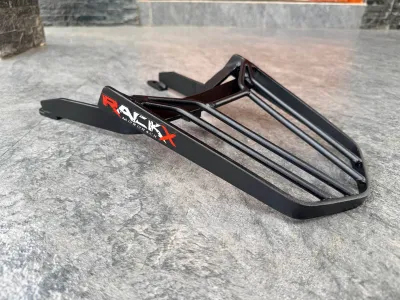
Prices are valid at publication and may change. Please refer to the product page for the latest price.
Quick Guide: Top Box Requirements for the Click 125i V4
Selecting an aftermarket storage solution for a lightweight scooter requires balancing convenience with mechanical safety. Before purchasing any luggage accessory, riders must understand that the scooter’s frame and suspension are engineered for specific load distributions. A top box that is too heavy or positioned incorrectly can severely degrade the vehicle’s handling.
To ensure your setup is safe and functional, keep the following core criteria in mind:
- Capacity Limit: Focus on top boxes within the 30-liter to 35-liter range to prevent overloading the rear subframe and altering steering response.
- Hinge Clearance: Verify that the mounting plate positions the box far enough back so the seat can swing open completely, allowing unobstructed access to the under-seat storage and fuel cap.
- Model-Specific Bracket: Use only a mounting bracket designed explicitly for the Click 125i V4 generation, as older brackets will not align with the updated tail plastics and grab rail mounts.
- Weight Distribution: Keep the combined weight of the bracket, empty top box, and cargo well within the scooter's rear carrier weight limit specified in your owner's manual.
- Chassis Dynamics: Avoid excessively wide or tall boxes that catch wind and disrupt the scooter's agile handling in tight city traffic.
Rear Rack Limits and Under-Seat Clearance Constraints
The Honda Click 125i V4 features a sleek, modern rear section with integrated tail plastics and a distinct grab rail design. Unlike older iterations of the Click series, the V4’s bodywork requires precise clearance for any aftermarket mounting system. The rear grab rail serves as the primary mounting point for top box brackets, meaning any load placed on the rack directly stresses this area. If a bracket is poorly designed or forces a generic fitment, it can pinch the tail plastics, leading to cosmetic damage or structural cracks over time.

One of the most common issues riders face after installing a top box is the inability to open the seat fully. The under-seat utility box (U-box) on the Click 125i V4 houses the fuel filler neck and the primary storage compartment. The seat hinges forward and swings upward in an arc. If a top box is mounted too far forward on the rear rack, the front face or backrest of the box will block the seat before it reaches its fully open position. This forces the rider to hold the seat up with one hand while refueling or searching for items, which is highly inconvenient during daily use.
To avoid this clearance issue, you must consult your scooter’s owner’s manual for the exact maximum rear carrier load capacity. This limit is typically conservative, often around 3 to 5 kilograms for standard rear racks. It is vital to remember that this weight limit represents the total load on the rear subframe, which includes the weight of the metal mounting bracket, the empty top box itself, and the cargo placed inside. Selecting a heavy aluminum top box can easily consume the entire weight limit before you even place a single item inside, placing excessive stress on the rear frame.
The solution lies in choosing a mounting plate that allows for adjustable positioning. A high-quality bracket will offset the top box backward just enough to clear the seat hinge arc when the seat is fully raised. However, this offset must be managed carefully. Pushing the box too far backward creates a lever effect, multiplying the force exerted on the rear subframe when riding over potholes or speed bumps. Finding the exact sweet spot—where the seat clears the box by a few millimeters and the box remains as close to the rider as possible—is key to protecting both the frame and your daily convenience.
Maintaining Scooter Balance and Handling Stability
Adding weight to the rear of a motorcycle changes its center of gravity, and on a lightweight scooter like the Click 125i V4, these changes are highly noticeable. Under normal riding conditions, the scooter’s weight distribution is balanced to keep the front tire firmly planted on the road for reliable steering and braking. When you install a top box and fill it with heavy items, you are placing weight high up and far behind the rear axle. This creates a pendulum effect that alters how the scooter handles.
The primary physical consequence of a heavy rear load is a lighter front end. As the front suspension extends and the tire loses downforce, steering can feel vague, loose, or overly sensitive. At higher speeds, or when decelerating from a commute on a highway, this lack of front-wheel traction can lead to a dangerous phenomenon known as speed wobble or handlebar shimmy. To prevent this, riders must adapt their packing habits. Always place the heaviest items, such as tools, locks, or spare parts, at the very bottom of the top box and as far forward as possible to keep the center of mass close to the scooter’s midpoint.
Aerodynamics also play a massive role in how a top box affects your ride. The Click 125i V4 is designed to cut through the air efficiently. Installing a large, blocky, or excessively wide top box acts like a sail behind the rider. In crosswinds, which are common on coastal roads or open highways in the Philippines, a large top box catches the wind and creates lateral aerodynamic drag. This can cause the scooter to sway unexpectedly, requiring constant steering corrections and increasing rider fatigue. Furthermore, this added drag increases wind resistance, directly reducing your fuel economy.
From a safety perspective, exceeding the manufacturer’s weight limits on the rear carrier poses serious risks. The rear subframe of the scooter is not designed to support heavy cargo over rough terrain. Overloading this area can compress the rear suspension completely, causing it to bottom out over bumps and transfer the impact directly to the frame and the rider’s spine. This lack of suspension travel reduces tire contact with the road, severely compromising your braking distance and cornering grip. Always perform a low-speed test ride in a safe area after changing your cargo configuration to understand how the scooter’s braking and steering dynamics have shifted.
Choosing the Best Honda Click 125i Accessories V4: Top Box Capacities and Styles
When shopping for a top box, it is easy to fall into the trap of thinking that bigger is always better. However, for a daily commuter on a Honda Click 125i V4, selecting the right volume is about finding the optimal balance between storage utility and riding safety.
30L to 35L Capacity (The Sweet Spot) For the vast majority of riders, a top box with a capacity of 30 to 35 liters represents the ideal sweet spot. This size is large enough to accommodate a single standard open-face or compact full-face helmet, a set of rain gear, and small personal items like a lunchbox or tablet. Because these boxes are relatively compact, they do not extend past the width of the scooter’s handlebars, keeping your lane-splitting capabilities intact. They are also lightweight, meaning they do not overstress the rear subframe or cause dramatic shifts in the scooter’s center of gravity.
40L+ Capacity (The Trade-off) Top boxes with capacities of 40 liters or more are widely available, but they present significant trade-offs for Click 125i V4 owners. These larger boxes encourage heavy packing, which can easily exceed the scooter’s rear subframe limits. Physically, they are much wider and taller, which dramatically increases aerodynamic drag and makes the scooter highly sensitive to side winds. While a larger box might be necessary for riders who travel long distances or carry bulky, lightweight items, using one safely typically requires upgrading to a heavy-duty, reinforced aftermarket subframe bracket. Even then, the standard grab rail mounts on the V4 are not designed for such loads, and long-term use can lead to frame fatigue.
Hard Shell vs. Soft Luggage Riders must also choose between hard-shell boxes and soft luggage systems. Hard-shell boxes, typically made of impact-resistant polypropylene or aluminum, are the preferred choice for daily commuting in tropical climates. They offer excellent weather resistance, keeping your belongings dry during sudden, heavy downpours. Additionally, they feature secure key-locking mechanisms, allowing you to leave your helmet or valuables locked on the bike safely. The downside is that they add permanent weight to the rear of the scooter. Soft luggage, such as tail bags, is much lighter and can be easily removed when not in use. However, soft bags offer very little protection against theft, require separate waterproof rain covers, and can sag or shift during a ride if they are not securely strapped down.
Checking Internal Dimensions Before making a purchase, do not rely solely on the advertised liter capacity of a top box. Different manufacturers shape their boxes differently; some are deep and narrow, while others are wide and shallow. If your primary goal is to store a specific helmet, measure the helmet’s physical dimensions—including any external ventilation ducts, spoilers, or action camera mounts—and compare them directly to the internal dimensions of the top box. A 32-liter box with a rounded, tall lid may easily fit a full-face helmet that would struggle to fit into a flatter 35-liter box.
Mounting Bracket Selection and Installation Safety
The safety and reliability of your top box setup depend entirely on the bracket that connects it to your scooter. Many riders make the mistake of purchasing cheap, generic brackets or attempting to reuse hardware from older motorcycle models. This compromises safety and can lead to catastrophic failure on the road.
It is absolutely critical to purchase a mounting kit specifically engineered for the Honda Click 125i V4. The V4 generation has unique frame mounting points, bolt hole spacing, and rear plastic bodywork that differ from the V2 and V3 models. Attempting to force an incompatible bracket to fit can strip the threads in the scooter’s frame, crack the expensive tail fairings, or leave the bracket under constant tension, making it highly susceptible to snapping under the vibration of daily riding.
When installing your mounting bracket and top box, always perform these essential safety checks:
- Thread-Locking Fluid: Apply a medium-strength thread-locking compound (such as blue threadlocker) to all mounting bolts. Motorcycle engines, especially single-cylinder scooter engines, produce high-frequency vibrations that can easily back out unsecured bolts over time.
- Light and Signal Clearance: Once the bracket and mounting plate are installed, sit on the scooter and have someone verify that the assembly does not block your tail light, brake light, or rear turn signals from any viewing angle. Road safety laws require these lights to be fully visible to vehicles behind you.
- Bodywork Friction: Inspect the area where the bracket passes near the tail plastics. There should be a clear gap of at least a few millimeters. If the metal bracket rubs against the plastic panels, the vibration will quickly wear away the paint and can eventually wear a hole through the plastic.
- Hardware Inspection: Regularly inspect all mounting bolts, brackets, and the top box latch mechanism for signs of wear, rust, or loosening. This is especially important if you frequently ride on unpaved or bumpy roads.
If the installation of your chosen bracket requires modifying the original grab rail, drilling holes into the bodywork, or if you are unsure of the correct torque specifications for the frame bolts, stop immediately. Refer to the manufacturer’s instructions for both the bracket and the scooter. If a conflict arises, or if you lack the proper tools, consult an authorized Honda dealer or a qualified motorcycle mechanic to complete the installation. A professionally installed bracket ensures that the structural integrity of your scooter is maintained and that your cargo remains secure at all times.
Frequently Asked Questions (FAQ)
Can I use a top box bracket from an older Click 125i model on the V4?
No, you should not use a bracket designed for older generations of the Honda Click on the V4 model. Although the top boxes themselves are generally universal and can be transferred between different mounting plates, the bracket that connects the plate to the scooter’s frame is highly model-specific. The Honda Click 125i V4 features redesigned rear plastics, a different grab rail shape, and updated bolt spacing compared to the V2 or V3 models. Attempting to install an older bracket will result in poor alignment, which can crack your bodywork, strip the frame threads, or cause the bracket to fail under load. Always verify that the bracket you purchase is explicitly labeled for the V4 generation.
Will adding a top box with LED lights drain the Click 125i V4's battery?
A standard top box without electrical components will have absolutely no effect on your scooter’s battery. However, if you choose a top box that features integrated LED brake lights, turn signals, or internal courtesy lights, you must take care during installation. While LED lights draw very little current, tapping directly into the scooter’s stock wiring harness without proper fuses or relays can lead to electrical shorts, parasitic battery drain, or even void your vehicle’s warranty. If you are not experienced with motorcycle electrical systems, always refer to the vehicle’s original wiring diagram and have the installation completed by a qualified professional auto-electrician.
How do I ensure my top box stays waterproof during heavy tropical rain?
To protect your belongings from heavy tropical downpours, you must perform regular maintenance on your top box. Start by checking the rubber gasket or weather seal that runs along the rim of the lid. Ensure it is clean, free of debris, and has no visible cracks or flat spots. Applying a thin coat of silicone grease to the rubber seal can help keep it pliable and improve its water-resistant properties. Additionally, ensure that the locking latch pulls the lid down firmly to compress the seal. For absolute safety when carrying sensitive items like electronics, laptops, or important documents, always place them inside a heavy-duty waterproof dry bag or dry sack before storing them inside the top box.
Community discussion
Share your experience or ask a question. Comments are reviewed before publication.