
Selecting the right engine air filter for your Toyota Innova is a critical maintenance task that directly impacts engine health, fuel efficiency, and overall performance. In the Philippines, where vehicles frequently encounter a mix of dense urban traffic, dusty provincial roads, and high relative humidity, the engine air filter serves as the primary line of defense against airborne contaminants. Choosing between a genuine Original Equipment Manufacturer (OEM) filter and an aftermarket alternative requires balancing upfront costs in ₱ against long-term reliability and warranty compliance. While OEM filters offer guaranteed fitment and factory-standard filtration, reputable aftermarket options provide a cost-effective solution for out-of-warranty vehicles, provided you verify the exact specifications. This guide outlines how to evaluate your options, inspect your current filter, and perform a safe replacement to keep your Innova running smoothly.
Identifying When Your Toyota Innova Needs a New Air Filter
Regularly inspecting your engine air filter is essential to prevent premature engine wear and maintain optimal combustion. Over time, the filter media accumulates dust, pollen, soot, and other airborne debris, which gradually restricts the volume of air reaching the engine cylinders.
To determine if your filter requires replacement, perform a thorough visual inspection. Remove the filter from its housing and hold it up to a bright light source; if the light cannot penetrate the pleats, the filter is saturated with fine dust and needs to be replaced. Look closely for physical damage, such as torn paper pleats, separated rubber borders, or mold growth caused by high humidity and moisture exposure during the monsoon season.
Products mentioned in this guide
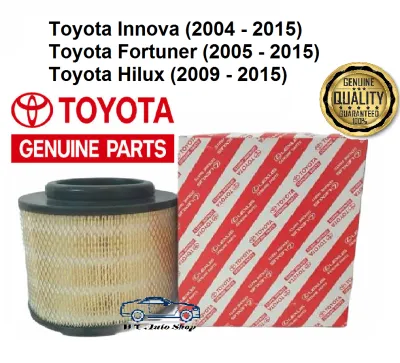
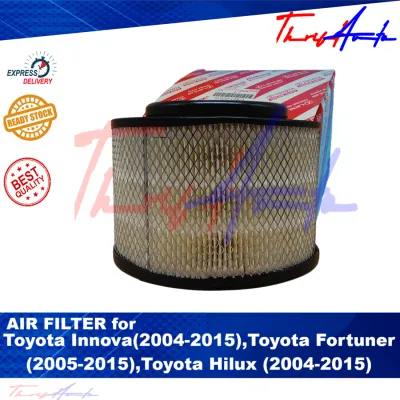
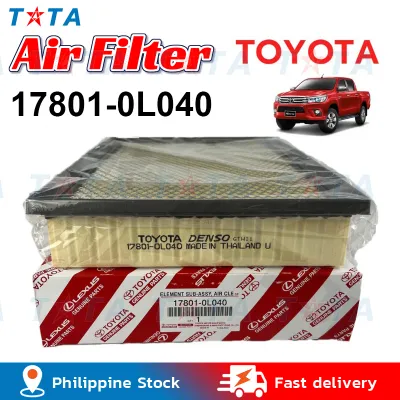
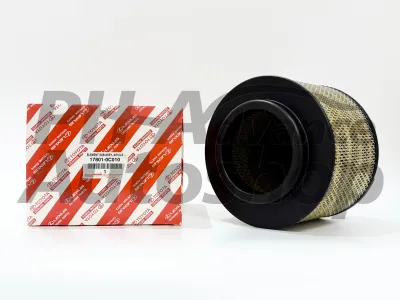
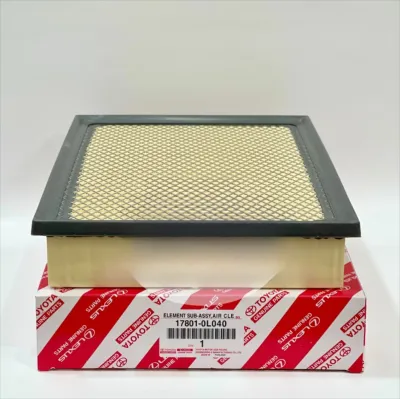
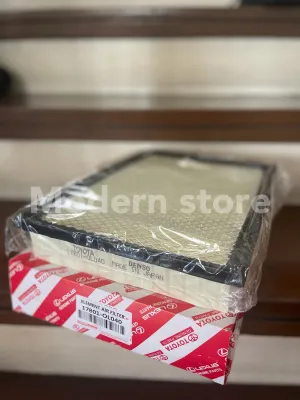
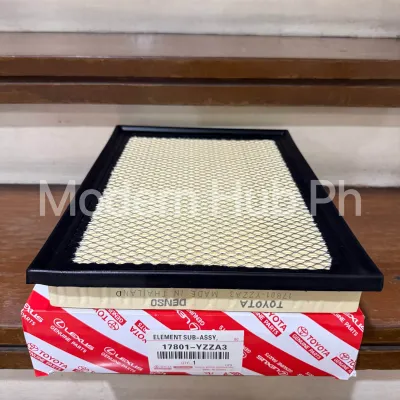
Prices are valid at publication and may change. Please refer to the product page for the latest price.
In addition to visual cues, pay attention to performance symptoms that indicate restricted airflow. A clogged air filter often manifests as sluggish throttle response, particularly when accelerating on highways or climbing steep inclines. Because a restricted filter limits the volume of oxygen available for combustion, the engine may exhibit unusual sucking sounds under load, a noticeable drop in fuel economy, or even black smoke from the exhaust in diesel engine variants.
Always consult your specific Toyota Innova owner’s manual for baseline replacement intervals rather than relying on generic mileage rules. Driving conditions in the Philippines—such as daily commuting in heavy stop-and-go city traffic or frequent travel on unpaved rural roads—are classified as severe operating conditions, which typically require more frequent inspections and shorter replacement intervals.
OEM vs. Aftermarket Air Filters: What to Compare
When purchasing a replacement air filter, you will generally choose between genuine Toyota OEM parts and third-party aftermarket alternatives. Both options have distinct characteristics, and understanding their trade-offs will help you make an informed decision based on your vehicle’s age and your budget.

Genuine OEM Filters
Genuine OEM filters are designed and manufactured to meet the exact specifications of your Toyota Innova’s engine. These parts guarantee a perfect fit, ensuring that the rubber sealing gasket matches the airbox dimensions precisely to prevent unfiltered air from bypassing the filter media.
Using genuine OEM filters is highly recommended if your vehicle is still covered under the factory warranty. Dealership service centers expect genuine parts during routine maintenance, and using OEM components eliminates any potential disputes regarding warranty coverage should an engine or sensor issue arise.
However, OEM filters typically carry a higher upfront cost in ₱ compared to third-party alternatives. Additionally, their availability is often limited to authorized dealership parts counters or specialized Toyota parts distributors, which may require a dedicated trip or shipping wait times if you live outside major metropolitan areas.
Aftermarket Alternatives
Aftermarket air filters are produced by independent manufacturers and are widely available at local auto supply stores and online marketplaces. These filters offer a highly cost-effective alternative for out-of-warranty vehicles, allowing owners to maintain their cars without paying dealership premiums.
When opting for an aftermarket filter, you must verify the exact part number cross-reference and physical dimensions against your old filter before finalizing the purchase. The Toyota Innova has been produced across multiple generations with different engine options—including the 2.0-liter petrol engine and the 2.5-liter or 2.8-liter diesel engines—and each variant utilizes a specific airbox design and filter size.
Be vigilant against low-quality aftermarket products by checking for common red flags. Avoid filters that feature flimsy cardboard frames, thin or unevenly spaced pleats, or hard, non-pliable rubber gaskets that fail to create an airtight seal inside the housing. Investing in a reputable, established aftermarket brand ensures the filter media provides adequate protection without restricting necessary airflow.
Evaluating Filter Materials and Care Requirements
Air filters are constructed from different materials, each requiring specific handling and maintenance procedures. Choosing the right material depends on your willingness to perform routine upkeep and the driving conditions your Innova regularly faces.
Standard dry paper or cellulose filters are the most common type and are designed strictly for single-use replacement. These filters trap fine dust particles deep within their microscopic fibers; attempting to wash them or blow them out with high-pressure compressed air will tear the delicate paper media, permanently damaging the micro-pores and allowing abrasive dirt to enter the engine.
Reusable cotton or synthetic gauze filters feature a more open weave designed to be cleaned, dried, and re-oiled periodically. While these filters can last significantly longer than paper alternatives, they require specific cleaning kits and precise re-oiling procedures strictly according to the manufacturer’s instructions. Applying too much oil to a reusable filter can cause the excess fluid to migrate down the intake tract, potentially contaminating the Mass Air Flow (MAF) sensor and triggering engine warning lights.
Before purchasing, always check the product label for specific material claims and care instructions. Ensure the chosen filter type matches your maintenance preferences; if you prefer a quick, hassle-free swap during routine oil changes, standard dry paper filters remain the most practical and reliable choice.
Step-by-Step Air Filter Replacement Guidelines
Replacing the engine air filter on a Toyota Innova is a straightforward task that can be completed at home with basic precautions. Prioritizing safety and cleanliness during the process prevents debris from entering the engine intake.
Before beginning, ensure the vehicle is parked on a level surface, the engine is turned off, the parking brake is engaged, and the engine bay has cooled completely to avoid burns. Locate the plastic airbox housing in the engine bay, referring to your Toyota Innova owner’s manual to identify the securing clips or screws holding the cover in place.
Carefully unclip or unscrew the airbox cover, lifting it gently to access the filter. Slide the old filter out of the housing, noting its orientation so you can install the new one in the exact same direction. Before inserting the new filter, use a clean, damp microfiber cloth to wipe away any dust, leaves, or debris accumulated at the bottom of the airbox housing, taking extreme care not to push any dirt into the clean-air side of the intake duct.
Compare the old and new filters side-by-side to verify that the length, width, height, and sealing gasket shape are identical. Seat the new filter firmly into the housing, ensuring the rubber gasket sits flush along the entire perimeter of the airbox edge to prevent unfiltered air bypass. Lower the airbox cover back into place without forcing it; if the cover does not close easily, the filter is likely misaligned and must be repositioned.
Secure the housing clips or screws evenly to maintain uniform pressure on the seal, and perform a final check to ensure no tools, rags, or loose parts are left inside the engine bay before closing the hood. If you notice that the plastic airbox housing is cracked, the securing clips are broken, or there is oily residue or heavy dust coating the clean-air side of the intake duct past the filter, stop the installation immediately and consult a qualified professional to address these issues.
Making Your Final Filter Decision
To make the best choice for your Toyota Innova, evaluate your vehicle’s current warranty status, your budget, and your typical driving environment.
Choose a genuine OEM filter if your Innova is still under factory warranty, if you prefer a zero-guesswork fitment, or if you rely exclusively on authorized dealership servicing to maintain your vehicle’s service history.
Opt for a reputable aftermarket filter if your vehicle is out of warranty, you want to manage your maintenance costs in ₱, and you are comfortable verifying part numbers and inspecting physical build quality at local auto supply stores.
Always verify your engine specifications first if you drive in exceptionally dusty or demanding environments. In these cases, confirm if a heavy-duty or high-capacity dry paper filter is approved for your specific Innova engine variant to handle the increased dust load without restricting airflow.
Frequently Asked Questions (FAQ)
Can I clean my Toyota Innova's paper air filter instead of replacing it? (FAQ)
No, standard paper or cellulose air filters are strictly single-use components and must be replaced when dirty. Tapping the filter against a hard surface may remove large debris, but it does not clear the microscopic dust embedded deep within the paper fibers. Using compressed air is highly discouraged, as the high pressure easily tears the delicate paper media, creating invisible holes that allow abrasive dirt particles to pass directly into your engine cylinders. For standard filters, replacement is the only safe and effective option.
Will using an aftermarket air filter void my Innova's warranty? (FAQ)
Using an aftermarket air filter does not automatically void your Toyota Innova’s factory warranty. Under general consumer protection principles, a manufacturer cannot void a warranty simply because a third-party consumable part was used, provided the part is of equivalent quality and correctly specified for the vehicle. However, if an aftermarket filter fails—for instance, if a poorly made gasket leaks unfiltered air or a reusable filter’s oil damages the MAF sensor—any resulting engine damage will not be covered under the factory warranty. To protect your warranty, keep detailed receipts of all maintenance work and ensure any aftermarket part used meets or exceeds OEM specifications.
Community discussion
Share your experience or ask a question. Comments are reviewed before publication.