
Selecting the right wiper washer fluid is one of the most critical yet overlooked steps in preparing your vehicle for the intense Philippine rainy season. When torrential downpours strike, your windshield becomes the only barrier between you and a complete loss of situational awareness on the road. Standard water or low-grade fluids simply cannot cope with the unique combination of high humidity, greasy road grime, and biological growth characteristic of a tropical monsoon. To maintain absolute optical clarity, you need a specialized wiper washer fluid formulated to cut through stubborn traffic oil films, repel heavy rain dynamically, and prevent biological clogs within your vehicle’s washer system.
Why the Philippine Monsoon Changes Your Washer Fluid Needs
Navigating the roads during the southwest monsoon, locally known as the Habagat, presents a set of environmental challenges that drivers in temperate climates rarely encounter. Persistent, heavy downpours can reduce visibility to less than five meters in a matter of seconds. At the same time, the tropical heat ensures that the ambient temperature remains high, hovering around 30°C even during active storms. This combination of intense moisture and heat creates a highly demanding environment for your vehicle’s windshield and wiper system, requiring a fluid that does far more than simply wet the glass.
In major urban centers like Metro Manila, Metro Cebu, and Davao, stop-and-go traffic exacerbates these driving hazards. The high concentration of vehicles, particularly older diesel trucks, buses, and jeepneys, releases a constant stream of unburnt hydrocarbons, soot, and oily particulates into the air. When it rains, this airborne pollution mixes with road water and is kicked up by the tires of leading vehicles, settling onto your windshield as a thick, greasy traffic oil film. This film is highly stubborn and non-water-soluble; running your wipers over it with plain water will only smear the grease across the glass, creating a blinding glare from oncoming headlights and streetlights during night drives.
Products mentioned in this guide
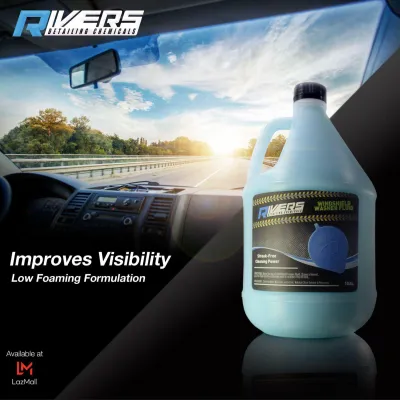
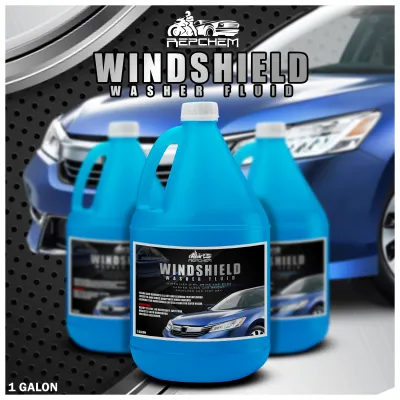
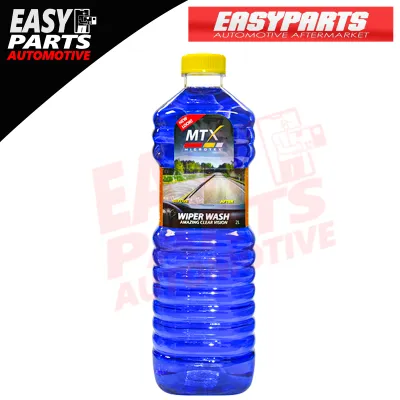
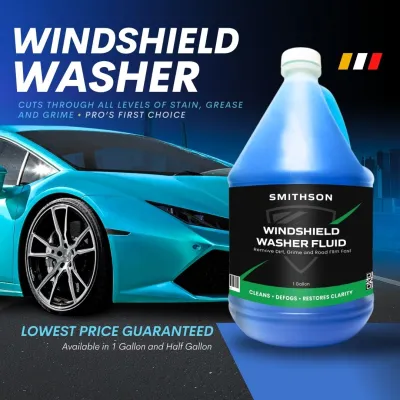
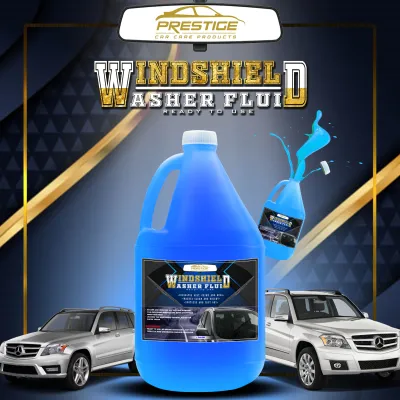
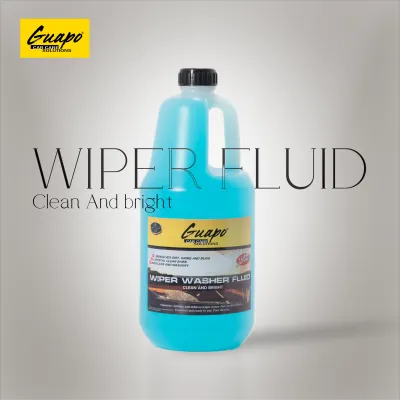
![[1 LITER] Toyota Windshield Washer Fluid - Toyota Auto Parts - TWWF](https://img.lazcdn.com/g/p/fbea552c32776d044e7e4186e55c0aef.jpg_400x400q80.jpg_.webp)
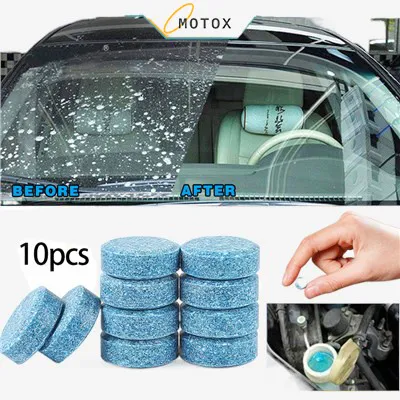
Prices are valid at publication and may change. Please refer to the product page for the latest price.
Furthermore, the tropical climate is highly conducive to organic residues. Wet roads during the rainy season are often accompanied by swarms of flying insects, especially when driving along provincial highways or near agricultural areas at dusk. These insects splatter against the warm windshield, and their proteins and lipids quickly bake onto the glass under the sun. Removing these organic bonds requires specific chemical surfactants that can break down the proteins without damaging the surrounding automotive finishes.
These extreme tropical conditions stand in stark contrast to cold-climate environments, where washer fluids are heavily loaded with volatile alcohols like methanol to act as de-icers. In the Philippines, where freezing temperatures are virtually non-existent, using a fluid designed for cold climates is highly counterproductive. The high alcohol content in de-icing fluids causes them to evaporate almost instantly on a warm tropical windshield, leaving behind unsightly streaks of dissolved minerals and drying out your wiper blades. Therefore, the core objective during the monsoon season is selecting a dedicated tropical formulation that maintains a wet, lubricated surface, actively dissolves road oils, and protects the mechanical integrity of your wiper system.
Key Formulation Features for Heavy Rain and High Humidity
To successfully combat the challenges of the tropical wet season, you must select a wiper washer fluid that features specific, scientifically formulated chemical properties. Understanding these key ingredients and their functions allows you to make an informed purchase that directly translates to safer driving conditions.

Oil Film Removal and Insect Dissolvers
The primary defense against dangerous windshield smearing is the presence of specialized surfactants in your washer fluid. Surfactants are surface-active agents designed to lower the surface tension of the fluid, allowing it to spread evenly across the glass and penetrate beneath greasy road oils and diesel soot. Chemically, these molecules feature a hydrophilic head that bonds with water and a hydrophobic tail that attaches to grease. This unique structure emulsifies the oily contaminants, lifting them off the glass surface so that the mechanical sweep of your wiper blade can wipe them away cleanly in a single pass.
When shopping for a wet-season washer fluid, avoid generic products that only claim to “clean” the glass. Instead, carefully inspect the product labels for explicit designations such as “oil film remover,” “heavy-duty traffic film dissolver,” or “bug wash.” These specialized formulations are engineered with mild, non-ionic surfactants that target stubborn petroleum-based grime and baked-on insect proteins. By breaking down these organic and chemical bonds on contact, these fluids prevent the formation of a hazy, light-scattering film, ensuring that your view remains crystal clear even during heavy night-time downpours.
Water Beading and Rain Repellent Additives
Maintaining visibility during a sudden tropical cloudburst requires more than just clearing away dirt; it requires actively managing how water behaves on the glass surface. Advanced washer fluids often incorporate hydrophobic additives, typically silicone-based polymers or fluoropolymers, which chemically bond to the microscopic pores of the windshield. This bonding process creates an ultra-smooth, low-energy barrier that alters the physical behavior of water droplets upon impact.
Instead of spreading out into a flat, continuous sheet of water that distorts your vision, rainwater hitting a treated windshield immediately pulls itself into tight, spherical beads. At highway speeds—such as when driving along the North Luzon Expressway (NLEX) or the South Luzon Expressway (SLEX)—the aerodynamic wind shear acting on the vehicle easily pushes these water beads off the glass. This self-clearing action drastically reduces the mechanical workload on your wiper blades and ensures that you can see clearly even in the brief intervals between wiper sweeps. To find these benefits, look for packaging labeled with terms like “water beading,” “rain repellent,” or “hydrophobic shield.” Keep in mind that these additives work most effectively when the glass has been thoroughly deep-cleaned and the wiper blades are in excellent physical condition.
Anti-Fungal and Algae-Preventing Agents
The high humidity and elevated temperatures of the Philippine climate present a unique biological risk to your vehicle’s washer fluid delivery system. The washer fluid reservoir, tucked away in the warm engine bay, acts as a virtual incubator for microorganisms. If you use untreated water or low-quality fluids that lack preservative stabilizers, bacteria, mold, and algae can rapidly colonize the reservoir, forming a thick, gelatinous biofilm.
This biological growth is a common cause of washer system failures during the rainy season. The slimy algae can easily clog the fine mesh screen of the fluid pump inlet, reducing the spray pressure, or it can travel down the thin delivery hoses to completely block the tiny spray nozzles on your hood. To prevent this, high-quality tropical washer fluids are formulated with biocides, anti-fungal agents, or specific “anti-algae” stabilizers. These ingredients keep the fluid sterile and free of biological growth over long periods of high humidity, ensuring that your spray jets remain completely unblocked and ready to perform when you need them most.
Ingredients to Avoid: Protecting Wipers and Paint in Tropical Heat
While selecting a powerful cleaning formula is important, you must also ensure that the chemical composition of the fluid does not cause long-term damage to your vehicle. The intense tropical heat of the Philippines accelerates chemical reactions, meaning that harsh or unsuitable ingredients can degrade automotive components much faster than they would in cooler climates.
First and foremost, avoid cheap, high-concentration methanol or harsh solvent-based fluids. In high tropical temperatures, volatile organic solvents evaporate at an accelerated rate. This rapid evaporation often occurs before the wiper blade can complete its sweep, leaving behind dry, white streaks of concentrated cleaning agents directly in your line of sight. Furthermore, concentrated methanol is highly aggressive toward rubber. Constant exposure to these harsh solvents strips the natural plasticizers and protective oils from your rubber wiper elements, causing them to dry rot, crack, split, or harden prematurely. Hardened rubber cannot conform to the curvature of your windshield, resulting in skipping, chattering, and poor clearing performance.
Additionally, steer clear of highly acidic or strongly alkaline formulations. Some vehicle owners mistakenly pour household glass cleaners or cheap, unbranded detergents into their washer reservoirs. Many of these household products contain ammonia or strong acids, which are highly destructive to automotive finishes. Run-off from these chemicals can chemically attack the clear coat of your vehicle’s paintwork, leaving permanent etched lines on your hood, A-pillars, and roof. Acidic or highly alkaline fluids also degrade the rubber weather stripping and polyurethane seals surrounding your windshield, potentially leading to cabin water leaks during heavy rain.
To protect your investment, always verify that the product label explicitly declares the fluid is “pH neutral,” “safe for paint,” and “safe for rubber and wipers.” Before purchasing or using any fluid, always refer to your vehicle’s owner’s manual for specific compatibility guidelines, and read the product label carefully to ensure it is authorized for automotive glass and paint. If instructions conflict, defer to the vehicle manufacturer’s guidelines.
Practical Maintenance for Your Washer System During the Wet Season
Investing in a high-quality tropical washer fluid is only half the battle; you must also ensure that the delivery system is properly maintained to achieve optimal performance. Simple, low-risk, and reversible maintenance steps can prevent common failures and keep your windshield perfectly clear throughout the monsoon months.
Reservoir Flushing If you suspect that your existing washer fluid has degraded, or if you observe visible algae or cloudiness inside the tank, you should perform a complete system flush before refilling it with a high-quality tropical formula. Mixing different chemical formulas can sometimes trigger a chemical reaction, resulting in a cloudy precipitate that can clog your system.
To safely flush the reservoir, locate the plastic tank under your hood, which is typically marked with a windshield wiper symbol on the cap. Use a clean siphon pump or a large syringe with a flexible hose to draw out as much of the old fluid as possible. If a siphon is unavailable, locate the rubber delivery hose connecting the reservoir pump to the hood nozzles, carefully disconnect it at a joint, place the end into a container, and have an assistant operate the washer switch inside the cabin in short, five-second bursts to empty the tank. Avoid running the pump continuously to prevent the pump motor from overheating. Once empty, fill the reservoir with clean, distilled water, cycle it through the system to rinse the internal lines, drain it once more, and then refill the tank with your chosen monsoon-ready formula.
Nozzle Clearing Over time, dust, car wash wax, and atmospheric debris can settle into the tiny spray jets on your vehicle’s hood, restricting the fluid flow or altering the spray pattern. If you notice that the fluid sprays in a weak, uneven stream or misses the windshield entirely, the nozzles likely require clearing.
Take a very fine sewing needle, a safety pin, or a specialized nozzle-cleaning tool, and gently insert the tip into the nozzle orifice. Do not force the pin or wiggle it aggressively, as this can damage the delicate nozzle insert or permanently distort the spray pattern. Gently rotate the pin to break up any hardened wax or mineral deposits, then activate the washer system to flush out the loosened debris. If the spray is misdirected, you can often use the pin inserted into the nozzle ball to gently pivot and adjust the spray direction so that the fluid targets the middle of the windshield, ensuring maximum coverage when driving.
Wiper Blade Synergy It is important to recognize that even the most advanced wiper washer fluid cannot compensate for physically degraded wiper blades. Wiper blades are wear items that typically last between six to twelve months in the harsh tropical climate of the Philippines, where they are constantly exposed to intense UV rays and high heat when parked outdoors.
Regularly inspect your wiper blades for physical signs of wear, such as tears along the rubber hinge, rounded edges on the squeegee, or a stiff, brittle texture. You can maintain their performance by cleaning the rubber elements periodically. Dampen a clean microfiber cloth with a small amount of diluted washer fluid and gently slide it along the edge of the rubber blade. This removes accumulated road grease, soot, and oxidized rubber, restoring the blade’s ability to make a clean, streak-free sweep. If the rubber remains hard, brittle, or torn after cleaning, replace the blades immediately with high-quality replacements that match your vehicle’s exact length and connector type.
System Verification Before heading out into a heavy downpour, always perform a quick system verification in a safe, stationary position. Ensure your vehicle is parked safely with the handbrake engaged, turn on the ignition, and activate the windshield washer system.
Observe the spray pattern to verify that the fluid is distributed evenly across the primary viewing areas of the windshield. Watch the wipers sweep across the glass: they should clear the fluid in one or two sweeps, leaving behind a perfectly clear surface without streaks, wet patches, or a temporary hazy film. Listen to the sound of the washer pump; a healthy pump should emit a smooth, consistent hum. If you hear a loud grinding noise or if no fluid emerges despite the reservoir being full, turn off the system immediately and inspect the lines for clogs or consult a qualified professional.
Frequently Asked Questions (FAQ)
Can I just use tap water instead of washer fluid during the rainy season?
No, using plain tap water in your washer reservoir is highly discouraged. Tap water lacks the necessary chemical surfactants to break down and lift stubborn, petroleum-based traffic oil films and baked-on insect residues, meaning your wipers will simply smear the grease across your windshield and create a dangerous glare. Additionally, tap water contains dissolved minerals like calcium and magnesium. Under the high heat of the engine bay, these minerals precipitate out of solution, forming hard scale deposits that will eventually clog your washer pump, hoses, and spray nozzles. Finally, tap water contains no biocides, allowing algae and mold to grow rapidly in the warm, humid environment of the reservoir, leading to severe clogs and foul odors.
How often should I check and refill the washer fluid during heavy monsoon months?
During the peak of the Philippine rainy season, you should visually inspect your washer fluid level at least once every two weeks, or every time you refuel your vehicle or perform a routine wash. Frequent driving in heavy rain and stop-and-go traffic significantly increases your fluid consumption, as you must constantly clear muddy road splash, oily mist, and atmospheric grime to maintain safe visibility. Do not rely solely on a dashboard warning light to alert you, as many older or entry-level vehicle models do not feature a low-fluid sensor, which could leave you completely without cleaning capability during a critical moment in a heavy downpour.
Community discussion
Share your experience or ask a question. Comments are reviewed before publication.