
Selecting the right clutch lining for your Honda Beat FI is essential for maintaining smooth acceleration, fuel efficiency, and overall ride comfort on busy roads. As a popular automatic scooter, the Honda Beat FI relies on a dry, centrifugal clutch system housed within the Continuously Variable Transmission (CVT) casing. Over time, the friction material on the clutch shoes wears down due to heat and constant engagement, leading to slipping and reduced performance. Choosing between standard replacement linings and performance-oriented compounds requires understanding your daily riding conditions, verifying exact model compatibility, and adhering to strict safety guidelines during installation.
To make an informed decision, you must first evaluate how your scooter is performing and inspect the physical condition of your current clutch components. By matching the lining material to your typical riding environment—whether that involves navigating flat city streets or carrying heavy loads up steep inclines—you can restore your scooter’s responsiveness and prevent premature wear on other transmission parts.
Recognizing Clutch Wear on Your Honda Beat FI
Before purchasing a replacement clutch lining, it is important to identify the clear signs of wear and distinguish them from other potential CVT issues. The most common symptom of a worn clutch lining is clutch slippage. When you twist the throttle, you may notice the engine revving higher than usual, but the scooter fails to accelerate proportionally. This occurs because the friction material on the clutch shoes can no longer grip the inner surface of the clutch bell effectively, causing the components to slide against each other instead of locking together.
Products mentioned in this guide
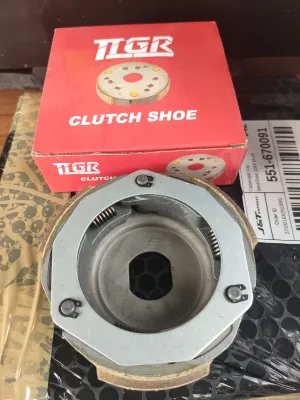
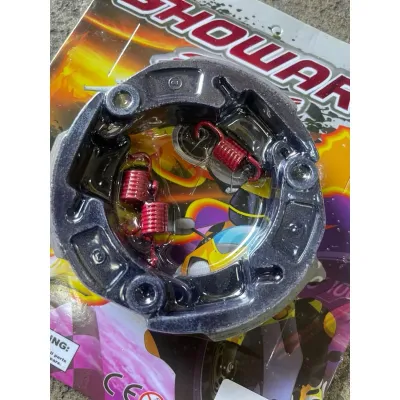
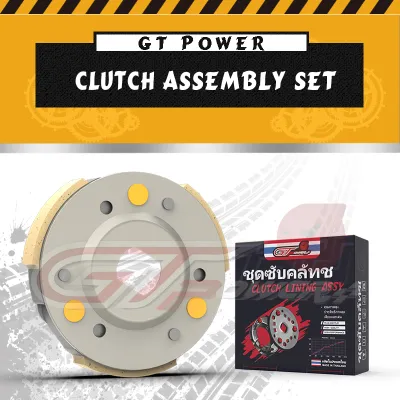
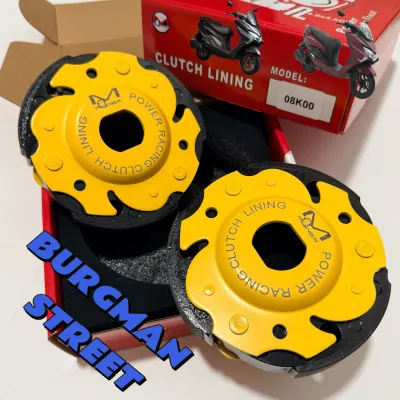
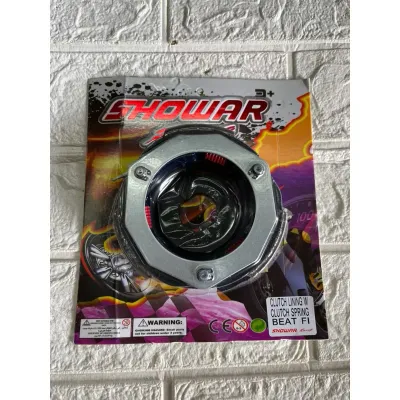
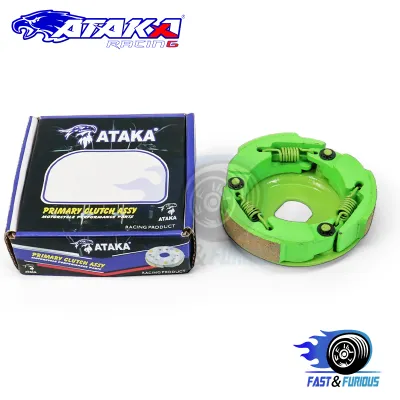
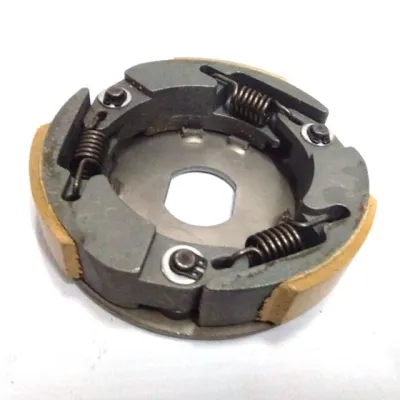
Prices are valid at publication and may change. Please refer to the product page for the latest price.
Another frequent indicator of clutch wear is a distinct shuddering or dragging sensation, often referred to locally as vibration or “panginginig,” when accelerating from a complete stop. This shuddering typically happens when the clutch lining has become glazed, unevenly worn, or contaminated with belt dust, grease, or engine oil. Glazing occurs when extreme heat crystallizes the surface of the friction material, turning it smooth and shiny, which severely reduces its gripping capability.
Unusual noises coming from the rear of the CVT casing also point to clutch problems. A high-pitched squealing or chirping sound during initial acceleration often indicates that the linings are slipping or glazed. If you hear a harsh, metallic grinding noise, the friction material may have worn down completely to the metal backing of the clutch shoes. Operating the scooter in this condition will rapidly score and ruin the inside of the clutch bell, leading to a much more expensive repair.
To confirm clutch wear, a visual inspection is necessary. After removing the CVT cover and the clutch bell, examine the thickness of the friction pads on the clutch shoes. While you should consult your owner’s manual for the exact service limit, a general rule of thumb is that linings worn down to less than 1.5 millimeters require immediate replacement. Additionally, check for uneven wear patterns across the shoes, deep cracks in the friction material, or signs of heat discoloration on both the shoes and the clutch bell.
It is also crucial to distinguish clutch wear from other drive system issues. For instance, a worn or stretched drive belt can cause slipping and a loss of top-speed performance, but it rarely causes low-speed shuddering. Flat spots on the CVT pulley’s roller weights will cause jerky gear transitions or sluggish mid-range acceleration rather than slipping during takeoff. If your scooter experiences a drop in power only at high speeds, the issue is more likely related to the rollers or the drive belt rather than the clutch lining.
Evaluating Clutch Lining Materials and Types
When shopping for replacement clutch linings, you will encounter different material compositions, each designed for specific riding conditions and performance characteristics. The two primary categories available for the Honda Beat FI are standard organic compounds and performance-oriented sintered or metallic compounds. Understanding the trade-offs of each material will help you select the option that best matches your daily usage.

Standard organic clutch linings are very similar to the original equipment manufacturer (OEM) parts that came with your scooter. These are typically composed of a mixture of organic fibers, rubber, resins, and small amounts of metal to assist with heat dissipation. Organic linings are highly recommended for daily commuting because they offer smooth, quiet, and predictable engagement. They operate exceptionally well at normal operating temperatures and are gentle on the clutch bell, which helps extend the lifespan of the entire clutch assembly. However, organic materials are more susceptible to thermal fade under extreme heat, meaning they can lose grip temporarily if subjected to prolonged stop-and-go traffic or heavy loads.
Sintered, metallic, or carbon-composite linings are often marketed as performance or heavy-duty upgrades. These linings are manufactured by fusing metallic particles and carbon fibers under high pressure and temperature. The primary advantage of these materials is their exceptional heat resistance and high friction coefficient. They maintain a strong grip even under extreme operating temperatures, making them highly suitable for riders who frequently carry pillion passengers, transport heavy cargo, or navigate hilly terrain. The trade-off, however, is that performance linings tend to engage more abruptly, which can make low-speed maneuvering in tight traffic feel slightly jerky. They can also generate more noise and cause faster wear on the clutch bell due to their abrasive nature.
When evaluating aftermarket clutch linings, always read the product packaging and manufacturer specifications carefully. Look for details regarding heat resistance, friction ratings, and recommended applications. High-quality manufacturers will clearly state whether the product is intended for standard daily commuting or high-load performance. Avoid products that make vague or exaggerated performance claims without providing clear specifications regarding material composition and compatibility.
Ultimately, your choice should depend on your primary riding environment. If your daily route consists of flat, open roads with minimal traffic, a standard organic lining will provide the smoothest ride and the longest component life. Conversely, if you regularly face congested city traffic with constant stopping and starting in tropical heat, a semi-metallic or carbon-composite lining may offer the durability and fade resistance you need to keep your scooter running reliably.
Verifying Compatibility and Sourcing Parts
Ensuring perfect compatibility is the most critical step when purchasing a new clutch lining for your Honda Beat FI. The Honda Beat has gone through multiple generations and model variants, including the early carburetor models, the initial fuel-injected (FI) versions, and the newer enhanced Smart Power (eSP) variants. Because dimensions, shoe weights, and spring tensions can vary between these generations, parts are not always universally interchangeable.
To guarantee a proper fit, start by locating the exact OEM part number for your specific model year. You can find this information in your scooter’s parts catalog, which is often available online, or by visiting an authorized Honda dealer. When cross-referencing aftermarket clutch linings, ensure the manufacturer explicitly lists your specific model year and engine variant on the packaging or in their official compatibility catalog. Never rely solely on a generic “Honda Beat” label, as installing a lining designed for a different generation can lead to poor engagement, excessive vibration, or physical damage to the CVT components.
When sourcing parts, it is highly recommended to purchase from authorized dealers, official brand stores, or reputable local motorcycle shops. While online marketplaces offer a wide convenience, they also host unbranded or counterfeit products that lack quality control. Counterfeit clutch linings may use inferior bonding adhesives that can fail under heat, causing the friction material to detach from the shoe while riding. If you choose to buy online, verify the seller’s credentials, read customer reviews, and look for official security holograms or packaging details that confirm product authenticity.
In terms of cost, standard OEM clutch shoe assemblies or reputable aftermarket equivalents typically range from ₱500 to ₱1,500. Complete assemblies that include the shoes, linings, and damper rubbers are generally more expensive than individual lining pads, but they offer a much simpler and safer installation process. Be cautious of products priced significantly below the market average, as they often compromise on material quality and manufacturing tolerances, which can jeopardize your safety on the road.
Installation Requirements and Safety Boundaries
Replacing the clutch lining or the complete clutch shoe assembly on a Honda Beat FI is a precise mechanical task that directly affects the vehicle’s drivetrain and rider safety. Before attempting to perform this maintenance yourself, it is essential to understand the specialized tools required and the safety boundaries involved in CVT service.
To safely disassemble the clutch system, you will need several specialized tools. These include a CVT holder or Y-tool to secure the clutch bell while loosening the locknut, a reliable socket wrench set, and a dedicated clutch spring compressor tool. The clutch shoes are mounted on the driven pulley and are held under significant tension by a large center compression spring. Attempting to remove the large retaining nut without a proper spring compressor is extremely dangerous; the spring can release violently, causing severe personal injury or damaging the surrounding components.
Improper installation of the clutch lining or assembly carries serious risks. If the clutch retaining nut is not tightened to the manufacturer’s exact torque specifications, it can work itself loose during operation. This can cause the clutch assembly to wobble, damage the input shaft, or even cause the rear wheel to lock up suddenly while riding, presenting an extreme safety hazard. Furthermore, failing to properly clean the clutch bell or contaminating the new linings with grease during installation will lead to immediate slipping and rapid glazing of the new friction material.
Because of these safety risks and the need for specialized equipment, you must carefully evaluate your mechanical experience before starting a DIY installation. If you do not own a torque wrench, a clutch spring compressor, or if you are uncomfortable handling high-tension springs, do not attempt the replacement yourself. Instead, take your scooter and the purchased parts to an authorized Honda service center or a qualified motorcycle mechanic. Professional installation ensures that all fasteners are torqued correctly, the CVT system is properly cleaned, and the clutch operates safely and smoothly.
Frequently Asked Questions (FAQ)
Can I replace just the clutch lining material instead of the whole shoe assembly?
While it is technically possible to purchase individual friction pads and bond them to your existing metal clutch shoes, this practice is highly discouraged for modern automatic scooters. Relining old shoes requires specialized high-temperature adhesives and precise industrial curing processes to ensure the pad remains securely bonded under intense centrifugal forces and extreme operating heat. If the bonding process is flawed, the lining can detach inside the spinning clutch bell, leading to an immediate rear-wheel lockup while riding. Replacing the complete clutch shoe assembly is the standard, recommended practice because it ensures structural integrity, proper balance, and consistent spring tension across all shoes.
How often should the clutch lining be inspected on a Honda Beat FI?
Under normal riding conditions, you should inspect your Honda Beat FI’s clutch lining every 8,000 to 12,000 kilometers, which aligns with standard CVT maintenance schedules. However, if you frequently ride in tropical conditions, high humidity, dusty environments, or experience heavy stop-and-go traffic, it is highly advisable to shorten this interval to every 4,000 to 6,000 kilometers. You should also perform an immediate inspection if you notice any sudden changes in acceleration, persistent shuddering when starting from a stop, or unusual squealing noises coming from the CVT casing, regardless of your current mileage.
Community discussion
Share your experience or ask a question. Comments are reviewed before publication.