
When you step on your vehicle’s brake pedal, you rely on a closed hydraulic system to multiply the force of your foot into enough clamping pressure to stop. At the heart of this system is the master cylinder. Upgrading or replacing this component often brings up the term “CNC-machined,” specifically regarding a high-performance cnc brake master cylinder. Understanding what this manufacturing process actually means for your vehicle’s safety is crucial before making any modifications to your braking system.
In the tropical climate of the Philippines, where stop-and-go traffic in metro areas generates immense heat and high humidity accelerates moisture absorption in brake fluid, brake component reliability is paramount. Standard cast-iron or cast-aluminum master cylinders have served drivers reliably for decades. However, CNC-machined alternatives offer distinct structural and hydraulic characteristics that appeal to performance enthusiasts and heavy-duty vehicle owners alike.
What CNC Machining Specs Mean for Brake Components
Computer Numerical Control (CNC) machining is a subtractive manufacturing process where a computer program directs precision machine tools to carve a finished part out of a solid block of metal, known as a billet. For high-performance brake master cylinders, manufacturers typically start with a solid billet of high-grade material, such as 6061-T6 or 7075-T6 aerospace-grade aluminum. This contrasts with traditional manufacturing, where molten metal is poured into a mold to create a cast component.
Products mentioned in this guide
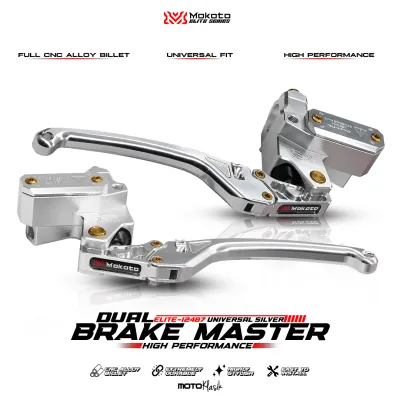
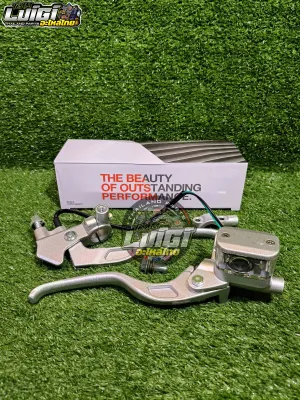
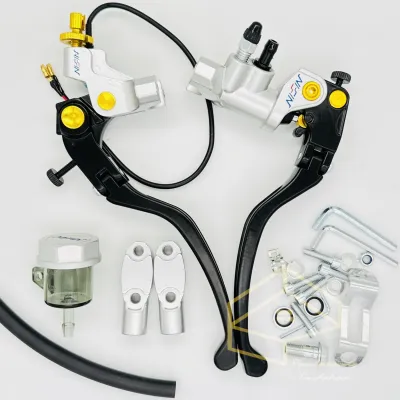
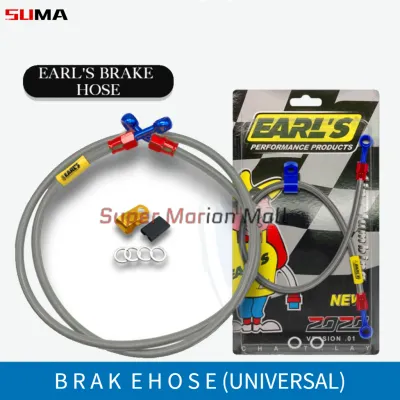
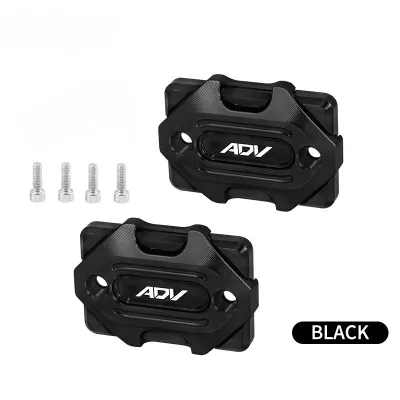
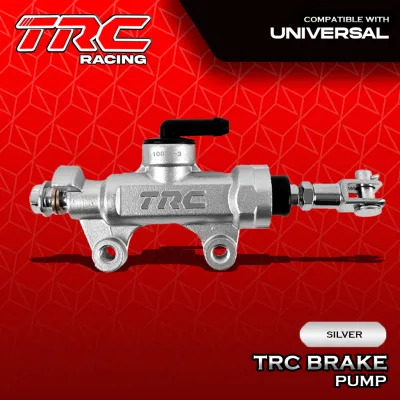
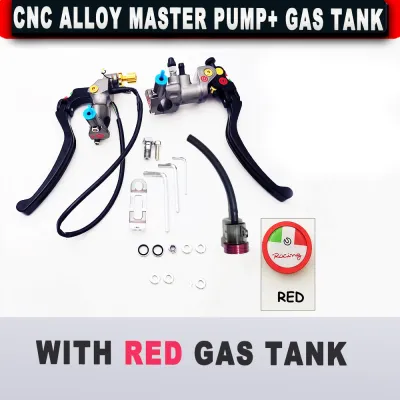
Prices are valid at publication and may change. Please refer to the product page for the latest price.
When evaluating a CNC brake master cylinder, several key manufacturing specifications define its quality. Dimensional tolerance is the most critical, often measured in microns or ten-thousandths of an inch. High-end CNC milling and turning machines maintain incredibly tight tolerances, ensuring that the internal bore of the cylinder is perfectly circular and uniform throughout.
Another vital specification is the bore surface finish, represented as a roughness average (Ra) value. A lower Ra value indicates a smoother surface, which is essential for components that experience constant sliding friction. Additionally, carving a part from a solid billet preserves the continuous, aligned grain structure of the original metal block, providing superior structural integrity compared to cast alternatives.
It is important to clarify that “CNC” refers strictly to the precision manufacturing method, not the material itself. A poorly designed master cylinder made from low-grade metal will not perform safely, regardless of how precisely it was machined. True braking safety and performance rely on a combination of rigorous engineering design, high-grade materials, and strict quality control standards used alongside CNC precision.
How Precision Tolerances Translate to Braking Safety
The ultra-precise tolerances achieved through CNC machining have direct, practical implications for your vehicle’s hydraulic efficiency and overall safety. Inside a master cylinder, rubber seals slide back and forth along the bore wall to build and maintain hydraulic pressure. A smoother internal bore surface with a low Ra value minimizes microscopic abrasion on these rubber seals, significantly extending their service life and preventing premature wear.

When these internal seals degrade, fluid can bypass the seal under high pressure, leading to internal hydraulic leaks. This phenomenon often manifests as a soft or “spongy” brake pedal that slowly sinks to the floorboard when held down. In extreme driving conditions, such as descending steep mountain passes in Benguet or navigating prolonged highway traffic, internal fluid bypass can lead to sudden pedal fade and a dangerous loss of stopping power.
Structural consistency is another safety benefit of billet-machined parts. Cast components can suffer from microscopic porosity, which occurs when tiny air bubbles or impurities become trapped in the molten metal as it cools. Under the extreme hydraulic pressures generated during emergency braking, these microscopic voids can act as stress concentration points, potentially leading to hairline cracks or catastrophic structural failure of the cylinder housing. A solid billet CNC master cylinder eliminates this risk due to its dense, uniform grain structure.
Furthermore, the precise piston-to-bore clearances made possible by CNC machining result in a highly responsive and predictable brake pedal feel. When there is minimal lateral play or fluid bypass around the piston, the driver receives immediate tactile feedback. This precision allows you to modulate the braking force with high accuracy, which is especially critical when managing traction near the limit of tire adhesion on wet, rain-slicked roads.
However, while a premium CNC master cylinder optimizes hydraulic transmission and structural reliability, it does not alter the fundamental physics of stopping. Your vehicle’s actual stopping distance remains strictly limited by the mechanical grip of your tires, the condition of your brake rotors, and the friction coefficient of your brake pads. A highly precise master cylinder ensures that your input is translated perfectly to the calipers, but it cannot compensate for bald tires or worn-out pads.
CNC Billet vs. Standard Cast: Which Specs Matter for Your Build?
Deciding between a standard cast master cylinder and a premium CNC billet component depends entirely on your vehicle’s use case, performance requirements, and budget. Standard cast-iron or cast-aluminum master cylinders are the industry norm for a reason. Original Equipment Manufacturers (OEMs) design these parts to be highly cost-effective, extremely durable, and perfectly adequate for daily commuting, highway speeds, and standard driving conditions. For a typical passenger car or family SUV, a high-quality cast replacement is more than sufficient.
In contrast, CNC billet master cylinders are engineered for high-stress, specialized environments. These include dedicated track cars, heavily loaded commercial or utility vehicles, off-road rigs running oversized tires, and highly modified high-horsepower builds. In these scenarios, drivers prioritize extreme pressure resistance, weight reduction, and the ability to customize pedal ratios or bore sizes to match aftermarket multi-piston calipers.
To help guide your decision, consider the following application criteria:
- Daily Commuting and OEM Restoration: Choose standard cast components. They offer reliable, long-term service at a fraction of the cost, typically ranging from ₱2,000 to ₱7,000.
- Performance Tuning and Custom Brake Kits: Choose CNC billet components. They provide the necessary pressure handling, custom bore options, and structural strength required for modified systems, though they generally cost between ₱10,000 and ₱30,000 or more.
- Heavy Towing and High-Load Vehicles: Consider high-spec CNC components if your standard cast cylinders exhibit premature wear or pedal fade under heavy, sustained thermal loads.
Upgrading to a premium CNC master cylinder yields diminishing returns if the rest of your braking system is neglected. If your vehicle is running old, moisture-contaminated brake fluid, deteriorated rubber flexible brake lines, or low-quality brake pads, installing an expensive CNC component will not noticeably improve safety or pedal feel. A braking system is only as strong as its weakest link, meaning a holistic maintenance approach is always required.
Safety Boundaries and Hydraulic Matching Rules
Modifying any part of a vehicle’s braking system introduces significant safety risks if not executed with absolute technical precision. Before purchasing a CNC master cylinder, you must verify its compatibility with your specific vehicle model, model year, mounting interface, and overall brake system dimensions. Never assume a component fits or functions correctly simply because it is marketed as a universal performance upgrade.
The most critical specification to match is the cylinder’s bore diameter. Changing the master cylinder bore size alters the hydraulic leverage ratio of the entire system. If you install a master cylinder with a larger bore than stock, you will experience a shorter pedal stroke but will need to apply significantly more physical foot pressure to achieve the same stopping power. Conversely, a smaller bore reduces the required pedal effort but increases the pedal travel distance, which could lead to the pedal bottoming out before full braking pressure is reached. The bore size must be mathematically matched to the total volume of your caliper pistons.
Additionally, you must verify that the internal rubber seals of the CNC component are chemically compatible with the specific type of brake fluid you intend to use. Most street vehicles use glycol-ether-based fluids like DOT 3, DOT 4, or DOT 5.1. Silicone-based DOT 5 fluid is chemically incompatible with glycol-based fluids and requires specialized seal materials. Given the high humidity in the Philippines, brake fluid absorbs moisture over time, which lowers its boiling point; always check the manufacturer’s instructions for the correct fluid specification and recommended flush intervals.
Because brakes are a primary safety system, all installation, disassembly, and modification work should be performed by a qualified professional mechanic. Meticulous bleeding of the hydraulic lines is mandatory to remove every trace of trapped air, as air compresses easily and will cause a catastrophic loss of braking pressure. Once installed, the system must undergo controlled, low-speed testing in a secure, traffic-free environment to verify structural integrity and line pressure before the vehicle is driven on public roads. Never compromise on the quality of brake lines, fittings, or fluid to offset the purchase price of a premium CNC master cylinder.
Frequently Asked Questions (FAQ)
Does a CNC brake master cylinder improve stopping distance?
No, a CNC brake master cylinder does not directly shorten your vehicle’s physical stopping distance. The master cylinder’s role is to generate and transmit hydraulic pressure to the brake calipers. The physical stopping distance of a vehicle is primarily determined by tire traction against the road surface, the friction profile of the brake pads, and the heat dissipation capacity of the rotors. However, a CNC master cylinder improves pedal modulation, consistency, and tactile feedback, which allows a driver to modulate the brakes more effectively near the threshold of lockup, leading to safer and more controlled stops.
Are CNC brake components street-legal in the Philippines?
Yes, CNC brake components are generally street-legal in the Philippines, provided they are installed correctly, maintain the vehicle’s fundamental braking balance, and meet or exceed original equipment manufacturer safety standards. Under Land Transportation Office (LTO) guidelines, vehicle modifications must not compromise road safety or vehicle controllability. Because aftermarket brake modifications can drastically alter hydraulic balance, you should ensure the components are installed by a certified professional and that the vehicle successfully passes the required Motor Vehicle Inspection System (MVIS) testing before driving on public roads.
Community discussion
Share your experience or ask a question. Comments are reviewed before publication.