
For business owners and fleet managers in the Philippines, a dash cam is a critical tool for liability protection, driver accountability, and operational efficiency. While consumer-grade cameras are designed for occasional road trips, commercial fleet operations demand hardware that can withstand continuous daily use, harsh cabin temperatures, and complex legal disputes. Choosing the right specifications ensures that your business is protected against fraudulent insurance claims and that your drivers remain safe on the road.
Understanding the technical differences between consumer models and dedicated commercial systems prevents costly purchasing mistakes. The right setup balances video clarity, storage capacity, and remote monitoring capabilities to match your specific business needs.
Core Recording and Hardware Specs That Matter
Selecting the appropriate camera configuration depends heavily on the types of vehicles in your fleet and your primary operational risks. Multi-channel setups allow you to capture multiple angles simultaneously. A dual-channel system typically monitors the road ahead and the cabin interior, which is ideal for passenger transport, ride-hailing, or delivery vans where driver behavior and passenger safety are paramount. For larger logistics trucks, a three-channel or four-channel configuration adding rear and side-view cameras helps document cargo loading and blind-spot incidents.
Products mentioned in this guide
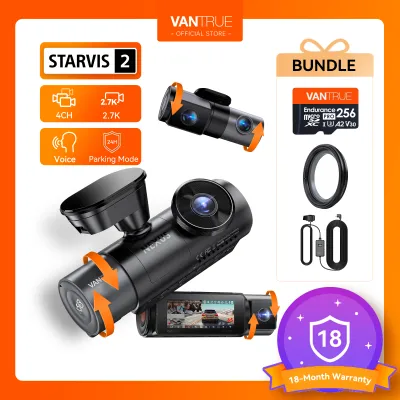
1 Lazada user ratings
Repeat Purchaser This is my second Vantrue unit, first being an F1 unit for my daughter’s NMAX. On that unit the parking feature helped in s…Read full reviewShow less
Repeat Purchaser This is my second Vantrue unit, first being an F1 unit for my daughter’s NMAX. On that unit the parking feature helped in several instances of theft and vandalism, the Night Shot high resolution giving extremely clear video and still images of Theives and Vandals doing their malfeasances-and led DIRECTLY to apprehension and recovery/restitution. In instances of traffic accidents the constant video logging and instant cloud upload returned similar astounding results regarding restitution and insurance recovery Torts. I ordered this unit when putting a deposit on my new 2026 Suzuki Jimny and it will be used there being installs before 500km have even been elapsed. Highly recommended. My recoveries have MORE than paid for the cost of the first unit, which otherwise would have been out-of-pocket. Hope I never need it on my Jimny, but I will park and sleep well knowing it’s on guard should evil come lurking.
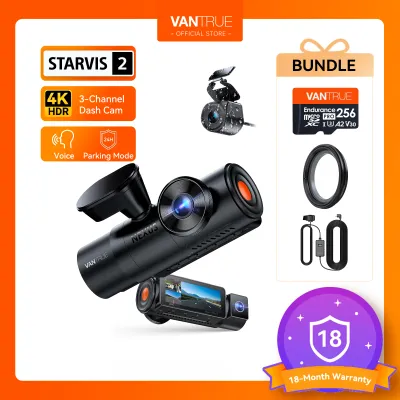
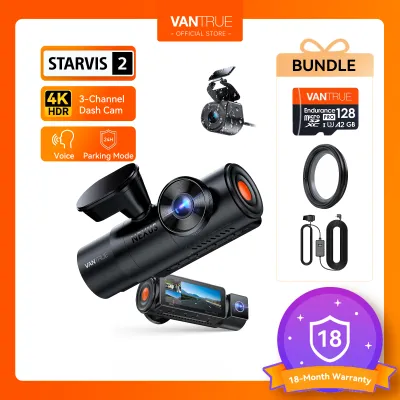
5 Lazada user ratings
📺Video Quality: perfect, specially the fish eye 🌙Night Vision: night vision is okay Easy to install and connect via wifi..
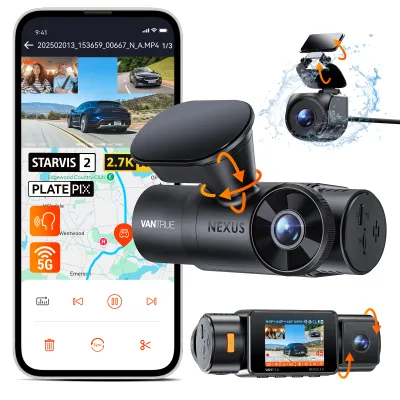
24H parking mode, Touchscreen display, GPS tracking,
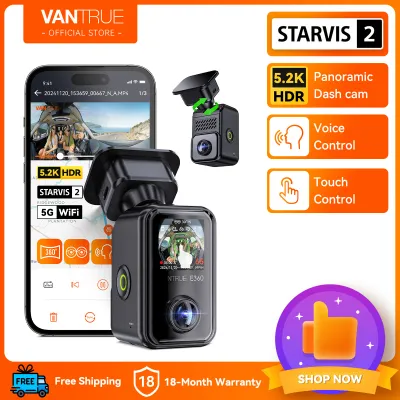
8 Lazada user ratings
Easy to install, lots of DIY installation guides to follow on Youtube. Definitely an upgrade from the midtier dashcam that I was previously …Read full reviewShow less
Easy to install, lots of DIY installation guides to follow on Youtube. Definitely an upgrade from the midtier dashcam that I was previously using. Cabin and rear cameras are clearer than what I expected. Arrived earlier than the estimated delivery date.
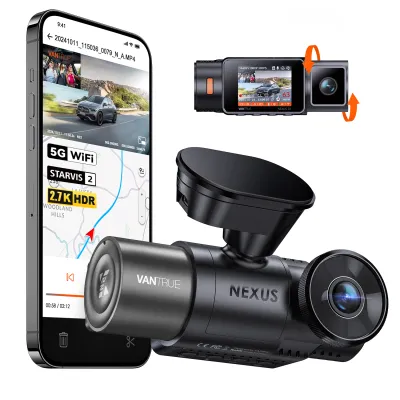
Supports up to 1TB SD card, 2.5K rear camera resolution, Voice control in multiple languages,
ok siya pero di ko pa nakakabit
42 Lazada user ratings
Excellent value: 4K + STARVIS 2 + PlatePix in a compact form. Night performance is impressive for the price, thanks to sensor and software s…Read full reviewShow less
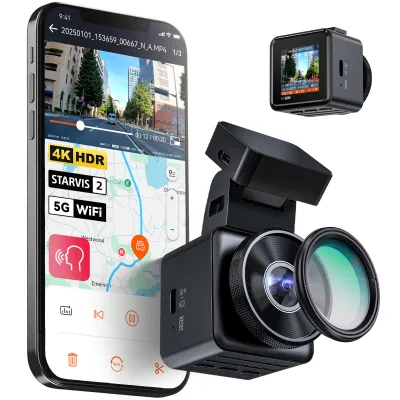
Excellent value: 4K + STARVIS 2 + PlatePix in a compact form. Night performance is impressive for the price, thanks to sensor and software synergy. CPL filter support helps with glare, which is often a weak point in dash cams. Rich feature set: GPS, WiFi (5 GHz), voice control, buffered motion detection, optional LTE. Good daylight and night capture, vibrant and sharp detail.
Vantrue E1 Pro Received and item is working. I can't have any comparisons with the N4 Pro or N5 since I don't have them. I can't verify the …Read full reviewShow less
Vantrue E1 Pro Received and item is working. I can't have any comparisons with the N4 Pro or N5 since I don't have them. I can't verify the improvement claims with the new sensors. Unboxing: youtu.be/U1um2XO6B_k Testing: youtu.be/HSmcFfJQofs
🔧Ease of Installation: it was very straight forward to install the dashcam DIY 📺Video Quality: video quality is very good, including low lig…Read full reviewShow less
🔧Ease of Installation: it was very straight forward to install the dashcam DIY 📺Video Quality: video quality is very good, including low light/night recording
🔧Ease of Installation:good 📺Video Quality:good 🌙Night Vision:good
great quality i hope they launch a rear cam add-on
25 Lazada user ratings
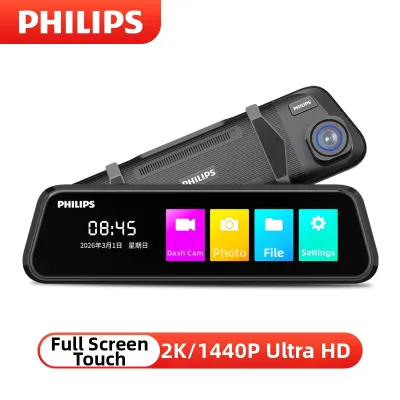
The screen is really clear, it's very comfortable to look at and the quality is good.
The screen is really clear, it's very comfortable to look at.
Pretty good dash cam, it's quite a good value.
It works great.
Good dash cam
Prices are valid at publication and may change. Please refer to the product page for the latest price.
While ultra-high resolution like 4K is popular in consumer electronics, commercial fleets must weigh resolution against storage and thermal limits. A resolution of 1080p (Full HD) at 30 frames per second is generally the sweet spot for fleet vehicles, offering sufficient clarity to read license plates and road signs without generating excessive heat or rapidly filling up memory cards. Higher resolutions require significantly more processing power, which can lead to system shutdowns in the intense tropical heat of the Philippines.
For cabin monitoring and night operations, standard optical lenses are insufficient. Commercial dash cams monitoring the interior should feature infrared (IR) light-emitting diodes (LEDs) or advanced low-light sensors. These sensors automatically activate in darkness, capturing clear grayscale footage of the driver and passengers even in a completely unlit cabin, which is essential for verifying driver alertness or documenting passenger disputes during night shifts.
Fleet Management and Connectivity Features
Modern fleet management relies on real-time data, making connectivity features a key differentiator for commercial hardware. Integrated Global Positioning System (GPS) modules do more than just log coordinates on a map. Advanced telemetry systems record vehicle speed, precise routing, and idle times, allowing managers to analyze driving efficiency and verify delivery timelines. This data serves as objective evidence if a driver is falsely accused of speeding or causing an accident.

Cloud connectivity and built-in Wi-Fi transform how businesses access recorded footage. Instead of physically retrieving memory cards from every vehicle at the end of a shift, cloud-enabled dash cams allow managers to remotely view live feeds, download specific incident clips, and receive instant notifications of harsh driving events. These systems typically require a stable cellular network connection, often utilizing a dedicated SIM card slot within the camera hardware or an external telematics gateway.
To ensure critical footage is never lost, commercial cameras utilize internal G-sensors (accelerometers) to detect sudden forces, such as hard braking, sharp turns, or collisions. When the sensor detects an event exceeding a pre-set threshold, the camera automatically locks the current video segment, saving it to a protected folder on the memory card or uploading it directly to the cloud. This prevents the loop recording system from overwriting vital evidence before managers can review it.
Power, Storage, and Parking Capabilities
Commercial vehicles operate for extended hours, requiring robust power delivery and storage solutions that differ from standard consumer setups. Hardwiring the dash cam directly to the vehicle’s fuse box is highly recommended over using temporary 12V auxiliary power plugs. Hardwiring provides a clean, hidden installation that prevents drivers from accidentally unplugging the device, and it enables continuous power for parking surveillance. Because hardwiring involves modifying the vehicle’s electrical system, you should always consult your vehicle’s original manufacturer guidelines and have the installation performed by a qualified professional to avoid damaging the electrical system or voiding warranties.
The constant writing and overwriting of video data put immense strain on storage media. Commercial operations require high-endurance microSD cards specifically rated for continuous write cycles. Standard consumer memory cards often fail prematurely under the heavy workload of daily fleet operations, leading to corrupted files or complete recording failures. Selecting cards with high write-endurance ratings and checking them regularly during routine vehicle maintenance is essential for operational reliability.
Parking mode capabilities protect your assets even when the engine is turned off. When parked, the camera can operate in a low-power standby state, using motion detection or G-sensor triggers to begin recording if someone approaches the vehicle or if a collision occurs. To prevent draining the vehicle’s starter battery, commercial hardwire kits must include an adjustable low-voltage cutoff feature that automatically shuts down the camera if the battery charge drops below a safe threshold.
Consumer Specs You Can Often Deprioritize
When outfitting a fleet, avoiding unnecessary consumer-oriented features can significantly reduce your hardware acquisition costs. Voice control and smart assistant integration, for example, are rarely useful in a commercial setting. Fleet cabins are often noisy due to diesel engines, cargo movement, or radio communications, which can cause voice recognition systems to fail or trigger accidentally, potentially distracting the driver from their core duties.
Standalone Advanced Driver Assistance Systems (ADAS)—such as lane departure warnings or forward collision alerts built directly into the dash cam—are often redundant. Many modern commercial vehicles already feature highly calibrated, integrated safety systems from the factory. Dash-cam-based ADAS can produce frequent false alerts, leading to driver annoyance and “alarm fatigue,” where drivers begin to ignore all safety warnings entirely.
Finally, ultra-high frame rates, such as 60 frames per second at high resolutions, are generally unnecessary for business liability purposes. While high frame rates deliver smoother video playback for action sports, they double the storage consumption and increase the processing load on the camera. Standard 30 frames per second is more than adequate for capturing clear, legally admissible evidence of road incidents while preserving valuable storage space.
Frequently Asked Questions (FAQ)
Do commercial dash cams require a monthly subscription?
Basic commercial dash cams that record locally to a microSD card do not require a monthly subscription. However, if your business requires advanced fleet management features—such as real-time GPS tracking, automatic cloud backups, remote live-viewing, and instant driver behavior alerts—manufacturers and telematics providers typically charge a recurring monthly service fee per vehicle. You should carefully review the manufacturer’s specifications and software service agreements to understand the ongoing costs associated with cloud-connected features before purchasing.
How long does loop recording typically retain footage?
The retention time of loop recording depends on the capacity of your memory card, the video resolution settings, and the number of active camera channels recording simultaneously. For example, a multi-camera system recording in high resolution will fill a memory card much faster than a single front-facing camera. Once the card is full, the camera automatically overwrites the oldest unprotected files. To determine your specific retention window, check your device’s manual for estimated recording hours per gigabyte and select a high-endurance memory card that accommodates your fleet’s average daily driving hours.

Community discussion
Share your experience or ask a question. Comments are reviewed before publication.