
Finding the perfect balance between protection on the motorcycle and comfort off it is a challenge every rider faces. Choosing the right rev it riding shoes depends on whether your daily rides consist of short, stop-and-go city trips with plenty of walking, or long, sustained highway journeys through unpredictable weather. The Dutch gear manufacturer REV’IT! has developed distinct lineups to address these contrasting needs, categorizing their footwear into urban-focused commuter shoes and heavy-duty touring boots.
In the tropical environment of the Philippines, this choice becomes even more critical. High humidity, sudden monsoon downpours, and intense engine heat radiating in gridlock traffic mean that your footwear must work twice as hard to keep you comfortable. Selecting the wrong type can lead to sweaty feet, painful blisters, or inadequate protection during a highway slide.
Understanding how you ride on a weekly basis is the first step toward making a smart investment. By analyzing the structural differences, protective features, and climate suitability of each category, you can confidently select the pair that matches your riding style.
Products mentioned in this guide
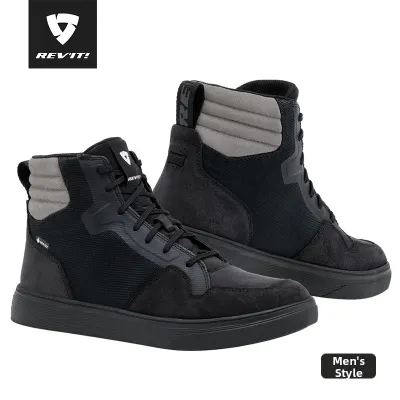
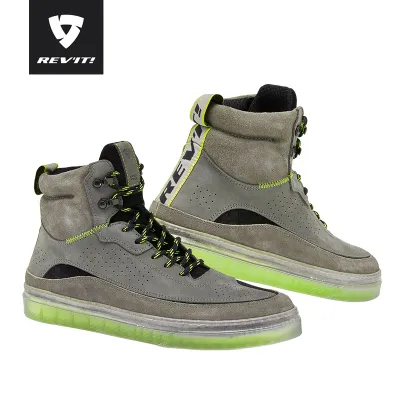
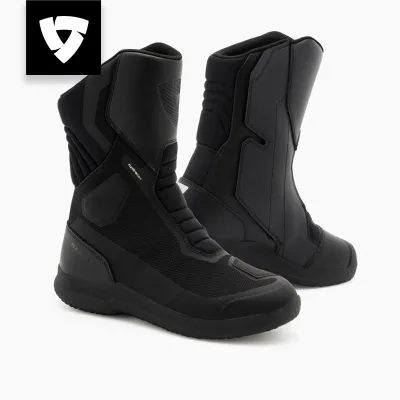
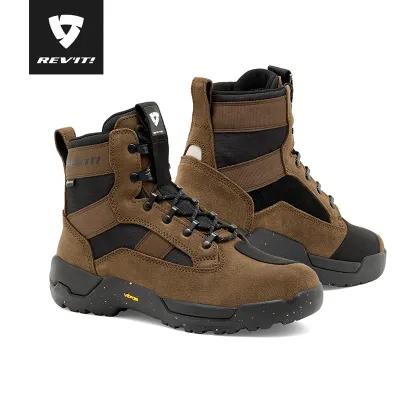
Prices are valid at publication and may change. Please refer to the product page for the latest price.
Assess Your Riding Routine: City Traffic vs. Open Highway
Before browsing specific models, you must evaluate where your motorcycle actually spends most of its time. Your weekly mileage, the average speed of your trips, and what you do immediately after parking all dictate the level of support, weatherproofing, and flexibility your feet require.
A typical urban commuter in the Philippines faces a highly demanding environment. Navigating the dense traffic of Metro Manila, Metro Cebu, or Davao means dealing with constant clutch work, frequent stops at intersections, and intense ambient heat bouncing off the asphalt. Commuters often need to transition seamlessly from the bike to an air-conditioned office, a university lecture hall, or a shopping mall without carrying a spare pair of shoes. For these riders, off-bike walking comfort and high ventilation are just as important as impact protection.
On the other hand, the provincial touring profile looks entirely different. Touring riders frequently embark on long weekend journeys along scenic routes like the Marilaque Highway, the Halsema Highway, or coastal loops. These rides involve sustained highway speeds where wind pressure and engine vibration constantly fatigue the feet.
Touring also exposes you to rapid elevation and weather changes. A sunny departure from low-lying coastal roads can quickly turn into a chilly, rain-slicked climb up toward highland destinations. On these extended journeys, your feet remain on the footpegs for hours at a time, requiring rigid structural support and dependable weather protection rather than walking flexibility.
Commuter Rev It Riding Shoes: Built for City Traffic and Walking
Commuter-style rev it riding shoes are engineered to bridge the gap between casual lifestyle sneakers and protective motorcycle gear. They allow riders to maintain a casual appearance off the bike while still benefiting from engineered safety features hidden beneath the surface.

The standout design feature of these shoes is their casual aesthetic. Many models mimic high-top skate shoes, running sneakers, or classic leather boots. To combat the intense heat and humidity of tropical cities, REV’IT! utilizes highly breathable materials such as engineered mesh, perforated suede, and lightweight textiles. These materials allow continuous airflow, helping to dry perspiration quickly and prevent heat buildup during slow-moving traffic.
Despite their relaxed appearance, these shoes do not compromise on fundamental safety. They incorporate reinforced thermoformed heel cups and toe boxes to protect against crushing impacts. Ankle protection is typically provided by injected ankle cups positioned on both sides of the joint. Additionally, many commuter models feature OrthoLite® insoles, which provide excellent cushioning for walking while remaining highly breathable and resistant to compression over time.
However, commuter riding shoes have distinct limitations that riders must consider. Because they prioritize flexibility for walking, their soles are relatively soft, which can lead to foot arch fatigue during long hours on narrow footpegs. Furthermore, highly ventilated mesh panels offer very little resistance to water, meaning your feet will quickly become soaked during a sudden tropical downpour.
Touring Riding Shoes: Designed for Long Distances and Weather
Touring riding shoes and boots are built with a single-minded focus: endurance. They are designed to shield your feet from the physical toll of high-speed travel, mechanical vibration, and harsh environmental elements over hundreds of kilometers.
The structural foundation of a touring shoe is its rigid sole. REV’IT! designs these soles with internal shanks to prevent the foot from flexing excessively over the footpegs. This rigidity distributes your body weight evenly across the peg, significantly reducing foot arch fatigue during long days in the saddle. Additionally, touring footwear features extended ankle collars, providing superior lateral support to prevent twisting in the event of a fall.
Weather resistance is another hallmark of the touring category. Many touring models incorporate proprietary Hydratex® waterproof membranes or premium GORE-TEX liners. These membranes are engineered to keep external water out while allowing sweat vapor to escape, keeping your feet dry during heavy provincial rainstorms. To withstand the constant friction of gear shifting, touring shoes also feature heavy-duty, integrated shift pads made of durable rubber or reinforced leather.
Secure closure systems are highly emphasized in touring designs. Instead of standard loose laces that could catch on the motorcycle’s moving parts, touring boots often utilize covered zipper entries, robust hook-and-loop flaps, or mechanical dial-fit systems. These systems ensure a precise, snug fit that will not loosen over hours of continuous movement.
The primary trade-off for this level of protection is walking comfort. The stiff soles and heavy-duty ankle reinforcements make touring boots feel clumsy and rigid when walking on flat ground. They are also noticeably heavier and warmer than commuter shoes, making them uncomfortable for casual wear in hot, indoor environments.
Decision Matrix: Match Your Riding Style to the Right Shoe
To help you finalize your decision, compare your typical riding habits against the key performance categories outlined below.
| Performance Dimension | Commuter Riding Shoes | Touring Riding Shoes |
|---|---|---|
| Primary Terrain | Stop-and-go city streets, urban avenues | Highways, provincial roads, mountain passes |
| Walking Frequency | High (walking around offices, malls, campus) | Low (mostly resting on footpegs, short stops) |
| Weather Exposure | Dry, hot weather (limited rain protection) | Wet, cold, or highly variable weather |
| Ankle Support | Moderate (flexible for walking comfort) | High (rigid, extended coverage to prevent twisting) |
| Sole Stiffness | Flexible (feels like a standard sneaker) | Rigid (internal shank to prevent foot fatigue) |
| Closure System | Standard laces, quick-lace systems | Zipper with flaps, heavy-duty buckles, dial systems |
If your weekly riding is highly mixed—such as commuting 80% of the time but taking a long provincial tour once a month—you must weigh your priorities. For most riders, it is best to select the shoe that matches your dominant daily use case. If you choose a commuter shoe for occasional touring, you must accept the risk of wet feet during rain and potential foot fatigue on long highway stretches.
Alternatively, you can look for versatile crossover options within the REV’IT! lineup. Some mid-cut boots combine a semi-flexible sole with a waterproof membrane, offering a middle ground for riders who refuse to buy two separate pairs.
Keep in mind that category labels alone do not guarantee a specific level of protection. You must always verify the safety credentials of each individual model by checking its official product documentation and physical labels.
Fit, Safety Verification, and Tropical Climate Care
Once you have decided on the style, ensuring the correct fit and maintaining your footwear is essential for long-term safety and comfort. A poorly fitting shoe can compromise protection and cause painful distractions while riding.
When trying on your riding shoes, always wear the specific socks you plan to use on the road. Ensure there is adequate clearance in the toe box; your toes should not press against the reinforced front cap, especially when you mimic the motion of shifting gears. Walk around the room to check for heel slippage. If your heel lifts significantly inside the shoe, it can cause friction blisters and may even slip off your foot during an accident.
Before finalizing your purchase, verify the safety standards of the footwear. Look for the physical CE (Conformité Européenne) certification tag sewn inside the shoe, which should reference the EN 13634 standard for protective footwear for motorcycle riders. This label displays a grid of numbers indicating the shoe’s performance levels in height, abrasion resistance, impact cut resistance, and transverse rigidity. Ensure the ratings align with your safety expectations rather than relying solely on the shoe’s visual design.
Maintaining your gear in a hot, humid tropical climate requires consistent care to prevent mold, odors, and material degradation. After riding through a heavy downpour, never place your shoes near direct heat sources like heaters, hair dryers, or intense direct sunlight, as extreme heat can dry out leather, warp protective plastic inserts, and degrade sole adhesives. Instead, remove the insoles, stuff the shoes with clean paper towels to absorb moisture, and let them air-dry naturally in a well-ventilated, shaded indoor area.
Regularly clean off road grime, mud, and salt buildup from coastal roads using a soft brush and mild soap authorized by the manufacturer. Keeping the outer surface clean is especially important for waterproof models, as clogged pores prevent the breathable membrane from venting sweat, leading to damp feet from the inside out. Always consult the specific care instructions provided by REV’IT! for the materials used in your exact shoe model.
Community discussion
Share your experience or ask a question. Comments are reviewed before publication.