
Quick Answer: Commuting vs. Touring Boots
Choosing the right motorcycle boots depends entirely on whether your daily ride consists of navigating dense city traffic or covering long distances on the open highway. For riders who face stop-and-go urban traffic, frequent dismounts, and the need to walk around at their destination, commuting boots are the superior choice. These boots prioritize walkability, casual styling, and high breathability, making them comfortable to wear both on the bike and in an office or classroom setting.
Conversely, if your daily route involves high-speed highway stretches, extended hours on the pegs, and exposure to unpredictable weather, touring boots are indispensable. Touring boots focus on maximum impact safety, robust ankle support, and comprehensive weatherproofing to protect against high-speed debris and heavy downpours. While they offer unmatched protection and long-distance comfort, they are significantly stiffer and heavier, making them impractical for walking long distances off the bike. Your final decision should align with your primary riding environment, local weather conditions, and how much time you spend on your feet after parking.
Key Differences at a Glance
While all purpose-built motorcycle boots are designed to offer better protection than standard footwear, commuting and touring boots are engineered for entirely different riding profiles. Commuting footwear blends into everyday life, whereas touring gear is built to withstand the harsh realities of long-distance travel.
Products mentioned in this guide
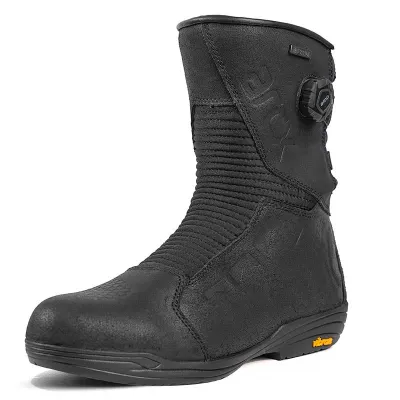
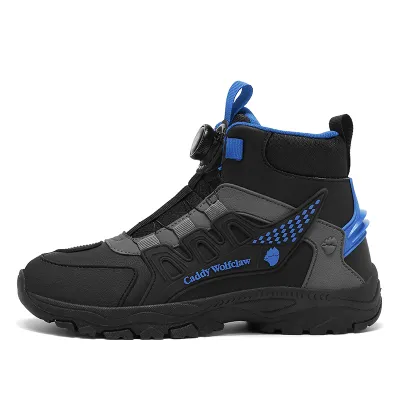
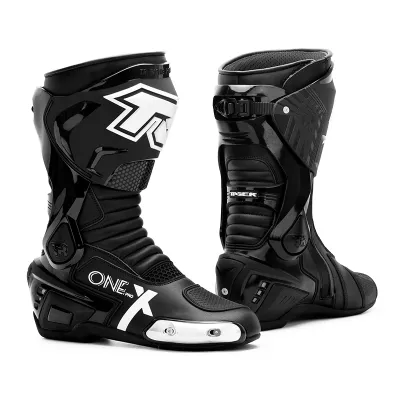
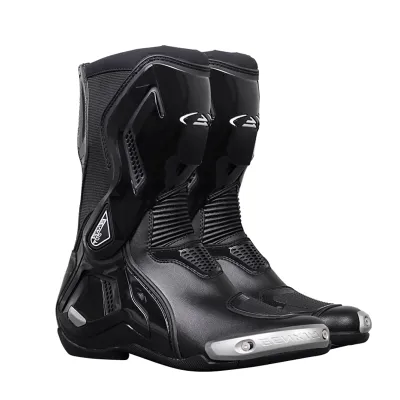
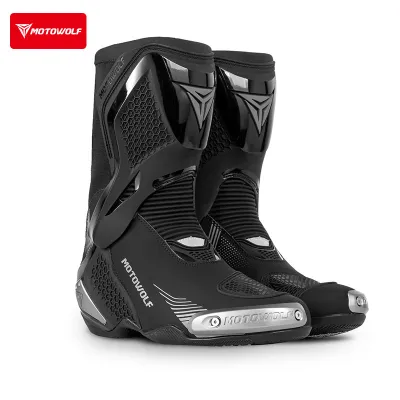
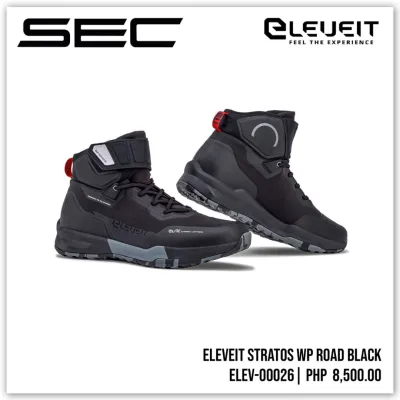
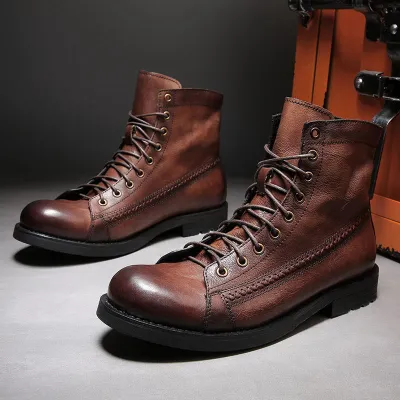
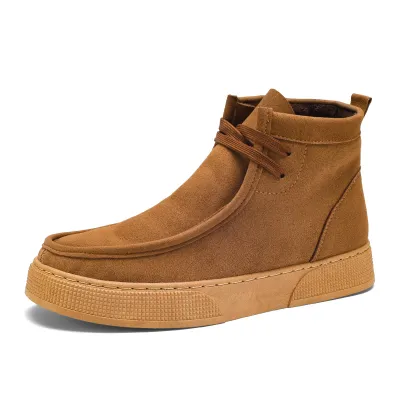
Prices are valid at publication and may change. Please refer to the product page for the latest price.

| Feature | Commuting Boots | Touring Boots |
|---|---|---|
| Primary Focus | Walkability, casual aesthetics, and quick ventilation | Maximum impact protection, joint support, and weatherproofing |
| Boot Height | Typically low-top to mid-calf (ankle height) | Mid-calf to high-top (shin-covering) |
| Sole Stiffness | Moderate to flexible (allows natural walking gait) | Highly rigid (crush-resistant, limits foot flexion) |
| Armor & Reinforcement | Basic ankle discs, reinforced toe box, and heel counter | Extended shin plates, heavy-duty heel cups, and ankle braces |
| Weather Resistance | Often highly ventilated (mesh/perforated leather); water-resistant options | Highly waterproof (breathable membranes), windproof |
| Off-Bike Walkability | High; feels similar to a stiff sneaker or casual work boot | Low; heavy, rigid construction can cause fatigue when walking |
| Typical Price Band | Entry-to-mid level (₱3,000 to ₱8,000) | Mid-to-premium level (₱8,000 to ₱25,000+) |
Understanding these general design characteristics helps clarify why a single pair of boots rarely excels in every scenario. Motorcycle boots exist on a wide spectrum, and choosing between these two categories requires balancing the physical demands of control operation on the motorcycle with the practical realities of your daily destination.
Protection and Safety Features Compared
The structural differences between commuting and touring boots directly impact how they perform during an accident. Touring boots are engineered to handle high-velocity impacts, slides on coarse asphalt, and the crushing weight of a heavy touring motorcycle. To achieve this, they feature extended shin plates made of high-impact thermoplastics, reinforced heel cups, and rigid ankle bracing systems that prevent lateral twisting. The soles of touring boots are exceptionally stiff, containing internal steel or nylon shanks designed to resist transverse crushing forces if the bike falls on the rider’s foot.
Commuting boots, on the other hand, scale back on rigid armor to allow for natural foot movement. They still offer essential protection that far exceeds standard sneakers, including reinforced toe boxes, stiffened heel counters, and dual-density ankle cups (malleolus protectors) embedded within the lining. Many commuting boots also feature integrated shift pads to prevent the gear lever from wearing through the top of the boot. However, they generally lack the extensive shin coverage and torsional rigidity found in touring models, making them less suited for high-speed highway crashes.
To verify the actual level of protection a boot offers, you should always check the manufacturer’s safety labels rather than relying on marketing descriptions. Look for the official European safety standard marking, EN 13634, which is typically printed on a white tag sewn inside the tongue or shaft of the boot. This standard tests footwear for height, abrasion resistance, impact cut resistance, and transverse rigidity.
The EN 13634 label displays a grid of four numbers, each rated as either Level 1 (basic protection) or Level 2 (enhanced protection):
- First Number: Height of the boot upper.
- Second Number: Abrasion resistance during a slide.
- Third Number: Impact cut resistance against sharp objects.
- Fourth Number: Transverse rigidity (resistance to crushing).
Touring boots frequently achieve Level 2 ratings across all four categories due to their tall, rigid construction. Commuting boots, especially shorter shoe-style models, often carry Level 1 ratings for height and rigidity to maintain flexibility. Checking these specific numbers allows you to make an objective safety comparison based on your personal risk tolerance and daily route speeds.
Comfort and Walkability: On and Off the Bike
Evaluating comfort requires looking at two distinct phases of your day: the time spent operating the motorcycle’s controls and the time spent walking at your destination. A boot that feels incredibly supportive on the highway can feel like a heavy ski boot once you step into an office or retail store.
On-Bike Comfort and Fatigue
On the motorcycle, touring boots excel at reducing physical fatigue over long periods. Their highly rigid soles distribute the pressure of the footpegs evenly across the entire arch of your foot. This prevents the foot muscles from flexing or wrapping around the peg, which is a common cause of plantar fasciitis and arch cramping during multi-hour rides. The tall shaft of a touring boot also provides a stable interface against the bike’s frame, allowing you to grip the tank with your legs more effectively.
Commuting boots feature more flexible soles, which offer a different kind of comfort. In stop-and-go city traffic, you are constantly shifting gears, searching for neutral, and putting your feet down at intersections. The flexibility of a commuting boot makes these rapid, repetitive ankle movements effortless and precise. However, if you take a flexible commuting boot on a long highway journey, the localized pressure from the footpegs can cause noticeable arch fatigue and soreness after an hour or two of continuous riding.
Off-Bike Walkability and Style
Once you dismount, the advantages shift heavily in favor of commuting boots. Many modern commuting boots are styled to look exactly like high-top sneakers, casual leather work boots, or skate shoes. They utilize flexible midsoles, cushioned OrthoLite or EVA insoles, and soft textile linings that allow you to walk naturally for hours. This makes them ideal for riders who commute to an office, university, or social gathering and do not want to carry a spare pair of shoes or draw attention with loud, squeaking plastic armor.
Touring boots are highly impractical for off-bike walking. Their stiff soles prevent your foot from rolling naturally from heel to toe, resulting in an awkward, clunky gait. The heavy thermoplastic armor and thick leather uppers trap heat, making long walks uncomfortable and tiring. Additionally, the specialized high-traction rubber compounds used on touring soles are optimized for grip on wet asphalt and oily tollbooth lanes, but they can wear down prematurely if subjected to extensive walking on abrasive concrete pavements.
Weather Resistance and Breathability in Tropical Climates
Riding in tropical climates like the Philippines presents a unique environmental challenge. Riders must constantly balance protection against intense heat, high humidity, and sudden, torrential downpours during the monsoon season. This environment highlights the stark trade-offs between the weatherproofing strategies of commuting and touring boots.
Touring boots are heavily biased toward weather protection. Many feature integrated waterproof and breathable membranes, such as Gore-Tex, Drystar, or proprietary laminates. These membranes work on a vapor-transmission principle: they feature microscopic pores that are too small for liquid water droplets to penetrate, but large enough to allow sweat vapor to escape. While this system works exceptionally well in cooler climates, its efficiency drops significantly in hot, high-humidity environments. When the ambient temperature and humidity outside the boot match or exceed the temperature inside, the sweat vapor cannot escape, turning waterproof touring boots into hot, damp sweat traps during slow-moving urban commutes.
Commuting boots often prioritize maximum airflow to combat tropical heat. Many models incorporate heavy-duty 3D mesh panels, perforated leather uppers, or canvas inserts that allow air to flow directly over the foot while riding. This active ventilation keeps your feet dry and cool in heavy city traffic. The major drawback, however, is that these highly breathable materials offer virtually no resistance to water. A sudden afternoon downpour will instantly soak through mesh panels, leaving you with wet feet for the remainder of your commute and workday.
To navigate these regional climate challenges, you must evaluate your daily route and seasonal weather patterns:
- Look for Ventilation Zippers: Some sport-touring boots feature mechanical vents or zippers that can be opened for airflow on dry days and zipped shut when it rains.
- Check for Water-Resistant Treatments: If you choose commuting boots, look for models treated with durable water repellent (DWR) coatings or constructed from hydrophobic microfiber, which can repel light road spray without completely sacrificing breathability.
- Consider the Monsoon Season: During the wettest months of the year, keeping a spare pair of dry socks and office shoes at your destination can allow you to wear highly protective, waterproof boots on your ride without suffering through a damp workday.
How to Choose: Match the Boot to Your Riding Scenario
Selecting the right footwear requires an honest assessment of your daily riding habits, your motorcycle’s ergonomics, and your professional environment. Use the following structured decision framework to identify the category that best serves your needs.
Choose Commuting Boots if:
- Your daily route consists primarily of low-to-medium-speed urban streets, heavy city traffic, and frequent stops.
- You need to walk extensively at your destination, or your workplace requires casual, non-disruptive footwear.
- You ride a scooter, underbone, or small-displacement commuter motorcycle where massive shin guards and rigid soles are unnecessary.
- You prioritize maximum ventilation and cooling during hot, humid midday rides over absolute wet-weather protection.
Choose Touring Boots if:
- Your daily commute or weekend rides involve long stretches of high-speed highway travel where impact and slide protection are critical.
- You ride a heavy adventure bike, touring motorcycle, or large cruiser that requires rigid sole support to manage the bike's weight on the pegs.
- You frequently ride through unpredictable weather, heavy rain, or cross-provincial routes where wet feet could lead to discomfort or safety distractions.
- You do not mind carrying a change of shoes or keeping a pair of office shoes at your desk to wear during the workday.
Verify First Before Purchasing:
- Check Footpeg and Shifter Clearance: Touring boots have a much thicker toe box and stiffer sole than commuting boots. Before buying, verify that your motorcycle's gear shifter has enough vertical clearance to accommodate a bulkier boot toe. You may need to adjust your shift linkage height to ensure smooth gear changes.
- Assess Riding Position: If your motorcycle has aggressive rearset footpegs (common on sportbikes), a very tall, rigid touring boot may pinch at the front of the ankle or restrict your ability to flex your foot upward. A mid-height sport-touring boot or a reinforced commuting shoe may offer a better ergonomic fit.
- Inspect Safety Labels: Regardless of style, ensure the boot carries a genuine EN 13634 certification tag. Never assume a boot is safe simply because it looks rugged or is marketed as a motorcycle boot.
Frequently Asked Questions (FAQ)
Can I use touring boots for daily city commuting?
Yes, you can wear touring boots for daily city commuting, and doing so will provide you with the highest possible level of impact and weather protection. However, you must be prepared to accept several practical trade-offs. In slow-moving city traffic, the lack of direct ventilation in waterproof touring boots will cause significant heat buildup and sweat accumulation. Additionally, the stiffness and weight of touring boots make them highly uncomfortable for walking around an office, school, or supermarket. If you choose to commute in touring boots, it is highly recommended to keep a spare pair of casual shoes at your destination so you can change out of your riding gear immediately upon arrival.
Are commuting boots safe enough for highway riding?
Commuting boots that carry a genuine EN 13634 certification provide a baseline level of safety that is acceptable for general riding, but they are not optimized for high-speed highway environments. While certified commuting boots will protect your feet from abrasion and minor impacts, they lack the structural rigidity, extended shin plates, and torsional ankle bracing required to prevent severe twisting or crushing injuries during a high-speed highway crash. If your daily commute involves traveling on high-speed expressways alongside heavy commercial vehicles, the safety benefits of a dedicated touring or sport-touring boot heavily outweigh the convenience and walkability of a casual commuting shoe.
Community discussion
Share your experience or ask a question. Comments are reviewed before publication.