
While many brands market their disc brake plates for daily riding, there is no single universally superior brand for every motorcycle. True reliability depends on matching the disc’s verified specifications, material build, and surface design to your specific motorcycle model and typical commuting routes in the Philippines. This guide provides the objective criteria to evaluate and compare available brands, ensuring you select a safe, compatible, and durable braking component for your daily needs.
By focusing on verifiable product standards rather than marketing slogans, you can avoid the common pitfalls of premature wear, brake fade, and compatibility issues. Whether navigating congested city streets or cruising along provincial highways, understanding how to evaluate a disc brake plate will keep your daily commute safe and predictable.
Understanding Your Daily Commuting Braking Needs
Every daily commute presents a unique set of physical demands that directly affect how your motorcycle’s braking system performs. In highly congested urban areas, stop-and-go traffic forces you to apply your brakes repeatedly over short distances. This constant friction generates intense heat within the disc brake plate, and without high-speed airflow to cool the metal, the temperature of the braking assembly rises rapidly. Over time, this thermal stress can lead to brake fade, where the lever feels spongy and stopping distances increase.
Products mentioned in this guide
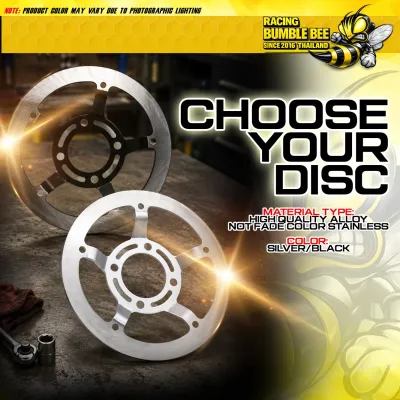
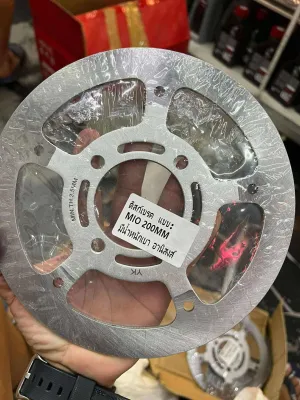
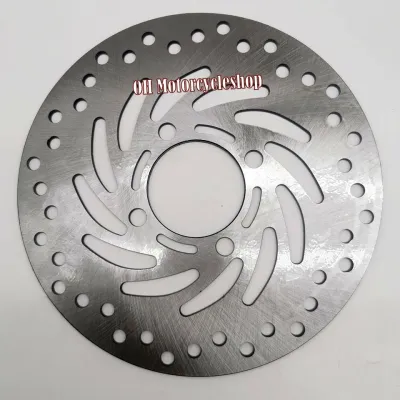
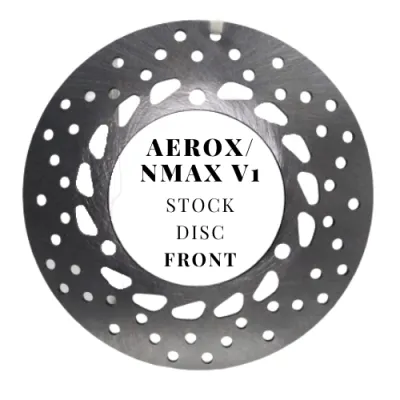
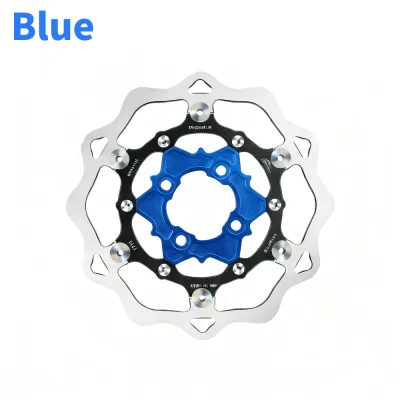
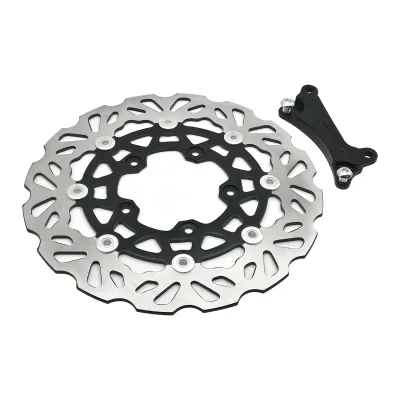
Prices are valid at publication and may change. Please refer to the product page for the latest price.
Conversely, sustained highway riding requires a different kind of braking performance. When traveling at higher speeds, you need immediate, predictable stopping power to react to sudden obstacles or merging traffic. The disc must be capable of handling rapid deceleration from high speeds without warping under the sudden spike in temperature. A reliable commuter disc must balance these two extremes, offering consistent friction whether cold or hot.
Your typical payload also plays a major role in determining the stress placed on your brakes. Carrying a pillion passenger or transporting heavy cargo for delivery work significantly increases the total kinetic energy of your motorcycle. This extra weight requires more clamping force from the caliper, which accelerates wear on both the disc brake plate and the brake pads. If you regularly carry heavy loads, you must prioritize discs with robust thermal mass and excellent heat dissipation.
Environmental factors in tropical climates introduce additional challenges that your braking system must overcome. The rainy season brings sudden downpours, deep puddles, and flooded streets that submerge your wheels in water, mud, and road grime. When a disc brake plate becomes wet, a thin film of water can form between the pad and the disc surface, temporarily reducing friction. Your chosen disc must have design features that quickly disperse water and debris to ensure immediate braking response in wet weather.
Key Specifications to Compare Across Brands
When comparing different brands of disc brake plates, you should look past brand names and focus on the physical specifications and materials detailed on the product packaging or technical data sheets. The material composition of the disc is the foundation of its durability and performance. Most high-quality commuter discs are manufactured from specific grades of martensitic stainless steel, such as SUS420. This material offers an excellent balance of high tensile strength, wear resistance, and sufficient rust prevention in humid environments. Avoid unbranded or extremely cheap plates that do not specify their steel grade, as low-quality alloys are highly prone to warping under thermal stress.

You will also need to compare the surface patterns of the discs, as each design serves a specific functional purpose. Solid discs provide the maximum surface area for pad contact, which generally results in longer brake pad life and consistent dry performance, but they retain heat and water longer than patterned designs. Drilled discs feature holes dispersed across the braking surface to allow water, gas, and dust to escape quickly, making them highly effective for wet-weather riding. However, the drilling process must be precise; poorly manufactured drilled discs can develop stress cracks around the holes over time. Slotted discs use shallow channels to scrape away glazed pad material and vent gases, maintaining a clean contact patch at the expense of slightly faster pad wear.
Dimensional tolerances are another critical factor that separates reliable brands from substandard alternatives. Before purchasing, verify the nominal thickness of the disc and compare it to your motorcycle’s original equipment manufacturer (OEM) specifications. A reliable brand will clearly stamp the minimum safe thickness (often marked as “Min. Th.”) directly on the disc face or carrier. Furthermore, high-quality discs are manufactured with incredibly tight lateral runout tolerances, typically under 0.1 millimeters. Excessive runout causes the disc to wobble slightly as it rotates, pushing the brake pads back and causing a pulsating sensation in your brake lever.
How to Verify Brand Authenticity and Quality
The market for motorcycle spare parts contains numerous counterfeit and substandard components that mimic the appearance of reputable brands. To protect your safety, you must know how to verify the authenticity of a disc brake plate before installation. Begin by closely inspecting the physical packaging. Genuine manufacturers invest in high-quality packaging materials, clear printing, and secure sealing. Many reputable brands include security features such as tamper-evident holograms, unique serial numbers, or scratch-off QR codes that allow you to verify the product’s authenticity on their official website.
Examine the physical disc brake plate itself for precise manufacturing marks. Authentic brands use laser etching or deep mechanical stamping to mark their logo, part number, production batch, and minimum thickness limit on the inner carrier or the non-contact areas of the disc. These markings should be perfectly legible, sharp, and straight. In contrast, counterfeit products often feature blurry, uneven, or misspelled markings, or they may lack these identification details entirely. Additionally, look for recognized quality standard stamps, such as ISO 9001 or TÜV certifications, which indicate the factory adheres to strict international quality control protocols.
Where you buy your parts is just as important as what you buy. To minimize the risk of purchasing counterfeit goods, always buy from authorized physical distributors, official brand flagship stores, or highly reputable local motorcycle shops. Be extremely cautious when browsing general online marketplaces. If you find a premium brand disc brake plate offered at a price that is significantly lower than the standard market rate—such as a few hundred ₱—it is highly likely to be a counterfeit or a rejected production unit. Saving money on a critical safety component like your front or rear brake disc is a compromise that can lead to catastrophic component failure.
Ensuring Fitment and Brake Pad Compatibility
Never assume a disc brake plate is compatible with your motorcycle simply because the product listing or packaging mentions your motorcycle’s brand. Fitment is highly specific and can vary based on the model year, engine displacement, and wheel type, such as cast alloy wheels versus spoke wheels. To ensure a perfect fit, you must verify the physical dimensions of the disc against your motorcycle’s service manual. Key measurements include the outer diameter of the disc, the inner center bore diameter, the number of mounting bolt holes, the bolt circle diameter (BCD), and the offset or dish depth of the disc.
Using a disc with incorrect dimensions can prevent the wheel from spinning freely, cause the caliper to misalign, or prevent the mounting bolts from threading securely. Even a minor discrepancy of one millimeter in the bolt pattern or center bore can make the disc unusable or highly dangerous if forced onto the wheel hub. Always double-check these measurements using a vernier caliper if you are unsure of your motorcycle’s exact hub specifications.
In addition to physical fitment, you must ensure compatibility between the disc brake plate material and your brake pad compound. Disc manufacturers design their rotors to work optimally with specific pad materials, such as organic, semi-metallic, or sintered metal compounds. Sintered metal pads offer excellent stopping power and durability, but they are highly abrasive. If you pair sintered pads with a soft stainless steel disc designed only for organic pads, the disc will wear down rapidly, develop deep grooves, and fail prematurely. Always consult the disc manufacturer’s guidelines to select a compatible brake pad compound that matches your riding style and rotor material.
Installation Requirements and Post-Fitment Safety Checks
Because the braking system is your motorcycle’s primary safety assembly, replacing a disc brake plate carries a high level of responsibility. Any error during disassembly or reassembly can lead to a complete loss of braking control. If you do not possess the proper tools, a calibrated torque wrench, and mechanical experience, you must have the disc brake plate installed by a qualified professional motorcycle mechanic. Attempting to install these components without proper training can jeopardize your safety on the road.
During the installation process, the mounting bolts must be tightened in a star pattern to ensure even pressure distribution across the wheel hub flange. You must use a torque wrench to tighten each bolt to the exact torque specification defined in your motorcycle’s service manual. Additionally, apply a medium-strength thread-locking compound to the bolt threads to prevent them from loosening due to engine and road vibrations. Many manufacturers recommend replacing the mounting bolts with brand-new hardware whenever you install a new disc, as old bolts can stretch and lose their clamping force.
Once the new disc brake plate and pads are installed, you must perform a proper bedding-in, or burnishing, process before riding in normal traffic. This process involves making a series of gentle, controlled stops from moderate speeds, such as slowing from 40 km/h down to 10 km/h, without coming to a complete stop. Repeating this cycle allows the brake pads to transfer an even layer of friction material onto the new disc surface. Proper bedding-in prevents uneven wear, eliminates brake squeal, and ensures the system achieves its full design stopping power.
After the initial test ride, conduct a thorough visual and auditory inspection of the braking system. Listen closely for any unusual scraping, clicking, or high-pitched squealing noises, and feel the brake lever or pedal for any abnormal pulsations or sponginess. Check the disc surface for even contact marks from the pads. If you detect any lever pulsation, stop riding immediately; this symptom usually indicates that the disc is not sitting flat against the wheel hub, possibly due to dirt or corrosion trapped on the mounting flange. If you experience a sudden loss of braking pressure or see visible smoke, park the motorcycle safely and consult a professional mechanic to resolve the issue before riding again.
Frequently Asked Questions (FAQ)
How do I know when my disc brake plate needs replacement?
You should inspect your disc brake plate regularly using a micrometer or vernier caliper to measure its thickness at several points along the swept area. If the thickness is at or below the minimum thickness limit stamped on the disc face, it must be replaced immediately. You should also replace the disc if you observe deep grooves, severe scoring, visible cracks around the cooling holes, or if you feel a persistent pulsation in the brake lever, which indicates the disc has warped. A distinct blue discoloration on the steel surface is another sign of severe overheating that compromises the metal’s structural integrity.
Can I upgrade to a larger aftermarket disc brake plate for better stopping power?
Upgrading to an oversized disc brake plate can increase leverage and improve heat dissipation, but it requires careful modification of your braking geometry. You must install a compatible caliper relocation bracket to position the brake caliper correctly over the larger diameter rotor. Ensure that the relocation bracket is made of high-strength billet aluminum or steel and fits perfectly without interfering with the wheel spokes, speed sensor, or front fork legs. Any modification to the braking system must be thoroughly evaluated for clearance, structural integrity, and road legality before you use the motorcycle for daily commuting.
Community discussion
Share your experience or ask a question. Comments are reviewed before publication.