
When buying coolant for a diesel engine, you must look for specific heavy-duty standards, chemical formulations like Organic Acid Technology (OAT) or Hybrid Organic Acid Technology (HOAT), and explicit cavitation protection. Unlike gasoline engines, diesel engines operate under extreme compression and thermal loads, which can cause rapid wear and localized boiling. Choosing a coolant based solely on color or a generic “universal” label can lead to catastrophic engine damage, such as cylinder liner pitting or cooling system corrosion. To protect your investment, you must cross-reference the exact Original Equipment Manufacturer (OEM) specifications listed in your vehicle’s owner’s manual with the certifications printed on the coolant bottle.
Why Diesel Engines Need Specialized Coolant
Diesel engines are built to withstand high compression ratios and deliver high torque, which generates immense thermal and physical stress. The combustion process in a diesel engine creates rapid pressure spikes that vibrate the cylinder walls. This vibration causes the surrounding coolant to form tiny vapor bubbles that collapse violently against the outer surface of the cylinder liners. This phenomenon, known as cavitation, can erode the metal over time, eventually creating microscopic holes that allow coolant to leak directly into the combustion chamber.
Standard passenger car coolants are rarely formulated to handle this level of physical punishment. In addition to cavitation risks, diesel engines frequently operate under heavy loads, such as hauling cargo or navigating steep, high-altitude mountain passes. These conditions demand a fluid with exceptional heat transfer efficiency and robust thermal stability to prevent localized boiling and scale buildup inside the radiator passages.
Products mentioned in this guide
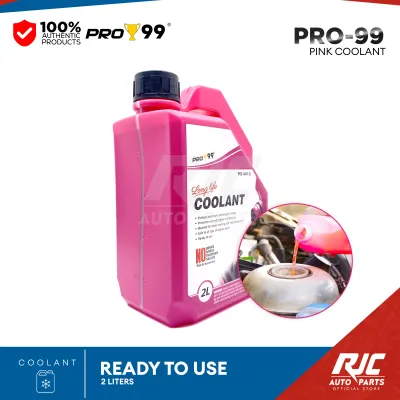
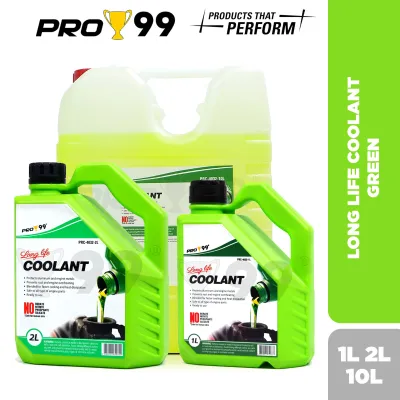
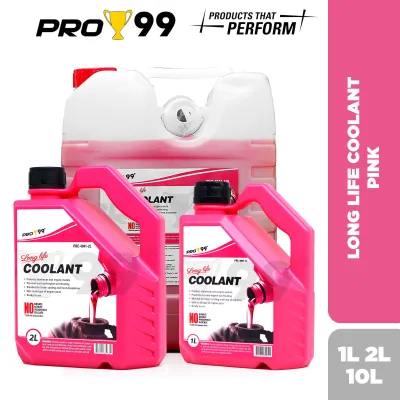
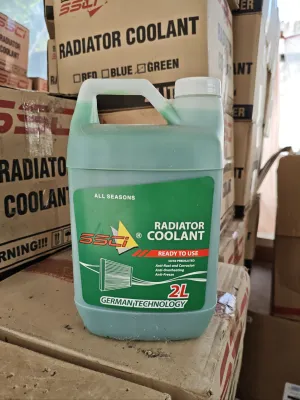
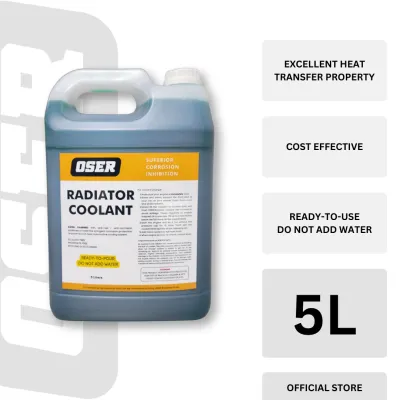
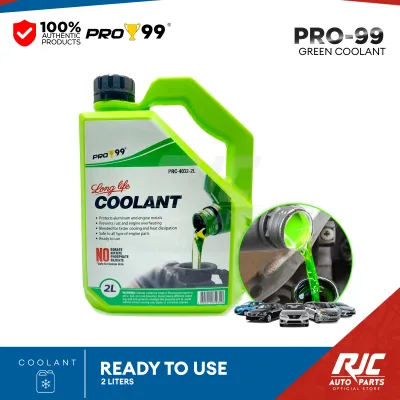
![[L-AX] 4 LITERS COOLANT TOPBEST BRAND](https://img.lazcdn.com/g/p/265a1ad5b28c2f5a6810dbf26c40a550.png_400x400q80.png_.webp)
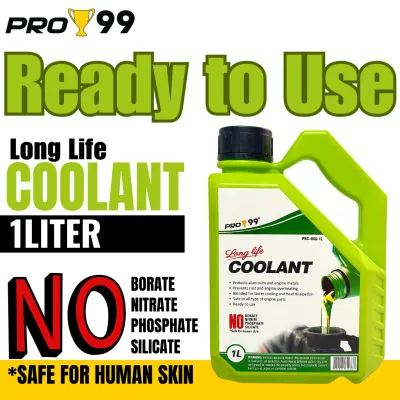
Prices are valid at publication and may change. Please refer to the product page for the latest price.
Understanding Coolant Chemistries: IAT, OAT, and HOAT
Coolants are categorized by their additive chemistry, which dictates how they protect internal metal surfaces and how long they remain effective. Inorganic Additive Technology (IAT) is the traditional formulation that relies on fast-acting but short-lived silicates and phosphates. While effective at coating metal parts quickly, IAT coolants degrade rapidly and typically require replacement every two years or after relatively low mileage.

Organic Acid Technology (OAT) utilizes organic acids to provide long-lasting corrosion protection, often lasting up to five years or more. OAT formulations do not contain silicates or phosphates, making them highly stable but slower to form a protective layer on new metal surfaces. Hybrid Organic Acid Technology (HOAT) combines organic acids with a small amount of inorganic inhibitors like silicates to offer both rapid surface protection and long-term durability.
Before purchasing any product, you must locate the required coolant technology specification in your vehicle’s owner’s manual. Mixing incompatible chemistries—such as pouring an OAT coolant into a system filled with IAT—can trigger a chemical reaction that forms a thick, gelatinous sludge. This gel can clog your radiator tubes, disable your water pump, and cause rapid engine overheating.
Checking for Diesel-Specific Additives and Cavitation Protection
To combat the destructive effects of cylinder liner cavitation, diesel-specific coolants rely on specialized additive packages. Traditional heavy-duty diesel coolants require the addition of Supplemental Coolant Additives (SCAs), such as nitrites or molybdates. These additives form a tough, sacrificial microscopic film on the wet sleeve cylinder liners, absorbing the shockwaves of collapsing vapor bubbles and preventing metal pitting.
When shopping for coolant, check the product label for explicit claims regarding cavitation protection or heavy-duty diesel compatibility. Many modern diesel coolants are sold as “fully formulated” or “pre-charged” options, meaning they already contain the necessary level of SCAs right out of the bottle. These products simplify maintenance because they do not require manual additive dosing during the initial fill.
If your vehicle manual specifies a conventional heavy-duty coolant, you may need to monitor and replenish the SCA levels periodically using test strips and separate additive concentrates. Failing to maintain the correct concentration of these additives can leave your engine vulnerable to liner failure, even if the coolant level itself remains full.
Reading Thermal Specs and OEM Certifications on the Label
Evaluating the physical specifications on the coolant packaging is crucial for ensuring reliable performance under local driving conditions. In tropical climates with high-altitude regions, such as the mountainous roads of Benguet, your cooling system must handle both intense heat and lower atmospheric pressures. The boiling point of the coolant mixture must be high enough to prevent boiling under pressure, while the freezing point must accommodate any unexpected temperature drops in elevated areas.
Rather than relying on generic marketing terms, look for recognized industry standards and OEM approval codes printed on the back label. Standards such as ASTM D6210 are specifically designed for fully formulated, ethylene-glycol-based coolants used in heavy-duty diesel engines. For light-duty or modern passenger diesels, look for specific manufacturer approval codes that match your vehicle brand, such as those from Cummins, Isuzu, Toyota, or Mitsubishi.
Verify that the product explicitly states compliance with these standards. A reputable manufacturer will list the exact certification codes they have met, giving you verifiable proof that the fluid has undergone rigorous testing to protect your specific engine design.
How to Match Coolant Specs to Your Vehicle Manual
To make a confident purchase, start by opening your vehicle’s owner’s manual and turning to the maintenance or specifications section. Locate the exact fluid standard, chemical type, or OEM part number recommended by the manufacturer. Write this code down or take a photo of the page to keep it handy while shopping.
When browsing options at an auto supply store or on an online marketplace, cross-reference your manual’s requirements directly with the product label. Do not rely on the color of the fluid; different manufacturers use various dyes, and color is not a reliable indicator of chemical compatibility. If the product label does not explicitly list your required OEM specification or ASTM standard, do not purchase it.
You will also need to choose between pre-mixed (ready-to-use) and concentrated coolants. Pre-mixed options are convenient and blended with demineralized water, preventing mineral buildup in your system. Concentrates are often more cost-effective per liter in ₱, but they require you to purchase and mix them with distilled water at a precise ratio, usually 50/50. Factor in the additional cost and effort of sourcing distilled water when comparing prices.
Always prioritize safety when working on your cooling system. Never open the radiator cap or coolant reservoir while the engine is hot, as the pressurized system can spray boiling liquid and cause severe burns. Allow the engine to cool completely before performing any checks, top-ups, or flushes. If your manual’s requirements are ambiguous or if you are unsure about the compatibility of a product, stop and consult a qualified professional mechanic or an authorized dealership.
Frequently Asked Questions (FAQ)
Can I use regular gasoline engine coolant in a diesel engine?
While some modern light-duty diesel passenger vehicles share coolant specifications with their gasoline counterparts, heavy-duty diesel engines require specialized formulations. Standard gasoline engine coolants generally lack the robust additive packages, such as nitrites or organic acids, needed to prevent cylinder liner cavitation and high-load thermal degradation. Using standard coolant in a demanding diesel application can lead to rapid engine wear and localized overheating. Always verify the specific requirements in your owner’s manual.
Do I need to add Supplemental Coolant Additives (SCAs) separately?
Whether you need to add SCAs separately depends on the type of coolant you purchase and your vehicle’s specific maintenance guidelines. Fully formulated heavy-duty coolants come pre-charged with these additives, eliminating the need for manual dosing during a fresh fill. However, conventional diesel coolants may require manual SCA additions and periodic testing with test strips to maintain proper concentration levels over time. Check the product label and your vehicle’s service schedule to determine the correct maintenance path.
Is it safe to mix different coolant colors or brands?
No, it is not safe to mix different coolant colors or brands unless you have verified that their chemical formulations are identical. Coolant dye colors are not standardized across the automotive industry; a green coolant from one brand may have a completely different chemical base than a green coolant from another. Mixing incompatible chemistries, such as OAT and IAT, can cause the additives to precipitate out of the solution, forming a thick gel that blocks coolant flow and damages the water pump. If you must top up your system and cannot find the exact matching product, it is safest to perform a complete system flush.
Community discussion
Share your experience or ask a question. Comments are reviewed before publication.