
Finding the right spark plug for motorcycle engines is one of the simplest yet most influential maintenance decisions you can make. The spark plug is responsible for igniting the air-fuel mixture inside the combustion chamber thousands of times per minute. While it may seem like a minor component, the metal alloy used in the electrode directly dictates how efficiently your engine burns fuel, how reliably it starts in humid tropical weather, and how often you need to pull out your toolkit for a replacement.
There is no single “best” spark plug material for every rider; instead, the optimal choice depends on your motorcycle’s engine design, your typical riding conditions, and your maintenance budget. Copper plugs offer outstanding electrical conductivity but wear out quickly under intense heat. Platinum provides a balanced middle ground, offering a significantly longer lifespan at a moderate price. Iridium represents the premium tier, delivering the longest service life and a highly concentrated spark that benefits modern, high-compression engines.
Regardless of which material you choose, any upgrade must strictly align with your motorcycle manufacturer’s specified heat range, thread dimensions, and reach. Installing a plug with the wrong physical dimensions or thermal properties can lead to catastrophic engine damage, regardless of how advanced the electrode material is. Understanding the physical differences between these metals will help you make an informed decision for your next service interval.
Products mentioned in this guide
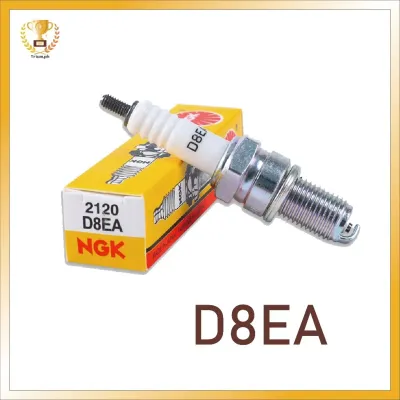
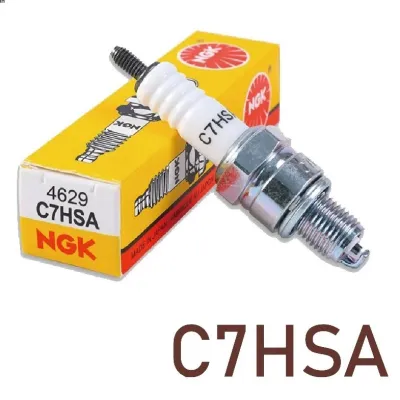
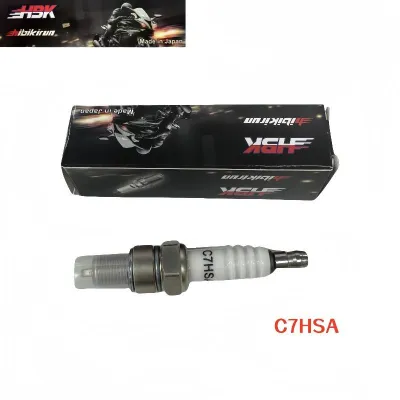
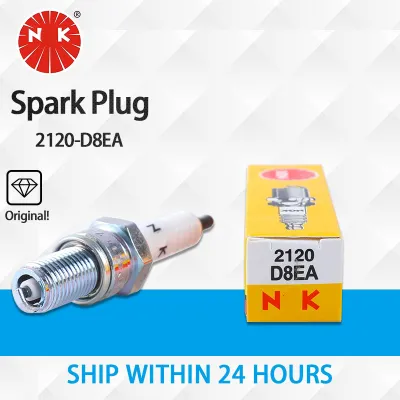
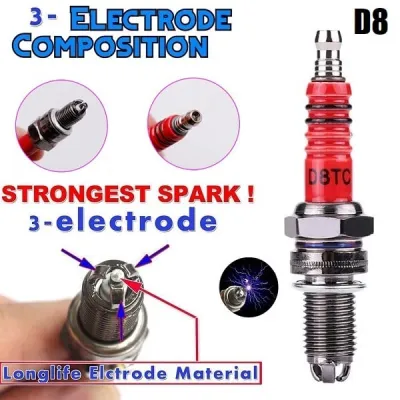
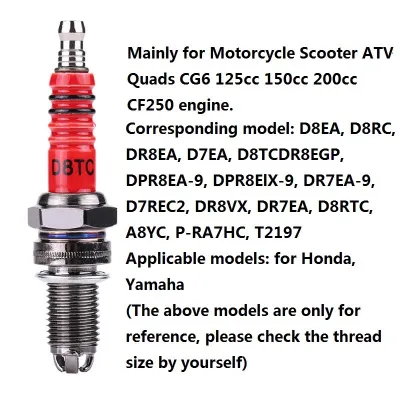
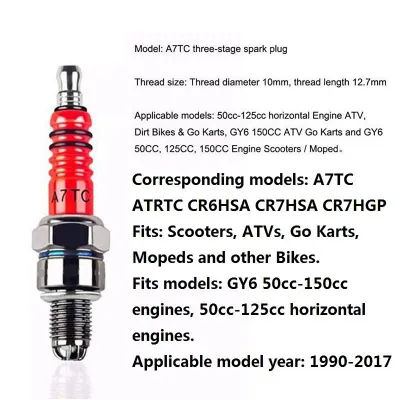
Prices are valid at publication and may change. Please refer to the product page for the latest price.
Core Differences in a Spark Plug for Motorcycle Applications
To understand why different spark plug materials perform the way they do, it helps to look at their physical construction. Every spark plug features a metal center electrode that projects down into the combustion chamber. When the ignition coil sends a high-voltage current through this electrode, an electrical spark jumps the gap to the ground electrode, igniting the compressed air-fuel mixture. The speed at which this electrode wears down is determined by the melting point and hardness of the metal used.
Copper Spark Plugs
Traditional copper spark plugs actually feature a solid copper core encased in a nickel alloy outer shell. While copper is an exceptional conductor of electricity and heat, it has a relatively low melting point and is a soft metal. Because pure copper would melt almost instantly inside a combustion chamber, manufacturers coat the electrode tip in a nickel alloy to protect it.
Even with this protective nickel coating, copper-core plugs wear down much faster than their precious-metal counterparts. The intense heat and electrical pressure of combustion gradually erode the nickel tip, causing the electrode gap to widen over time. As the gap grows, the ignition system must work harder to produce a spark. These plugs are typically standard equipment on older, carbureted, or lower-displacement commuter motorcycles, where high conductivity is valued and frequent maintenance is expected.
Platinum Spark Plugs
Platinum spark plugs upgrade the design by welding a small platinum disc to the tip of the center electrode. In double-platinum designs, a platinum disc is also attached to the ground electrode. Platinum is significantly harder than nickel alloy and has a much higher melting point, which dramatically slows down the rate of electrode wear.
Because the metal resists erosion so well, the electrode gap remains stable over a much longer period. This stability ensures consistent ignition performance throughout the plug’s service life. Platinum plugs serve as a highly practical middle ground for daily riders in the Philippines who want to reduce their maintenance frequency without paying the premium price associated with iridium options.
Iridium Spark Plugs
Iridium spark plugs represent the pinnacle of modern ignition technology. Iridium is an extremely dense, hard precious metal with a melting point of approximately 2,446 degrees Celsius. This extreme resistance to heat and electrical wear allows manufacturers to design center electrodes with an ultra-fine wire tip, often measuring just 0.4mm to 0.6mm in diameter.
A thinner electrode tip concentrates the electrical charge, requiring significantly less voltage from the ignition coil to jump the gap. This results in a stronger, more consistent spark even under high-compression or lean-burn conditions. While they carry the highest upfront cost, their durability and superior spark characteristics make them the preferred choice for high-performance, multi-valve, and fuel-injected engines.
Key Performance and Value Comparison Dimensions
When comparing these three spark plug types, evaluating them across practical performance dimensions helps clarify how they impact your daily ride and maintenance schedule.

Lifespan and Replacement Intervals
The most obvious difference between these materials is how long they last before requiring replacement. Copper plugs have the shortest lifespan because the nickel alloy coating erodes relatively quickly under continuous thermal stress. Platinum plugs offer a substantial step up, often lasting two to three times longer than copper due to the durability of the platinum disc. Iridium plugs last the longest, frequently outlasting platinum plugs by a wide margin under identical riding conditions.
However, you must always verify the specific replacement interval in your motorcycle’s owner’s manual. Factors such as engine design, oil consumption, fuel quality, and local riding conditions dictate the actual baseline. For instance, a motorcycle driven daily through the heavy, stop-and-go traffic and high humidity of metropolitan areas in the Philippines will experience faster carbon buildup and electrode wear than a bike used primarily for long-distance highway cruising.
Ignition Performance and Throttle Response
The physical shape of the electrode tip plays a major role in how your engine starts and responds to throttle inputs. Because copper electrodes are wider, they distribute the electrical spark over a larger surface area, which requires a higher voltage to jump the gap. While this produces a reliable, wide spark, it can strain older ignition systems.
In contrast, the ultra-fine tip of an iridium plug concentrates the electrical energy into a highly focused spark. This focused spark leads to more rapid flame kernel expansion inside the cylinder, which can translate into smoother idle stability, crisper throttle response, and more reliable cold starts during rainy monsoon seasons. It is important to note, however, that while premium plugs optimize combustion efficiency, they do not increase your engine’s maximum horsepower beyond its factory mechanical limits.
Heat Resistance and Engine Compatibility
Every spark plug is designed with a specific heat range, which refers to its ability to transfer heat away from the combustion chamber and into the cylinder head. A “hot” plug has a longer ceramic insulator nose that retains heat, helping to burn off carbon deposits in low-speed commuter bikes. A “cold” plug has a shorter insulator nose that transfers heat rapidly, preventing pre-ignition in high-performance or high-compression engines.
While platinum and iridium handle higher physical temperatures without melting, their rated heat range must strictly match your engine’s specifications. You should never assume that upgrading to an iridium plug allows you to ignore the manufacturer’s recommended heat range index. Installing a plug with an incorrect heat range can cause severe pre-ignition, spark plug fouling, or even localized melting of the piston crown.
Copper vs. Platinum vs. Iridium: Quick Comparison Matrix
The following matrix summarizes the key differences between the three main spark plug materials to help you quickly compare their attributes.
| Material | Electrode Design | Relative Lifespan | Conductivity | Typical Motorcycle Use Case | Relative Upfront Cost |
|---|---|---|---|---|---|
| Copper | Wide nickel-alloy coated tip (typically 2.5mm) | Short | Excellent | Older, carbureted, or low-displacement commuter bikes | Low (Budget-friendly) |
| Platinum | Fine platinum disc welded to tip (typically 1.0mm) | Medium | Good | Standard mid-displacement scooters and commuter bikes | Moderate |
| Iridium | Ultra-fine wire tip (typically 0.4mm to 0.6mm) | Long | Excellent | Modern fuel-injected, high-compression, or sport motorcycles | High (Premium investment) |
Decision Framework: Choosing the Right Spark Plug for Your Ride
Selecting the right spark plug is not about finding the most expensive option; it is about matching the plug’s characteristics to your motorcycle’s engine type, your riding habits, and your budget.
Choose Copper If…
Copper spark plugs are the ideal choice if you ride an older, carbureted, or low-displacement commuter motorcycle, such as a standard business model or a vintage underbone. These engines are often designed around the high thermal conductivity of copper and do not require the high-voltage efficiency of precious metals.
If you do not mind performing regular maintenance and prefer to minimize your upfront expenses, copper plugs offer excellent value. A copper plug typically costs a very small double-digit sum in Philippine Pesos (₱), making it highly economical to replace at regular intervals during routine oil changes.
Choose Platinum If…
Platinum spark plugs are highly recommended if you ride a standard mid-displacement scooter or commuter motorcycle and want to reduce how often you have to remove your body panels for maintenance. They represent a practical “set-and-forget” upgrade for daily riders who want a reliable ignition source that resists gap erosion over tens of thousands of kilometers.
By choosing platinum, you gain a substantial boost in durability over copper without paying the premium price of iridium. This makes it an excellent compromise for riders seeking long-term reliability on a moderate budget.
Choose Iridium If…
Iridium spark plugs are the premier choice if you ride a modern, high-compression, fuel-injected, or multi-cylinder performance motorcycle. If your bike features a high-voltage ignition system or operates at consistently high RPMs, the fine-wire iridium design will ensure maximum spark consistency and reduce the risk of high-speed misfires.
Iridium is also highly beneficial if you ride in challenging conditions, such as heavy urban traffic where engines run hot, or during wet weather when reliable starting is critical. While the upfront cost in ₱ is several times higher than copper, the extended service life, improved cold-start reliability, and reduced maintenance hassle make it a highly cost-effective investment over the lifespan of the plug.
Installation Safety and Maintenance Boundaries
Upgrading your spark plug material does not override the fundamental rules of physical compatibility. Before purchasing any spark plug, you must verify that the thread size, thread reach, and seat type (tapered or gasket) match your motorcycle’s original equipment specifications exactly. Never rely solely on a store catalog or general category description; always consult your motorcycle’s service manual to confirm the precise part number code.
When installing a new spark plug, follow these safety steps to protect your engine:
- Allow the Engine to Cool: Never attempt to remove or install a spark plug on a hot engine. Motorcycle cylinder heads are typically made of aluminum, which expands when hot and is highly susceptible to thread damage.
- Clean the Spark Plug Well: Before removing the old plug, blow away any dirt, sand, or debris accumulated around the spark plug base using compressed air or a soft brush. This prevents contaminants from falling directly into the combustion chamber.
- Verify the Electrode Gap: Even if a plug is labeled as "pre-gapped," the gap can shift during shipping and handling. Use a wire-type feeler gauge to gently check the gap against the specification in your service manual. Be extremely careful when gapping platinum or iridium plugs, as applying pressure directly to the delicate center electrode tip can easily fracture the precious metal or ceramic insulator.
- Thread by Hand First: Always start threading the new spark plug into the cylinder head by hand using only your fingers or a flexible rubber hose slipped over the plug's terminal. This ensures you will feel any resistance immediately if the plug begins to cross-thread.
- Use a Torque Wrench: Once the plug is finger-tight, use a calibrated torque wrench to tighten it to the manufacturer's exact torque specification. Under-tightening can prevent the plug from transferring heat properly, causing it to run hot or vibrate loose. Over-tightening can easily strip the aluminum threads in the cylinder head or distort the spark plug's internal seal.
If you do not have the proper tools, such as a spark plug socket and a torque wrench, or if you feel uncomfortable working with delicate aluminum threads, always have the installation performed by a qualified professional mechanic at an authorized service center.
Frequently Asked Questions (FAQ)
Can I mix different spark plug materials in a multi-cylinder motorcycle?
You should strongly avoid mixing different spark plug materials, brands, or heat ranges within the same engine. Multi-cylinder motorcycle engines rely on identical combustion characteristics across all cylinders to maintain balance, smooth power delivery, and stable idling.
Because different metals have different electrical resistance and thermal properties, mixing them can cause uneven cylinder performance, localized overheating, or ignition imbalances. Always replace your spark plugs as a complete, matched set of identical part numbers.
Will iridium spark plugs increase my motorcycle's top speed?
No, installing iridium spark plugs will not increase your motorcycle’s top speed or add horsepower beyond its factory mechanical limits. A spark plug’s role is to ignite the air-fuel mixture, not to generate additional power.
What premium iridium plugs do is restore and maintain your engine’s original combustion efficiency. If your old plugs were worn, fouled, or improperly gapped, switching to new iridium plugs can make the engine start easier, idle more smoothly, and respond more crisply to throttle inputs, but this is a restoration of lost performance rather than an upgrade in top speed.
Community discussion
Share your experience or ask a question. Comments are reviewed before publication.