
Choosing the right spark plug for toyota vios is one of the simplest yet most influential maintenance decisions you can make for your vehicle. As the most popular subcompact sedan in the Philippines, the Toyota Vios serves as a reliable daily commuter, a fleet workhorse, and a family carrier. To keep its engine running efficiently, you must choose a spark plug material that matches your driving habits, budget, and maintenance preferences.
There is no single best spark plug material for every Vios owner. Instead, the ideal choice depends on your long-term ownership goals. Standard copper plugs offer the lowest upfront cost and excellent conductivity, but they require frequent replacements. Platinum plugs provide a balanced middle ground in both price and service life. Premium iridium plugs command a higher initial price but deliver the longest lifespan, exceptional ignition reliability, and the best defense against engine misfires.
Before making any purchase, always check your Toyota Vios owner’s manual to verify the exact part number, thread dimensions, reach, and heat range specified for your engine generation. Installing a plug with the wrong physical dimensions or heat rating can lead to severe engine damage, poor fuel economy, or ignition failure.
Products mentioned in this guide
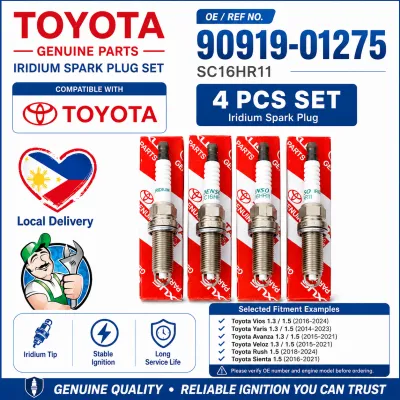
![4 PCS Toyota Spark Plug Iridium | Toyota Vios 2016-Up Dual VVTi [90919-01275]](https://img.lazcdn.com/g/p/fa8be885f4ac34ef091f09203f30fbe8.png_400x400q80.png_.webp)
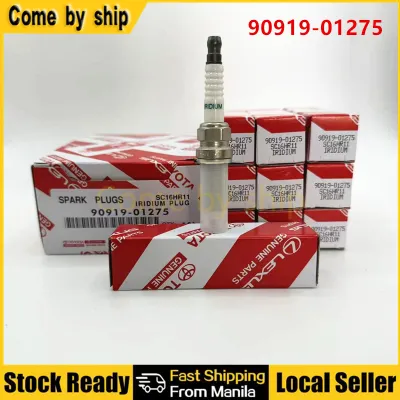
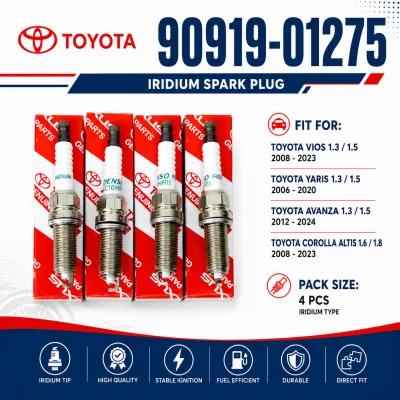
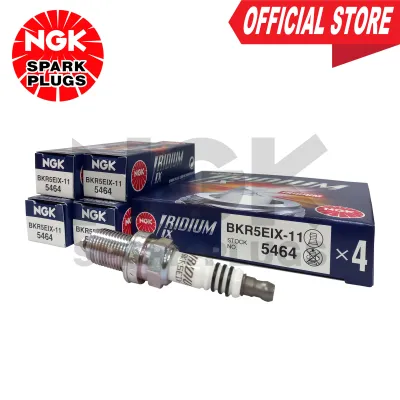
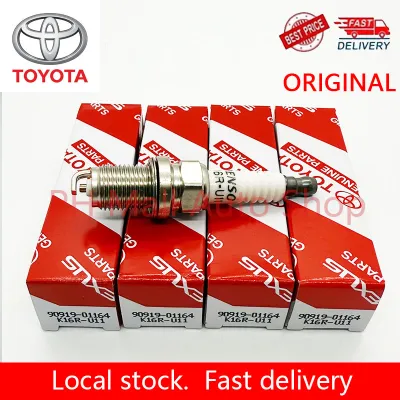
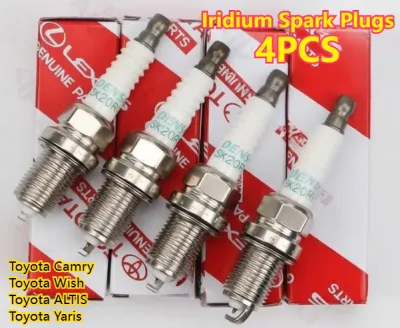
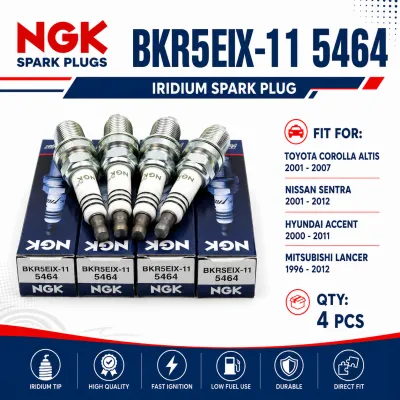
Prices are valid at publication and may change. Please refer to the product page for the latest price.
Copper, Platinum, and Iridium: How They Differ in the Engine
To understand why spark plugs perform differently, it helps to look at the metals used in their construction. The spark plug’s primary job is to channel high-voltage electricity from the ignition coil across a small gap, creating a spark that ignites the air-fuel mixture inside the cylinder. The hardness, melting point, and electrical conductivity of the electrode materials directly dictate how efficiently and how long the plug can perform this task.
Copper spark plugs, often referred to as standard or nickel-alloy plugs, feature a solid copper core surrounded by a nickel-alloy outer electrode. Copper is an outstanding conductor of electricity and heat, which is why these plugs perform beautifully when new. However, nickel alloy has a relatively low melting point and is prone to rapid wear under the intense heat and pressure of combustion. To compensate for this wear, manufacturers must make the center electrode relatively thick, typically around 2.5 millimeters in diameter. This thicker tip requires more electrical voltage to jump the gap, placing a higher baseline load on your ignition system over time.
Platinum spark plugs improve on this design by featuring a small platinum disc welded to the tip of the center electrode, and sometimes the ground electrode as well. Platinum is significantly harder than nickel alloy and has a much higher melting point. Because the metal resists wear so effectively, the center electrode can be constructed with a much finer tip, usually measuring between 1.1 and 1.5 millimeters. This narrower profile concentrates the electrical charge, allowing a spark to jump the gap more easily and requiring less voltage from the ignition coils.
Iridium spark plugs represent the premium tier of ignition technology. Iridium is extremely dense, incredibly hard, and boasts a melting point of roughly 2,446 degrees Celsius, which is far higher than both nickel and platinum. This extreme durability allows manufacturers to engineer an ultra-fine center electrode, often measuring just 0.4 to 0.6 millimeters in diameter. This needle-like tip concentrates the spark with incredible precision, requiring minimal voltage to fire. The result is a highly stable, consistent spark that resists erosion even under the most demanding engine operating conditions.
Comparing Lifespan, Performance, and Value for Vios Drivers
For a Toyota Vios owner navigating local driving conditions, choosing between these three materials involves evaluating real-world performance, maintenance frequency, and financial trade-offs.

Expected Lifespan and Replacement Frequency
When ranking spark plugs by longevity, copper sits at the bottom, platinum occupies the middle tier, and iridium stands at the top. Copper plugs wear down relatively quickly as the nickel-alloy electrode gradually erodes, widening the gap and degrading spark quality. Platinum plugs offer a substantial step up, lasting roughly twice as long as standard copper. Iridium plugs deliver the longest service life, often lasting several times longer than copper before requiring replacement.
Rather than relying on generic mileage estimates, you should consult your specific Toyota Vios owner’s manual for the manufacturer’s recommended maintenance intervals. A first-generation Vios with a 1NZ-FE engine may have different baseline requirements compared to a newer model equipped with a Dual VVT-i 2NR-FE engine.
It is also vital to account for local driving conditions. Operating a vehicle in the Philippines often involves severe driving cycles, characterized by prolonged idling in heavy metropolitan traffic, short trips where the engine does not reach full operating temperature, high ambient tropical heat, and elevated humidity. These factors accelerate electrode wear and carbon buildup, meaning you may need to inspect and replace your spark plugs sooner than the standard service interval suggests.
Ignition Consistency and Engine Smoothness
In a compact engine like the 1.3-liter or 1.5-liter powerplants found in the Toyota Vios, ignition consistency directly impacts the quality of your daily drive. The fine-wire electrodes of iridium and platinum plugs focus the electrical energy more efficiently than the blunt tip of a copper plug. This focused spark ensures more complete and reliable combustion on every single engine cycle.
On the road, this consistent combustion translates to a noticeably smoother idle, especially when the air conditioning compressor cycles on and places an extra load on the engine. It also contributes to more reliable cold starts during damp monsoon mornings and provides a more linear, responsive throttle feel when accelerating from a standstill.
However, it is important to dispel a common automotive myth: upgrading to premium iridium spark plugs will not miraculously increase your Vios’s horsepower beyond its original factory specifications. Spark plugs do not create power; they unlock the power already latent in the fuel. Premium plugs simply prevent the power loss, sluggishness, and rough running associated with weak or inconsistent sparks.
Upfront Price vs. Long-Term Ownership Cost
Financial considerations play a major role in spark plug selection, and the calculation involves more than just the price tag at the auto parts store. Copper spark plugs are highly budget-friendly, typically costing between ₱120 and ₱250 per plug. Platinum plugs represent a moderate step up, generally priced around ₱300 to ₱500 each. Iridium plugs require the highest initial investment, often ranging from ₱600 to over ₱1,200 per plug depending on the brand and specific technology.
To determine the true value, you must factor in the cost of labor. If you rely on a professional mechanic or an authorized service center to maintain your Vios, you will pay a labor fee for every spark plug replacement. Because the labor charge remains the same whether you install cheap or expensive plugs, choosing long-lasting iridium plugs can save you money over time by dramatically reducing the number of workshop visits.
For hands-on car owners who prefer DIY maintenance in their own garage, copper plugs can be a highly economical choice. If you do not mind spending an hour every year or two changing your own plugs, the low upfront cost of copper allows you to keep your ignition system fresh for a minimal cash outlay.
Quick Comparison: Spark Plug Materials for Toyota Vios
The table below provides a direct, qualitative comparison of the three spark plug materials to help you weigh your options at a glance.
| Material | Electrode Design | Relative Lifespan | Relative Upfront Cost | Best Suited For |
|---|---|---|---|---|
| Copper | Thick center electrode (approx. 2.5mm) | Shortest | Lowest | Budget-conscious DIYers and fleet operators with strict maintenance schedules |
| Platinum | Medium center electrode (approx. 1.1mm – 1.5mm) | Moderate | Moderate | Drivers seeking a balanced upgrade without paying premium prices |
| Iridium | Fine-wire center electrode (approx. 0.4mm – 0.6mm) | Longest | Highest | Daily commuters, ride-sharing vehicles, and owners seeking maximum service intervals |
Note: Regardless of the material you choose, you must verify that the physical dimensions of the plug—including thread pitch, reach, and hex size—match the exact engineering specifications of your Toyota Vios engine.
Decision Guide: Which Material Matches Your Driving Profile?
To finalize your choice, evaluate how you use your Toyota Vios and match your driving profile to the strengths of each material.
Choose Copper if:
- You are operating on a tight immediate budget and need to restore basic engine functionality as affordably as possible.
- You enjoy performing routine automotive maintenance yourself and prefer the physical routine of inspecting and changing your plugs regularly.
- You are preparing the vehicle for resale and want to install fresh, standard-compliant components without investing in premium upgrades.
Choose Platinum if:
- You want a reliable upgrade over standard copper plugs but prefer not to pay the premium price associated with iridium.
- Your Vios is driven under normal, mixed conditions and you follow a standard, moderate maintenance schedule.
- You want to improve cold-start reliability and idle smoothness without overcomplicating your maintenance budget.
Choose Iridium if:
- Your Vios serves as a daily commuter in dense, stop-and-go city traffic, where engine idling times are exceptionally high.
- You use your vehicle for commercial purposes, such as ride-hailing or delivery services, where maximizing vehicle uptime and minimizing shop visits is critical to your livelihood.
- You prefer a "fit and forget" approach to car care, wanting the peace of mind that comes with the longest possible service intervals.
- You want to ensure your engine maintains its optimal combustion efficiency, fuel economy, and emission levels over tens of thousands of kilometers.
Verify First if:
- Your Vios is currently experiencing running issues, such as a rough idle, engine misfires, or a lit "Check Engine" light. Installing premium plugs will not fix underlying mechanical problems like bad ignition coils, vacuum leaks, or dirty fuel injectors.
- Your vehicle has aftermarket modifications or an upgraded ignition system, which may require a specific heat range or gapping configuration different from the stock settings.
Safe Replacement and Maintenance Practices for Your Vios
Replacing spark plugs is a straightforward task, but it requires strict adherence to safety and mechanical guidelines to prevent costly damage to your Vios’s engine.
Preparation and Engine Temperature Never attempt to remove spark plugs from a hot engine. The cylinder head of the Toyota Vios is made of aluminum, which expands when hot. Attempting to unscrew spark plugs from a hot aluminum head can easily strip or gall the delicate threads in the spark plug well. Always let the engine cool down completely to ambient temperature before beginning work.
Debris Clearance Before removing the old spark plugs, use compressed air or a hand blower to clean out any dirt, dust, or debris that has accumulated around the ignition coils and spark plug wells. If you skip this step, loose debris can fall directly into the open combustion chamber once the plug is unscrewed, potentially causing severe internal engine damage.
Gap Verification Even if your new spark plugs are advertised as “pre-gapped” from the factory, always verify the gap using a dedicated spark plug gap tool or feeler gauge before installation. Compare your reading against the gap specification listed in your Vios service manual. Be extremely gentle when checking or adjusting the gap on platinum or iridium plugs; the precious metal tips are highly delicate and can easily snap or chip if subjected to excessive force.
Torque Specifications Always use a calibrated torque wrench to tighten the new spark plugs to the exact manufacturer specification. Undertightening can cause the plug to vibrate loose, leading to compression loss, poor heat dissipation, and potential engine damage. Overtightening is equally dangerous, as it can strip the aluminum threads in the cylinder head or crack the spark plug’s ceramic insulator, causing electrical arcing and misfires.
Knowing Your Limits If you encounter a spark plug that feels seized or extremely difficult to turn, do not force it. Applying excessive torque can snap the plug off inside the cylinder head, resulting in an expensive and complex repair. If you lack the proper tools—such as a magnetic spark plug socket, an extension bar, and a torque wrench—or if you feel unsure about any step of the process, stop immediately and consult a qualified professional mechanic.
Frequently Asked Questions (FAQ)
Can I upgrade from standard copper to iridium spark plugs in my older Vios?
Yes, you can generally upgrade from standard copper to iridium spark plugs in older Toyota Vios models. Upgrading is a highly effective way to extend your maintenance intervals and ensure a more stable spark. However, you must ensure that the replacement iridium plug matches the exact physical dimensions of your original OEM plug, including the thread diameter, thread pitch, reach, hex size, and heat range. Do not guess or select a plug based on material alone; always cross-reference the part number using a reputable spark plug manufacturer’s application guide or consult an auto parts specialist to verify compatibility with your specific engine model year.
Will iridium spark plugs significantly improve my Vios fuel economy?
Iridium spark plugs will not dramatically increase your Vios’s fuel economy beyond the vehicle’s original factory baseline. The primary benefit of iridium is its extreme durability, which allows it to maintain its optimal gap and spark shape over a much longer period compared to copper. As copper plugs wear down, their gap widens, requiring more voltage and occasionally causing minor, imperceptible misfires that degrade fuel efficiency. By resisting this wear, iridium plugs ensure that your engine maintains its peak combustion efficiency and fuel economy consistently throughout the plug’s long service life, preventing the gradual fuel economy drop-off associated with worn-out standard plugs.
Community discussion
Share your experience or ask a question. Comments are reviewed before publication.