
Finding the perfect carphone holder dashboard setup is a balance of convenience, visibility, and interior preservation. With the sheer variety of options on the market, drivers often find themselves torn between three primary mounting styles: suction cups, magnetic mounts, and air vent clips. Each mechanism offers distinct advantages, but choosing the wrong one can lead to a dropped phone, a damaged dashboard, or a blocked view of the road.
The ideal choice depends entirely on your vehicle’s interior layout, the texture of your dashboard, your local climate, and your phone’s physical dimensions. For instance, drivers navigating the hot, humid climate of the Philippines must consider how cabin heat affects adhesives and suction gels. Meanwhile, those driving on uneven roads or over frequent speed bumps need to prioritize mechanical stability. This guide compares these three mounting styles to help you match the right mount to your specific car interior and daily driving habits.
Suction Cup Holders: The Classic Carphone Holder Dashboard Option
Suction cup mounts are a highly versatile carphone holder dashboard option, but their performance relies heavily on surface physics. A suction cup works by creating a vacuum seal against a surface. For this vacuum to hold, the mounting surface must be completely non-porous, flat, and smooth. While windshield glass is the perfect candidate, modern car dashboards present a major challenge. Many vehicles feature textured plastics, synthetic leather wraps, or soft-touch materials that allow microscopic amounts of air to seep under the cup, breaking the vacuum seal and causing the mount to fall.
Products mentioned in this guide
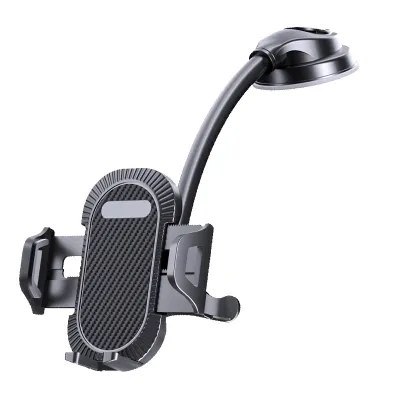
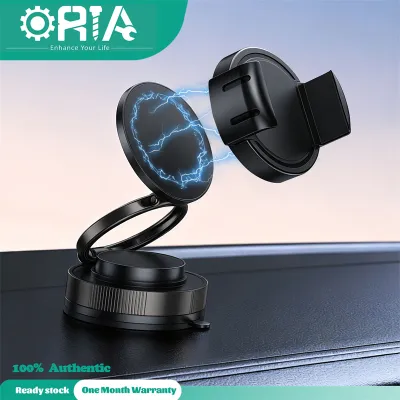
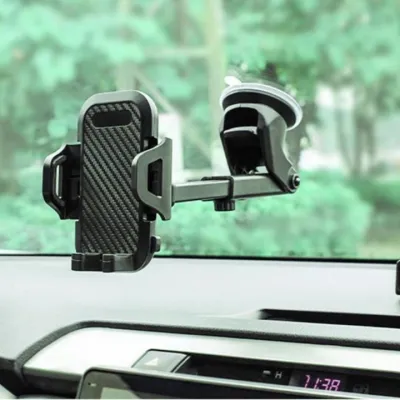
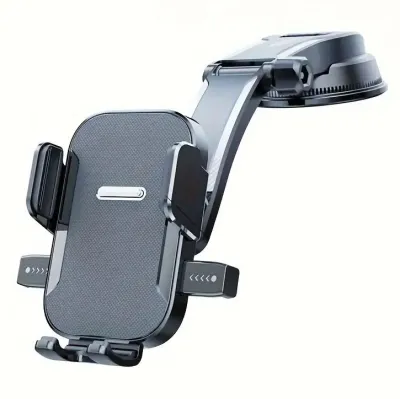
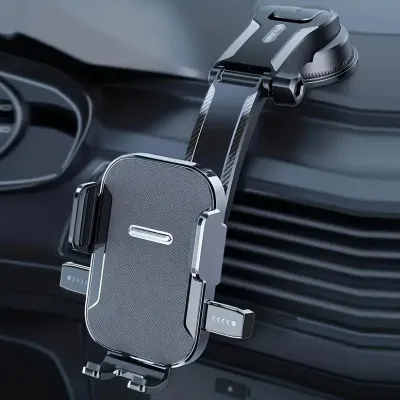
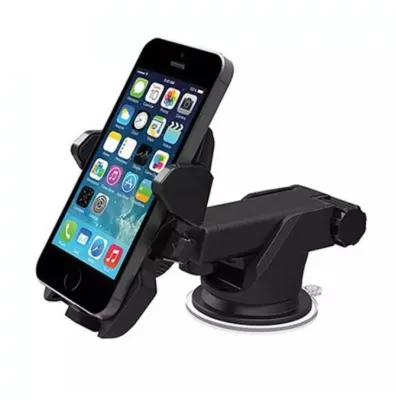
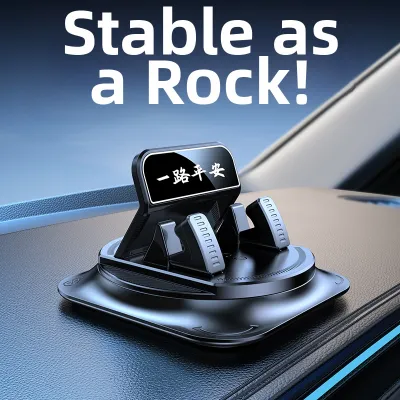
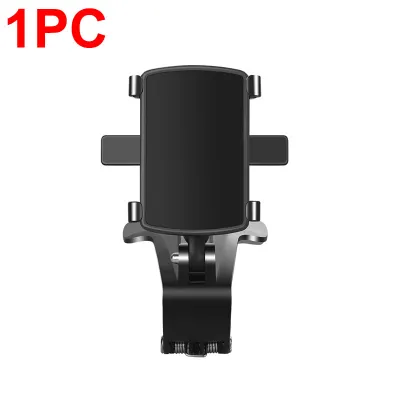
Prices are valid at publication and may change. Please refer to the product page for the latest price.
In tropical regions like the Philippines, climate conditions play a massive role in suction cup reliability. When a car is parked under the direct sun, interior cabin temperatures can easily exceed 50°C. This extreme heat softens the polyurethane gel lining found on many sticky suction cups. As the gel warms up, it becomes less cohesive, and the air trapped inside the suction chamber expands, causing the mount to lose its grip. If you choose a suction cup mount, look for models with high-grade, heat-resistant silicone or polyurethane, and be prepared to periodically clean and re-seat the mount, especially during the dry season.
Placement is another critical factor. Mounting a suction cup on the windshield or the top of the dashboard provides an eye-level view of your navigation app, but it can also obstruct your field of vision. In the Philippines, the Anti-Distracted Driving Act (ADDA) strictly regulates the placement of electronic devices. Under these rules, your phone must not block your direct line of sight to the road. This means a dashboard-mounted suction cup must be positioned low enough or far enough to the side to remain out of your primary viewing zone. Additionally, never mount a suction cup within the deployment path of your vehicle’s airbags, as a deploying airbag can turn the mount into a dangerous projectile.
Finally, consider the potential for interior damage. While suction cups do not use permanent adhesives, the sticky gel pads can leave unsightly oily rings or discoloration on soft-touch dashboard plastics or vinyl over time. To prevent this, avoid using sticky suction cups on delicate, leather-wrapped, or premium synthetic dashboards. When removing a suction cup, never yank it off by force. Instead, pull the release tab gently, or slide a thin piece of plastic (like an old credit card) underneath the edge of the cup to break the vacuum seal safely.
Magnetic Holders: Best for Quick Access and Minimalist Setups
Magnetic phone holders are favored for their minimalist design and unmatched convenience. They allow you to mount or remove your phone with a simple, one-handed motion, making them highly popular for daily commuters. However, unlike suction cups that rely on vacuum pressure, magnetic dashboard mounts almost always rely on strong adhesive backing—typically 3M double-sided tape—to secure the base to your car’s interior.

This reliance on adhesives introduces significant risks to your vehicle’s dashboard. While high-bond adhesives provide exceptional stability, they can permanently alter or damage delicate interior surfaces. If applied to soft-touch vinyl, leather, or suede-like materials, the adhesive can bond so deeply that removing the mount later may peel, tear, or discolor the surface. If your vehicle features a premium or delicate dashboard, it is highly recommended to test the adhesive on a hidden area first, or apply a protective static film to the dashboard before sticking the mount down. Warning: once stuck, repositioning is difficult and requires a new adhesive pad.
Another critical consideration is the weight of your smartphone and the thickness of your phone case. The stability of a magnetic mount depends entirely on the magnetic attraction between the mount’s head and the metal plate attached to your phone. If you use a heavy device—such as a large-screen foldable phone or a flagship model with a heavy rugged case—the magnetic connection may not be strong enough to withstand sudden physical forces. Driving over deep potholes, traversing rough gravel roads, or hitting speed bumps can cause a heavy phone to slip off the magnetic face, potentially damaging the device.
Furthermore, you must account for electronic and hardware compatibility. While the small neodymium magnets used in these mounts will not damage modern solid-state storage or flash memory, they can interfere with other smartphone features. A metal plate pasted on the back of your phone will block Qi and MagSafe wireless charging signals, preventing you from using wireless charging pads at home or in the car unless you use a specialized MagSafe-compatible magnetic mount. Additionally, strong magnets can temporarily interfere with your phone’s internal digital compass, which may cause minor calibration issues in navigation apps until the phone is removed from the mount.
Air Vent Clips: The Safe Choice for Delicate Dashboard Surfaces
Air vent phone mounts offer a compelling alternative for drivers who want to keep their dashboards completely free of adhesives, suction marks, and line-of-sight obstructions. These mounts utilize a mechanical clip, clamp, or claw that grips onto the plastic slats of your car’s air conditioning vents. By utilizing existing cabin structures, air vent clips completely bypass the risk of dashboard cosmetic damage.
However, vent compatibility is a major limitation. Most air vent mounts are designed specifically for standard, straight horizontal or vertical vent blades. If your vehicle features circular vents, diagonal slats, or ultra-thin hidden vents common in many modern luxury or electric vehicles, standard vent clips will not fit securely or may slide off entirely. Before purchasing, closely inspect your vehicle’s vent design to ensure a secure mechanical match.
Using an air vent mount also introduces a trade-off regarding cabin airflow and device temperature. Mounting your phone directly in front of an AC vent inevitably blocks a portion of the cool air flowing into the cabin. While this might seem like a disadvantage, it actually offers a unique benefit in hot climates. Running intensive GPS navigation apps while charging can cause smartphones to heat up rapidly, leading to thermal throttling and screen dimming. The continuous stream of cool air from the vehicle’s air conditioning system acts as an active cooling mechanism, keeping your phone running at optimal temperatures even during long daytime drives.
Despite this benefit, physical wear and tear is a serious concern. Car air vent blades are typically made of thin, lightweight plastic that is not designed to support significant weight. Hanging a heavy smartphone from a vent blade puts constant downward leverage on the plastic mechanism. Over time, the combination of phone weight and road vibrations can stress, crack, or completely snap the delicate plastic slats. To minimize this risk, always look for vent mounts that feature an integrated support leg or stabilizer bracket. These stabilizers rest against the lower frame of the vent housing, redistributing the phone’s weight away from the fragile blades.
Additionally, vent-mounted phones are highly susceptible to vibrations. Because the vent assembly itself is suspended within the dashboard, driving over uneven roads, gravel, or rough asphalt can cause the mount to bounce, rattle, or sag. This constant motion can make it difficult to read your navigation screen clearly and may require frequent manual adjustments.
Direct Comparison: Stability, Visibility, and Interior Protection
To choose the right carphone holder dashboard or vent solution, you must weigh how each mounting type performs across the real-world conditions of your daily drive. Let’s analyze how they compare across three critical performance vectors: stability, driver visibility, and interior protection.
When it comes to stability on bumpy roads, adhesive-backed magnetic mounts and high-quality suction cups mounted on glass offer the most rigid connection. Because they are fixed directly to the solid structure of the vehicle, they experience minimal vibration, ensuring your phone screen remains perfectly legible even on rough terrain. Air vent clips, by contrast, are inherently more prone to shaking because they rely on flexible plastic blades that move with the vehicle’s suspension.
Driver visibility and ergonomics present another clear trade-off. Suction cup mounts placed on the windshield or upper dashboard keep your phone close to your natural line of sight, making it easy to check navigation maps without taking your eyes off the road. However, this high placement can create physical blind spots, particularly in smaller vehicles. Air vent mounts and low-profile magnetic mounts keep your phone positioned lower on the center console. While this eliminates windshield obstructions and complies easily with local traffic safety laws like the ADDA, it does require you to look further down and away from the road to view your screen.
Interior damage risk is perhaps the most significant factor for vehicle owners. Adhesive magnetic mounts carry the highest risk of leaving permanent marks, residue, or tearing delicate dashboard materials. Suction cups are highly safe for glass surfaces but can leave oily rings on soft-touch vinyl over time. Air vent clips present zero risk to your dashboard’s surface, but they carry a moderate risk of breaking internal plastic vent components if overloaded or installed incorrectly.
Let’s summarize these key trade-offs in a direct comparison table:
| Mounting Type | Best Surface Type | Heat Resistance | AC Airflow Impact | Interior Damage Risk |
|---|---|---|---|---|
| Suction Cup | Windshield glass or smooth, flat plastic | Moderate (Gel can soften in high heat) | None (Does not block vents) | Low (on glass) to Moderate (on soft dash) |
| Magnetic (Adhesive) | Flat, hard plastic or metal trim | High (Quality adhesive holds well if cured) | None (Does not block vents) | High (Can damage leather or soft vinyl) |
| Air Vent Clip | Horizontal or vertical vent blades | High (Completely unaffected by cabin heat) | Blocks airflow (but cools the phone) | Low to Moderate (Risk of snapping plastic blades) |
How to Choose Based on Your Car's Interior and Driving Habits
Selecting the perfect phone mount is not about finding the objectively “best” product, but rather matching the mount’s physical design to your specific vehicle and driving patterns. Use this simple framework to guide your decision before making a purchase.
Choose a Suction Cup Mount if:
- You prefer your phone positioned near eye level for easy navigation.
- Your vehicle has a completely flat, hard-plastic dashboard or you plan to mount it directly to the windshield.
- You do not mind occasionally cleaning the suction gel and re-seating the mount during hot summer months.
Choose a Magnetic (Adhesive) Mount if:
- You prioritize fast, one-handed mounting and a clean, minimalist interior look.
- Your dashboard has a solid, flat, non-porous area that can safely tolerate strong adhesives.
- You use a lightweight phone or a dedicated MagSafe-compatible case.
Choose an Air Vent Mount if:
- Your dashboard is made of textured, soft-touch, or premium leather materials that you want to keep completely unmarked.
- Your vehicle features standard horizontal or vertical air vent blades that are sturdy and easily accessible.
- You want to prevent your phone from overheating while running GPS navigation under the hot sun.
Before finalizing your choice, always physically inspect your vehicle’s interior. Check the texture of your dashboard, measure the clearance around your air vents, and consult your vehicle’s owner’s manual to ensure your chosen mounting location does not interfere with passenger safety systems, control knobs, or airbag deployment zones.
Frequently Asked Questions (FAQ)
Do magnetic car phone holders damage smartphone internals?
No, modern smartphones are not damaged by the small neodymium magnets used in car mounts. Older electronic devices relied on magnetic hard drives and cathode-ray tube screens, which were highly sensitive to magnetic fields. Modern smartphones use solid-state flash memory, which is completely unaffected by consumer-grade magnets. However, there are minor practical trade-offs. A metal plate attached to your phone will block Qi or MagSafe wireless charging signals. Additionally, extremely strong magnets placed directly over internal sensors can temporarily interfere with your phone’s digital compass or the optical image stabilization (OIS) systems in some premium camera lenses while the phone is mounted.
Why does my suction cup phone mount keep falling off the dashboard?
The most common reason a suction cup mount falls off is an incomplete vacuum seal caused by surface texture or dirt. Microscopic textures on your dashboard allow air to leak slowly into the suction cup, breaking the vacuum. To fix this, thoroughly clean both the dashboard surface and the suction cup with isopropyl alcohol to remove dust and oils, and let them dry completely. If your dashboard is heavily textured, the suction cup will not hold; in this case, you must use an adhesive dashboard pad as a smooth base or mount the suction cup directly to your windshield glass. Additionally, extreme cabin heat can soften the suction gel, requiring you to re-seat the mount periodically.
Can air vent phone holders break the AC blades?
Yes, air vent phone holders can break your vehicle’s AC blades if they are overloaded or installed incorrectly. While most mounts are designed to distribute weight safely, modern smartphones are becoming increasingly heavy. The leverage of a heavy phone, combined with the continuous vibrations of driving over potholes or rough roads, can put immense stress on the thin plastic blades of your air vents. To prevent damage, always check the mount’s weight rating, avoid pulling or yanking on the mount while it is attached, and choose models that feature stabilizing legs or brackets to distribute the weight to the surrounding dashboard frame.
Community discussion
Share your experience or ask a question. Comments are reviewed before publication.