
Navigating the roads of the Philippines presents a unique set of challenges for daily drivers. From the stop-and-go traffic of Metro Manila to the rugged, unpaved provincial roads, your vehicle is constantly subjected to vibrations, sudden jolts, and deep potholes. Amid these driving conditions, finding a reliable carphone holder dashboard solution is not just a matter of convenience—it is a critical safety requirement. A phone mount that fails on a bumpy road can distract the driver, damage the device, or even interfere with the vehicle’s controls.
To keep your phone secure, you must choose the right mounting mechanism. Adhesive mounts generally offer the most secure, semi-permanent hold on uneven surfaces and can best withstand high cabin temperatures. Suction cups with a mechanical locking lever serve as a close second, offering strong stability with the distinct advantage of being removable and repositionable. Conversely, gravity (weighted) bases are the least secure option for severe bumps, as they rely purely on friction and mass, making them highly prone to sliding or bouncing when encountering deeply rutted roads. Ultimately, the best choice depends on your specific vehicle’s dashboard material, your daily driving routes, and your tolerance for potential adhesive residue.
Understanding the Three Dashboard Mounting Mechanisms
To make an informed decision, it is essential to understand the physics and engineering behind how these three mounting types interact with your vehicle’s interior.
Products mentioned in this guide
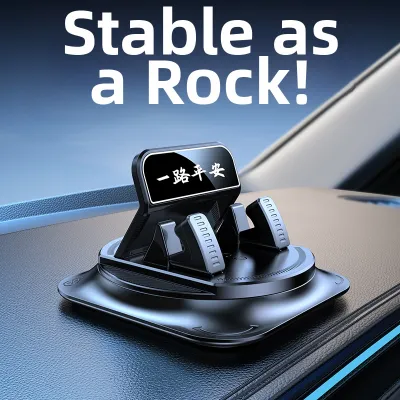
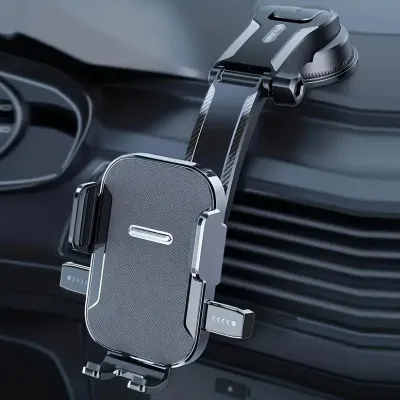
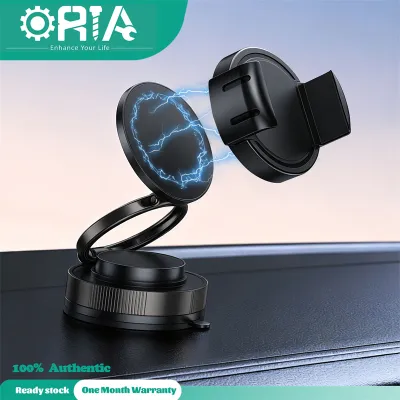
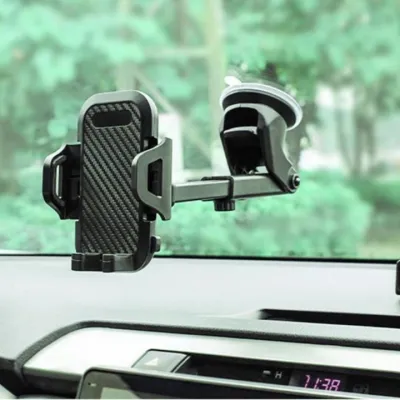
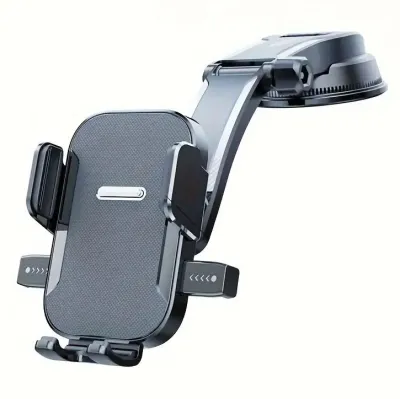
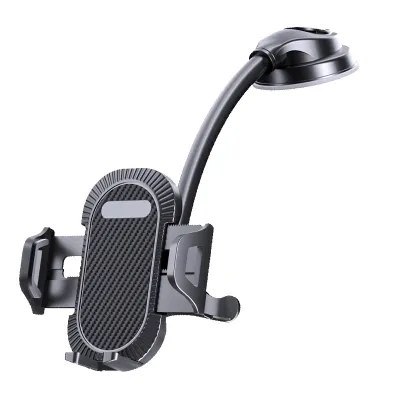
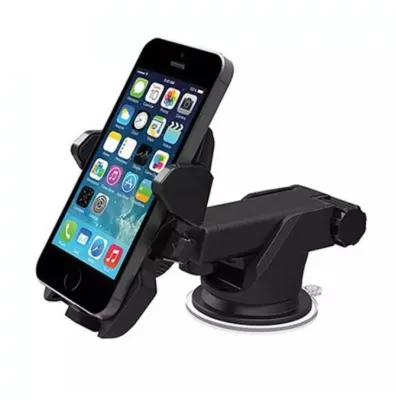
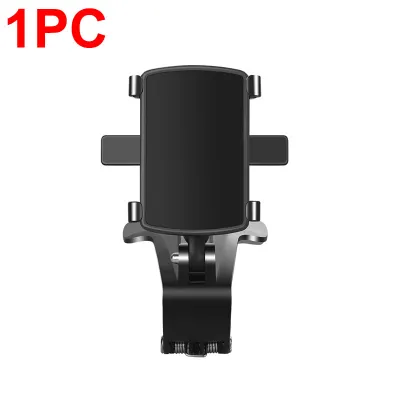
Prices are valid at publication and may change. Please refer to the product page for the latest price.
Suction Cup Mounts
Suction cup mounts rely on atmospheric pressure to create a secure hold. When you press the flexible cup against a flat, non-porous surface, air is forced out from underneath. A mechanical locking lever then pulls the center of the cup upward, creating a low-pressure vacuum chamber inside. The higher atmospheric pressure of the surrounding air presses the cup firmly against the surface.
However, standard vinyl or rubber suction cups require a perfectly smooth surface to maintain this vacuum. To address the textured plastics common in modern vehicle cabins, many manufacturers utilize a hybrid design featuring a polyurethane gel pad on the suction face. This sticky gel fills the microscopic gaps and textures of the dashboard, while the mechanical lever provides the structural vacuum pull.
Adhesive (Sticky Pad) Mounts
Adhesive mounts bypass the need for a vacuum seal by establishing a direct chemical bond with the dashboard surface. Most high-quality adhesive mounts utilize heavy-duty double-sided acrylic foam tape, such as 3M VHB (Very High Bond), or specialized nano-gel pads.
When applied, the adhesive flows into the microscopic valleys of the surface, creating a high-strength bond that cures over time. As the adhesive polymerizes, it effectively becomes integrated with the mounting spot. This chemical bonding process makes adhesive mounts highly resistant to shear forces—the sliding forces caused by sudden braking or sharp turns—and vertical vibrations.
Gravity (Weighted) Base Mounts
Gravity or weighted base mounts do not use suction or chemical adhesives to stay in place. Instead, these mounts feature a heavy, flexible base—often filled with dense materials like sand, steel shot, or heavy rubber—and a high-friction silicone or polyurethane bottom surface.
The mechanism relies entirely on mass, gravity, and the coefficient of static friction between the base and the dashboard. Because there is no physical attachment to the vehicle, these mounts require zero installation time and leave absolutely no residue. However, because they are held down only by their own weight, their hold is entirely passive, making them the most vulnerable to vertical acceleration forces, such as those experienced when driving over speed bumps or potholes.
Performance on Bumpy Roads and in Tropical Heat
Evaluating these mounting types requires looking at how they perform under real-world Philippine driving conditions, characterized by severe road vibrations and extreme cabin temperatures.

Vibration and Bump Handling
When your vehicle hits a pothole or navigates a rough gravel road, energy is transferred from the suspension through the chassis and directly into the dashboard. A phone holder must absorb or resist this kinetic energy to keep your device steady.
Adhesive mounts excel at vibration dampening. The acrylic foam core of high-quality adhesive pads acts as a miniature shock absorber, dissipating high-frequency vibrations before they reach the phone. Because the bond is chemical and continuous, there are no mechanical parts to loosen or flex under load.
Mechanical suction cups also provide a highly stable hold, but they are subject to leverage. Because suction mounts often feature adjustable arms or goosenecks, the weight of the phone acts as a lever arm. On exceptionally bumpy roads, this leverage can place immense strain on the vacuum seal, occasionally causing the cup to pop off unexpectedly if the seal has been compromised by dust or micro-leaks.
Weighted bases perform poorest under severe vibrations. When a vehicle experiences a sudden vertical jolt, the upward force can momentarily exceed the gravitational pull acting on the weighted base. For a split second, the static friction drops to zero, allowing the mount to slide, tilt, or bounce completely off the dashboard. On winding mountain roads or during emergency maneuvers, a weighted base can easily slide across the dashboard, creating a dangerous distraction.
Tropical Heat and UV Exposure
The climate of the Philippines presents a harsh environment for cabin accessories. When parked under direct sunlight in tropical conditions, interior cabin temperatures can easily exceed 60°C (140°F), with the dashboard absorbing the brunt of the heat and ultraviolet (UV) radiation.
This heat is highly detrimental to suction cup mounts. As the temperature rises, the air trapped inside the tiny micro-gaps of the suction seal expands. This thermal expansion reduces the pressure differential between the inside of the cup and the cabin, weakening the vacuum. Over time, the rubber or silicone cup can dry out, harden, and develop micro-cracks, leading to sudden, catastrophic seal failure.
Adhesive mounts are also affected by extreme heat, but their response depends heavily on the quality of the adhesive used. While cheap, unbranded adhesive pads can soften, melt, or turn into a gooey residue under intense heat, premium acrylic foam tapes are engineered to withstand continuous exposure to high temperatures without losing structural integrity. However, prolonged exposure to UV rays can eventually degrade the plastic housing of the mount itself, emphasizing the need to choose UV-stabilized materials.
Weighted bases are largely immune to thermal expansion and adhesive melting. The silicone or polyurethane friction pads on the bottom of weighted bases can withstand high temperatures without losing their grip. However, their performance can be severely compromised if the dashboard is treated with silicone-based protectants or “dashboard shiners.” Heat can cause these chemical treatments to leach to the surface, forming a slick, oily barrier that reduces static friction to near zero.
Dashboard Material Compatibility and Safety
Before selecting a mounting type, you must evaluate the material and construction of your vehicle’s dashboard. Dashboards generally fall into two categories: hard molded plastics and soft-touch materials (such as vinyl, synthetic leather, or padded foam).
Adhesive mounts present a significant risk to soft-touch, leather, or painted dashboard surfaces. The chemical bond of a high-strength adhesive can permanently bond with the top layer of these delicate materials. If you attempt to remove the mount later, the adhesive can tear, peel, or discolor the surface, leading to costly cosmetic damage.
Suction cups are safer for soft-touch materials, but they are not entirely risk-free. The constant downward pressure of a locked suction cup, combined with the sticky polyurethane gel pad, can compress the underlying foam or vinyl, leaving a semi-permanent ring or indentation.
Weighted bases are the safest option for delicate, expensive, or highly textured dashboards. Because they do not rely on suction or glue, they present zero risk of peeling leather or leaving permanent adhesive residue.
Safety Boundary: Always consult your vehicle’s owner’s manual to identify airbag deployment zones. Never place any phone mount, regardless of the mounting type, on or near the passenger airbag cover or along the paths where side-curtain airbags deploy. A mount placed in these zones can become a high-velocity projectile in the event of a collision, risking severe injury to occupants.
| Mounting Type | Vibration Stability | Heat Tolerance | Ease of Removal | Dashboard Damage Risk |
|---|---|---|---|---|
| Adhesive Mount | Excellent (Absorbs shock) | High (With quality acrylic tape) | Difficult (Requires heat/solvent) | High (On soft-touch/leather) |
| Mechanical Suction | Good (Subject to leverage) | Moderate (Prone to vacuum loss) | Easy (Release lever) | Low to Medium (May leave rings) |
| Weighted Base | Poor (Prone to sliding/bouncing) | High (Friction pad is heat-stable) | Effortless (Lift and remove) | Extremely Low (No residue) |
How to Choose the Right Carphone Holder Dashboard Mount for Your Vehicle
To select the most secure carphone holder dashboard setup for your daily commute, you must balance your road conditions against your vehicle’s interior materials. Use the following decision framework to identify the right match:
Choose Adhesive if:
- Your daily routes consist of severely uneven roads, provincial highways with frequent potholes, or unpaved terrain where constant vibration is guaranteed.
- Your vehicle features a hard plastic, flat, or minimally textured dashboard surface that can safely handle strong adhesives.
- You prioritize absolute, uninterrupted stability and do not plan on moving the mount to another vehicle.
- You are willing to use specialized adhesive removers or heat guns to carefully clean the surface if you eventually decide to remove the mount.
Choose Suction Cup (with Mechanical Lock) if:
- You require a highly stable hold but want the flexibility to remove or reposition the mount, such as when switching between family vehicles or rental cars.
- Your dashboard has a flat, non-porous section or a smooth glass windshield where a vacuum seal can be easily established.
- You are diligent about performing routine maintenance, such as cleaning the gel pad and re-engaging the locking lever every few months to prevent gradual air leaks.
Choose Gravity (Weighted) Base if:
- Your driving is primarily limited to well-paved city streets, expressways, and urban areas with minimal severe road damage.
- Your dashboard is constructed from delicate, expensive materials like genuine leather, soft-touch vinyl, or has a highly curved, complex geometry where suction cups and adhesives cannot adhere.
- You want a completely plug-and-play solution that requires zero surface preparation, cures instantly, and can be stowed away in the glove compartment when not in use.
Verify first if: Before making a purchase, inspect your intended mounting location. If your dashboard has been heavily treated with silicone-based dashboard polishes or UV protectants, neither suction cups nor adhesives will be able to form a secure bond. These treatments create a microscopic slick barrier that prevents the gel or adhesive from contacting the actual plastic. If this is the case, you must thoroughly clean and degrease the area before installation, or opt for a weighted base.
In terms of pricing, high-quality adhesive and suction mounts typically fall into a mid-range price band of ₱500 to ₱1,200 on local ecommerce platforms. Basic, unbranded options are often available under ₱300, while highly specialized magnetic or wireless-charging variants from reputable brands can exceed ₱1,500.
Installation and Safety Rules for a Secure Hold
Even the highest-quality mount will fail if it is installed incorrectly. To ensure your carphone holder dashboard setup remains secure on the road, follow these essential preparation, curing, and maintenance steps.
Surface Preparation: To achieve a reliable bond, the mounting surface must be completely free of dust, oils, and chemical dressings.
- Clean the target area using a microfiber cloth dampened with isopropyl alcohol. (Note: 70% concentration is generally safe for automotive plastics, but always test a small, hidden area of your dashboard first to ensure it does not cause discoloration or strip the finish).
- Avoid using household glass cleaners, multi-surface sprays, or soapy water, as these can leave behind a thin chemical residue that compromises adhesive and suction performance.
- Allow the surface to dry completely before proceeding with the installation.
Curing and Setting: For adhesive mounts, patience is critical to achieving maximum bond strength.
- Apply the adhesive pad to the clean, dry dashboard and press down firmly with even pressure for at least 30 to 60 seconds.
- Do not attach your phone or apply any weight to the mount immediately. High-quality acrylic adhesives require a curing period—typically 24 hours—to allow the polymer chains to flow and fully bond with the surface textures.
- For suction cup mounts, perform the installation when the vehicle cabin is cool, such as early in the morning or in a shaded garage. Installing a suction cup on a hot windshield or dashboard can trap hot, expanded air inside the chamber, which will contract when the cabin cools, potentially weakening the initial seal.
Maintenance: No dashboard mount is entirely set-and-forget. Regular checks will prevent unexpected failures while driving.
- For suction cups with polyurethane gel bases, remove the mount every few months, rinse the gel pad under warm water to remove accumulated dust and lint, let it air dry completely to restore its stickiness, and reinstall it.
- Periodically inspect the edges of adhesive pads for any signs of lifting or peeling. If the edges begin to lift, replace the adhesive pad entirely rather than attempting to re-stick it.
Safety Boundaries: Your phone mount must never compromise your safety or the safety of your passengers.
- Ensure the mount and your phone do not obstruct your forward line of sight through the windshield or block your view of the side mirrors.
- Verify that the physical installation does not interfere with the operation of steering wheels, gear shifters, wiper stalks, or dashboard control screens.
- Remember that a heavy phone detached from a mount on a bumpy road becomes a dangerous projectile. Regularly verifying the tightness of your mount's adjustment collars and checking the integrity of its base is your best defense against unexpected cabin hazards.
Community discussion
Share your experience or ask a question. Comments are reviewed before publication.