
The DDPai Z50’s technical specifications—such as its high-resolution video capture, wide field of view, and supercapacitor power supply—directly address the unique challenges of driving on Philippine roads. From navigating the dense, stop-and-go traffic of Metro Manila to enduring the intense tropical heat of a parked car in midday sun, these features are designed to provide reliable, clear evidence when you need it most. Investing in a reliable dashcam setup is a practical way to protect your vehicle—which often represents a significant financial commitment of hundreds of thousands of Pesos (₱)—against road disputes and insurance claims. However, understanding how these numbers translate to real-world performance requires looking past the marketing buzzwords to evaluate how the hardware handles local road conditions, lighting shifts, and installation requirements.
Resolution and License Plate Readability in Heavy Traffic
A dashcam’s primary job is to capture clear, actionable details, and resolution is the most advertised specification. The DDPai Z50’s high-resolution sensor is designed to record fine details, which is useful when you need to crop or digitally zoom into a recorded frame to read a license plate or a conduction sticker. In the tight, bumper-to-bumper traffic common on major thoroughfares like EDSA, having extra pixels allows you to distinguish characters on a plate even if the vehicle is several meters away.
However, a high pixel count on paper does not automatically guarantee a clear image. Real-world video clarity depends heavily on the camera’s bitrate—the amount of data processed per second—especially during high-motion scenes where vehicles move at different speeds. If the bitrate is too low, fast-moving objects can appear pixelated or blurry, regardless of the nominal resolution.
Products mentioned in this guide
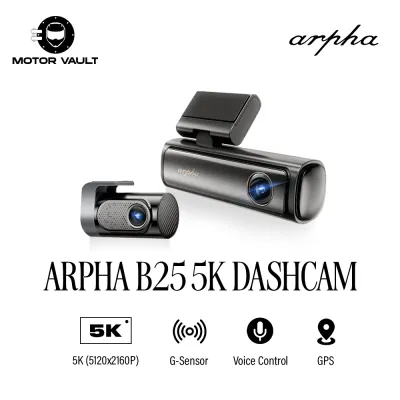
Prices are valid at publication and may change. Please refer to the product page for the latest price.
To verify how the camera performs under local conditions, check official sample footage or reliable user reviews that showcase real-world driving at typical city speeds. Look closely at how the camera handles moving motorcycles filtering through traffic. Clear, unblurred frames during moderate motion are a much better indicator of real-world performance than static resolution numbers alone.
Field of View (FOV) for Complex Intersections and Lane Changes
The field of view (FOV) determines how much of the road ahead is captured in a single frame. A wider angle is highly beneficial for documenting complex intersections, sudden lane merges, or pedestrians stepping off the curb. On multi-lane highways and narrow city streets where motorcycles and tricycles frequently filter through tight spaces, a broad perspective ensures that side-impact incidents or sudden cut-ins are fully documented.

Despite the benefits of a wide FOV, there is an inherent engineering trade-off: as the viewing angle increases, the image can suffer from “fisheye” distortion at the outer edges. This distortion stretches objects near the sides of the frame, making it harder to read license plates or identify details in those areas. Additionally, spreading the sensor’s pixels over a wider area reduces the overall pixel density per object, meaning vehicles directly in front of you might appear further away than they actually are.
When evaluating the DDPai Z50, verify the actual usable diagonal and horizontal viewing angles by consulting the manufacturer’s official technical documentation. A balanced field of view captures adjacent lanes clearly without causing excessive edge distortion that renders the sides of the video unusable.
Image Sensor Performance in Low Light and Glare
Night driving in urban areas presents a challenging mix of pitch-black side streets and blinding glare from oncoming LED headlights, neon signs, and streetlights. While high megapixel counts look impressive on a spec sheet, the physical size of the image sensor and its individual pixels are far more critical for low-light performance. Larger sensors and pixels can capture more ambient light, reducing digital noise and graininess when driving through poorly lit neighborhoods.
To manage extreme contrasts in lighting, modern dashcams utilize Wide Dynamic Range (WDR) or High Dynamic Range (HDR) processing. These technologies work by combining multiple exposures of the same frame, balancing out the blinding glare of oncoming high beams while lifting the shadows along dark road shoulders. This processing is essential for keeping license plates readable when they are illuminated by your own headlights, which can otherwise cause a “white-out” effect on reflective plates.
Before purchasing, check the product label and user manual to verify the specific low-light enhancement technologies integrated into the device. Pay close attention to any stated operational limits, such as changes in maximum resolution or frame rate when HDR is active.
Heat Resistance and Power Management for Tropical Climates
The tropical climate of the Philippines presents a severe challenge for cabin electronics, where parked cars under direct sunlight can easily reach internal temperatures exceeding 60 degrees Celsius. Traditional dashcams powered by lithium-ion batteries run a high risk of battery swelling, degradation, and even thermal runaway under these extreme conditions. The DDPai Z50 addresses this by utilizing a supercapacitor instead of a lithium battery.
Supercapacitors are significantly more heat-resistant, offering a longer operational lifespan and a much lower risk of failure when exposed to intense cabin heat. They do not store energy to run the camera for long periods; instead, they hold just enough charge to safely save the current video file and shut down when the vehicle’s engine is turned off. You should verify the official operating and storage temperature ranges listed on the product’s specification sheet to confirm it is rated to withstand the typical peak temperatures of a closed vehicle parked outdoors.
If you plan to use the continuous parking surveillance feature, you must also consider power management. Because the supercapacitor does not power the camera when the engine is off, parking mode requires a constant power source from your vehicle’s battery. This setup necessitates a dedicated hardwire kit equipped with a low-voltage cutoff feature to prevent the dashcam from draining your car battery completely.
Essential Setup: Storage and Installation Checks
Even the most advanced dashcam is only as reliable as its storage media and power delivery. Because dashcams continuously overwrite old footage, they subject memory cards to constant write cycles. You must select a high-endurance microSD card specifically rated for continuous loop recording; standard cards can fail rapidly under these demanding conditions, leading to corrupted files. Always check the manufacturer’s manual to verify the maximum supported storage capacity and the required speed class (typically Class 10, U3, or V30).
For power, you can choose between using the included cigarette lighter adapter or installing a dedicated hardwire kit. While the cigarette lighter adapter offers a simple, plug-and-play setup, it only powers the camera when the ignition is on. A hardwire kit provides a cleaner, hidden installation and enables parking mode by drawing power directly from the vehicle’s fuse box.
Before attempting any electrical modifications, check your vehicle’s owner’s manual to identify compatible fuse slots and ensure that installing a hardwire kit will not void your vehicle’s warranty. Because working with automotive electrical systems carries safety risks—including short circuits or damage to the vehicle’s wiring harness—it is highly recommended to consult a qualified professional auto electrician for the installation.
Frequently Asked Questions (FAQ)
Does the DDPai Z50 require a specific type of memory card?
Yes, the DDPai Z50 requires a high-endurance microSD card designed specifically for continuous write cycles in dashcams. Standard memory cards often fail quickly under the constant stress of loop recording. Always consult the user manual to verify the maximum supported storage capacity and ensure the card meets the minimum write-speed requirements (such as U3 or V30) to handle high-resolution video streams without dropping frames.
Can the DDPai Z50 record audio inside the cabin?
Yes, the device features a built-in microphone that can capture audio inside the vehicle cabin. You can easily enable or disable this audio recording feature through the device’s settings menu or via the companion mobile application. When choosing to record audio, keep local privacy considerations in mind, especially if you frequently transport passengers or commercial clients who may expect privacy during their ride.
Is professional installation required for the parking mode feature?
While professional installation is not strictly mandatory, it is highly recommended. Enabling the parking mode feature requires connecting a dedicated hardwire kit directly to your vehicle’s fuse box to ensure continuous power when the engine is turned off. Because improper wiring can lead to electrical shorts, battery drain, or damage to your vehicle’s electrical system, having a qualified automotive technician perform the installation ensures safety and proper system integration.

Community discussion
Share your experience or ask a question. Comments are reviewed before publication.