
Deciding on a dashcam for your daily commute in the Philippines requires looking past flashy marketing and focusing on how a device handles real-world challenges. The DDPAI Z90 Pro is a popular contender in the car electronics market, but is it truly equipped to handle the unique demands of local roads? To make an informed decision, you must evaluate its core specifications—such as resolution, low-light performance, power delivery, and thermal limits—against the harsh realities of stop-and-go traffic, unlit streets, and intense tropical heat. This guide provides a structured framework to help you verify if this model meets your specific driving needs.
Core Demands of Philippine Driving Scenarios
Driving in the Philippines presents a unique set of environmental and traffic challenges that quickly expose the weaknesses of low-quality dashcams. Major thoroughfares like EDSA, C5, and Commonwealth Avenue are notorious for heavy congestion, sudden lane changes, and high volumes of motorcycles filtering through traffic. In these stop-and-go scenarios, a dashcam must have a wide field of view and reliable loop recording to capture close-range incidents from multiple angles.
Furthermore, many urban side streets and provincial highways lack consistent street lighting, making superior low-light performance a necessity rather than a luxury. Finally, the local climate is unforgiving. Dashcams must endure intense solar radiation that heats parked car cabins to extreme temperatures, alongside sudden monsoon downpours that cause high humidity and potential lens fogging. Any camera you choose must be robust enough to operate continuously under these demanding conditions.
Products mentioned in this guide
Prices are valid at publication and may change. Please refer to the product page for the latest price.
Capturing License Plates in Heavy Traffic
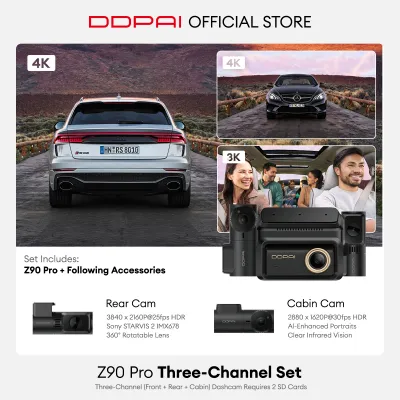
When evaluating the DDPAI Z90 Pro for heavy traffic, your primary focus should be on its video resolution and frame rate. You should check the official product manual or the manufacturer’s specification sheet to confirm its maximum recording resolution. Higher resolutions, such as 4K or 2K, provide a significantly higher pixel density, which is crucial when you need to zoom in on license plates, conduction stickers, or small details during a traffic dispute.

A wider field of view is also essential to capture vehicles merging from adjacent lanes. However, recording at higher resolutions comes with a clear trade-off: larger video files that quickly fill up storage space. To prevent the loop recording feature from overwriting critical footage too quickly, you must verify the maximum microSD card capacity supported by the DDPAI Z90 Pro. It is highly recommended to pair the device with a high-endurance microSD card specifically rated for continuous write cycles in dashcams, as standard cards can fail rapidly under the constant stress of high-resolution recording.
Night Vision on Poorly Lit Roads
Nighttime driving on poorly lit roads or provincial highways requires a dashcam with strong low-light capabilities. Before purchasing, verify the DDPAI Z90 Pro’s image sensor type, aperture size, and whether it supports Wide Dynamic Range (WDR) or High Dynamic Range (HDR) technology. A larger aperture, indicated by a lower f-number like f/1.8 or f/1.6, allows more light to reach the sensor, which improves visibility in dark environments.
HDR and WDR technologies are designed to balance exposure, preventing the camera from being blinded by oncoming high-beam headlights while still capturing details in the shadows. If you frequently drive at night, check the companion mobile app or the user manual to see if the device allows you to manually adjust exposure settings. Fine-tuning these settings can help reduce glare from highly reflective license plates, ensuring that the recorded footage remains legible even under challenging lighting conditions.
Surviving Monsoon Rain and Cabin Heat
The tropical climate of the Philippines is one of the toughest testing grounds for car electronics. When reviewing the DDPAI Z90 Pro, direct your attention to its official operating temperature range to ensure it can withstand the intense heat that builds up inside a vehicle parked under the sun. Dashcams powered by supercapacitors are generally much more reliable and safer for hot climates than those using traditional lithium-ion batteries.
Supercapacitors do not swell, degrade, or pose a thermal runaway risk when exposed to high temperatures, making them the preferred choice for long-term durability. Additionally, heavy monsoon rains can severely impact visibility. You should check the design of the camera housing and the lens coating to ensure it resists fogging caused by rapid temperature changes when your car’s air conditioning battles the humid outside air. Keeping your windshield clean and ensuring your vehicle’s defogger is functioning properly will also help the dashcam capture clear footage during sudden downpours.
Installation, Power, and Maintenance in Tropical Climates
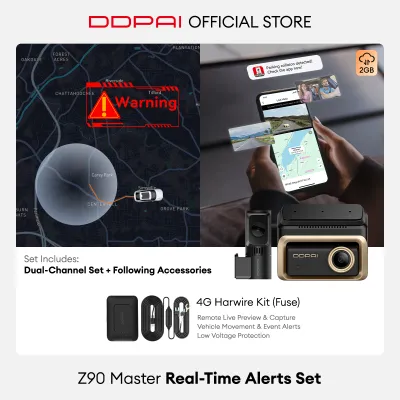
Properly installing and maintaining your dashcam is just as important as choosing the right model. When setting up the DDPAI Z90 Pro, you must decide between using the standard cigarette lighter adapter or hardwiring the device to your vehicle’s fuse box. Hardwiring enables parking mode, allowing the camera to record incidents while your car is parked, but it requires a compatible hardwire kit equipped with low-voltage protection to prevent draining your car battery.
Because vehicle electrical systems are complex and safety-critical, any hardwiring work should be performed by a qualified professional to avoid damaging your car’s wiring harness or voiding your vehicle warranty. For mounting, position the camera behind the rearview mirror to minimize direct exposure to sunlight and keep it out of your direct line of sight. Always check your vehicle’s owner manual to ensure the mounting location does not interfere with airbag deployment zones.
Finally, establish a regular maintenance routine. High heat and continuous writing can cause file errors over time, so format your high-endurance microSD card at least once a month using the dashcam’s companion app to ensure reliable operation.
Where to Buy and What to Verify Before Checkout
To ensure you receive an authentic DDPAI Z90 Pro with a valid warranty, it is best to purchase from official brand stores or authorized distributors on major e-commerce platforms. Avoid buying from unverified third-party sellers who may offer refurbished, counterfeit, or grey-market units that lack local support.
Before checking out, verify the specific warranty terms offered by the seller. A local warranty that can be claimed at domestic service centers in the Philippines is highly valuable, as shipping a defective unit back overseas for repairs can be costly and time-consuming.
Additionally, carefully check the package contents before finalizing your purchase. Some listings may bundle essential accessories like a high-endurance microSD card or a hardwiring kit, while others may sell the camera unit alone. Budgeting an extra ₱500 to ₱1,500 for a high-quality storage card and professional installation will ensure your dashcam is ready to perform reliably from day one.
Frequently Asked Questions (FAQ)
Does the DDPAI Z90 Pro support parking mode for street parking?
Yes, but enabling parking mode typically requires a separate hardwire kit that connects directly to your vehicle’s fuse box. This kit allows the camera to draw power even when the engine is turned off. Before enabling this feature, check the manufacturer’s official compatibility list for the correct hardwire kit and ensure your car battery is in good health, as continuous recording can put additional strain on older batteries.
Will the suction cup mount fail in extreme heat?
Many modern dashcams, including various DDPAI models, utilize adhesive 3M mounts rather than traditional suction cups. Adhesive mounts are highly recommended for tropical climates because they provide a much stronger, heat-resistant bond that is less likely to fail when the windshield heats up under the sun. If you must use a suction mount, thoroughly clean the windshield with isopropyl alcohol before mounting, and periodically check the suction strength to prevent the camera from falling.

Community discussion
Share your experience or ask a question. Comments are reviewed before publication.