
When shopping for a GPS tracker, the term “long range” is often splashed across product packaging. In GPS technology, “long range” does not mean the device has a stronger connection to satellites in space. Instead, it refers to how far and reliably the tracker can transmit its gathered location data back to your smartphone or computer. Understanding this distinction is the first step toward choosing a device that will actually keep track of your vehicle, whether it is navigating dense city streets or traveling through remote provincial highways.
The Reality of "Long Range": GPS Reception vs. Data Transmission
To understand how a tracker works, you must separate receiving a signal from transmitting data. Every GPS tracker contains a receiver that listens to microwave signals sent by global positioning satellites. Because these satellites cover the entire globe, almost any functional GPS receiver can determine its own coordinates anywhere outdoors. This part of the process does not have a “range limit”; as long as the device has a clear view of the sky, it knows where it is.
The actual limitation—and what manufacturers really mean by “long range”—is the transmission of that coordinate data back to you. Once the tracker calculates its position, it must use a cellular or satellite network to send those coordinates to a server or your phone. If your tracker uses a cellular network, its range is strictly limited by the coverage of local cellular towers. If a vehicle travels into a deep valley, a mountainous area, or a remote coastal road where there is no cellular service, the tracker becomes temporarily unreachable. It still knows its location, but it cannot transmit that data until it re-enters a coverage zone.
Products mentioned in this guide
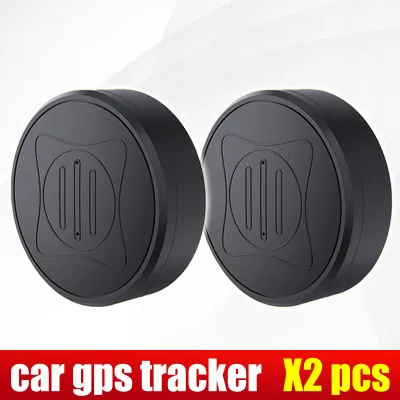
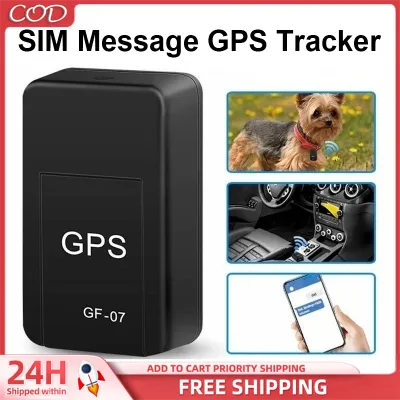
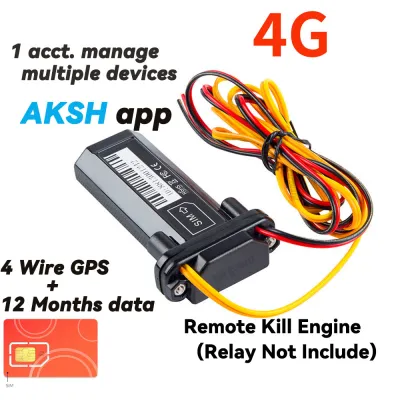
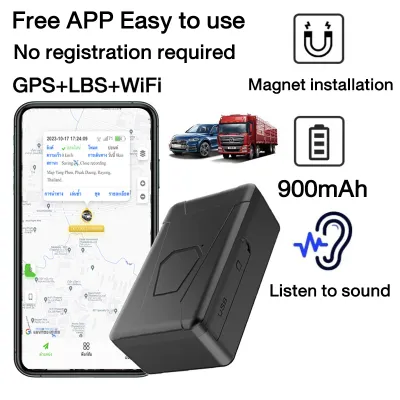
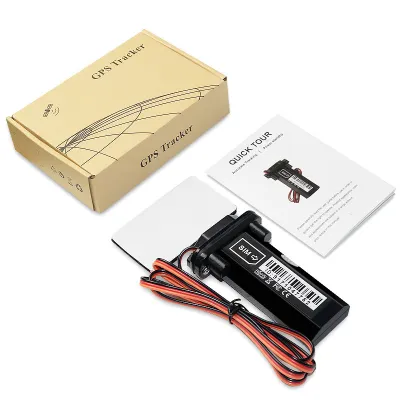
Prices are valid at publication and may change. Please refer to the product page for the latest price.
Before purchasing, verify the coverage maps of local telecommunications operators in your target areas. A tracker advertised with “unlimited range” will still fail to report in real time if it is taken to a remote province where your network provider has no active towers. The true baseline of any cellular-based tracker’s range is the strength and reach of the network carrier’s infrastructure.
Key Specs That Actually Determine Tracking Coverage
Several hardware and network specifications directly dictate how well a tracker can maintain its connection and report its position under challenging real-world conditions.

Network Connectivity and Module Types
The communication module inside the tracker determines which networks it uses to transmit data. Standard cellular trackers typically rely on 4G LTE networks, which offer rapid data transmission, making them excellent for real-time tracking in populated areas. However, for assets that travel long distances, specialized low-power networks like NB-IoT (Narrowband Internet of Things) or LTE-M are often more suitable. These modules transmit small packets of data over longer distances, offering better signal penetration through concrete while consuming less battery power.
For true off-grid tracking where cellular networks do not exist, you must look for trackers equipped with satellite communication modules. These devices transmit data via commercial satellite constellations. While satellite trackers offer virtually limitless geographical range, they generally require more expensive hardware and subscription plans.
When reviewing specifications, check the supported frequency bands. Ensure the device’s cellular modem is compatible with the specific frequency bands used by network operators in your region. A device designed solely for foreign frequency bands may suffer from poor signal retention or fail to connect entirely.
Antenna Design and Signal Sensitivity
A tracker’s physical antenna design plays a critical role in maintaining connections. Trackers feature either internal or external antennas. Internal antennas are compact and ideal for discreet installations. However, because they are small, their signal gain is limited. External antennas, which connect via a cable, can be mounted in optimal, unobstructed locations, making them highly recommended for heavy machinery or vehicles with metal enclosures.
Instead of relying on vague marketing terms like “high gain,” look at the receiver sensitivity ratings on the manufacturer’s specification sheet, measured in decibels-milliwatts (dBm). A lower number (more negative, such as -165 dBm compared to -145 dBm) indicates a more sensitive receiver that can lock onto weak satellite signals.
Physical obstructions significantly degrade signal strength. In tropical climates, vehicles often use heavy metallic window tinting to block solar heat, but these metallic films can also block GPS and cellular signals. Similarly, parking inside concrete basements, driving through dense urban canyons, or mounting the tracker deep within a vehicle’s steel chassis will severely reduce the effective range.
Battery Capacity and Reporting Frequency
There is an unavoidable trade-off between a tracker’s transmission range, its update frequency, and its battery life. When a tracker is in an area with a weak cellular signal, its internal modem must increase its transmission power to reach the nearest tower, draining the battery much faster.
To manage this, look for trackers that offer adjustable reporting frequencies. A tracker set to report its location every ten seconds will exhaust its battery rapidly. Configuring the device to report only when movement is detected, or at fixed intervals like once or twice a day, dramatically extends the operational life.
Additionally, check the battery chemistry and operating temperature limits listed on the product label. In hot, humid environments, the interior of a parked car can reach extreme temperatures that can degrade lithium-ion batteries quickly. Ensure the tracker’s battery is rated to withstand these elevated temperatures.
How to Match Specs to Your Real-World Tracking Needs
Selecting the right GPS tracker requires matching these technical specifications to your specific asset and environment.
For urban fleets and daily commuter vehicles operating primarily in developed areas, a standard 4G LTE tracker with an internal antenna is usually the most practical choice. These devices provide rapid, real-time updates and are easy to conceal within the vehicle dashboard. Because cellular coverage is dense in cities, the lower signal gain of an internal antenna is rarely an issue.
If you are tracking remote logistics or heavy machinery that operates in rural areas or across provincial borders, prioritize ruggedized trackers with external antennas and high-capacity batteries. These assets often travel through weak-signal zones where the tracker must work harder to transmit data. Opting for a device that supports NB-IoT or LTE-M networks, combined with a lower reporting frequency, ensures the tracker remains operational for longer periods.
For off-grid, agricultural, or maritime assets, cellular trackers are insufficient. In these scenarios, you must invest in a satellite-enabled tracker. These devices should feature robust weatherproofing (such as an IP67 or IP68 rating) to protect the internal electronics from heavy tropical rains and high humidity.
Before making a purchase, use this checklist to verify the device’s operational requirements:
- Confirm whether the tracker requires a specific proprietary SIM card or if it accepts standard local SIM cards.
- Check the ongoing subscription costs or prepaid load requirements needed to keep the data transmission active.
- Verify the physical mounting constraints of your vehicle, ensuring that the installation location does not completely shield the antenna with solid metal.
- For wired trackers, consult your vehicle's manual or a qualified automotive technician to ensure the installation does not interfere with the vehicle's electrical system.
Marketing Red Flags and Specs You Can Safely Ignore
The GPS tracker market is filled with confusing jargon and misleading claims. Knowing what to ignore can save you from purchasing an unsuitable device.
Be highly skeptical of claims promising “unlimited range” or “global tracking” without a monthly subscription fee. All cellular-based trackers require an active data plan to transmit coordinates. If a manufacturer claims there are no ongoing fees, the device is either using an extremely limited network protocol or the initial purchase price has been inflated to cover a short, pre-paid data period. Furthermore, no cellular tracker has true global range unless it is paired with a roaming SIM card compatible with networks in every country you visit.
You can also largely ignore raw GPS chip model numbers. The real-world performance of the tracker depends far more on the overall system integration, the quality of the antenna, and the software algorithms used to filter out signal noise. A high-end chip paired with a poorly positioned internal antenna will perform worse than an average chip paired with a well-designed, properly mounted antenna.
Finally, avoid devices that do not clearly state their supported network bands or those that force you to use proprietary, unverified SIM cards. These proprietary setups often lock you into expensive data plans with poor local coverage.
Frequently Asked Questions (FAQ)
Do I need a special SIM card for a long-range GPS tracker?
Most cellular-based GPS trackers require a SIM card to transmit location data, but you do not necessarily need a special one. Many trackers work reliably with standard prepaid or postpaid SIM cards from local telecommunications providers. However, some specialized trackers use multi-network roaming SIMs. These roaming SIMs can automatically switch between different network providers to find the strongest available signal, which significantly improves the tracker’s effective coverage and reliability when traveling across different regions.
Will a long-range tracker work inside a metal shipping container?
A tracker placed entirely inside a sealed metal shipping container will struggle to function. Metal acts as a Faraday cage, blocking both incoming GPS satellite signals and outgoing cellular transmissions. To track assets inside a container, you must use a tracker with an external antenna mounted on the outside of the container, or place the tracker near a non-metallic opening, such as a wooden door seal or a fiberglass cargo window, where signals can pass through.
Community discussion
Share your experience or ask a question. Comments are reviewed before publication.