
When choosing an HNJ off-road helmet, understanding safety certifications is the most critical step in protecting yourself on the road and trail. In the Philippines, the presence of an Import Commodity Clearance (ICC) sticker or a Philippine Standard (PS) mark indicates that a helmet has met the mandatory safety requirements established by the government. These certifications serve as proof that the protective gear has undergone standardized testing to help safeguard riders during an impact.
For riders navigating both paved highways and rugged provincial trails, these stickers are more than just regulatory decals. They represent a baseline level of construction quality and material integrity. Understanding what these marks mean, how to verify them, and what other specifications to look for will help you make an informed decision before purchasing your next riding gear.
Understanding PSB and ICC Safety Standards for Motorcycle Helmets
The Bureau of Philippine Standards (BPS), an agency under the Department of Trade and Industry (DTI), is responsible for regulating and testing protective motorcycle helmets sold in the local market. To ensure that riding gear can withstand real-world road hazards, the BPS enforces strict compliance with national standards. Helmets that pass these evaluations are issued specific marks depending on where they were manufactured.
Products mentioned in this guide
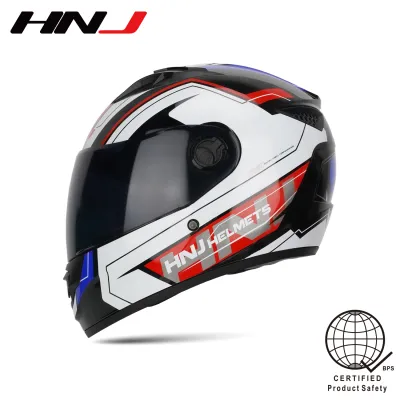
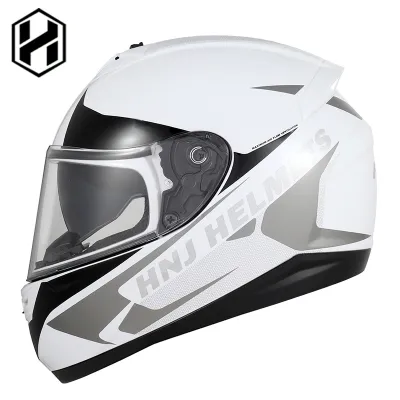
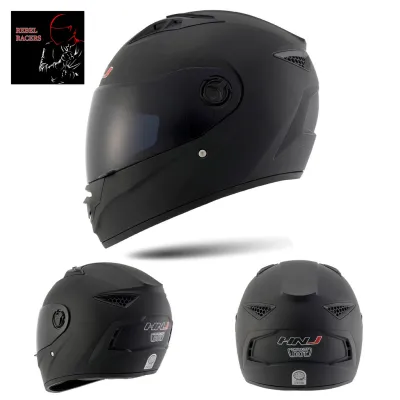
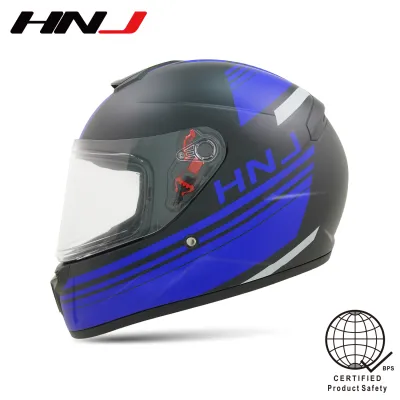
Prices are valid at publication and may change. Please refer to the product page for the latest price.
The Philippine Standard (PS) mark is typically issued to locally manufactured helmets, certifying that the production facility and the final product consistently meet national safety guidelines. Conversely, the Import Commodity Clearance (ICC) sticker is mandatory for imported helmets, which includes brands like HNJ. Because these products are manufactured abroad, each imported batch must undergo inspection and verification by the BPS to secure the official ICC sticker before they can be legally distributed.
It is common for riders in the Southeast Asian region to also encounter the term PSB certification, which refers to the Product Standards Board of Singapore. While some imported helmets carry PSB markings from regional distribution, Philippine law specifically mandates the local PS or ICC mark for road legality. These certifications indicate that the helmet complies with baseline national standards for impact absorption, penetration resistance, and chin strap retention strength.
However, riders must remember that no certification provides an absolute guarantee against injury. Safety standards establish a minimum performance threshold for protective gear under specific testing conditions. Real-world accidents involve unpredictable angles, speeds, and surfaces, meaning that a certified helmet is a tool to minimize risk rather than a complete shield against all harm.
How to Verify PSB and ICC Marks on HNJ Off-Road Helmets
Verifying the legitimacy of the safety marks on an HNJ off-road helmet is essential, as counterfeit stickers occasionally circulate in the market. A genuine ICC sticker or PS mark is designed with specific security features. On most certified helmets, the ICC sticker is placed at the back of the helmet shell, often protected under a clear coat, or securely adhered to the rear lower section. It features a unique serial number, a distinct color scheme, and holographic elements that are difficult to replicate.

To confirm that the certification is active and legitimate, you can cross-reference the license or certificate number. The DTI and BPS provide official online databases and mobile verification tools where consumers can input the serial number printed on the sticker. If the number does not appear in the database or corresponds to a completely different product category, the sticker is likely counterfeit.
When inspecting a helmet in person, look out for common red flags that indicate a compromised or fake certification. Be wary of stickers that are peeling at the edges, printed on low-quality paper, or missing the unique serial number entirely. Unofficial third-party stickers that mimic the design of government marks but lack official registration details are also clear warning signs. Purchasing your gear from authorized local distributors or official brand stores is the most reliable way to ensure the helmet carries genuine certification.
Key Off-Road Helmet Specifications Beyond Basic Certification
While securing a certified helmet is non-negotiable for legal and safety reasons, off-road riding demands specific design features that go beyond baseline impact testing. Off-road and dual-sport environments present unique challenges, such as flying debris, intense physical exertion, and exposure to extreme tropical weather. Evaluating these additional specifications will ensure your gear performs well on the trail.
A prominent feature of any off-road helmet is the peaked visor. This extension is designed to deflect low-hanging branches, shield your eyes from sudden sun glare, and block roost or mud kicked up by riders ahead of you. When riding in the tropical climate of the Philippines, a well-designed peak also helps keep heavy rain off your goggles or face shield, preserving your line of sight.
Ventilation is another critical factor for trail riding, where low speeds and high physical effort can quickly lead to heat exhaustion. Look for helmets with deep internal EPS channels, multiple forehead intake vents, and rear exhaust ports to draw hot air away from your head. A lightweight shell construction is equally important, as it reduces neck fatigue during long, bumpy rides over uneven terrain.
Finally, ensure the helmet’s physical fitment is correct before riding. A certified helmet cannot protect you effectively if it is too loose or shifts during an impact. The retention system, typically a double D-ring or a secure micrometric buckle, must be adjusted snugly against your chin. Ensure the inner comfort liners are removable and washable, as sweat and dust from off-road trails will require regular cleaning to maintain hygiene and material longevity.
Frequently Asked Questions (FAQ)
Are DOT or ECE certifications legally accepted instead of PSB or ICC?
In the Philippines, the law mandates that all motorcycle riders on public highways must wear helmets bearing a valid PS or ICC sticker. While international standards such as the United States Department of Transportation (DOT) or the Economic Commission for Europe (ECE) standards are highly respected and often feature more rigorous testing protocols, they do not legally replace local certification. An imported helmet with an ECE or DOT rating must still obtain an official ICC sticker through the proper BPS channels to be considered legally compliant on public roads.
Does a higher price guarantee better off-road protection?
A higher retail price does not automatically mean a helmet offers superior impact protection. Price differences are often driven by premium shell materials, such as carbon fiber or advanced fiberglass composites, which offer lighter weight rather than higher safety ratings. Budget-friendly helmets made of certified polycarbonate can provide excellent impact resistance as long as they carry a genuine ICC or PS mark. Proper physical fitment, an uncompromised shell, and valid local certification are far more important for your safety than a premium price tag or elaborate graphics.
Community discussion
Share your experience or ask a question. Comments are reviewed before publication.