
Selecting the correct viscosity grade for your diesel engine is one of the most critical maintenance decisions you will make. The ideal viscosity grade is not a one-size-fits-all specification; rather, it is the exact grade defined by your vehicle’s manufacturer to match its internal clearances, oil pump capabilities, and operating temperatures. While multi-grade options like 15W-40, 10W-30, and 5W-40 are widely available, choosing the right engine oil for diesel engine systems requires understanding how these numbers translate to real-world protection, especially under demanding driving conditions.
The Short Answer: Always Start With Your Owner's Manual
Before purchasing any engine oil for diesel engine applications, your first step must always be consulting your vehicle’s owner’s manual. The manufacturer designs the engine with precise tolerances—the microscopic gaps between moving metal parts like bearings, pistons, and camshafts. The manual or the engine oil filler cap will explicitly state the required Society of Automotive Engineers (SAE) viscosity grade and the necessary performance standards, such as API (American Petroleum Institute) or ACEA (Association des Constructeurs Européens d’Automobiles) classifications.
Deviating from these official recommendations can have severe consequences. Using an oil that is too thin may fail to maintain a protective barrier under heavy loads, leading to accelerated wear. Conversely, choosing an oil that is too thick can restrict oil flow during critical startup periods, increase internal drag, reduce fuel economy, and place unnecessary strain on the oil pump. Furthermore, using non-compliant fluids can instantly void your manufacturer’s warranty. The manufacturer’s specification is the ultimate authority for your specific engine model and year.
Products mentioned in this guide
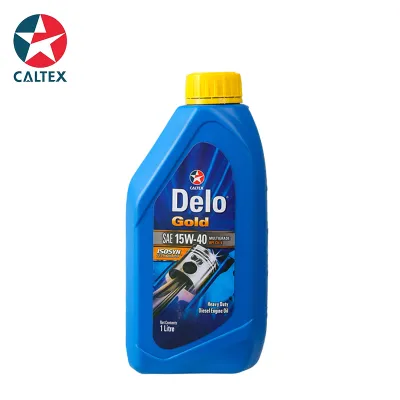
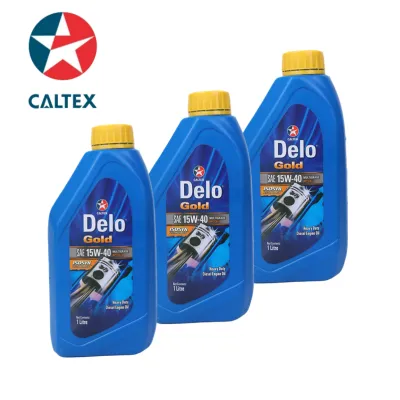
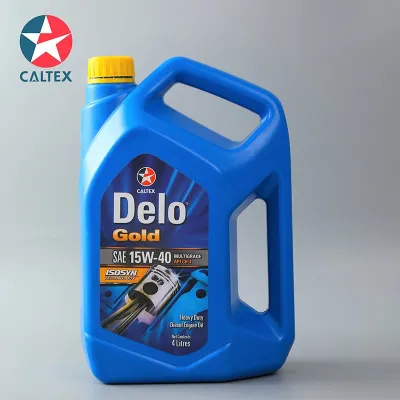
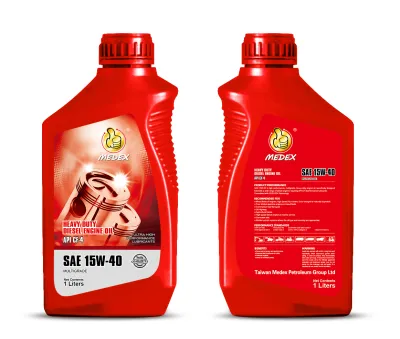
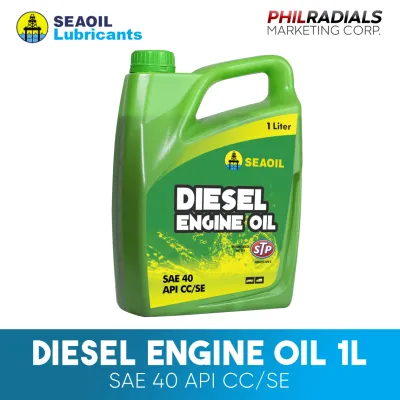

Prices are valid at publication and may change. Please refer to the product page for the latest price.
Decoding Viscosity Grades: What Do Numbers Like 15W-40 Mean?
To make an informed choice, you need to understand how to read the numbers on an oil bottle. Most modern diesel engine oils are multi-grade lubricants, designated by a dual-number system established by the SAE. For example, in a standard 15W-40 oil, the rating is split into two distinct parts that describe how the fluid behaves at different temperatures.

The first part of the grade, “15W,” stands for “Winter” and indicates the oil’s low-temperature flow characteristics. A lower number before the “W” means the oil remains more fluid in cold temperatures, allowing it to circulate quickly during a cold start. Even in tropical climates where freezing temperatures are non-existent, a lower “W” rating (such as 5W or 10W) helps the oil reach critical upper-engine components faster immediately after turn-key ignition, minimizing initial startup wear.
The second number, “40,” represents the oil’s kinematic viscosity at 100°C, which is the typical operating temperature of a fully warmed engine. This high-temperature rating measures the oil’s thickness and its ability to resist thinning out under extreme heat. A higher second number indicates a thicker, more robust oil film that can withstand intense pressure and heavy mechanical loads without shearing. It is important to recognize that a higher number is not inherently “better” than a lower one. Instead, the ideal viscosity is a carefully engineered balance: it must be thin enough to flow efficiently and reduce fuel-wasting drag, yet thick enough to prevent metal-on-metal contact under high thermal stress.
Why Diesel Engines Have Different Oil Requirements
Diesel engines operate under significantly harsher conditions than gasoline engines, which directly dictates their unique oil formulations and viscosity needs. Diesel combustion relies on high compression ratios to ignite fuel, resulting in massive internal pressures and elevated operating temperatures. These forces place immense shear stress on the oil film, requiring robust high-temperature viscosity grades to prevent the lubricant from breaking down.
Additionally, the diesel combustion process naturally generates soot, a highly abrasive byproduct of burning diesel fuel. If not properly managed, soot particles can agglomerate, turning the engine oil into a thick, abrasive sludge that accelerates component wear. Because of this, an engine oil for diesel engine systems must be formulated with specialized additive packages. These oils feature high concentrations of detergents and dispersants to keep soot suspended in the fluid and prevent it from settling on critical engine surfaces.
These demanding requirements are why diesel oils carry specific API service categories, such as CK-4 or FA-4, which differ fundamentally from gasoline performance ratings. While viscosity determines the physical thickness of the oil, these performance ratings guarantee that the oil can neutralize acidic combustion byproducts, resist oxidation, and manage high soot levels over its service life. Viscosity and performance ratings must always be considered together when selecting an oil.
Adjusting for Tropical Climates and Driving Conditions
Environmental factors and driving habits play a major role in how engine oil performs. In a consistently hot and humid tropical climate like the Philippines, ambient temperatures rarely drop below 20°C, meaning the extreme cold-flow capabilities of a 0W or 5W oil are less critical for seasonal survival than they would be in freezing regions. However, the high-temperature rating (the second number) becomes exceptionally vital.
Daily driving in the Philippines often involves navigating dense, stop-and-go metropolitan traffic, hauling heavy payloads over provincial terrain, or climbing steep mountain passes under intense midday sun. These conditions elevate engine temperatures rapidly, putting a premium on the oil’s high-temperature film strength. While some vehicle manufacturers provide temperature-based viscosity charts in their manuals allowing for a slightly thicker oil in hot climates, you must never drop below the minimum high-temperature viscosity specified for your engine.
At the same time, you should avoid the common mistake of arbitrarily switching to an excessively thick oil, such as a 20W-50, simply because the weather is hot. Modern diesel engines, particularly common-rail direct injection (CRDI) systems, are built with highly precise, tight clearances. Using an oil that is significantly thicker than recommended can restrict flow through narrow oil passages, causing localized oil starvation, increased internal friction, higher fuel consumption, and elevated operating temperatures. Always stay within the viscosity ranges approved by your vehicle manufacturer.
How to Verify and Select the Right Diesel Engine Oil
To ensure you are putting the correct fluid into your vehicle, follow a systematic verification process before every oil change. First, consult your owner’s manual to note the exact SAE viscosity grade and the required performance specifications (such as API CK-4 or ACEA E9). Keep in mind that different model years of the same vehicle may require different specifications due to changes in emissions control systems.
Second, carefully read the product label on the back of the oil bottle. Verify that both the viscosity grade and the performance standards match your manual’s requirements exactly. Look for the official API certification “donut” symbol, which guarantees the oil has undergone rigorous laboratory testing to meet industry standards.
Third, purchase your oil exclusively from authorized dealerships, official brand flagship stores, or highly reputable automotive supply shops. Counterfeit engine oils are a persistent hazard in the market and can cause catastrophic engine failure due to sub-standard base oils and missing additive packages. Finally, always verify oil filter compatibility with your specific vehicle model and year, and ensure you replace the filter during every single oil change to prevent clean oil from being contaminated by trapped debris.
Frequently Asked Questions (FAQ)
Can I mix two different viscosity grades of diesel engine oil?
While mixing two different viscosity grades (such as topping off a 15W-40 system with a 10W-30 oil) will not cause immediate, catastrophic engine failure in an absolute emergency, it is highly discouraged for regular operation. Mixing different grades alters the carefully engineered viscosity profile and can dilute the specific additive packages of both oils, reducing their overall protective capabilities. If you must mix oils to reach a service station, schedule a complete oil and filter change as soon as possible to restore the correct manufacturer-specified fluid.
Is synthetic oil better for my diesel engine than conventional oil?
Synthetic oil generally offers superior performance compared to conventional oil, particularly in modern turbo-diesel engines equipped with diesel particulate filters (DPFs). Synthetics provide better thermal stability under extreme heat, resist oxidation and sludge buildup longer, and flow more easily during initial startup. Many modern diesel manufacturers require full synthetic or synthetic blend oils to meet stringent API CK-4 or OEM-specific standards. Always check your manual to see if a synthetic formulation is mandatory for your engine’s warranty compliance.
What happens if I use gasoline engine oil in a diesel engine?
Using gasoline engine oil in a diesel engine can lead to severe engine damage. Gasoline oils are not formulated to handle the high soot levels, extreme compression pressures, and acidic byproducts characteristic of diesel combustion. Without the robust detergent and dispersant packages found in dedicated diesel oils, the soot will quickly clump together, forming thick sludge that blocks oil passages, accelerates wear on bearings and valvetrains, and can permanently damage emissions control systems like DPFs. Always use an oil explicitly certified for diesel engines.
Community discussion
Share your experience or ask a question. Comments are reviewed before publication.