
Choosing the right motorcycle anti-theft lock is a balancing act between physical security, daily portability, and ease of use. There is no single lock that perfectly fits every rider’s routine, as the ideal choice depends heavily on where you park, how long you leave your motorcycle unattended, and how much weight you are willing to carry. By understanding how disc locks, chain locks, and U-locks perform under different conditions, you can select a security setup that effectively deters thieves while fitting seamlessly into your daily commute.
Understanding the Core Trade-Offs: Security, Portability, and Convenience
Every motorcycle security strategy relies on three competing factors: security, portability, and convenience. Security refers to a lock’s physical resistance to common theft methods, such as cutting, picking, drilling, and leverage attacks. Portability dictates how easily you can transport the lock on your motorcycle, considering its overall weight, volume, and available storage space. Convenience measures the time and effort required to lock and unlock your vehicle during quick stops or daily commutes.
In practice, maximizing one of these dimensions usually requires compromising on another. For instance, a heavy-duty lock designed to resist industrial-grade cutting tools will naturally be heavy and bulky, reducing its portability. Conversely, a highly portable lock that fits easily into a pocket or under-seat compartment may not offer the physical resistance needed for long-term parking in high-risk areas.
Products mentioned in this guide
Prices are valid at publication and may change. Please refer to the product page for the latest price.
The physical strength of any lock is largely determined by its material composition and locking mechanism design. Hardened steel alloys are commonly used to resist manual hand tools, while the thickness of the shackle or chain link directly influences how long it can withstand aggressive attacks. When evaluating locks, you must assess your primary parking environments to determine which trade-offs align with your daily routine.
Disc Locks: Maximum Portability for Quick Stops
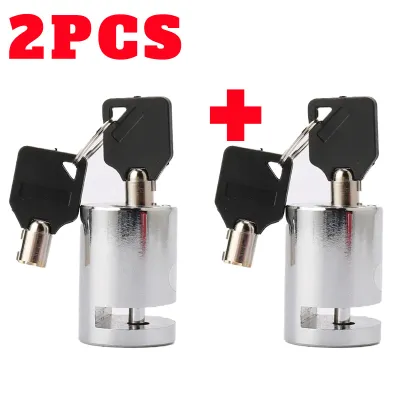
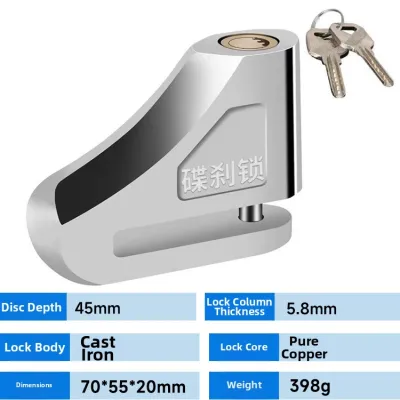
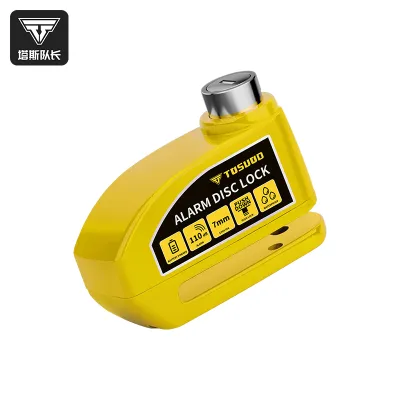
Disc locks are highly popular among daily commuters due to their compact size, lightweight construction, and rapid deployment. These locks clamp directly onto the motorcycle’s brake rotor, physically preventing the wheel from rotating and making it impossible for someone to roll the motorcycle away. Their small footprint allows them to be stored easily in a jacket pocket, a small tank bag, or the limited space beneath a passenger seat.

Despite their convenience, disc locks have a significant security limitation: they do not anchor the motorcycle to an immovable object. A motorcycle secured only with a disc lock remains vulnerable to being lifted into the back of a van or truck by a small group of thieves. Additionally, their effectiveness relies entirely on the presence of a compatible brake rotor, meaning they cannot be used on motorcycles with drum brakes or solid rotors.
These characteristics make disc locks ideal as a supplementary security measure for brief stops, such as running quick errands, or when parking in secure, monitored indoor garages. They serve as an excellent first line of defense to deter opportunistic thieves, but they should rarely be relied upon as the sole method of protection for extended outdoor parking.
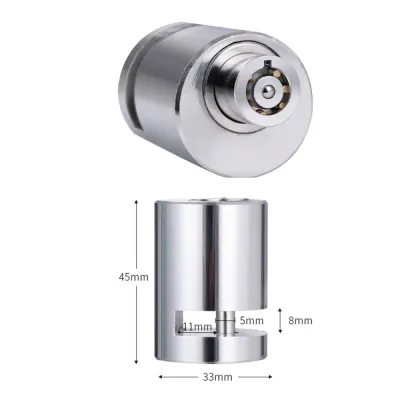
Before purchasing a disc lock, you must perform specific verification checks on your motorcycle’s braking system. Inspect your brake rotors to confirm they have drilled holes or slots that can accommodate a lock pin. You must also measure the diameter of these rotor holes and compare them to the lock manufacturer’s pin specifications to ensure a proper fit, as a pin that is too large will not pass through the rotor.
Chain Locks: Heavy-Duty Security for Fixed Anchoring
Chain locks represent the gold standard for physical security because they allow you to anchor your motorcycle directly to an immovable object, such as a concrete pillar, a heavy metal railing, or a dedicated ground anchor. This fixed anchoring completely eliminates the risk of lift-away theft, which is one of the most common methods used by organized motorcycle thieves. The flexible nature of a chain also makes it easier to wrap around awkwardly shaped structures or secure multiple parts of the motorcycle simultaneously.
The primary drawback of a high-security chain lock is its substantial weight and bulk. Carrying a thick, hardened steel chain on a daily basis can be highly inconvenient, especially if your motorcycle lacks a top box, side panniers, or a secure tail bag. Furthermore, lower-grade or thinner chains can still be vulnerable to manual bolt cutters, meaning you must carefully select the appropriate link thickness for your security needs.
Chain locks are highly recommended for long-term street parking, overnight storage, or when leaving your motorcycle in high-risk public areas where anchoring points are available. Many riders choose to leave a heavy chain lock permanently wrapped around an anchor point at their home or workplace, saving them from having to transport the heavy weight during their daily commute.
When selecting a chain lock, verify that the links are constructed from hardened steel alloys designed to resist cutting and sawing attacks. Check the manufacturer’s specifications for the link thickness, aiming for dimensions that provide robust resistance to manual hand tools. Additionally, ensure the chain is wrapped in a durable, weather-resistant fabric sleeve to protect your motorcycle’s paintwork and wheel rims from scratches and impact damage during use.
U-Locks: Rigid Protection with Balanced Handling
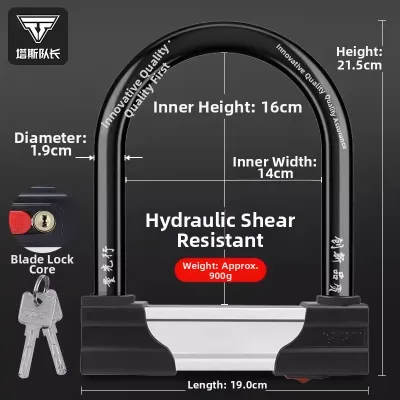
U-locks, also known as D-locks, offer a rigid, U-shaped shackle that provides an excellent balance between physical security and manageable weight. The rigid structure of a high-quality U-lock is highly resistant to leverage attacks, twisting, and jack-spreading methods. Because they do not require the long, heavy links of a chain, U-locks can often deliver a similar level of physical resistance at a fraction of the total weight, making them easier to transport.
However, the fixed, rigid shape of a U-lock also limits its versatility. The locking radius is strictly defined by the inner dimensions of the shackle, which can make it challenging to secure your motorcycle to thick poles, trees, or wide concrete structures. You may also find it difficult to position the lock in a way that secures both the motorcycle’s frame and a wheel to an external anchor point simultaneously.
U-locks are best suited for medium-to-high security scenarios where you have consistent access to appropriately sized anchor points, such as thin metal railings, bicycle racks, or dedicated low-profile anchors. They are highly effective for riders who want stronger physical protection than a disc lock can offer but do not want to carry the extreme weight of a heavy chain lock.
To ensure a U-lock will work for your specific setup, you must measure the diameter and width of the anchor points you plan to use regularly. Compare these measurements with the inner clearance dimensions of the U-lock shackle before buying. Additionally, verify the lock cylinder’s specifications to ensure it features anti-drill and anti-pick designs, which protect the locking mechanism from manual tampering.
How to Match the Lock to Your Riding and Parking Routine
Selecting the right motorcycle lock requires analyzing your daily riding habits, your typical parking environments, and the local conditions in your area. In tropical environments with high humidity and frequent rainfall, such as the Philippines, locks are constantly exposed to moisture, which can accelerate corrosion and compromise locking mechanisms over time. Your choice should reflect these environmental factors alongside your security needs.
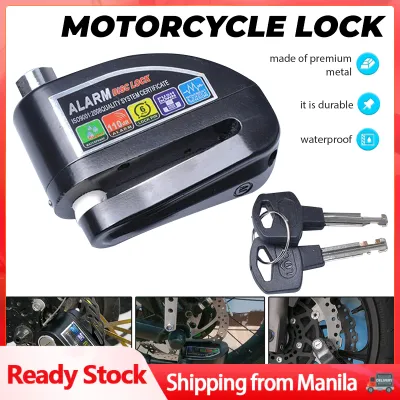
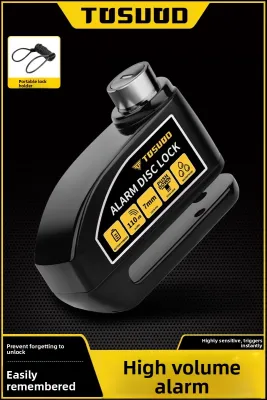
If your routine consists primarily of brief commutes and parking in secure, monitored office garages (Scenario A), a high-quality disc lock is often the most practical choice. It provides rapid deployment and excellent portability, allowing you to secure your bike quickly. For added deterrence in busy public spaces, consider pairing the disc lock with a built-in motion alarm to draw immediate attention to any unauthorized movement.
For extended street parking, overnight storage, or parking in high-risk, unmonitored areas (Scenario B), physical anchoring is non-negotiable. In these situations, you should prioritize a heavy-duty chain lock or a large U-lock that allows you to secure the motorcycle’s frame or rear wheel to an immovable structure. This physical connection is the only reliable way to prevent thieves from simply lifting your motorcycle into a waiting vehicle.
For maximum security requirements (Scenario C), implementing a layered security strategy is highly recommended. This involves using multiple lock types simultaneously, such as a heavy chain lock to anchor the rear wheel and frame to a post, combined with a disc lock on the front brake rotor. While this layered approach increases your overall budget (₱) and requires more carrying capacity, it significantly multiplies the time and effort a thief would need to bypass your defenses, making your motorcycle a highly unattractive target.
Finally, always verify the specific requirements of your local motorcycle insurance policy. Some insurance providers in the Philippines mandate the use of locks with specific physical dimensions, material certifications, or locking mechanisms to qualify for theft coverage or to process a claim successfully. Reviewing your policy documentation beforehand ensures your chosen lock meets these administrative standards.
Installation, Maintenance, and Safety Checks
Proper installation and regular maintenance are critical to ensuring your anti-theft locks function effectively and do not cause accidental damage to your motorcycle. When installing a chain lock or U-lock, always position the lock off the ground. Keeping the lock and chain suspended prevents thieves from resting the locking mechanism or chain links against the pavement, which would otherwise allow them to use the floor as leverage for heavy bolt cutters or striking tools. Additionally, try to keep chain locks as taut as possible to minimize the physical space available for inserting cutting tools.
Given the high humidity and wet weather common in tropical climates, regular lock maintenance is essential to prevent internal corrosion and jamming. Clean the lock cylinder periodically using compressed air or a soft brush to remove dust, road grit, and moisture. Apply lock lubricants strictly according to the manufacturer’s instructions; avoid using heavy household oils, grease, or WD-40 unless specified, as these substances can attract dirt and eventually clog the internal pin-tumbler mechanism.
Safety must always be your top priority when using any motorcycle lock. Before starting your engine or moving your vehicle, perform a physical check to ensure all locks are completely removed and securely stored in your luggage or under-seat compartment. Attempting to ride away with a disc lock, chain, or U-lock still attached can cause severe damage to your brake calipers, rotors, wheels, and suspension, and can lead to an immediate fall or serious injury. If a lock mechanism becomes difficult to operate, binds, or conflicts with your motorcycle’s structural components, stop using it immediately and consult a qualified professional locksmith or motorcycle technician.
Frequently Asked Questions (FAQ)
Can I use a single lock for both the frame and the wheel?
Whether you can secure both the frame and a wheel with a single lock depends entirely on the lock’s physical dimensions and your motorcycle’s design. A long, flexible chain lock or an oversized U-lock can often reach through the spokes of a wheel and loop around a main frame tube. Before purchasing, you must measure the clearance and distance between your motorcycle’s frame and wheels to verify that the lock’s length or shackle clearance is sufficient to span the gap without putting undue tension on brake lines or electrical wiring.
Are alarm-equipped locks worth the extra investment?
Alarm-equipped locks provide an excellent secondary layer of deterrence by emitting a loud siren when they detect motion or vibration. While they do not increase the physical cutting resistance of the lock itself, they are highly effective at deterring opportunistic thieves and alerting nearby pedestrians. If you choose an alarmed lock, verify the manufacturer’s specifications regarding water-resistance ratings to ensure the electronics can withstand heavy tropical downpours, and check the recommended battery replacement procedures to maintain reliable operation.
What should I do if my lock gets jammed or stuck?
If your motorcycle lock becomes jammed or difficult to turn, do not attempt to force the key, as this can easily bend or snap the key inside the cylinder. First, spray a small amount of manufacturer-approved lock lubricant or dry graphite spray directly into the keyway and gently work the key back and forth to loosen any trapped grit or corrosion. If the mechanism remains completely stuck, avoid using hammers, pry bars, or angle grinders yourself, as these can slip and cause expensive damage to your motorcycle’s wheels or braking system; instead, contact a professional locksmith to safely remove the lock.
Community discussion
Share your experience or ask a question. Comments are reviewed before publication.