
Choosing the right motorcycle anti-theft lock is not about finding a single, flawless solution, but rather about matching a lock’s physical design to your daily riding habits and parking environments. While some riders require heavy-duty anchors to secure their bikes overnight on busy city streets, others only need a quick, highly portable deterrent for brief daytime errands. Understanding how each lock type functions allows you to balance security, weight, and convenience effectively.
Assessing Your Parking Environment and Riding Routine
Before selecting a lock, you must evaluate where your motorcycle spends most of its time. Parking in a secured, private garage presents a very different risk profile compared to leaving your bike on a public street overnight or parking it in a high-traffic commercial area during a quick grocery run. Each scenario demands a specific level of physical deterrence and dictates how much weight you can practically carry on your journey.
Carrying a heavy, thick steel chain might be feasible if you have a spacious top box or saddlebags, but it becomes highly impractical if you ride a sportbike with minimal under-seat storage. Conversely, relying solely on a pocket-sized lock for overnight street parking leaves your motorcycle vulnerable to being lifted into the back of a van by multiple people. By defining your primary parking locations and assessing your bike’s storage capacity, you can establish a realistic baseline for your security needs.
Products mentioned in this guide
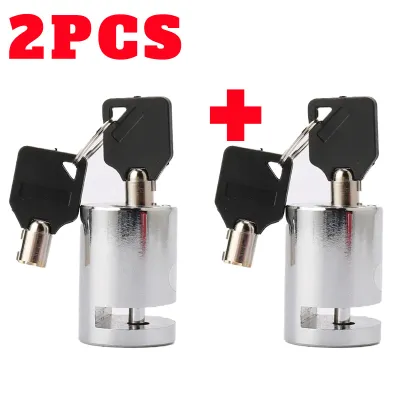
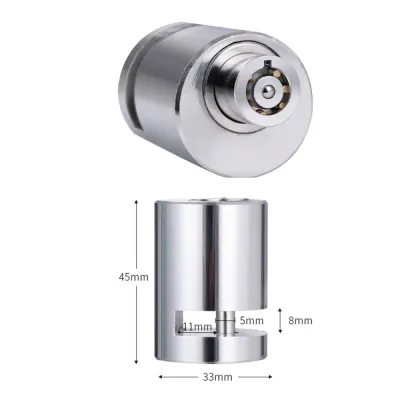
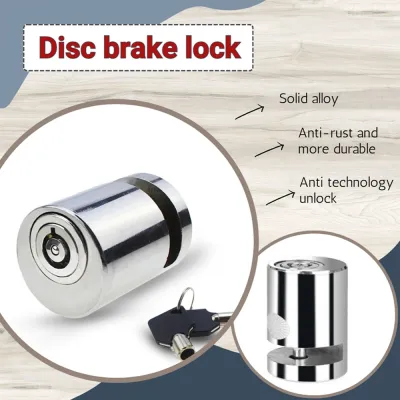
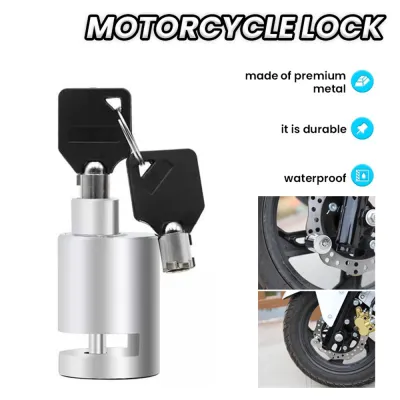
Prices are valid at publication and may change. Please refer to the product page for the latest price.
Disc Locks: Lightweight Security for Quick Stops
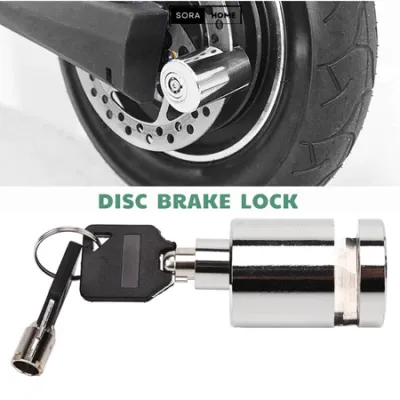
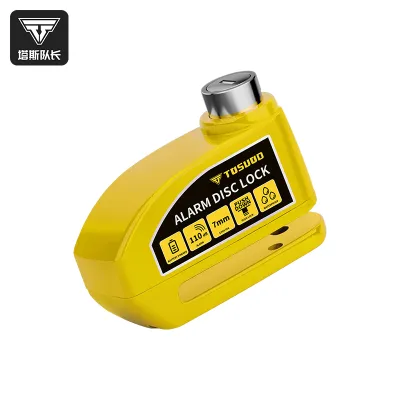
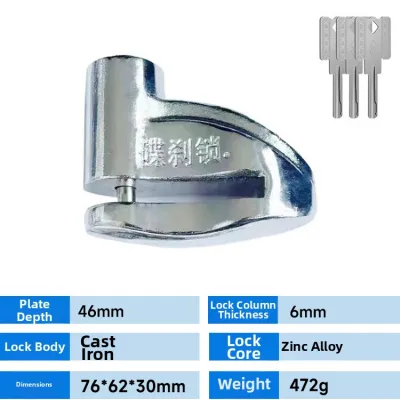
Disc locks are designed specifically for rapid deployment and high portability, making them an excellent option for short stops. These compact devices function by clamping directly onto the motorcycle’s brake rotor, with a hardened steel pin passing through one of the rotor’s cooling holes. Once locked in place, the mechanism physically prevents the wheel from rotating, which stops anyone from easily rolling or riding the motorcycle away.

The primary advantage of a disc lock is its pocket-sized form factor. You can easily store it in a small under-seat compartment, a tank bag, or even a jacket pocket, ensuring you always have physical security on hand. This convenience makes them highly popular for quick daytime errands, group rides, or parking in highly visible, high-traffic areas where a thief is unlikely to attempt a prolonged, noisy attack.
However, disc locks have a significant physical limitation: they do not anchor your motorcycle to a fixed object. Even with the front wheel completely immobilized, a group of determined individuals can lift the motorcycle into a flatbed truck or van within seconds.
Additionally, safety is a critical consideration when using this type of lock. Always ensure the disc lock is completely removed before starting the engine or moving the vehicle, as attempting to ride with the lock engaged can damage the braking system and cause a sudden fall. Refer to your motorcycle’s manual for brake component care, and consider using a bright, highly visible reminder cable stretched from the lock to the handlebar to prevent accidental ride-offs.
Chain Locks: Heavy-Duty Anchoring for Long-Term Parking
When you must leave your motorcycle unattended for extended periods, especially overnight or in unmonitored areas, a heavy-duty chain lock offers robust physical security. These locks consist of thick, hardened steel links covered by a protective fabric sleeve to prevent scratches on your bike’s paintwork. The chain is wrapped through the motorcycle’s frame or rear wheel and secured to a solid, immovable object like a concrete pillar, a steel post, or a dedicated ground anchor.
The main security benefit of a chain lock is its ability to prevent lift-and-carry thefts. By physically anchoring the motorcycle to a permanent structure, you force thieves to attempt to cut through the hardened steel links on-site, which requires heavy, noisy tools like angle grinders or massive bolt cutters. Furthermore, keeping the chain off the ground during use makes it much harder for a thief to gain leverage with manual bolt cutters, as they cannot use the pavement to press down on the tool’s handles.
The trade-off for this high level of security is substantial weight and bulk. High-quality security chains can weigh several kilograms, making them difficult to transport without dedicated luggage options like a sturdy top case, side panniers, or a secure tail bag. Because of this weight, many riders choose to leave a heavy chain permanently locked to their home parking spot or apartment garage, using a lighter, more portable lock when traveling.
U-Locks: Rigid Protection and Balanced Convenience
U-locks, also known as D-locks, offer a rigid alternative that bridges the gap between the extreme portability of disc locks and the heavy-duty security of chains. Featuring a solid, U-shaped steel shackle that locks into a straight crossbar, these devices provide excellent resistance against leverage attacks, twisting, and cutting. Their rigid construction means there are no loose links for a thief to easily manipulate or wedge a tool into.
Because they are made of solid, hardened steel, high-quality U-locks are exceptionally difficult to cut with manual hand tools like standard bolt cutters. This makes them a reliable choice for daily commuters who park in designated motorcycle bays or near sturdy street furniture. They offer a higher level of physical resistance than most disc locks while being significantly lighter and easier to pack than a long, heavy-duty chain.
Despite these benefits, the rigid shape of a U-lock introduces specific practical limitations. Unlike a flexible chain, a U-lock has a fixed clearance area, which severely limits the size of the objects you can lock your motorcycle to. You must carefully measure your motorcycle’s wheel, fork, or frame clearance, as well as the dimensions of the local street furniture, to ensure the lock can physically fit around both. If the shackle is too small, you will not be able to anchor the bike; if it is too large, it may leave too much open space, allowing thieves to insert hydraulic jacks or leverage bars to pop the lock open.
Comparing Lock Types Across Key Decision Dimensions
To choose the right security setup, it is helpful to compare how these three lock types perform across key practical categories. Each design prioritizes certain attributes at the expense of others, meaning no single lock is perfect for every situation.
| Lock Type | Deterrence Level | Portability | Ease of Use | Anchor Capability |
|---|---|---|---|---|
| Disc Lock | Moderate (Prevents roll-away) | Excellent (Fits in pocket) | High (Quick to install) | None (No fixed anchoring) |
| Chain Lock | High (Resists lift-and-carry) | Low (Heavy and bulky) | Moderate (Requires wrapping) | Excellent (Secures to large posts) |
| U-Lock | High (Rigid and cut-resistant) | Moderate (Fits in backpack/rack) | Moderate (Requires alignment) | Limited (Requires specific sizing) |
As shown in the comparison, physical security is directly tied to weight and bulk. While a heavy-duty chain lock provides the most comprehensive protection against all common theft methods, its weight makes it less practical for quick stops during a daily commute. Conversely, a disc lock offers unmatched convenience but cannot stop a team of thieves from lifting your bike.
Budget considerations also play a role in your decision. Generally, heavy-duty chain locks require a larger investment of several thousand ₱ due to the sheer volume of hardened steel and the complex manufacturing processes involved, whereas disc locks are often more accessible. Before purchasing any lock, always check your motorcycle’s specific brake disc thickness, wheel clearance, and frame design to ensure the lock’s dimensions are fully compatible with your vehicle.
Final Decision Framework: Choosing Your Ideal Lock
To select the most effective lock for your daily routine, consider which of the following scenarios best describes your riding habits and parking conditions:
- Choose a Disc Lock if you primarily park in well-lit, high-traffic areas during the day, make frequent short stops, and have limited storage space on your motorcycle. It serves as an excellent, highly portable visual and physical deterrent against opportunistic roll-away theft.
- Choose a Chain Lock if you must park your motorcycle overnight on the street, in an unsecured apartment parking lot, or in any high-risk area where the bike is left unattended for long periods. This option is essential if you want to anchor your bike to a permanent structure to prevent lift-and-carry theft.
- Choose a U-Lock if you are a daily commuter with access to predictable, sturdy anchor points, such as dedicated motorcycle racks, and you want a high level of cut resistance without the extreme weight of a heavy chain.
- Consider a Combination if you want to establish a layered security system. For example, you can use a highly portable disc lock for quick daytime errands, and then combine it with a heavy-duty chain lock anchored to a concrete pillar when parking your motorcycle at home overnight.
Frequently Asked Questions (FAQ)
Can I use a single lock for all my parking situations?
While using a single lock is convenient, it rarely provides adequate protection across all environments. A lightweight disc lock is perfect for a quick stop at a local shop, but it offers very little protection if your bike is left overnight in a dark alley where thieves have the time and privacy to lift it into a vehicle. Conversely, carrying a heavy chain lock for a five-minute errand can quickly become tedious, leading you to skip locking your bike altogether. Adopting a layered security approach based on your daily risk level ensures you always have the right balance of convenience and protection.
Do I need a lock with an alarm or tracking feature?
Locks equipped with built-in movement sensors and audible alarms add an extra layer of psychological deterrence by drawing immediate attention to any tampering. This can be highly effective in busy urban areas where thieves rely on stealth to avoid detection. However, electronic features require regular battery maintenance and can occasionally trigger false alarms during heavy tropical downpours or high winds. It is important to remember that an alarm is a secondary deterrent; it must always be paired with a robust physical locking mechanism that physically prevents the motorcycle from being moved.
How do I maintain my motorcycle lock to prevent jamming?
Motorcycle locks are constantly exposed to harsh outdoor elements, including road grime, dust, and heavy tropical humidity, which can cause the internal mechanisms to stiffen or rust over time. To prevent your key from jamming, regularly clean the keyway and apply a lock lubricant approved by the manufacturer, such as a dry PTFE or graphite spray. Avoid using wet, sticky oils or multi-purpose household lubricants, as these substances tend to attract dirt and debris, which will eventually clog the internal pins and make the lock difficult to operate.
Community discussion
Share your experience or ask a question. Comments are reviewed before publication.