
Quick Answer: Matching Lock Types to Parking Scenarios
When searching for the most reliable steering lock for motorcycle security, many riders quickly discover that no single security device can perfectly handle every situation. The ideal locking mechanism depends heavily on your daily routine, where you park, and how much weight you are willing to transport. For quick stopovers and daily commutes, a compact disc lock provides excellent portability. If you park in fixed locations like an office basement or a school campus, a rigid U-lock offers a robust balance of cut resistance and manageable weight. For maximum security in high-risk areas or overnight street parking, a heavy-duty chain lock anchored to an immovable object remains the gold standard.
Ultimately, relying on a single lock is rarely enough; layering different lock types is the most effective way to deter determined thieves and protect your investment. In busy urban environments, where motorcycles are primary modes of transport, understanding the strengths and limitations of each lock type is the first step toward securing your ride. By matching your lock choice to your specific parking scenario, you can significantly reduce the risk of theft without adding unnecessary hassle to your daily commute.
Why a Factory Steering Lock for Motorcycle Protection Is Not Enough
Most motorcycles come equipped with a built-in steering lock for motorcycle security, which is operated directly through the ignition cylinder. When you turn the key to the lock position and turn the handlebars fully to one side, a small metal pin extends from the steering column into the frame. While this mechanism is highly convenient because it requires no extra equipment to carry, it provides only a baseline level of security that is easily bypassed by motivated thieves.
Products mentioned in this guide
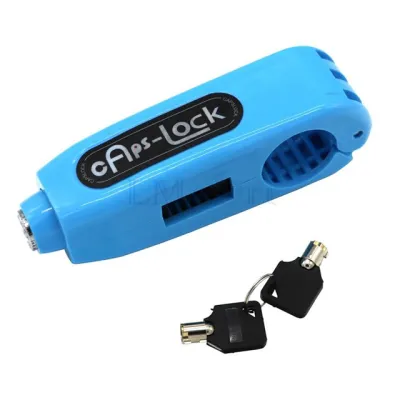
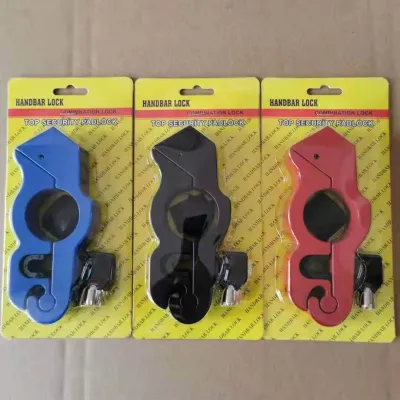
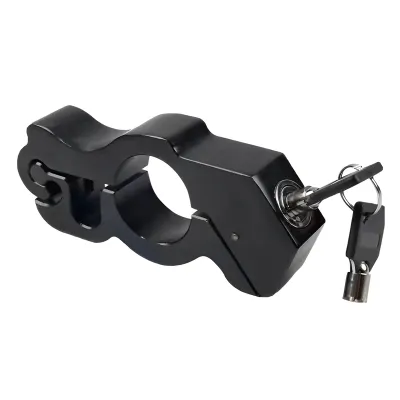
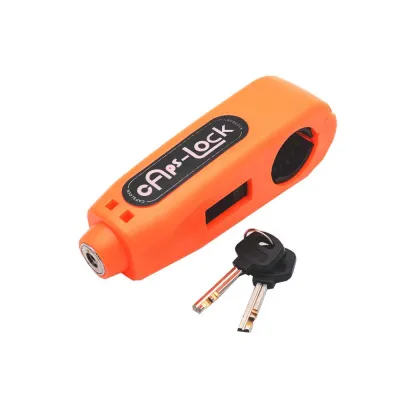
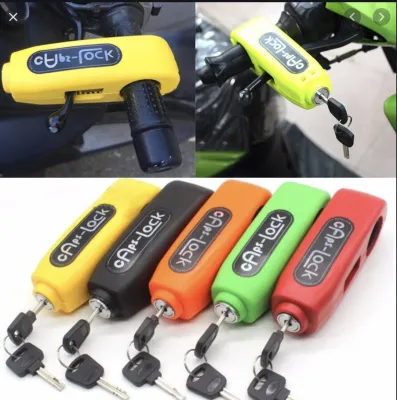
Prices are valid at publication and may change. Please refer to the product page for the latest price.

The primary physical limitation of a factory steering lock is the strength of the locking pin itself. In many standard motorcycles and scooters, this pin is made of relatively soft cast metal. A thief can simply stand next to the motorcycle, grab the handlebars firmly, and apply a sudden, violent force. This leverage is often enough to snap the internal locking pin instantly. Once the pin is broken, the steering column moves freely, allowing the thief to roll the motorcycle away or push it using another vehicle.
Because factory steering locks are hidden inside the steering column, they also lack visual deterrence. An opportunistic thief might not realize the lock is engaged until they attempt to push the bike, potentially damaging your steering column in the process. Aftermarket locks—such as disc locks, U-locks, and chain locks—act as highly visible, secondary physical barriers. They force thieves to use heavy, noisy, and conspicuous tools like angle grinders or bolt cutters, which dramatically increases their chances of being caught.
Disc Locks: Portable Security for Quick Stops
A disc lock is a compact security device that clamps directly onto your motorcycle’s brake disc rotor. The mechanism features a hardened steel pin that passes through one of the rotor’s existing ventilation holes. Once locked, the body of the device prevents the wheel from rotating more than a few inches before it physically strikes the brake caliper or front fork, stopping the motorcycle from being rolled away.
The primary advantage of a disc lock is its exceptional portability. These locks are small enough to fit easily under your seat, in a small tank bag, or even in a jacket pocket. They can be applied and removed in a matter of seconds, making them highly convenient for quick errands, brief stops at convenience stores, or parking in busy, high-traffic daytime areas. Many modern disc locks also feature built-in motion sensors and loud alarms that trigger if the bike is moved, adding an auditory layer of defense.
However, disc locks have distinct security limitations. Because they only lock the wheel to itself, they do not anchor the motorcycle to the ground or to any fixed structure. A lightweight scooter or underbone motorcycle can easily be lifted by two or three people and loaded into the back of a utility vehicle or pickup truck in under a minute, regardless of whether a disc lock is attached. Additionally, because of their compact size, they can be vulnerable to targeted attacks with portable angle grinders if the motorcycle is left unattended in isolated areas for long periods.
Operating a disc lock also requires strict user safety precautions. Attempting to ride off with a disc lock still attached to your wheel is a common mistake that can cause severe, costly damage to your front forks, brake calipers, and brake disc rotors. It can also lead to an immediate, dangerous fall. To prevent this, always use a highly visible, brightly colored reminder cable looped from the lock to your handlebar grip, or choose an alarmed model that sounds a warning beep the moment you straighten the handlebars. Before purchasing, verify your vehicle’s brake rotor specifications to ensure the lock’s pin diameter matches your rotor’s ventilation holes.
U-Locks: Rigid Protection for Fixed Parking
A U-lock, also known as a D-lock, consists of a rigid, U-shaped hardened steel shackle that secures into a heavy-duty locking crossbar. This shackle is typically looped through the motorcycle’s wheel spokes, around a fork leg, or through the frame, physically preventing the wheel from turning or securing the bike to a thin anchor point.
The main benefit of a U-lock is its high resistance to manual physical attacks. The thick, hardened steel shackle—often ranging from 14mm to 18mm in thickness—is extremely difficult to cut with manual hand tools like bolt cutters. Because the lock is rigid and can be positioned off the ground, thieves cannot easily use the pavement as a fulcrum to apply downward pressure on bolt cutters. U-locks are also significantly lighter and less cumbersome to transport than long, heavy chain locks, offering a practical balance of high-level security and manageable weight.
The primary drawback of a U-lock is its limited versatility. Because the shackle is rigid and has a fixed shape, you cannot stretch or bend it to reach distant anchoring points. It must fit precisely within the clearance of your wheel, brake rotors, and frame. If you attempt to secure your motorcycle to a thick street pole, a large concrete pillar, or a wide guardrail, a standard U-lock will rarely be wide or long enough to close around the object.
Before purchasing a U-lock, you must physically measure the clearance between your motorcycle’s wheel spokes, brake discs, and forks. Ensure the shackle diameter is thick enough to resist attacks but thin enough to pass through your wheel gaps without pinching brake lines, speed sensors, or wiring. When locking your bike, try to minimize the amount of open space inside the “U” shackle; leaving excess gap space makes the lock vulnerable to hydraulic bottle-jack attacks, where a thief inserts a compact jack to force the shackle apart.
Chain Locks: Versatile Anchoring for High-Risk Areas
A chain lock consists of a series of heavy, hardened steel links covered by a protective fabric sleeve, secured at the ends by a heavy-duty padlock or an integrated locking head. This design is engineered for maximum physical security and versatility, allowing you to anchor your motorcycle directly to permanent, immovable structures.
The greatest advantage of a chain lock is its ability to prevent lift-away theft. By wrapping the flexible chain around a concrete pillar, a thick steel lamp post, or a dedicated ground anchor, you ensure that thieves cannot simply lift your motorcycle into a van. High-quality chains with link diameters of 12mm to 16mm or more are incredibly resilient against manual bolt cutters and require significant time, effort, and noisy power tools to cut through. The protective fabric sleeve also prevents the heavy steel links from scratching your motorcycle’s paint or wheels.
However, the extreme security of a chain lock comes with a significant weight penalty. A secure, high-quality chain lock can easily weigh anywhere from 4 to 10 kilograms. Carrying this extra weight on a daily commute can negatively affect your motorcycle’s handling if stored in a top box, and it is highly impractical to carry in a backpack. Additionally, the padlock itself can become the weakest link if it is not of equal security grade; a high-end chain paired with a cheap, soft-metal padlock is easily defeated.
When selecting a chain lock, check the manufacturer’s specifications for steel composition, prioritizing triple-heat-treated or boron-alloy steel. Ensure the accompanying padlock features a closed or shrouded shackle to prevent bolt cutters or saws from getting a grip on the locking pin. When securing your motorcycle, always try to keep the chain suspended off the ground. If the chain rests on the pavement, a thief can place one handle of a large bolt cutter on the ground and use their entire body weight to press down on the other handle, easily cutting through links that would otherwise resist manual attacks.
Head-to-Head Comparison: Security, Portability, and Ease of Use
To help you visualize how these three lock types compare across key decision dimensions, the table below summarizes their performance, portability, and primary use cases.
| Lock Type | General Theft Resistance | Portability | Ground Anchoring Capability | Ideal Parking Scenario |
|---|---|---|---|---|
| Disc Lock | Moderate | Excellent | None | Quick errands, high-traffic daytime parking, busy streets |
| U-Lock | High | Moderate | Limited (requires close proximity to thin anchors) | Fixed daily parking, office/school basements, designated motorcycle bays |
| Chain Lock | Very High | Poor | Excellent | Overnight parking, high-risk or isolated areas, home storage |
It is critical to note that the theft resistance listed above assumes you are comparing high-quality, properly manufactured locks within each category. A cheap, low-grade chain made of mild steel can be cut faster than a premium, high-end alloy U-lock. Always verify the specific material composition, heat-treatment processes, and independent security certifications (such as Sold Secure Motorcycle Gold or ART ratings) rather than relying solely on the lock category.
Decision Framework: Which Lock Should You Buy?
To finalize your decision, evaluate your daily riding habits, parking environments, and storage capacity against these condition-based buying rules:
- Choose a Disc Lock if your daily routine involves frequent, short stops where you need to secure your bike quickly, you have limited storage space under your seat, and you primarily park in highly visible, well-lit, high-traffic areas during the day.
- Choose a U-Lock if you park your motorcycle in a designated, semi-secure area for long hours (such as an office parking lot or a condo basement) and want a high level of physical protection without the extreme weight of a heavy chain.
- Choose a Chain Lock if you must leave your motorcycle unattended overnight, park in isolated or high-risk locations, or want to secure your bike to a permanent ground anchor at home.
- Verify first if your motorcycle's front brake rotor features ventilation holes large enough to accommodate the disc lock's pin diameter (common pin sizes range from 5mm to 14mm), or if your wheel and frame design allows a rigid U-lock shackle to pass through safely without damaging brake lines or speed sensors.
For riders facing high-risk parking scenarios, such as leaving a motorcycle overnight in an unmonitored street or public alley, the most effective strategy is to layer your security. Combining a portable disc lock on the front wheel with a heavy-duty chain lock on the rear wheel anchored to a post forces a thief to bring multiple tools and spend twice as much time, making your motorcycle an highly unattractive target.
Furthermore, because of the high humidity and heavy rainfall common in tropical environments, regular maintenance is essential. Protect your investment by choosing locks with built-in keyway dust covers to prevent water entry, and periodically lubricate the locking mechanism with a manufacturer-approved dry graphite spray or light lock oil to prevent corrosion and seizing.
Community discussion
Share your experience or ask a question. Comments are reviewed before publication.