
Deciding whether to add a magnetic jack pad to your automotive tool collection comes down to understanding your vehicle’s design and your personal maintenance habits. For many car owners, this small accessory offers a practical solution to a common garage frustration: keeping a protective pad aligned with the vehicle’s lifting point while positioning a heavy floor jack. While it is not a mandatory tool for basic car ownership, it can prevent costly cosmetic and structural damage to your vehicle’s undercarriage.
In the Philippines, where high humidity and seasonal rains can accelerate rust on exposed metal, protecting the factory paint and protective coatings on your car’s undercarriage is highly important. A scratched pinch weld or a scraped frame rail can quickly become a breeding ground for corrosion. A magnetic jack pad helps mitigate this risk by providing a cushioned barrier between the hard steel of your floor jack and the vulnerable metal of your car. However, before purchasing one, you must evaluate your specific vehicle, your jack type, and how often you actually perform DIY maintenance.
What Is a Magnetic Jack Pad and How Does It Work?
A magnetic jack pad is a specialized lifting accessory designed to sit between your floor jack’s saddle and your vehicle’s designated jacking point. Typically constructed from heavy-duty vulcanized rubber, polyurethane, or silicone, these pads feature a slot or contour molded into the top surface to accommodate specific undercarriage shapes, such as pinch welds. Inside the body of the pad, one or more strong magnets are permanently embedded.
Products mentioned in this guide
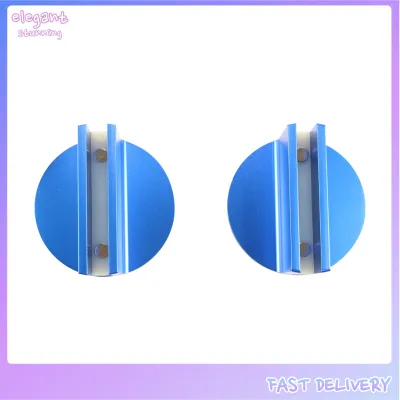
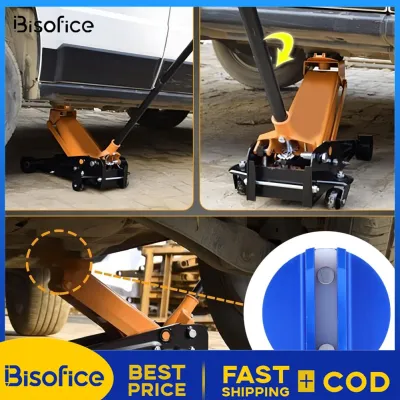
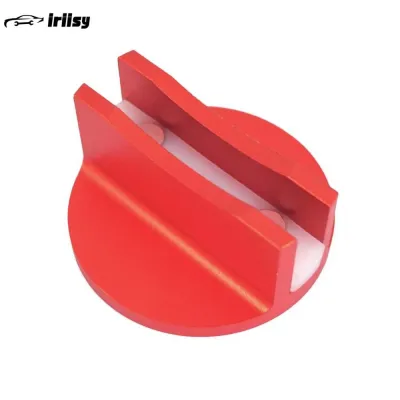
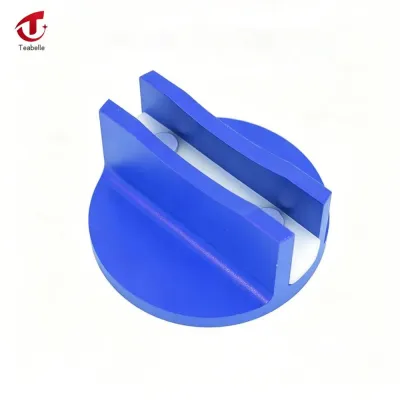
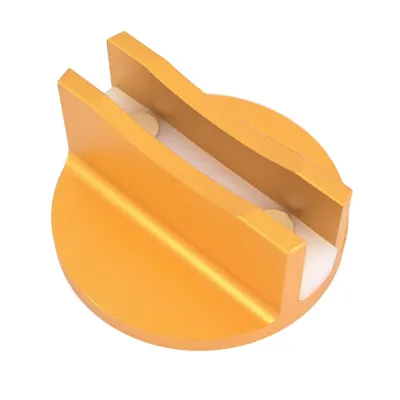
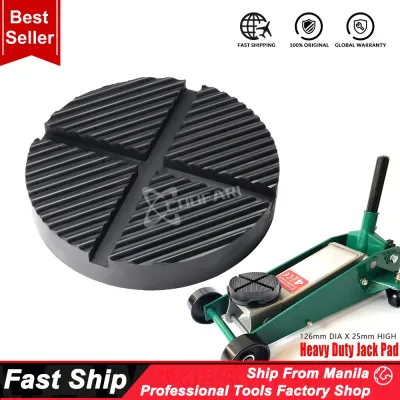
Prices are valid at publication and may change. Please refer to the product page for the latest price.
The primary function of the embedded magnet is to hold the pad securely to the steel saddle of your floor jack. When you roll the jack under your vehicle, the pad stays perfectly centered on the saddle instead of shifting, sliding, or falling off. This hands-free stability allows you to focus entirely on aligning the jack with the vehicle’s lifting point. Once in place, the soft yet durable material of the pad compresses slightly under the vehicle’s weight, preventing metal-on-metal contact, absorbing minor misalignments, and reducing the risk of the jack slipping.
Self-Assessment: Does Your Vehicle and Maintenance Routine Require One?
To determine if a magnetic jack pad is a practical investment for your garage, you need to look closely at two main factors. First, you must inspect the physical design of your vehicle’s undercarriage and factory-designated lifting points. Second, you should evaluate your typical maintenance environment and how often you actually lift your vehicle for DIY tasks.

Check Your Vehicle's Jacking Points
Before buying any lifting accessory, consult your vehicle’s owner’s manual to locate the exact factory-recommended jacking points. Different vehicles use vastly different structural designs for lifting. Many modern unibody vehicles, such as sedans, hatchbacks, and compact crossovers, feature pinch welds—thin, vertical metal seams running along the rocker panels. Lifting these vehicles with a flat metal jack saddle without a slotted pad can easily bend the weld, crack the protective paint, or damage nearby plastic side skirts.
If your vehicle has these exposed pinch welds, a slotted magnetic jack pad is highly beneficial because the slot cradles the weld while the flat shoulders of the pad distribute the lifting force to the reinforced metal behind it. Conversely, if you drive a body-on-frame vehicle, such as a pickup truck or a large SUV, the designated lifting points are typically flat, heavy-duty frame rails or reinforced metal plates. For these vehicles, a standard flat rubber block or even the jack’s bare saddle may be perfectly sufficient, making a specialized slotted magnetic pad unnecessary. Additionally, some European vehicles feature dedicated plastic jack point blocks or pockets under the rocker panels, which require highly specific rectangular adapters rather than a standard slotted pad.
Evaluate Your DIY Maintenance Frequency and Environment
Your working environment and how often you perform maintenance play a significant role in whether this tool is worth the investment. If you frequently perform DIY tasks such as tire rotations, brake pad replacements, suspension tuning, or oil changes in your carport or driveway, a magnetic jack pad offers substantial convenience. In outdoor environments, trying to balance a loose rubber pad on a jack saddle while maneuvering the jack over rough concrete, gravel, or uneven ground can be incredibly frustrating. The pad can easily fall off, collect dirt, or slip out of alignment.
The magnetic feature solves this by keeping the pad locked to the jack saddle as you roll it into position. However, if your DIY maintenance is limited to occasional emergency roadside tire changes, a magnetic jack pad is generally unnecessary. Emergency roadside jacks, such as the scissor jacks included with most vehicles, are designed to interface directly with the vehicle’s jacking points without aftermarket accessories. Furthermore, if you typically take your vehicle to a professional service center for all maintenance and repairs, you do not need to purchase this tool, as professional shops use heavy-duty lifts equipped with their own protective arm pads.
Magnetic Jack Pad vs. Standard Jack Pads and Alternatives
When shopping for lifting accessories, you will find several alternatives to magnetic pads, each with its own set of trade-offs. Standard rubber blocks and hockey puck-style pads are popular, low-cost options. While they provide excellent cushioning, they lack magnets, meaning you must manually hold them in place against the vehicle’s undercarriage or carefully balance them on the jack saddle as you raise the jack. This can be challenging and increases the risk of misalignment if the jack shifts slightly during the initial lift.
Another common alternative is the non-magnetic slotted pinch-weld adapter. These function identically to magnetic pads in terms of protecting the vehicle’s metal seams, but they must be manually aligned with every lift. The primary advantage of the magnetic version is purely hands-free convenience and speed, rather than any increase in lifting capacity or structural safety. It is also important to inspect your floor jack before buying a magnetic pad. Some modern floor jacks come equipped with built-in textured rubber saddles or removable rubber inserts. If your jack already has a high-quality rubber pad that fits your vehicle’s lifting points safely, adding an aftermarket magnetic pad may be redundant and could even create an unstable lifting surface if stacked.
Safety Boundaries and When to Stop DIY Jacking
Working underneath or around a raised vehicle carries inherent risks, and using a jack pad does not change fundamental safety protocols. A jack pad—magnetic or otherwise—is strictly a lifting aid and must never be relied upon to support a vehicle while you work underneath it. Hydraulic floor jacks are designed to raise a vehicle, not to hold it stationary for extended periods. Once the vehicle is raised to the desired height, you must immediately support it with weight-rated jack stands placed at the factory-approved support locations before performing any work.
Never attempt to fabricate DIY jack pads from unstable materials such as scrap wood blocks, bricks, or folded cardboard, as these materials can easily split, crush, or slip under the immense weight of a vehicle. Regularly inspect your magnetic jack pad for signs of wear, such as deep cracks, severe deformation, or crumbling rubber. If the pad shows any structural degradation, discard it immediately and replace it. Finally, always establish a strict stop condition: if you discover that your vehicle’s jacking points are severely rusted, structurally compromised, or if you cannot position the jack on a flat, level, and solid concrete surface, stop immediately. Do not attempt to lift the vehicle; instead, consult a qualified professional mechanic to handle the service safely.
Frequently Asked Questions (FAQ)
Will the magnet scratch my car's paint or undercarriage?
The magnets in high-quality jack pads are typically embedded deep within the rubber or polyurethane body, meaning the metal magnet itself does not make direct contact with your vehicle’s paint or undercarriage. However, because magnets attract ferrous metal particles, the surface of the pad can easily collect loose metal shavings, rust flakes, or abrasive road grit. If these particles are trapped between the pad and your vehicle under load, they can scratch the protective paint or undercoating. To prevent this, always wipe both the jack pad and the vehicle’s jacking point clean with a cloth before every lift.
Can I use a magnetic jack pad with a scissor jack or a bottle jack?
Whether you can use a magnetic jack pad with a scissor jack or a bottle jack depends entirely on the design and material of the jack’s lifting saddle. For the magnet to function, the saddle must be made of a ferromagnetic metal, such as steel or iron, and must have a flat surface large enough to accommodate the pad. Many emergency scissor jacks have highly specialized, narrow hooks or curved saddles designed to cradle the pinch weld directly, making a magnetic pad incompatible or unstable. Always consult your jack’s instruction manual and verify that the pad sits completely flat and secure on the saddle before attempting to lift the vehicle.
Community discussion
Share your experience or ask a question. Comments are reviewed before publication.