
Toyota models manufactured from the mid-2000s onward equipped with sealed automatic transmissions or specific hybrid transaxles typically require Toyota Genuine ATF WS (World Standard) fluid. However, because transmission designs vary widely across model years, engine options, and regional specifications, you must never rely on guesswork. Using the wrong fluid can lead to severe transmission slippage, overheating, and catastrophic mechanical failure.
Driving in the Philippines involves high ambient temperatures, intense humidity, and grueling stop-and-go traffic. These environmental factors place immense thermal stress on your transmission, making correct fluid selection critical for the longevity of your vehicle. Replacing a ruined transmission assembly can easily cost upwards of ₱100,000 in parts and labor, making proper fluid verification a vital preventive maintenance step.
How to Verify if Your Vehicle Requires ATF WS
Confirming the exact fluid specification for your vehicle is a straightforward process that requires no specialized mechanical knowledge. By following a few systematic checks, you can ensure you purchase the correct product.
Products mentioned in this guide
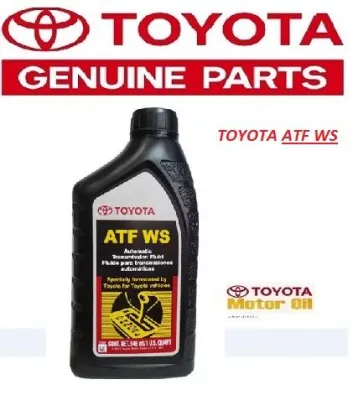
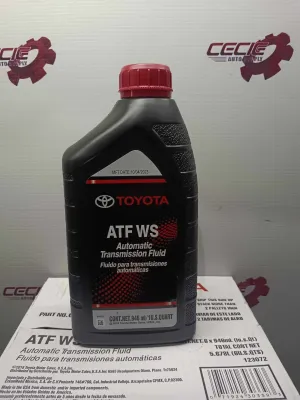
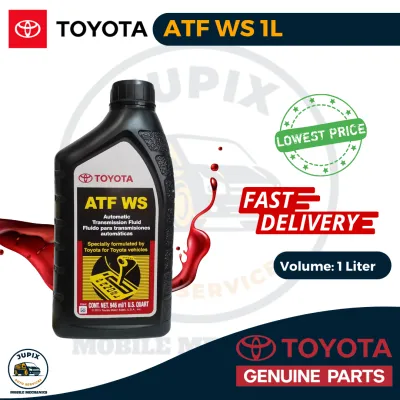
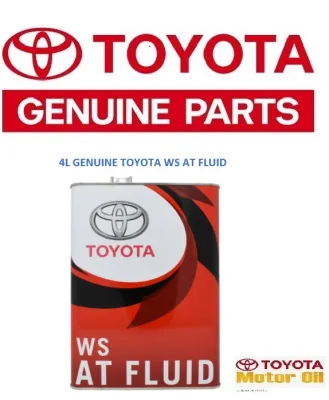
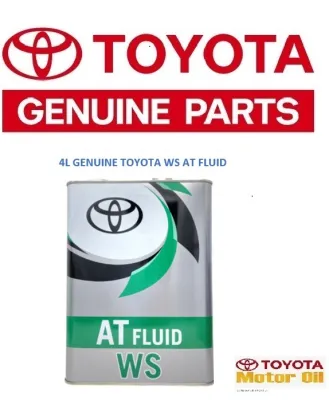
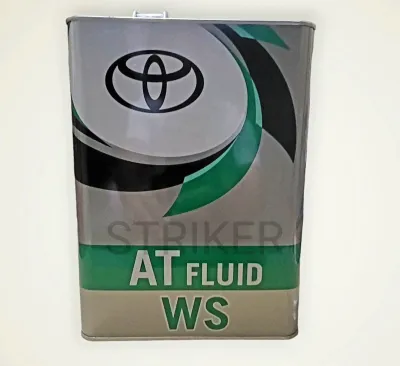
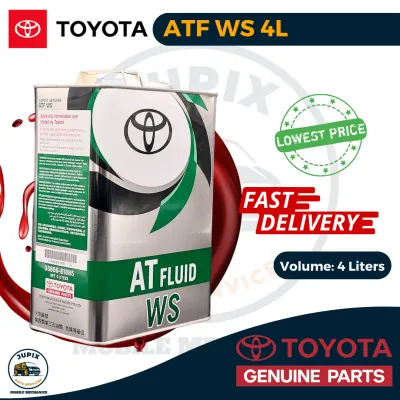
Prices are valid at publication and may change. Please refer to the product page for the latest price.
First, consult your vehicle’s owner’s manual. This is the most reliable source of truth. Navigate to the index and look for “Specifications,” “Fluid Capacities,” or “Transmission.” The manual will explicitly state the required automatic transmission fluid (ATF) specification, such as “Toyota Genuine ATF WS” or an equivalent standard.
Second, inspect the transmission dipstick or fill plug. Many older or conventional automatic Toyota vehicles feature a dipstick under the hood. Pull the dipstick out and clean it with a lint-free cloth. Look closely at the metal blade or the plastic handle, where the required fluid type is often stamped directly into the material. For newer “sealed” transmissions that lack a dipstick, the specification is typically stamped on or near the transmission fill plug or overflow plug underneath the vehicle.
Third, verify using your Vehicle Identification Number (VIN). If your owner’s manual is missing or the stamps on the vehicle are unreadable, note down your vehicle’s 17-digit VIN. Contact the service department of an authorized Toyota dealership. They can input your VIN into their database to confirm the exact factory-fill specification for your specific production run.
Safety Warning: Working underneath a vehicle to locate fill plugs or inspect transmission components carries inherent risks of burns from hot exhaust parts or crushing injuries. Always secure the vehicle on heavy-duty jack stands, use wheel chocks, wear appropriate personal protective equipment, or have this inspection performed by a qualified professional technician.
Why Using the Exact ATF Specification Matters
Transmission fluids are highly specialized lubricants engineered for specific operating parameters. ATF WS is formulated with a lower viscosity compared to older fluids. This lower viscosity reduces internal fluid drag, which helps optimize fuel efficiency and ensures smooth shifting across a wide range of operating temperatures.

Friction modifiers within the fluid are also tailored to the specific clutch materials used in your transmission. The clutch packs inside an automatic transmission rely on precise frictional characteristics to engage and disengage without slipping or shuddering. Using a fluid with incorrect friction properties can cause the clutches to slip, generating excessive heat and accelerating wear.
In tropical climates, high humidity and extreme heat accelerate fluid degradation. If you use a fluid with incorrect viscosity or friction properties, the transmission may experience increased wear, erratic shifting, or severe overheating. Furthermore, using non-compliant fluid can void any remaining powertrain warranty on your vehicle. Always check the manufacturer’s documentation to ensure compliance.
Identifying Alternative Toyota Fluid Specifications
If your verification process reveals that your vehicle does not require ATF WS, you will likely need one of the other common Toyota fluid specifications. Understanding these alternatives prevents accidental misapplication.
ATF Type T-IV: This is an older, higher-viscosity fluid used in many Toyota vehicles built before the mid-2000s. It has completely different friction characteristics and is not chemically compatible or interchangeable with ATF WS.
Continuously Variable Transmission Fluids (CVTF): Many modern Toyota models sold locally utilize a Continuously Variable Transmission (CVT) rather than a traditional geared automatic. CVTs require specialized fluids like Toyota Genuine CVTF TC or CVTF FE. Putting ATF WS into a CVT, or vice versa, can cause catastrophic belt or pulley slippage and ruin the unit within kilometers.
Hybrid Transaxles: Toyota hybrid vehicles use unique electronic continuously variable transmissions (e.CVTs). Despite the “CVT” name, many of these hybrid transaxles actually specify ATF WS rather than CVTF because their internal design behaves more like a traditional gear set housing electric motor-generators. This highlights why you must verify the exact specification for your specific model year and powertrain configuration rather than assuming based on the transmission type.
Purchasing the Correct Transmission Fluid
Once you have verified that your vehicle requires ATF WS, sourcing the correct product safely is the next step to ensure vehicle reliability.
When shopping at local auto supply shops or reputable online marketplaces, inspect the product label carefully. It must explicitly state compliance with the “Toyota Genuine ATF WS” or “JWS 3324” specification. Avoid products with vague “multi-vehicle” claims unless they explicitly list the WS standard as an approved application on the back label.
While Toyota Genuine ATF WS is the safest choice as it is the factory-fill standard, reputable aftermarket lubricant manufacturers offer fluids licensed to meet the WS specification. If choosing an aftermarket brand, verify that the label states “approved for” or “meets” the WS standard.
Counterfeit fluids are a risk in the local market. Only purchase fluids in factory-sealed containers with intact tamper-evident caps, clear batch codes, and high-quality label printing. Avoid buying unbranded or loosely decanted fluids.
Professional Installation: Because draining and refilling modern sealed transmissions requires precise temperature monitoring and specialized pump equipment, we highly recommend having the fluid exchanged by a qualified professional mechanic at a certified service center.
Frequently Asked Questions (FAQ)
Can I mix ATF WS with older Toyota fluids like T-IV?
No, you should never mix ATF WS with older fluids like Toyota Type T-IV or generic multi-vehicle fluids. They have different chemical compositions, base oil properties, and viscosity profiles. Mixing them alters the friction characteristics, which can lead to clutch slippage, harsh shifting, and accelerated wear. If you accidentally mix these fluids, a complete transmission fluid flush and exchange using the correct specification is necessary to prevent internal damage.
Is ATF WS exclusively for hybrid Toyota vehicles?
No, ATF WS is not exclusive to hybrids. While many Toyota hybrid transaxles require ATF WS, this fluid is also widely used in conventional 6-speed, 8-speed, and multi-speed automatic transmissions across a broad range of non-hybrid Toyota sedans, SUVs, and pickups. Always refer to your specific vehicle’s owner’s manual or consult an authorized dealer to verify the exact fluid requirement for your drivetrain.
How can I tell if my current transmission fluid needs replacing?
You can identify the need for a fluid change through physical inspection and vehicle behavior. Fresh ATF WS is typically bright red. Over time and under heavy thermal stress, it degrades, turning dark brown or black, often accompanied by a burnt odor. If you experience delayed gear engagement, slipping clutches, or rough shifts during acceleration, your fluid may have lost its protective properties. Refer to your vehicle’s maintenance schedule, especially when operating under severe driving conditions like heavy traffic and high tropical humidity, to determine the appropriate inspection and replacement intervals.

Community discussion
Share your experience or ask a question. Comments are reviewed before publication.