
The correct choice between DOT 3 and DOT 4 brake fluid is determined entirely by your vehicle manufacturer’s specifications. Do not assume that a higher DOT number is universally better or backward-compatible for every braking system. To find the exact standard your car requires, look at your owner’s manual or check the molded text on the brake fluid reservoir cap under the hood.
While both options are glycol-ether-based fluids, they feature distinct chemical formulations and boiling point standards. Using the incorrect fluid can degrade your braking performance, compromise safety seals, and lead to mechanical issues. When planning a maintenance service, purchasing a standard size such as a high-quality brake fluid dot 3 1 liter bottle ensures you have sufficient volume for a complete system flush or top-up without leaving too much leftover fluid to absorb moisture on your garage shelf.
Brake fluid serves as the vital hydraulic medium that transfers the force of your foot on the brake pedal directly to the brake calipers and pads. Because liquids are incompressible, this hydraulic pressure is transmitted instantly to slow down your vehicle. However, if the fluid gets too hot and reaches its boiling point, it turns into a gas. Since gas is highly compressible, pressing the brake pedal will simply compress the gas bubbles instead of moving the brake pads, leading to a dangerous loss of braking power.
Products mentioned in this guide
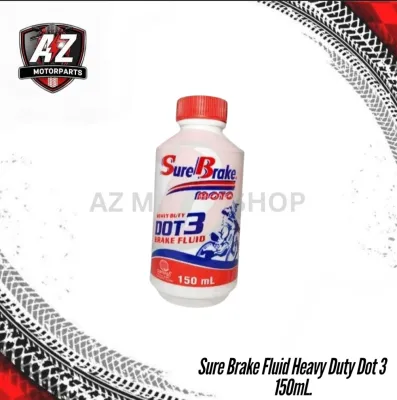
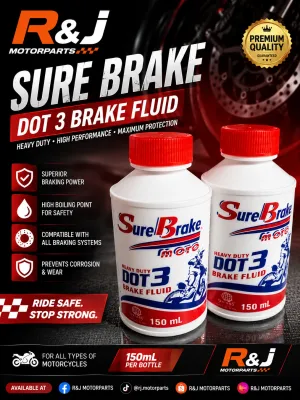
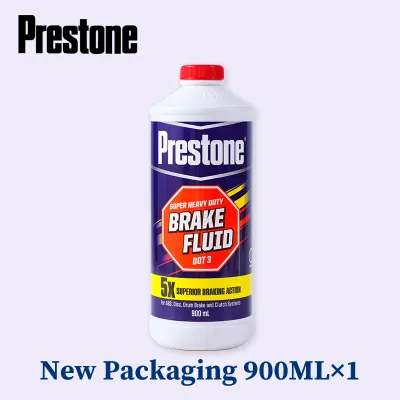
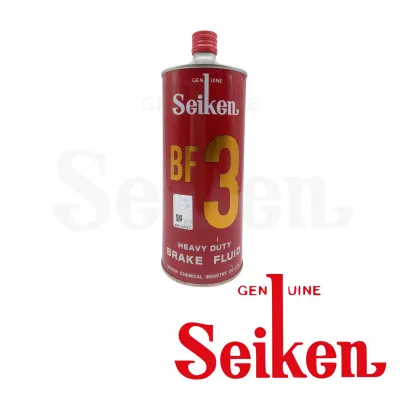
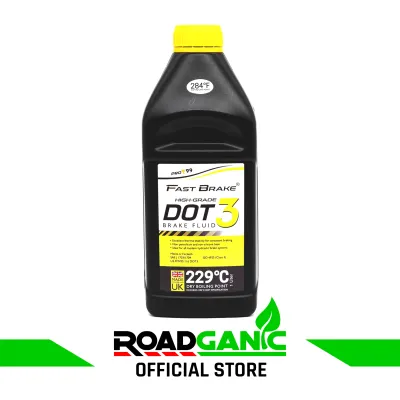
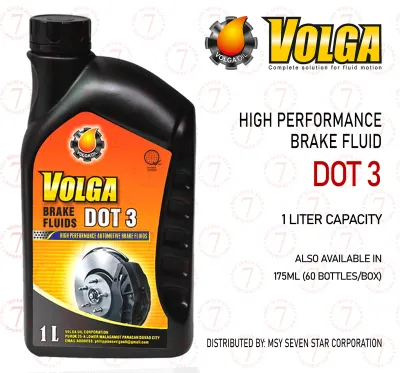
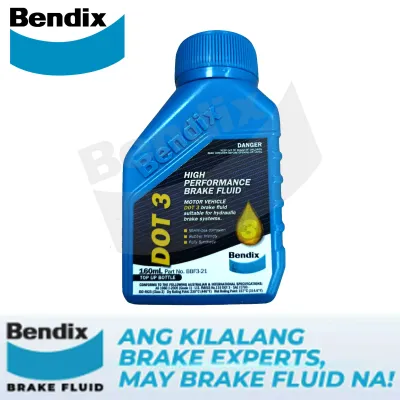
Prices are valid at publication and may change. Please refer to the product page for the latest price.
Understanding DOT 3 and DOT 4 Brake Fluids
The Department of Transportation (DOT) classification is a regulatory framework that sets minimum performance criteria for brake fluids. These standards primarily govern physical properties such as dry and wet boiling points, viscosity at various temperatures, and chemical compatibility with rubber seals and metal components within the braking system.
Both DOT 3 and DOT 4 brake fluids share a similar glycol-ether chemical base. This chemical structure makes them highly effective at operating under extreme pressures and temperatures. However, it also makes them highly hygroscopic, meaning they actively attract and absorb moisture from the surrounding atmosphere over time, even through microscopic pores in rubber hoses and reservoir seals.
The primary engineering difference between the two lies in their chemical additives. DOT 4 fluids are formulated with borate esters in addition to the standard glycol-ether base. These borate esters are specifically designed to handle higher temperatures, providing higher boiling point thresholds and greater resistance to heat-induced chemical breakdown compared to standard DOT 3 fluids.
It is critical to understand that material names and DOT labels are not standalone performance guarantees. Car owners must always verify the specific product label to ensure the fluid meets the required SAE (Society of Automotive Engineers) or ISO standards referenced in their vehicle’s service documentation. High-quality fluids will clearly display these certifications alongside their DOT rating.
Key Comparison Dimensions for Brake Fluid Selection
To make an informed decision, you must understand how these fluids perform under different thermal and environmental conditions. The differences between DOT 3 and DOT 4 directly impact vehicle safety, braking response, and maintenance intervals.

Dry and Wet Boiling Points
Brake fluid performance is measured by two critical temperature thresholds: the dry boiling point and the wet boiling point. The dry boiling point refers to the temperature at which fresh, uncontaminated fluid from a newly unsealed bottle begins to boil. The wet boiling point is the temperature measured after the fluid has absorbed a standard 3.7% water content by volume, which typically occurs after one to two years of service.
DOT 4 is engineered to maintain higher minimum wet and dry boiling points than DOT 3. This makes DOT 4 highly suitable for vehicles that generate elevated brake temperatures, such as heavier SUVs, vehicles pulling trailers, or cars frequently driven in stop-and-go city traffic or up steep mountain passes. When selecting a fluid, always compare the specific boiling point values printed on the product labels against the minimum requirements listed in your vehicle’s service manual, rather than relying on general assumptions.
If the fluid in your brake lines reaches its boiling point, the resulting vapor pockets will cause a soft, spongy pedal feel. In extreme cases, this can lead to complete brake failure. Because DOT 4 has a higher wet boiling point, it provides a larger safety margin against this phenomenon under heavy, prolonged braking conditions.
Hygroscopic Properties and Climate Considerations
The hygroscopic nature of these fluids has a massive impact on vehicle safety, especially in tropical climates. In a country like the Philippines, where high humidity and intense rainy seasons are the norm, brake fluids absorb ambient moisture much faster than they would in dry, arid regions. As water mixes with the fluid, the wet boiling point drops significantly.
Under heavy braking—such as descending steep roads in Benguet or navigating congested streets in Metro Manila—the water inside the brake lines can boil and turn into steam. Because steam is compressible, unlike liquid, this leads to a sudden loss of stopping power known as brake fade. Internal corrosion of steel brake lines, pistons, and ABS valves is another major risk of moisture contamination.
While DOT 4 has a higher initial boiling point, its formulation may absorb moisture at a slightly different rate than DOT 3, meaning maintenance and testing intervals must be strictly followed regardless of the DOT rating chosen. In humid tropical environments, regular fluid testing is far more critical than relying solely on mileage-based service intervals.
How to Verify the Correct Brake Fluid for Your Car
Using the wrong brake fluid can damage internal seals and compromise your vehicle’s safety. Follow these three steps to identify the exact fluid your vehicle requires before making a purchase.
- Step 1: Consult the Owner’s Manual. Open your vehicle’s manual and turn to the "Fluids and Capacities" or "Maintenance" section. Here, the manufacturer will explicitly state whether the braking system requires a DOT 3, DOT 4, or specialized OEM-specific fluid.
- Step 2: Inspect the Reservoir Cap. Pop the hood of your car and locate the translucent brake fluid reservoir, typically mounted on the driver's side firewall. The plastic cap usually has the required DOT rating and safety warnings molded directly into its surface.
- Step 3: Check the Product Label. When purchasing your fluid, closely examine the bottle's label. Ensure that the container, such as a standard 1-liter bottle, explicitly states compliance with the required DOT standard and matches your manual's specifications.
Never guess the fluid type based on color. Brake fluid dye colors are not standardized across the automotive industry; a golden, clear, or amber fluid does not indicate a specific DOT rating and can vary widely by brand. Only the printed specifications on the bottle provide a reliable guarantee of compatibility.
Decision Framework: When to Use DOT 3 vs DOT 4
To help you finalize your choice, use this conditional decision framework based on your vehicle’s specific design, usage patterns, and manufacturer guidelines.
Choose DOT 3 if:
Your vehicle’s owner manual and reservoir cap explicitly specify DOT 3, and the car is primarily used for standard, everyday commuting without extreme braking loads. Many older vehicles and compact city cars are optimized for the viscosity and seal compatibility of DOT 3 fluid. Using a standard, high-quality DOT 3 fluid in these systems provides reliable performance and excellent service life when maintained properly.
Choose DOT 4 if:
The manufacturer specifically requires DOT 4, or if the vehicle is equipped with high-performance braking systems, carries heavy loads, or is driven in conditions that generate excessive brake heat, provided the manual permits it. Modern European vehicles and many newer SUVs specify DOT 4 to match their advanced braking dynamics and heat-management requirements.
Verify First if:
You are considering upgrading from DOT 3 to DOT 4. While DOT 4 is often compatible with systems designed for DOT 3, doing so without manufacturer approval may alter maintenance intervals or affect the performance of specific ABS/ESP valve tolerances. DOT 4 is slightly more viscous than DOT 3 at lower temperatures, which can affect the rapid cycling of ABS (Anti-lock Braking System) and ESC (Electronic Stability Control) valves in modern vehicles designed specifically for DOT 3. Always consult a qualified mechanic or the manufacturer before switching.
Neither may fit if:
Your vehicle requires specialized low-viscosity fluids (often labeled as DOT 4 LV, DOT 5.1, or specific OEM standards) for advanced electronic stability systems. These systems rely on ultra-fast fluid movement through tiny valve orifices, and using a standard DOT 3 or DOT 4 fluid can slow down safety interventions during an emergency maneuver.
Safe Handling and Replacement Guidelines
Braking systems are critical safety components. Improper bleeding, air bubbles, or contamination during a fluid swap can lead to total brake failure. If you are performing any maintenance on your brakes, always refer to your vehicle’s service manual for specific bleeding sequences and torque specifications.
Brake fluid is highly corrosive to vehicle paint, clear coats, and certain plastics. If you spill any fluid on your car’s bodywork, clean it immediately with plenty of water and a clean microfiber cloth. Avoid wiping it dry without water, as this can smear the fluid and strip the paint down to the bare metal.
Avoid mixing different DOT ratings or brands unless explicitly approved by the manufacturer, as this can unpredictably alter the boiling point and chemical stability. Additionally, never reuse old brake fluid or leave a bottle open to the air, as it will rapidly absorb moisture and degrade before it even enters your vehicle’s lines.
If you are unsure about the flushing process, lack the proper bleeding tools, or if the system has been opened and contaminated, stop immediately and seek a qualified automotive professional. Professional shops have dedicated pressure bleeders and electronic scan tools required to cycle ABS pumps and ensure no air remains trapped in the system.
Frequently Asked Questions (FAQ)
Can I mix DOT 3 and DOT 4 brake fluids?
Mixing DOT 3 and DOT 4 is generally discouraged. While they are chemically compatible in a way that won’t cause immediate gelling, mixing them alters the overall boiling point of the fluid in the system. Adding DOT 3 to a DOT 4 system effectively reduces the higher-performing DOT 4 to the lower standard of the DOT 3 present, which can compromise safety under heavy braking. If you must switch types or if contamination occurs, always flush the system completely following manufacturer guidelines.
How often should I change my brake fluid?
Replacement intervals depend on the vehicle manufacturer’s schedule and the fluid’s actual moisture content, rather than just mileage. In highly humid climates like the Philippines, brake fluid may degrade faster due to accelerated moisture absorption. A typical replacement interval is every two years, but it is highly recommended to have the fluid’s moisture content tested annually with a dedicated electronic brake fluid tester. If the moisture level exceeds 3%, the fluid must be flushed and replaced immediately to prevent brake fade and internal component corrosion.
Community discussion
Share your experience or ask a question. Comments are reviewed before publication.