
Quick Answer: Which Brake Fluid Should You Use?
Choosing the correct brake fluid for your vehicle is not a matter of simply picking the highest number on the shelf. The correct fluid depends entirely on your vehicle manufacturer’s original specifications. While dot 4 brake fluid generally offers higher boiling points and better resistance to heat than DOT 3, upgrading or downgrading your fluid without verifying compatibility can compromise your vehicle’s braking safety, damage internal seals, or degrade the performance of modern electronic braking systems.
To make the correct decision, follow this straightforward framework:
- Choose DOT 3 if your vehicle manufacturer explicitly specifies it in the owner's manual and on the reservoir cap, and your driving conditions do not demand extreme thermal performance.
- Choose DOT 4 if your manufacturer specifies it, or if your manual explicitly permits it as an approved upgrade to handle higher thermal loads during heavy towing or mountain driving.
- Verify low-viscosity requirements before purchasing. Many modern vehicles equipped with advanced electronic stability systems require specialized, low-viscosity variants such as DOT 4 LV or ISO 4925 Class 6. Using standard DOT 4 in these systems can delay safety interventions.
Never assume which fluid is correct based solely on the age or make of your car. Always check the physical reservoir cap under the hood or consult your owner’s manual before adding or replacing any brake fluid.
Products mentioned in this guide
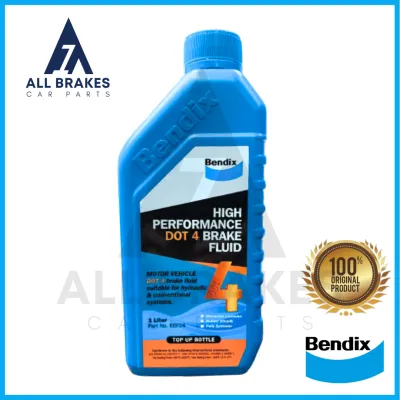
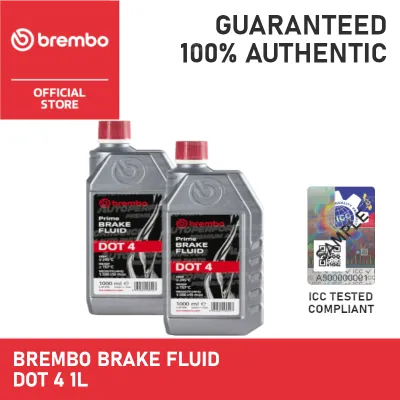
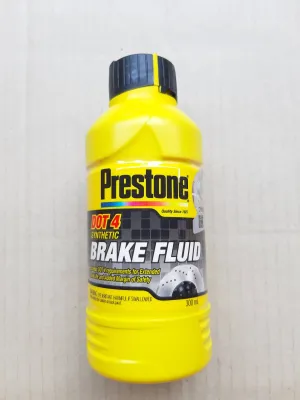
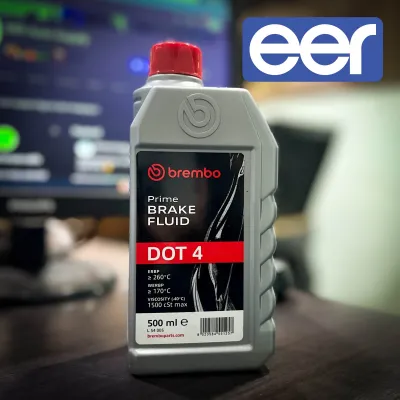
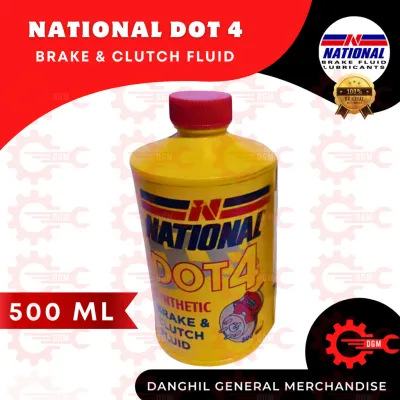
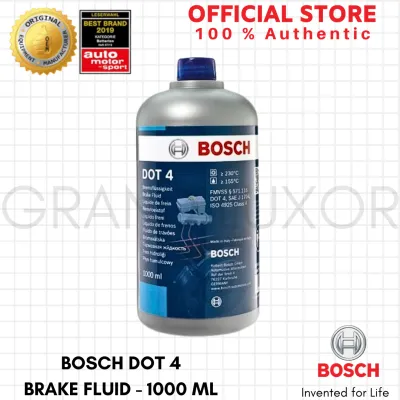
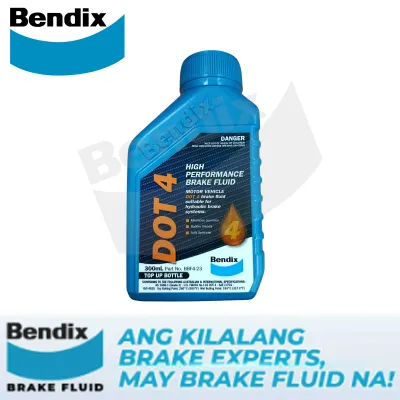
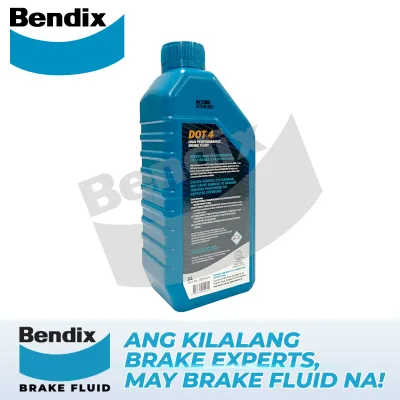
Prices are valid at publication and may change. Please refer to the product page for the latest price.
DOT 3 vs. DOT 4 Brake Fluid: Key Specifications Compared
To understand why these fluids are not always interchangeable, it is necessary to examine the technical standards established by regulatory bodies like the Department of Transportation (DOT) and the Society of Automotive Engineers (SAE). Both DOT 3 and DOT 4 are non-petroleum, glycol-based fluids, but they are formulated to meet different performance thresholds under extreme heat and pressure.

Boiling Points (Dry and Wet)
The most critical performance metric for any brake fluid is its boiling point. When you press your brake pedal, the brake pads squeeze the rotors, generating immense friction and heat. This thermal energy transfers directly into the brake calipers and the surrounding fluid. If the brake fluid reaches its boiling point, it begins to vaporize, creating gas bubbles within the hydraulic lines. Because gas is highly compressible—unlike liquid—pressing the brake pedal will simply compress the gas bubbles instead of moving the caliper pistons. This phenomenon, known as vapor lock, results in a spongy brake pedal and a catastrophic loss of braking force.
Federal Motor Vehicle Safety Standard (FMVSS) No. 116 outlines the minimum temperature thresholds that brake fluids must survive without boiling:
- DOT 3 Minimums: Dry boiling point of 205°C (401°F); Wet boiling point of 140°C (284°F).
- DOT 4 Minimums: Dry boiling point of 230°C (446°F); Wet boiling point of 155°C (311°F).
The “dry” boiling point refers to fresh, uncontaminated fluid straight from a newly opened, sealed container. The “wet” boiling point represents the fluid’s performance after it has absorbed approximately 3.7% water by volume, which typically occurs after one to two years of real-world service. Because DOT 4 maintains a higher wet boiling point, it provides a larger safety margin against vapor lock as the fluid ages. However, actual boiling points vary by brand, and premium formulations often exceed these regulatory minimums. Always inspect the product label to verify the exact specifications of the fluid you purchase.
Chemical Composition and Moisture Absorption
Both DOT 3 and DOT 4 brake fluids utilize a glycol-ether base, making them hygroscopic. This means they naturally and continuously absorb moisture from the surrounding atmosphere. Moisture enters the braking system through microscopic pores in the flexible rubber brake hoses, past the seals in the master cylinder, and whenever the reservoir cap is opened for inspection.
The primary chemical difference lies in the additives. DOT 4 formulations contain borate esters in addition to the standard glycol-ether base. These borate esters chemically react with and bind to free water molecules entering the system. By chemically neutralizing a portion of the absorbed water, the borate esters slow down the rate at which the fluid’s boiling point degrades over time. This chemical buffering helps protect internal metal components from acidic corrosion, though it does not eliminate the eventual need for a complete fluid flush.
Viscosity and ABS Compatibility
Viscosity refers to the thickness or resistance to flow of the fluid. In modern vehicles, viscosity is a safety-critical specification because of how Anti-lock Braking Systems (ABS), Electronic Stability Control (ESC), and Traction Control Systems (TCS) operate. These systems rely on micro-valves and pumps to rapidly apply and release pressure to individual wheels—often pulsing up to 15 to 20 times per second—to prevent wheel lockup and skidding.
At extremely low temperatures, standard brake fluids thicken significantly. Standard DOT 3 fluid has a maximum allowable kinematic viscosity of 1,500 mm²/s (centistokes) at -40°C, while standard DOT 4 allows up to 1,800 mm²/s. Because standard DOT 4 is actually thicker than DOT 3 at lower temperatures, using standard DOT 4 in a system designed for low-viscosity fluid can slow down the response time of the ABS valves.
To address this, manufacturers developed low-viscosity formulations, commonly labeled as DOT 4 LV, Class 6, or ISO 4925 Class 6. These specialized fluids have a maximum viscosity of just 750 mm²/s at -40°C. If your vehicle specifies a low-viscosity fluid, replacing it with standard DOT 3 or standard DOT 4 can delay critical safety system interventions during emergency maneuvers.
Can You Mix DOT 3 and DOT 4 Brake Fluid?
Because both DOT 3 and DOT 4 brake fluids share a glycol-ether foundation, they are chemically compatible and miscible. This means that if you mix them together in a container, they will blend smoothly without separating, forming sludge, or triggering an immediate chemical reaction that destroys your brake lines or rubber seals. However, chemical compatibility does not mean mixing them is safe or advisable for long-term vehicle operation.
When you mix DOT 3 and DOT 4 brake fluids, the resulting mixture adopts the physical properties of the lower-performing fluid. Adding DOT 4 to a system currently filled with DOT 3 will not provide a meaningful performance upgrade. Conversely, adding DOT 3 to a system designed for DOT 4 will immediately dilute and lower the overall wet and dry boiling points of the entire hydraulic system. This reduction in boiling resistance compromises your braking safety margins, especially under demanding driving conditions.
Therefore, mixing these fluids should be reserved strictly for emergency situations. If you find yourself on the road with a dangerously low brake fluid reservoir, topping off with any clean, glycol-based fluid (whether DOT 3 or DOT 4) is far safer than driving with an empty master cylinder, which would draw air into the lines and cause immediate brake failure.
If you must mix the fluids during an emergency, treat this as a temporary fix. Drive your vehicle carefully to a professional service center or your home garage and perform a complete system flush. Bleed the entire hydraulic system and refill it with fresh fluid that matches your manufacturer’s original specifications to restore the intended safety thresholds.
How to Verify Your Vehicle's Brake Fluid Requirement
To maintain the safety and warranty of your vehicle, you must identify its exact brake fluid requirements rather than guessing based on the vehicle’s age, make, or previous service history. Follow these three steps to locate the correct specification:
- Step 1: Inspect the Master Cylinder Reservoir Cap. Open your vehicle's hood and locate the translucent plastic brake fluid reservoir, typically mounted on the driver-side firewall. The plastic cap is almost always stamped or printed with the required fluid type (such as "Use Only DOT 3" or "Use Only DOT 4"). Clean any dirt or road grime off the cap before opening it to prevent debris from falling into the fluid.
- Step 2: Consult the Owner's Manual. Locate the "Specifications," "Capacities," or "Maintenance" section of your vehicle's owner's manual. The manual will list the exact fluid type required, along with any specific viscosity ratings or industry standards (such as FMVSS 116 or ISO 4925) that the fluid must meet.
- Step 3: Identify OEM-Specific Standards. Some vehicles, particularly European imports or specialized performance models, require fluids that meet specific manufacturer approval codes (such as those from VW, BMW, or Mercedes-Benz) that go beyond basic DOT designations. Ensure the bottle you purchase explicitly lists these approvals on its back label.
If you find conflicting information between the reservoir cap and the owner’s manual—which can happen if a previous owner replaced the master cylinder with an aftermarket part—or if you cannot locate the correct specification, do not guess. Stop and consult your vehicle’s manufacturer or a certified automotive technician before adding any fluid to the system.
Maintenance: When to Flush and Replace Brake Fluid
Because glycol-based brake fluids are hygroscopic, their performance degrades continuously from the moment they are installed. As the fluid absorbs moisture, its boiling point drops, and the water content begins to corrode the internal steel lines, aluminum pistons, and delicate valves inside the ABS modulator.
This degradation is highly sensitive to local environmental conditions. In tropical, high-humidity climates like the Philippines, brake fluid absorbs moisture at an accelerated rate compared to dry or temperate regions. If you frequently drive on steep, winding descents—such as the roads leading down from Baguio or Tagaytay—your brakes will generate extreme heat. Under these conditions, moisture-laden fluid with a severely degraded boiling point can easily vaporize, causing sudden and dangerous brake fade.
To prevent brake failure, establish a regular maintenance and testing routine:
- Perform Visual Inspections: Check your brake fluid reservoir during every oil change. Fresh brake fluid is clear to light amber. If the fluid appears dark brown, cloudy, or black, it is contaminated with rubber seal particles, moisture, and oxidized additives, indicating that a flush is overdue. However, color alone is not a precise indicator of moisture content.
- Use an Electronic Moisture Tester: A practical and accurate way to check your fluid is with an electronic brake fluid tester, which measures the electrical conductivity of the fluid to estimate the water percentage. A moisture level of 1% to 2% is acceptable, 3% indicates that a flush should be scheduled soon, and any reading of 4% or higher requires an immediate system flush.
- Follow Recommended Intervals: Most manufacturers recommend a complete brake fluid flush every two years or every 40,000 kilometers, whichever comes first, regardless of the vehicle's mileage.
Always perform a complete flush using fresh fluid from a sealed container. If you are not experienced in bleeding hydraulic brakes or do not have the proper tools to cycle the ABS valves, have this service performed by a qualified professional to ensure no air remains trapped in the system.
Frequently Asked Questions (FAQ)
Is DOT 4 always better than DOT 3?
No, DOT 4 is not universally better for every vehicle. While DOT 4 offers higher dry and wet boiling points, it is also more viscous than DOT 3 at lower temperatures unless you purchase a specialized low-viscosity variant (DOT 4 LV). If your vehicle’s braking system and ABS valves are calibrated specifically for the lower viscosity of DOT 3, switching to standard DOT 4 can alter the response time of your safety systems. The best fluid is strictly the one specified by your vehicle’s manufacturer.
Can I use DOT 5 instead of DOT 3 or DOT 4?
No, you must never mix or substitute DOT 5 with DOT 3 or DOT 4. DOT 5 is a silicone-based fluid, whereas DOT 3, DOT 4, and DOT 5.1 are glycol-ether-based. Silicone-based fluids do not mix with glycol-based fluids. Combining them will cause the fluids to separate, swell and destroy the rubber seals, and create a thick sludge that will clog the ABS valves and cause complete braking system failure. DOT 5 is reserved for specific military, classic car, or motorcycle applications and requires a completely dry, clean system designed for silicone chemistry.
Does the brand of brake fluid matter?
Any reputable brand of brake fluid is acceptable as long as the packaging explicitly states that it meets or exceeds the required safety standards, such as FMVSS No. 116 or ISO 4925. When purchasing fluid, prioritize buying from trusted automotive parts retailers to avoid counterfeit products. Always check that the factory foil seal under the plastic cap is completely intact. Because brake fluid absorbs moisture from the air, never use fluid from a bottle that has been opened and sitting on a shelf for more than a few weeks.
Community discussion
Share your experience or ask a question. Comments are reviewed before publication.