
Quick Answer: Should You Use DOT 3 or DOT 4?
The choice between DOT 3 and DOT 4 brake fluid is determined entirely by your vehicle manufacturer’s specifications. To find the correct fluid for your car, you must check your vehicle’s owner’s manual or look at the label printed on the brake fluid reservoir cap under the hood. Using the wrong fluid type can compromise your braking system’s efficiency and safety.
DOT 4 brake fluid offers higher dry and wet boiling points than DOT 3, making it the standard choice for modern, heavier, or high-performance vehicles. DOT 3 fluid is typically specified for older or standard light-duty commuter cars that operate under normal driving conditions.
As a critical safety rule, you must never use DOT 3 brake fluid in a vehicle that explicitly requires DOT 4. Because DOT 3 has a lower boiling point, it can easily boil under the high temperatures generated by a DOT 4-rated braking system. This boiling creates gas bubbles in the brake lines, which can lead to a sudden, catastrophic loss of braking pressure. Conversely, while you can technically use DOT 4 in a system designed for DOT 3, doing so requires careful consideration of maintenance schedules and system compatibility.
Products mentioned in this guide
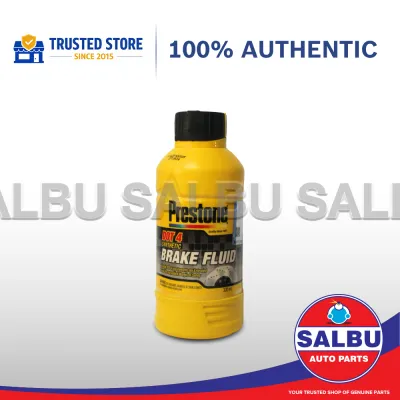
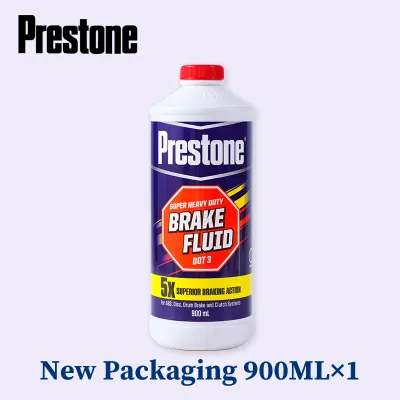
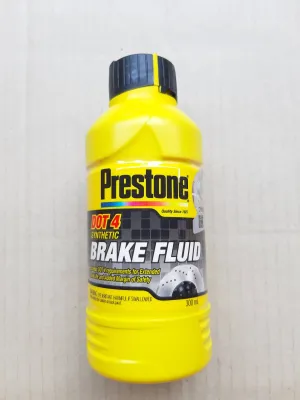
Prices are valid at publication and may change. Please refer to the product page for the latest price.
Key Differences Between DOT 3 and DOT 4 Brake Fluid
To make an informed decision about your vehicle’s maintenance, you must understand the technical and performance distinctions between these two fluid classes. While they look similar to the naked eye, their chemical behaviors under extreme heat and pressure are fundamentally different.

Boiling Points (Dry vs. Wet)
Brake fluid is the hydraulic medium that transfers the force of your foot on the pedal directly to the brake pads at the wheels. This friction-based stopping process generates immense heat, which transfers directly into the brake calipers and the surrounding fluid. If the brake fluid reaches its boiling point, it vaporizes into gas. Because gas is compressible—unlike liquid—stepping on the brake pedal will simply compress the gas bubbles instead of pushing the brake pads, resulting in a dangerous condition known as brake fade.
The Federal Motor Vehicle Safety Standard (FMVSS) 116 establishes the baseline boiling points for brake fluids. The “dry” boiling point refers to the temperature at which brand-new, uncontaminated fluid out of a sealed bottle begins to boil. The “wet” boiling point measures the boiling temperature once the fluid has absorbed 3.7% water by volume, which represents the typical moisture level after several years of real-world use.
Under FMVSS 116 standards, DOT 3 brake fluid must have a minimum dry boiling point of 205°C (401°F) and a minimum wet boiling point of 140°C (284°F). DOT 4 brake fluid raises these safety thresholds significantly, requiring a minimum dry boiling point of 230°C (446°F) and a minimum wet boiling point of 155°C (311°F). This higher thermal resistance makes DOT 4 far more reliable during prolonged braking sequences, such as descending steep mountain passes or navigating continuous stop-and-go traffic.
Moisture Absorption and Service Life
Both DOT 3 and DOT 4 brake fluids are glycol-ether-based liquids. A primary characteristic of glycol-ether fluids is that they are highly hygroscopic, meaning they actively absorb moisture from the surrounding atmosphere over time. Moisture enters the sealed braking system through microscopic pores in the flexible rubber brake hoses, worn seals, and the small breather hole in the reservoir cap.
In tropical climates like the Philippines, high ambient humidity and intense seasonal rainfall accelerate this moisture absorption process. When water mixes with brake fluid, it steadily lowers the fluid’s overall boiling point toward its wet limit. Furthermore, moisture inside the brake lines can cause internal corrosion of steel brake lines, pistons, and expensive anti-lock braking system (ABS) modulators.
While DOT 4 brake fluid offers superior initial boiling points, its chemical formulation—which often includes borate esters to elevate its thermal limits—can cause it to absorb moisture more rapidly or react differently to water contamination over time. Consequently, a vehicle running on DOT 4 fluid may require more frequent testing and flushing than one using DOT 3 to ensure the fluid remains above its safe operating temperature threshold.
Chemical Compatibility and Mixing
Because both DOT 3 and DOT 4 are glycol-ether-based fluids, they are chemically compatible and will not react destructively if mixed. This is a stark contrast to silicone-based DOT 5 fluids, which are completely incompatible with glycol-ether fluids and will gel if mixed. However, just because you can mix DOT 3 and DOT 4 does not mean you should.
If you add DOT 3 fluid to a system currently filled with DOT 4, you will immediately dilute the mixture and lower the overall boiling point of the system to a level closer to the DOT 3 standard. If your vehicle requires DOT 4, this dilution compromises safety by increasing the risk of brake fluid boiling under heavy loads.
If you decide to upgrade a DOT 3 system to DOT 4 to take advantage of the higher boiling points, a simple top-off is insufficient. To achieve the full safety benefits of the higher rating, you must perform a complete system flush. This process involves purging all the old DOT 3 fluid, cleaning any residual moisture or debris from the lines, and refilling the entire system with fresh DOT 4 fluid.
How to Choose the Right Brake Fluid for Your Vehicle
Selecting the correct fluid requires a systematic approach to ensure you do not compromise your vehicle’s mechanical integrity or road safety.
Check the Owner's Manual
Your absolute first step must always be to consult your vehicle manufacturer’s documentation. The owner’s manual contains the precise fluid specifications engineered for your car’s weight, braking system design, and operating temperatures. Additionally, most manufacturers stamp the required fluid type directly onto the plastic cap of the master cylinder reservoir located in the engine bay. Look for embossed text indicating “DOT 3 Only” or “DOT 4 Only.”
Choose DOT 3 if:
- Your vehicle's owner's manual or reservoir cap explicitly specifies DOT 3 fluid.
- The vehicle is an older model or a lightweight commuter car used primarily for short, everyday trips on flat terrain.
- The car is operated under standard driving conditions without carrying heavy payloads, towing trailers, or enduring high-speed performance driving.
Choose DOT 4 if:
- Your vehicle manufacturer specifically mandates the use of DOT 4 fluid.
- The vehicle is equipped with modern, sensitive safety systems such as Electronic Stability Programs (ESP), Traction Control, or advanced Anti-lock Braking Systems (ABS) that require low-viscosity fluid to cycle rapidly through micro-valves.
- You frequently drive in demanding conditions, such as navigating steep mountain descents (for example, driving up or down the highlands of Benguet or Tagaytay), carrying heavy passenger or cargo loads, or enduring severe stop-and-go city traffic in high tropical heat.
Verify First if:
- The brake fluid reservoir cap is missing, damaged, or the text has faded to the point of being illegible.
- The vehicle has been modified with aftermarket high-performance brake calipers, larger rotors, or braided stainless steel lines, which may require a higher-specification fluid than the original factory setup.
- You have recently purchased a secondhand vehicle and have no reliable service records indicating which fluid is currently in the system.
Evaluating Brake Fluid Brands and Specifications
When buying brake fluid, you must look beyond the basic DOT classification on the front of the bottle. High-quality fluids display specific industry certifications that guarantee they have been tested to meet strict safety and performance standards.
Always check the back label for compliance with FMVSS 116, SAE J1703 (for DOT 3), SAE J1704 (for DOT 4), or international ISO 4925 standards. These certifications ensure the fluid will remain stable under extreme temperatures, will not excessively swell or degrade the rubber seals in your braking system, and will provide adequate lubrication to moving parts.
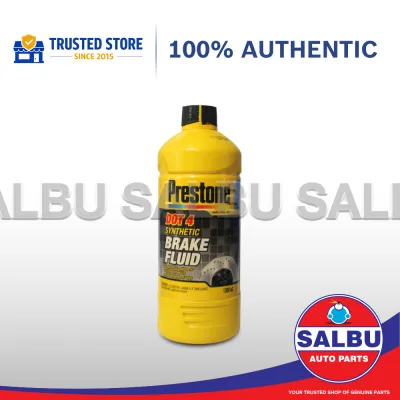
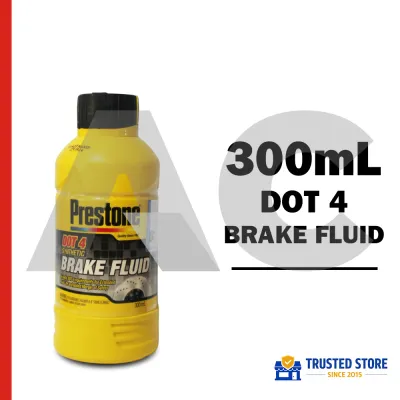
In the Philippine market, reputable automotive brands like Prestone offer highly reliable formulations. When searching for a dependable product, options such as preston brake fluid dot 4 provide excellent thermal stability and reliable performance under high-temperature driving conditions.
Because brake fluid is a critical safety component, you must protect yourself against counterfeit or degraded products. The local automotive market has seen an influx of imitation fluids sold at suspiciously low prices, especially on online marketplaces and unauthorized ecommerce platforms. To ensure your safety, purchase your brake fluid exclusively from authorized brand flagship stores, official distributors, or established physical auto supply shops. Avoid buying unbranded fluids or products with broken seals.
Brake Fluid Maintenance and Safety Rules
Proper handling and regular maintenance of your brake fluid are just as important as choosing the right type. Neglecting this fluid can lead to slow response times, component damage, and potential brake failure.
Visual Inspection
At least once a month, open your car’s hood and visually inspect the brake fluid reservoir. Fresh, clean brake fluid is nearly transparent with a light amber or yellowish tint. As the fluid ages and absorbs moisture, dirt, and microscopic wear particles from the rubber seals, it turns a dark yellow, then brown, and eventually a murky black. If your fluid appears dark brown or cloudy, it is a clear indicator that the fluid has degraded and requires a professional flush.
Flushing Intervals
While you should always prioritize the specific maintenance schedule detailed in your vehicle’s owner’s manual, a general industry guideline is to flush and replace your brake fluid every two years or every 40,000 kilometers, whichever comes first. In highly humid tropical environments, you may need to test the moisture level of your fluid annually using a digital brake fluid tester, which measures the boiling point or moisture percentage directly.
Handling Safety
Brake fluid is a highly corrosive chemical compound. It acts as an aggressive solvent that will quickly strip, blister, and ruin your vehicle’s paint and clear coat down to the bare metal if spilled. If you accidentally spill any fluid on your car’s bodywork, do not wipe it off dry, as this can smear the paint; instead, immediately flush the area with large amounts of soapy water to neutralize and wash the fluid away. Additionally, brake fluid is toxic to humans and pets. Always wear protective gloves and safety glasses when handling it, and dispose of used fluid at an authorized recycling or hazardous waste center.
Professional Service Boundary
Performing a brake fluid flush or bleeding the brake lines to remove trapped air is a highly precise, safety-critical procedure. If air bubbles are introduced into the hydraulic lines during a DIY service, the brake pedal will feel soft and spongy, and your vehicle’s stopping distance will increase dramatically. Modern vehicles with ABS and traction control systems often require specialized diagnostic scan tools to open internal solenoid valves during the bleeding process. For these reasons, it is strongly recommended that you have a qualified, professional mechanic perform all brake fluid flushes and system bleeding at a certified service center.
Frequently Asked Questions (FAQ)
Can I use DOT 4 instead of DOT 3?
Yes, in most standard passenger vehicles designed for DOT 3, you can safely use DOT 4 fluid as an upgrade. DOT 4 is backward compatible with DOT 3 systems and offers higher dry and wet boiling points, which provides a greater safety margin against brake fade under heavy braking. However, because DOT 4 can absorb moisture differently, you must monitor its condition closely and adhere strictly to regular service intervals. Remember the absolute safety rule: you must never use DOT 3 fluid in a system that explicitly requires DOT 4, as the lower boiling point of DOT 3 can cause dangerous brake fluid vaporization.
How do I know if my brake fluid needs changing?
Several physical symptoms indicate that your brake fluid needs immediate professional attention. If you feel a soft, spongy, or mushy sensation when pressing the brake pedal, or if you have to press the pedal closer to the floorboard than usual to stop, air or moisture has likely contaminated the fluid. Other signs include a noticeable increase in stopping distances, an illuminated ABS or brake warning light on your dashboard, or a dark, murky appearance of the fluid inside the reservoir. If you experience any of these symptoms, have your braking system inspected by a qualified professional immediately.
Community discussion
Share your experience or ask a question. Comments are reviewed before publication.