
When keeping your vehicle safe on the road, few components are as critical as your brake fluid. The direct answer to whether your car needs DOT 3 or DOT 4 depends entirely on your vehicle manufacturer’s specification. This information is typically stamped directly onto your brake fluid reservoir cap or detailed inside your owner’s manual.
While DOT 4 is often perceived as an upgrade due to its higher boiling points, it is not a universal replacement. Braking systems are engineered around specific fluid viscosities, chemical compositions, and maintenance cycles. Using the wrong fluid or mixing them without a complete system flush can compromise your braking efficiency, alter pedal feel, and lead to accelerated component wear.
Quick Answer: Which Brake Fluid Should You Use?
To determine which brake fluid your vehicle requires, start by locating the physical markings on the master cylinder reservoir cap under the hood. If the cap is dirty or illegible, consult the technical specifications section of your vehicle’s owner’s manual. The manufacturer has calibrated the anti-lock braking system (ABS), electronic stability control (ESC), and internal rubber seals to perform optimally with a specific fluid rating.
Products mentioned in this guide
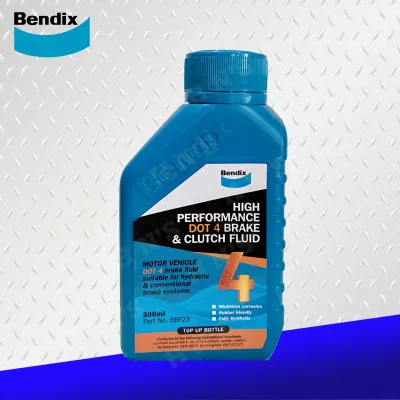
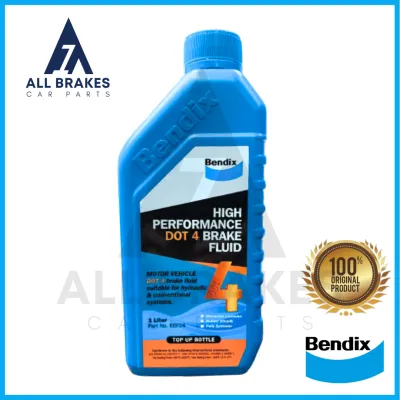
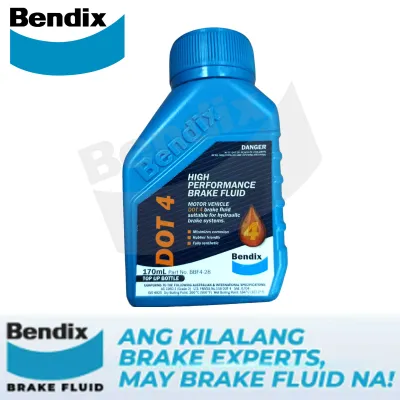
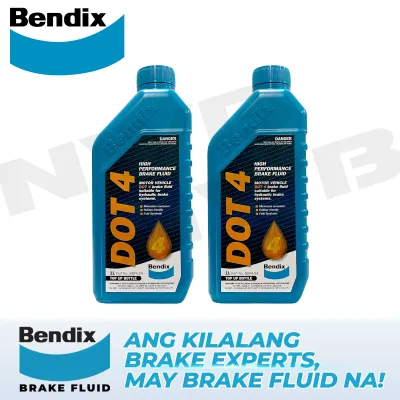
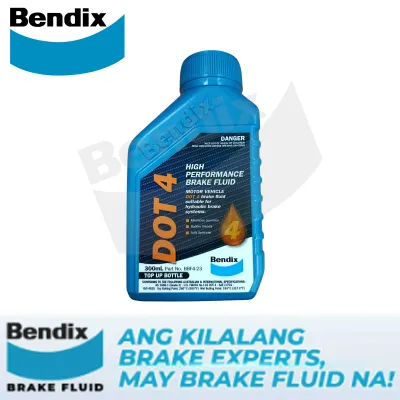
Prices are valid at publication and may change. Please refer to the product page for the latest price.
Because brakes are a primary safety system, always consult your specific vehicle documentation to verify compatibility, road legality, and safety impact before performing any fluid swap or top-up. Never infer compatibility simply from the generic fluid category. While DOT 4 brake fluid features higher thermal resistance, simply pouring it into a system designed for DOT 3 is not always the best course of action. DOT 4 fluids generally absorb moisture at a faster rate, which can shorten your service intervals. If your car is a standard commuter vehicle designed for DOT 3, switching to DOT 4 without adjusting your maintenance schedule might leave you with degraded fluid sooner than expected.
Conversely, if your vehicle specifies DOT 4, you must never use DOT 3. Doing so lowers the boiling threshold of your hydraulic system, making it highly susceptible to brake fade under normal driving temperatures. Always prioritize safety by adhering strictly to the manufacturer’s designated fluid specification to ensure reliable stopping power.
Understanding DOT 3 and DOT 4 Brake Fluids
The term “DOT” refers to the Department of Transportation, an administrative body that establishes safety and performance standards for automotive fluids. These standards are recognized and adopted globally, including by regulatory bodies and automotive service networks in the Philippines. The DOT rating system ensures that any brake fluid sold on the market meets minimum performance baselines, particularly regarding boiling points, viscosity, and chemical stability.

Both DOT 3 and DOT 4 brake fluids are formulated from a glycol-ether base. This common chemical foundation means they share similar basic properties, such as being non-compressible hydraulic fluids designed to transfer force from your foot on the brake pedal directly to the brake calipers and pads. However, the exact chemical formulations, including the specific polyglycols and additive packages used by manufacturers, differ significantly to achieve their respective DOT ratings.
These additive packages include corrosion inhibitors, anti-foaming agents, and pH stabilizers. These chemicals protect the intricate metal and rubber components inside your braking system, such as the master cylinder pistons, steel brake lines, and flexible rubber hoses. While they share a similar base, the advanced chemical structure of DOT 4 is designed to handle more intense thermal energy, making it suitable for modern vehicles with compact, high-heat braking systems.
Key Performance Differences: Boiling Points and Moisture Absorption
The primary differences between DOT 3 and DOT 4 brake fluids center on how they manage heat and environmental moisture. Understanding these physical characteristics is essential for appreciating why choosing the correct fluid is a critical safety decision rather than a simple product preference.
Dry and Wet Boiling Points
Brake fluid operates under extreme pressure and temperature. When you press the brake pedal, the friction between the brake pads and rotors generates intense heat, which is transferred directly into the brake calipers and the hydraulic fluid. If the fluid reaches its boiling point, it undergoes a physical phase change from a liquid to a gas. Because gas is compressible, unlike liquid, boiling fluid creates gas bubbles in your brake lines, resulting in a spongy pedal and a dangerous loss of stopping power known as vapor lock or brake fade.
To measure a fluid’s resistance to this phenomenon, the industry uses two key metrics: the dry boiling point and the wet boiling point. The dry boiling point refers to the temperature at which brand-new, completely uncontaminated brake fluid will boil. This measurement assumes there is zero percent water content in the system. The wet boiling point, on the other hand, measures the boiling temperature once the fluid has absorbed approximately 3.7% water by volume, which represents the typical moisture level of brake fluid after several years of real-world use.
DOT 4 brake fluid is engineered to provide higher boiling points than DOT 3 in both dry and wet states. This higher thermal threshold makes DOT 4 highly effective for vehicles that experience demanding driving conditions, such as heavy stop-and-go city traffic, towing heavy loads, or descending steep mountain roads. By maintaining a higher wet boiling point, DOT 4 offers an extra margin of safety against brake fade as the fluid ages and inevitably absorbs moisture.
Hygroscopic Nature and Moisture Absorption
Both DOT 3 and DOT 4 brake fluids are hygroscopic, meaning they actively attract and absorb moisture from the surrounding atmosphere. Even in a sealed braking system, water molecules gradually find their way inside. Moisture penetrates the system through microscopic pores in the flexible rubber brake hoses, through the seals around the master cylinder, and every time the reservoir cap is opened for inspection or top-ups.
In a tropical, high-humidity environment like the Philippines, this hygroscopic behavior is significantly accelerated. The constant high moisture content in the air means that brake fluids will absorb water faster than they would in a dry, arid climate. As water mixes with the glycol-ether fluid, it lowers the overall boiling point of the mixture, bringing it closer to the boiling point of water. This dramatically increases the risk of the fluid boiling during hard braking.
While DOT 4 starts with a higher boiling point, its chemical formulation often causes it to absorb moisture more rapidly than DOT 3. This means that although a DOT 4 fluid provides superior initial heat resistance, its performance can degrade more quickly if it is not serviced regularly. Consequently, vehicles using DOT 4 often require more frequent fluid flushes to maintain their safety advantages, highlighting why the “better” fluid is always the one that matches your vehicle’s designated maintenance schedule.
Compatibility and Mixing: Can You Switch or Blend Them?
A common question among vehicle owners is whether they can mix DOT 3 and DOT 4 brake fluids in an emergency or during a top-up. From a purely chemical standpoint, because both fluids are glycol-ether based, they are compatible and will not cause immediate chemical reactions, gelling, or precipitate formation. However, mixing them is strongly discouraged for critical safety reasons.
When you mix DOT 3 and DOT 4 fluids, you do not get a fluid with average performance. Instead, you compromise the chemical integrity of the higher-rated fluid. The boiling point of the mixture drops significantly, often closer to the lower threshold of the DOT 3 fluid. If your vehicle requires DOT 4 due to high-heat operating conditions, adding DOT 3 to top up the reservoir can dangerously lower the system’s boiling point, putting you at risk of sudden brake failure under heavy loads or during emergency braking maneuvers.
Additionally, brake fluids are highly corrosive chemicals. They must be used strictly for their label-authorized hydraulic purposes. Spilling brake fluid on painted car panels, plastic trim, or rubber suspension seals can cause immediate, irreversible damage, as a fluid’s rating does not prove its safety for non-metallic surfaces.
This brings us to the common myth of “upgrading” a system designed for DOT 3 by simply pouring in DOT 4. While it is generally safe to use DOT 4 in a vehicle that specifies DOT 3—provided you perform a complete system flush to remove all old fluid—it may not provide any noticeable real-world benefit for a standard daily commuter. Furthermore, because DOT 4 can absorb moisture faster, you may end up needing to flush your system more frequently than the original DOT 3 maintenance schedule requires.
Conversely, putting DOT 3 into a system that explicitly requires DOT 4 is highly dangerous. Modern braking systems designed for DOT 4 are engineered to operate at higher temperatures and may feature advanced ABS and traction control systems calibrated for the specific viscosity and thermal properties of DOT 4. Using a lower-rated fluid in these vehicles can lead to rapid fluid degradation, premature boiling, and catastrophic brake failure. Always check your vehicle manufacturer’s guidelines, and if you must switch fluid types, ensure a qualified professional performs a complete flush of the entire hydraulic system.
How to Choose the Right Brake Fluid for Your Vehicle
Selecting the correct brake fluid requires a systematic approach based on your vehicle’s specifications, driving habits, and maintenance preferences. Rather than guessing or choosing based on price alone, use this conditional framework to make an informed decision:
Choose DOT 3 if:
- Manufacturer Recommendation: Your vehicle's owner's manual or reservoir cap explicitly specifies DOT 3.
- Driving Habits: Your daily driving consists of normal, non-demanding commutes, such as standard highway driving or light city traffic.
- Maintenance Preference: You prefer a longer service interval as recommended by your vehicle manufacturer, and you want to minimize the frequency of complete system flushes.
Choose DOT 4 if:
- Manufacturer Requirement: Your vehicle manufacturer explicitly requires DOT 4 fluid. This is common in many modern European, American, and Japanese vehicles equipped with advanced electronic braking systems.
- Demanding Conditions: You frequently drive in demanding environments, such as steep mountainous regions, or use your vehicle for towing heavy loads or carrying heavy cargo.
- Performance Upgrades: You are performing a complete system flush on a DOT 3 vehicle and want the added thermal safety margin of a high-quality product, such as bendix brake fluid dot 4, while being fully prepared to adhere to a stricter maintenance and flushing schedule.
Verify first if:
- Fluid Condition: You are unsure of the current fluid type in your system, or if the fluid in the reservoir appears dark, cloudy, or contaminated with debris. In these cases, a simple top-up is insufficient; you should have the system inspected and flushed.
- Technical Specifications: You are considering a high-performance or heavy-duty application. Always cross-reference the product label with your vehicle's technical requirements to ensure compatibility before making a purchase.
Before purchasing any brake fluid, always read the product label carefully. Look for clear indications of the DOT rating and verify that the bottle is factory-sealed. Never purchase or use brake fluid from a container that has already been opened or has a damaged seal, as the fluid inside has likely already begun absorbing moisture from the air, reducing its effectiveness before it even enters your vehicle.
Maintenance and Replacement Best Practices
Brake fluid is a consumable safety item that degrades over time, regardless of how many kilometers you drive. To ensure your vehicle’s braking system remains reliable, you must establish a regular inspection and maintenance routine.
There are several visual and physical indicators that your brake fluid is due for a replacement. Healthy brake fluid should be relatively clear with a light amber or golden tint. If you inspect your reservoir and notice the fluid has turned dark brown, cloudy, or contains visible black particles, this is a clear sign of oxidation, moisture contamination, and the breakdown of internal rubber components. Physically, a spongy or soft brake pedal feel, an increased stopping distance, or the illumination of your ABS or brake warning light on the dashboard are urgent signs that your hydraulic system requires immediate attention.
When performing maintenance or topping up your fluid, always use fresh fluid from a sealed container. Because glycol-based fluids are highly hygroscopic, an opened bottle of brake fluid left on a garage shelf will rapidly absorb moisture from the ambient air. Within a matter of weeks, the fluid inside an opened bottle can absorb enough water to lower its boiling point to unsafe levels. For this reason, it is best to purchase brake fluid in smaller containers that can be fully utilized during a single service, and safely discard any remaining fluid left in opened bottles.
Given the immense safety risks associated with hydraulic brake systems, any maintenance, bleeding, or component disassembly must strictly follow the original-vehicle instructions. If you encounter conflicting guidelines between your aftermarket fluid bottle and your car’s service manual, stop immediately and consult the vehicle manufacturer or a certified professional technician. Qualified installation and servicing by a professional mechanic are essential to ensure the system functions correctly under emergency braking conditions.
Frequently Asked Questions (FAQ)
Can I use DOT 5 instead of DOT 3 or DOT 4?
No, you must never use DOT 5 brake fluid in a system designed for DOT 3 or DOT 4. DOT 5 is a silicone-based fluid, which is chemically entirely different from glycol-ether-based DOT 3 and DOT 4 fluids. Mixing silicone-based and glycol-based fluids will cause them to react, leading to severe gelling of the fluid, rapid swelling and destruction of the rubber seals, and immediate, catastrophic failure of your entire braking system. While DOT 5.1 is a glycol-based fluid that is chemically compatible with DOT 3 and DOT 4, standard DOT 5 must be kept strictly separate and used only in specialized systems designed specifically for it.
How often should I change my brake fluid in the Philippines?
In the Philippines, the combination of high tropical temperatures and intense relative humidity accelerates the rate at which brake fluid absorbs moisture. While many vehicle manufacturers recommend a standard replacement interval of every two years or 40,000 kilometers, the local climate makes annual inspections highly advisable. Having a trusted mechanic test your brake fluid’s moisture content and visual condition every 12 months ensures that you can catch high water contamination early, protecting your braking performance and preventing internal corrosion of costly ABS components.
Community discussion
Share your experience or ask a question. Comments are reviewed before publication.