
Choosing the correct hydraulic fluid for your vehicle’s braking system is one of the most critical maintenance decisions you can make. The braking system relies on incompressible liquid to transmit force from your foot on the pedal directly to the brake calipers at the wheels. If this fluid fails, your ability to stop the vehicle is severely compromised. When comparing DOT 3 and DOT 4 options, the correct choice is always the specific fluid formulation recommended by your vehicle’s original equipment manufacturer (OEM).
While many drivers assume that a higher DOT number represents a universally superior upgrade, this is a common misconception that can lead to maintenance issues or system incompatibility. DOT 4 fluid features higher minimum boiling points than DOT 3, but it also exhibits different chemical properties, moisture absorption rates, and service life expectations. You must never downgrade your fluid—such as using DOT 3 in a system designed for DOT 4—as this can lead to dangerous brake fade under normal operating conditions. Always verify your vehicle’s exact requirements by consulting your owner’s manual or checking the embossed label on the master cylinder reservoir cap before purchasing any replacement fluid.
Understanding DOT 3 and DOT 4: What the Ratings Mean
To make an informed decision about your braking system, you must first understand what the Department of Transportation (DOT) ratings actually signify. These classifications are established by regulatory standards, such as the Federal Motor Vehicle Safety Standard (FMVSS) No. 116 and SAE J1703. These standards dictate the minimum physical and chemical performance criteria that hydraulic fluids must meet to be legally sold and operated on public roads. Both DOT 3 and DOT 4 are glycol-ether based synthetic formulations, meaning they share a similar chemical foundation, but they are blended with different additive packages to meet distinct performance thresholds.
Products mentioned in this guide
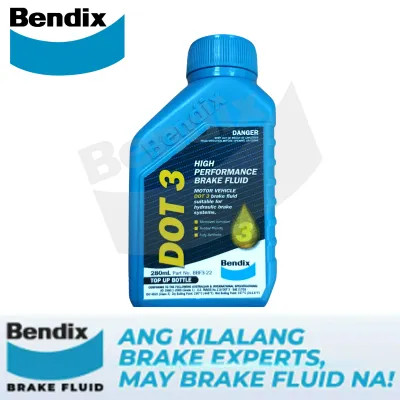
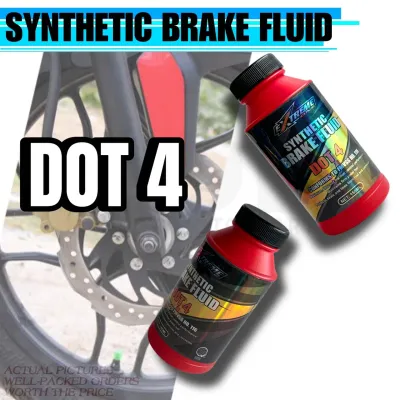
Prices are valid at publication and may change. Please refer to the product page for the latest price.
The primary metrics used to classify these fluids are the “Dry Boiling Point” and the “Wet Boiling Point.” The dry boiling point refers to the temperature at which the fluid will begin to boil when it is brand new, fresh out of a hermetically sealed container, with absolutely zero percent water contamination. The wet boiling point represents the boiling temperature of the fluid after it has absorbed a standardized volume of water—specifically 3.7% water by volume. This standardized wet test simulates the real-world condition of the fluid after it has spent several months or years in a vehicle’s braking system, naturally absorbing moisture from the surrounding environment.
Because DOT 4 fluids are formulated with advanced additives, including borate esters, they are engineered to meet higher minimum boiling thresholds than DOT 3 fluids. Under international safety standards, a fluid must exceed these minimum dry and wet temperatures to receive its respective DOT certification. These higher thresholds ensure that the fluid can withstand the extreme thermal energy generated by modern braking systems, especially in heavier vehicles, turbocharged models, or vehicles designed for performance driving. However, these superior temperature ratings come with distinct chemical trade-offs that affect how the fluid behaves over time.
DOT 3 vs. DOT 4: Boiling Points, Moisture, and Maintenance
To understand how these two fluids perform in daily driving, you must look at how heat, moisture, and time interact with their chemical structures. A fluid’s theoretical performance on a laboratory test bench translates directly to how your vehicle stops when descending a steep road or navigating heavy traffic.

Boiling Point Performance and Brake Fade
When you press your brake pedal, the brake pads press against the spinning brake rotors, creating immense friction to slow the vehicle down. This friction generates extreme heat, which is transferred from the brake pads to the metal caliper pistons, and ultimately into the brake fluid resting directly behind those pistons. If the temperature of the caliper exceeds the boiling point of the brake fluid, the liquid will begin to vaporize, turning into gas bubbles within the brake lines.
Unlike liquid, which is virtually incompressible, gas is highly compressible. If vapor bubbles form in your brake lines—a dangerous condition known as vapor lock—pressing the brake pedal will simply compress the gas bubbles rather than pushing the caliper pistons. This results in a soft, spongy brake pedal and a sudden, terrifying loss of stopping power known as brake fade. By utilizing a high-quality brake fluid DOT 4 with its elevated dry and wet boiling points, you provide your vehicle with a much larger thermal safety margin, ensuring the fluid remains a solid liquid even under extreme operating temperatures.
Moisture Absorption in Humid Climates
Both DOT 3 and DOT 4 fluids are hygroscopic, meaning they act like a sponge, actively attracting and absorbing moisture from the atmosphere. This moisture absorption does not require a visible leak; water vapor slowly permeates into the system over time through the microscopic pores of flexible rubber brake hoses, the master cylinder reservoir cap seal, and every time the reservoir is opened for inspection or servicing.
In tropical environments with high relative humidity, such as the Philippines, this moisture absorption process is significantly accelerated. When water enters the braking system, it does not remain separate; it chemically binds with the glycol-ether base. While this prevents free water from pooling and causing immediate localized boiling or freezing, it continuously lowers the overall boiling point of the mixture. Although DOT 4 fluids contain borate esters designed to chemically neutralize water and maintain a higher wet boiling point, they often absorb moisture at a faster initial rate than DOT 3 fluids once exposed to humid air. This means that a DOT 4 fluid can degrade to its minimum safety limits more rapidly than a DOT 3 fluid if it is not carefully monitored.
Service Life and Replacement Intervals
Because of their differing chemical compositions and moisture absorption characteristics, DOT 3 and DOT 4 fluids require different maintenance schedules. DOT 3 fluid is highly stable over long periods, often lasting up to two years or more in standard passenger vehicles under moderate driving conditions before requiring a flush. Its boiling point drops gradually, making it a reliable, low-maintenance choice for everyday commuter cars that do not subject the brakes to extreme thermal stress.
In contrast, because DOT 4 fluid is highly active in binding with moisture, its high-temperature performance advantages can drop more sharply once it becomes saturated. Consequently, manufacturers utilizing DOT 4 systems typically mandate shorter service intervals—frequently requiring a complete system flush every 12 to 18 months, regardless of mileage. Rather than assuming a higher DOT rating allows you to neglect your maintenance, you must recognize that choosing DOT 4 actually commits you to a more rigorous and frequent service schedule to keep the system safe. Regularly testing your fluid with electronic moisture pens or chemical test strips is highly recommended over relying solely on time or mileage intervals.
Can You Mix DOT 3 and DOT 4 Brake Fluid? (Safety Rules)
One of the most common questions car owners ask is whether these two fluids can be mixed together in the same reservoir. Because both DOT 3 and DOT 4 are glycol-ether based fluids, they are chemically compatible. This means that if you are in an emergency situation—such as discovering a low fluid level while traveling—and you need to top up your reservoir, you can safely add DOT 4 fluid to a system containing DOT 3, or vice versa, without causing a chemical reaction, clumping, or immediate damage to your brake seals.
However, while mixing them will not destroy your braking system, it does carry a significant performance penalty. When you mix DOT 3 and DOT 4, the resulting mixture’s boiling point is compromised, dropping down close to the level of the lower-performing DOT 3 fluid. If your vehicle specifically requires DOT 4 due to high thermal loads, adding DOT 3 to top it off will dangerously lower your safety margin against vapor lock. Therefore, mixing these fluids should only be treated as a temporary, emergency measure to get you safely to a service center, rather than a permanent maintenance practice.
Critical Safety Warning: Under no circumstances should you ever mix glycol-based fluids (DOT 3, DOT 4, or DOT 5.1) with silicone-based brake fluid (DOT 5). DOT 5 is a completely different chemical compound designed for highly specific applications, such as military vehicles or certain classic cars. If silicone-based DOT 5 is mixed with glycol-based DOT 3 or DOT 4, the two fluids will not blend; instead, they will react chemically to form a thick, jelly-like sludge. This sludge will rapidly clog the small orifices inside your anti-lock braking system (ABS) modulator, cause your rubber seals to swell and fail, and ultimately lead to a complete and catastrophic failure of your entire braking system.
If you discover that the wrong fluid has been added to your reservoir, or if you are planning to transition your vehicle from one fluid standard to another, you must perform a complete system flush. This process involves draining all the old fluid from the master cylinder, lines, and calipers, and purging the system with fresh, clean fluid of the correct specification. Because of the critical safety risks associated with trapped air bubbles or residual contaminated fluid, this procedure should be performed by a qualified professional mechanic using dedicated pressure-bleeding equipment.
How to Choose the Right Brake Fluid for Your Vehicle
Selecting the correct fluid for your vehicle does not have to be complicated. By following a structured, safety-first framework, you can ensure your vehicle’s braking system remains reliable and responsive.
- Step 1: Verify the OEM Requirement. Your primary and absolute authority is your vehicle manufacturer. Open your hood and inspect the plastic cap of the brake fluid master cylinder reservoir; the required standard (usually "Use Only DOT 3" or "Use Only DOT 4") is almost always embossed directly onto the plastic. Cross-reference this by reading the maintenance section of your vehicle owner's manual to confirm the factory specification, as well as any specific brand or viscosity requirements.
- Step 2: Assess Your Driving Conditions. If your owner's manual explicitly states that both DOT 3 and DOT 4 are acceptable for use, evaluate your typical driving environment. If you primarily drive a lightweight compact car for daily commuting on flat city roads, DOT 3 is highly practical, cost-effective, and offers a longer service life. However, if you frequently drive a heavy SUV, tow trailers, carry heavy cargo, or regularly navigate steep mountain passes—such as driving up to Baguio or through the rugged terrain of the Cordillera region—the superior heat resistance of a high-quality brake fluid DOT 4 is highly recommended to protect against brake fade.
- Step 3: Check the Product Label. When purchasing brake fluid, carefully inspect the container. Ensure the label explicitly states compliance with recognized international safety standards, such as FMVSS No. 116, SAE J1703, or ISO 4925. Only purchase fluid that comes in a factory-sealed metal or high-density plastic bottle. Once a brake fluid bottle is opened, it immediately begins absorbing moisture from the air; never use an open bottle of brake fluid that has been sitting on a garage shelf for more than a few weeks.
- Step 4: Factor in the Local Climate. Living in a highly humid, tropical climate means your brake fluid is under constant environmental attack from water vapor. Do not fall into the trap of buying an expensive, ultra-high-performance racing fluid assuming it will last longer. High-performance racing fluids often have exceptionally high dry boiling points but can be highly hygroscopic, requiring extremely frequent flushes. For daily driving in humid conditions, a standard, high-quality passenger-car formulation from a reputable brand, combined with strict adherence to a 1-to-2-year flush schedule, provides the best balance of safety and longevity.
If you ever encounter conflicting information, or if you are unsure of your vehicle’s service history, consult a certified automotive technician. Brakes are your vehicle’s most critical safety component; when in doubt, always defer to professional expertise to ensure your system is properly serviced and road-legal.
Frequently Asked Questions (FAQ)
Is DOT 4 always a better upgrade than DOT 3?
No, DOT 4 is not a universal upgrade. While DOT 4 fluid offers higher dry and wet boiling points, making it highly effective at resisting heat under heavy braking, it also absorbs moisture more aggressively than DOT 3. This rapid moisture absorption means that DOT 4 requires more frequent system flushes—often every 12 to 18 months—to maintain its performance. If your vehicle manufacturer specifies DOT 3 and you do not engage in heavy towing or mountain driving, upgrading to DOT 4 may unnecessarily increase your maintenance workload without providing any practical benefit.
What happens if I accidentally use DOT 3 in a DOT 4 system?
Using DOT 3 in a system designed specifically for DOT 4 poses a severe safety risk. Because DOT 3 has lower dry and wet boiling points, the fluid may boil under the high thermal operating conditions that the vehicle’s braking system was engineered to produce. This can quickly lead to vapor lock, resulting in a spongy brake pedal, significantly increased stopping distances, or complete brake failure during heavy braking, steep descents, or emergency stops. If you accidentally put DOT 3 into a DOT 4 system, you should have the system completely flushed and refilled with the correct fluid as soon as possible.
How can I tell if my brake fluid needs to be flushed?
There are several clear indicators that your brake fluid is due for a replacement. Visually, fresh brake fluid should be clear with a light amber or yellow tint; if your fluid has turned dark brown, cloudy, or contains visible black particles of degraded rubber seal material, it is highly contaminated and must be flushed immediately. Additionally, if your brake pedal feels unusually soft, spongy, or requires you to press it closer to the floor to achieve stopping power, vapor lock may already be occurring. The most accurate way to verify fluid health is to have a mechanic test the moisture content using an electronic brake fluid tester or chemical test strips; any reading showing a moisture level of 3% or higher indicates the fluid has reached its safety limit and requires an immediate flush.
Community discussion
Share your experience or ask a question. Comments are reviewed before publication.