
Choosing between DOT 3 and DOT 4 brake fluid is not a matter of picking an arbitrary upgrade; it is a critical safety decision dictated primarily by your vehicle manufacturer’s engineering specifications. While both fluids are glycol-ether based and serve the same fundamental hydraulic purpose, their chemical formulations handle heat and moisture differently. In tropical climates like the Philippines, where high relative humidity is a constant factor, understanding these differences is essential for maintaining reliable stopping power.
Your vehicle’s braking system relies on fluid pressure to transmit the force of your foot on the pedal directly to the brake calipers at the wheels. Because liquids are virtually incompressible, this hydraulic link is highly efficient. However, if the fluid degrades or boils under extreme heat, the system fails. Selecting the correct fluid type ensures that this hydraulic link remains solid under all operating conditions.
Key Differences Between DOT 3 and DOT 4 Brake Fluid
To understand how these fluids differ, it helps to look at their chemical foundation. Both DOT 3 and DOT 4 are formulated using a glycol-ether base. This chemical structure is chosen because it remains stable across a wide temperature range and does not compress under extreme hydraulic pressure. However, this base also makes both fluids highly hygroscopic, meaning they actively absorb moisture from the surrounding air over time.
Products mentioned in this guide
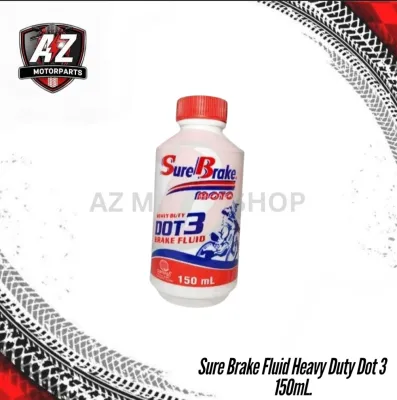
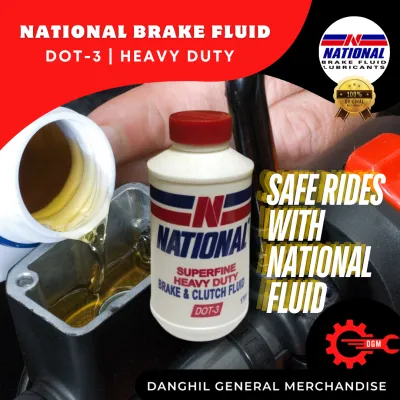
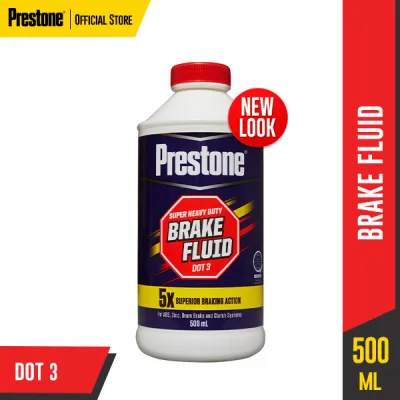
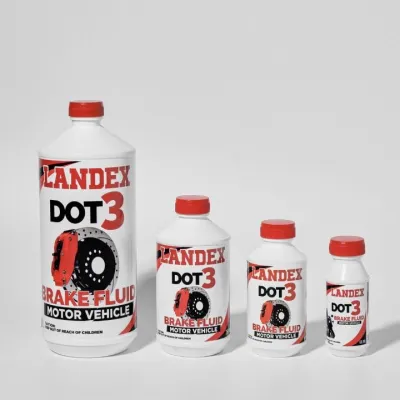
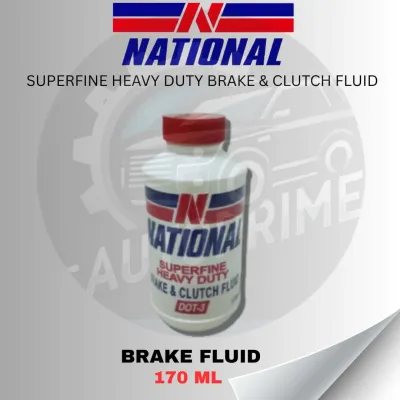
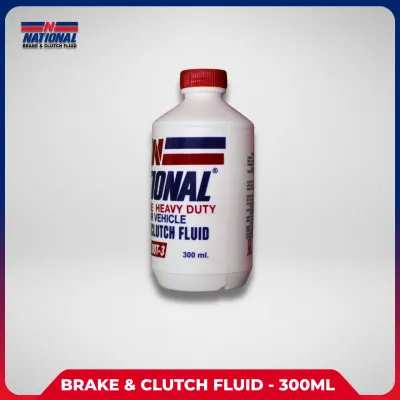
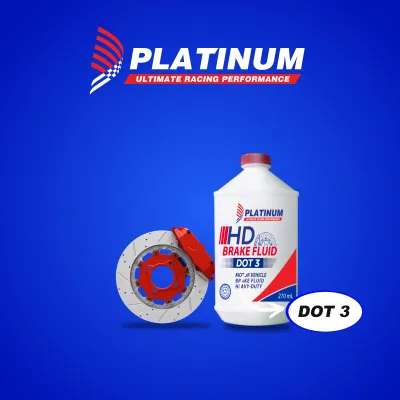
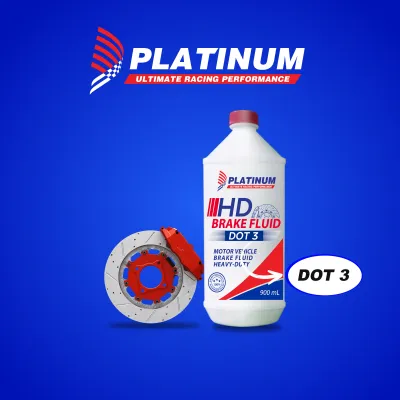
Prices are valid at publication and may change. Please refer to the product page for the latest price.
Moisture absorption is actually an intentional safety design. If brake fluid did not absorb water, any moisture entering the system would pool in low points of the brake lines. In cold climates, this water could freeze; in hot climates, it would boil instantly, causing immediate brake failure. By absorbing and distributing the water molecules evenly throughout the fluid, the system prevents localized water pooling and reduces internal corrosion of metal brake lines.
However, this moisture absorption comes with a significant trade-off. As the water content within the fluid increases, the overall boiling point of the mixture drops. This behavior is categorized into two distinct metrics: the “dry” boiling point and the “wet” boiling point. The dry boiling point refers to the temperature at which fresh, uncontaminated fluid from a newly opened container begins to boil. The wet boiling point represents the temperature threshold after the fluid has absorbed a specific percentage of water—typically around 3.7% by volume—which generally occurs after one to two years of real-world service.
When brake fluid boils, it transitions from a liquid to a gas. Because gas is highly compressible, pressing the brake pedal simply compresses the gas bubbles instead of pushing the brake pads against the rotors. This dangerous phenomenon, known as vapor lock or brake fade, results in a soft, spongy pedal and a drastic loss of stopping power.
While DOT 4 fluids generally feature higher dry and wet boiling points than DOT 3 fluids due to different chemical additives, you should never rely on generic assumptions. Always check the physical product label before purchasing. Certified brake fluids will display compliance with standards such as FMVSS 116 or ISO 4925, along with the exact minimum boiling points guaranteed by the manufacturer.
Why Manufacturer Specifications Dictate Your Choice
The absolute authority on which brake fluid to use is your vehicle’s manufacturer. This specification is not a casual recommendation; it is an engineering requirement based on the design of the master cylinder, the caliper pistons, the anti-lock braking system (ABS) valves, and the specific elastomer seals used throughout the hydraulic circuit. You can easily locate this requirement by checking your vehicle’s owner’s manual or by inspecting the top of the master cylinder reservoir cap under the hood, where the required DOT rating is typically embossed.

Using a lower DOT rating than specified by the manufacturer introduces severe safety risks. If your vehicle requires DOT 4 and you fill it with DOT 3, you are operating with a lower thermal safety margin. Under heavy braking, the fluid may reach its boiling point much sooner than the system designers anticipated, leading to sudden brake fade. Additionally, the chemical additives in DOT 3 may not be fully compatible with the internal components of a system designed exclusively for DOT 4, potentially leading to accelerated wear of the ABS modulator.
Furthermore, using the incorrect fluid can cause physical damage to the rubber seals and hoses within the braking system. Different DOT formulations contain distinct packages of corrosion inhibitors, pH buffers, and lubricity agents. If these chemicals react negatively with the specific rubber compounds in your vehicle’s seals, the seals can swell, soften, or degrade. This leads to internal fluid leaks, a loss of hydraulic pressure, and eventually, complete brake system failure.
While upgrading from DOT 3 to DOT 4 is often permissible due to the higher thermal resistance of DOT 4, it is not a universal upgrade. Some older vehicles utilize natural rubber seals that can react poorly to the synthetic additives in certain high-performance DOT 4 fluids. Before making any changes to your vehicle’s factory-specified fluid type, always consult your vehicle documentation or seek professional verification from a certified automotive technician.
Performance Under Different Driving Conditions
The environment in which you drive plays a massive role in how your brake fluid performs and how quickly it degrades. In highly humid tropical regions, such as the Philippines, the rate of moisture absorption is significantly accelerated. Even though the braking system is sealed, moisture continuously enters through microscopic pores in the flexible rubber brake hoses and through the reservoir cap vent. This constant exposure to high humidity means that the fluid’s wet boiling point is reached much faster than it would be in an arid climate.
Your daily driving habits also dictate the thermal demands placed on your brake fluid. For standard daily commuting in flat, urban areas with light traffic, a high-quality DOT 3 fluid typically operates well within its thermal limits. However, demanding driving conditions change the equation entirely. If you frequently navigate steep mountain passes—such as driving up to Baguio via Kennon Road—or carry heavy cargo, your brakes generate immense friction heat. This heat transfers directly from the brake pads and calipers into the fluid. Under these high-load scenarios, the superior thermal capacity of DOT 4 is highly beneficial to prevent fluid boiling and maintain a firm pedal.
Similarly, stop-and-go traffic in congested metropolitan areas prevents the brakes from cooling down naturally through airflow. This continuous heat buildup can gradually raise the temperature of the brake fluid. If you are towing a trailer or driving a heavily loaded utility vehicle, the kinetic energy required to stop the vehicle is much higher, generating extreme temperatures at the wheel ends. In these scenarios, the extra thermal headroom of a certified DOT 4 fluid provides a critical safety buffer.
Regardless of the fluid type you use, you must remain vigilant for observable signs of degradation. Fresh brake fluid is typically clear with a light amber or yellow tint. As it ages, absorbs moisture, and collects microscopic debris from the system, it darkens to a deep brown or black color. Another critical warning sign is a “spongy” or soft brake pedal feel, where you must press the pedal much closer to the floorboard to achieve stopping force. If you observe these symptoms, the fluid must be flushed and replaced immediately to restore safe braking performance.
Compatibility and Mixing Rules
Understanding the compatibility rules between different brake fluids is essential for maintaining system safety. A common question is whether you can top up a DOT 3 system with DOT 4 fluid. While they are chemically compatible because they share a glycol-ether base, mixing them is not recommended as a permanent solution. When you mix DOT 4 into a DOT 3 system, the overall boiling point of the mixture degrades toward the lower thermal threshold of the DOT 3 fluid. You do not get the full performance benefits of the higher-rated fluid.
If you decide to upgrade your vehicle’s brake fluid from DOT 3 to DOT 4, simply topping up the reservoir is insufficient and unsafe. You must perform a complete hydraulic system flush. This process involves draining the old fluid entirely, purging the lines, and bleeding the system with fresh DOT 4 fluid until all traces of the old DOT 3 fluid and any trapped air or moisture are completely removed.
Working on hydraulic braking systems carries inherent safety risks. If you are unsure of the fluid currently in your system, or if your vehicle features aftermarket calipers, braided lines, or modified master cylinders, do not guess. Always consult a qualified mechanic. They can use specialized testing equipment to measure the moisture content of your fluid and perform a professional bleed to ensure no air bubbles remain in the lines.
Decision Framework: Which Brake Fluid Should You Buy?
To make an informed decision, use this structured checklist based on your vehicle’s specific needs and driving conditions:
- Choose DOT 3 if:
- Your vehicle's owner's manual or master cylinder cap explicitly specifies DOT 3.
- Your daily driving consists of standard, light commuting in urban or flat areas.
- You commit to regular maintenance and flush intervals as recommended by the manufacturer.
- Choose DOT 4 if:
- Your vehicle manufacturer explicitly requires DOT 4 fluid for your specific model and year.
- You are upgrading a compatible DOT 3 system to handle heavier thermal loads, such as frequent mountain driving, towing, or spirited driving.
- You want an extra margin of safety against vapor lock in hot, humid climates.
- Verify first if:
- You purchased a used vehicle and have no service history indicating the current fluid type.
- Your vehicle has aftermarket braking components that may require specific fluid formulations.
- The owner's manual lists multiple acceptable standards or specifies a proprietary manufacturer fluid.
- Neither may fit if:
- Your vehicle specifies DOT 5 brake fluid. DOT 5 is silicone-based and is completely incompatible with glycol-ether fluids (DOT 3, DOT 4, and DOT 5.1). Mixing silicone and glycol-based fluids will cause them to jelly, leading to immediate and catastrophic brake system failure. Note that DOT 5.1 is glycol-based and compatible with DOT 3 and 4, but always verify system requirements first.
While a bottle of high-quality brake fluid may only cost a few hundred ₱, neglecting to replace it can lead to thousands of ₱ in repairs for damaged ABS modulators or master cylinders. Always prioritize regular inspection and adhere strictly to the manufacturer’s guidelines.
Frequently Asked Questions (FAQ)
Can I use DOT 4 instead of DOT 3 in an older car?
Yes, in most cases, DOT 4 is backward compatible with systems designed for DOT 3 because they share a similar glycol-ether chemical base. However, older classic cars or vehicles with highly aged braking components may have natural rubber seals that are sensitive to the different additive packages found in modern DOT 4 fluids. Before making the switch on an older vehicle, it is highly recommended to have a qualified mechanic inspect the condition of the rubber hoses and master cylinder seals, followed by a complete system flush rather than a simple top-up.
How often should I replace my brake fluid?
You should always prioritize the maintenance schedule specified in your vehicle’s owner’s manual. However, because environmental factors like high humidity accelerate degradation, relying solely on time or mileage intervals may not be enough. A reliable method is to have your fluid tested for moisture content using a dedicated electronic brake fluid tester during routine service. If the moisture level exceeds acceptable limits, or if you observe visual cues such as the fluid turning dark brown or black, you should perform an immediate system flush to maintain optimal braking safety.
Community discussion
Share your experience or ask a question. Comments are reviewed before publication.