
The Short Answer: Which Brake Fluid Does Your Honda Click V3 Need?
Determining the correct brake fluid for honda click v3 depends strictly on the manufacturer specifications printed on your master cylinder reservoir cap and detailed in your official Honda owner’s manual. For the Honda Click V3 (covering both the 125i and 150i variants), Honda typically specifies the use of either DOT 3 or DOT 4 glycol-based hydraulic fluid. Both fluids are chemically compatible with the scooter’s internal braking components, but they offer different thermal properties and service lifespans.
Using the exact DOT rating specified by the manufacturer ensures optimal braking performance, seal compatibility, and rider safety. Rather than searching for a single “best” fluid, you must understand that the ideal choice is the one that aligns with your specific riding environment, local climate, and maintenance habits. Adhering to these guidelines ensures your front hydraulic disc brake operates reliably when you need it most.
DOT3 vs DOT4 Brake Fluid: Key Differences Explained
To make an informed decision for your scooter, it is essential to understand what these ratings mean. Both DOT 3 and DOT 4 are synthetic, glycol-based hydraulic fluids regulated by international transport standards. They are designed to remain stable under high pressures and extreme temperatures, ensuring that when you squeeze the brake lever, the force is instantly and predictably transmitted to the brake caliper pistons. However, their chemical formulations differ, primarily in the addition of borate esters in DOT 4, which alters how they handle heat and moisture.
Products mentioned in this guide
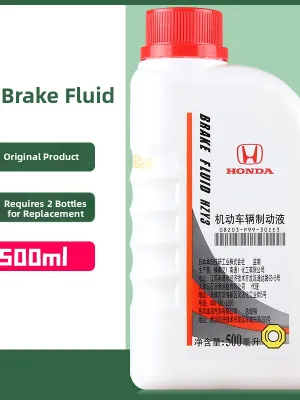
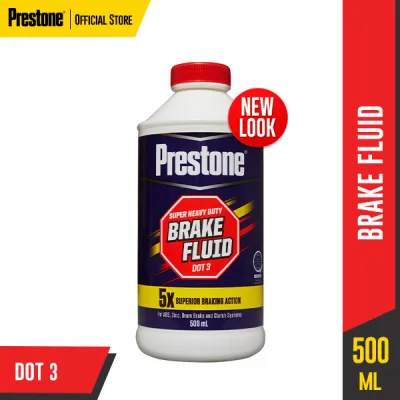
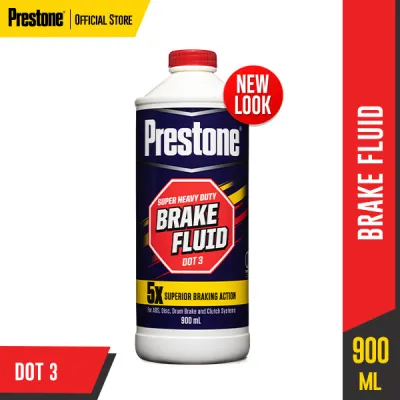
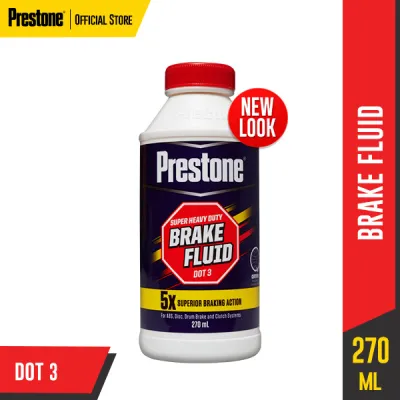
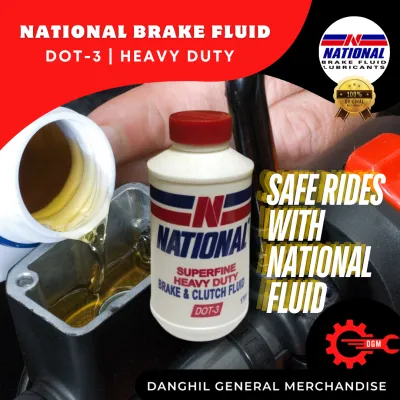
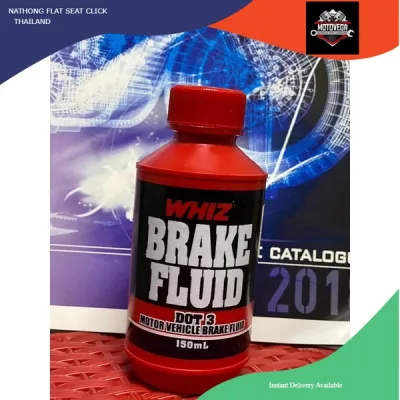
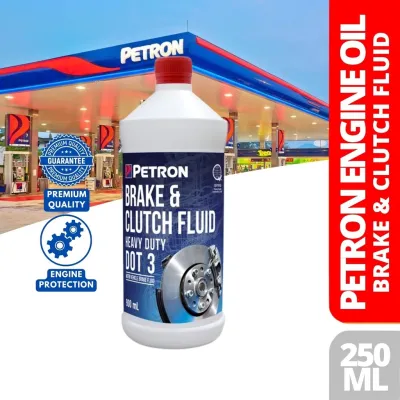
Prices are valid at publication and may change. Please refer to the product page for the latest price.

Boiling Points and Heat Resistance
The most critical performance difference between these two fluids lies in their boiling points. The Federal Motor Vehicle Safety Standard (FMVSS) No. 116 establishes minimum temperature thresholds for both dry and wet conditions. For DOT 3, the minimum dry boiling point—which refers to fresh fluid from a sealed container—is 205°C (401°F), while its wet boiling point—measured after the fluid has absorbed roughly 3.7% water by volume—is 140°C (284°F). In contrast, DOT 4 fluid must meet a higher minimum dry boiling point of 230°C (446°F) and a wet boiling point of 155°C (311°F).
These temperature thresholds directly impact your safety on the road. When you apply the front brake, the brake pads press against the spinning steel rotor, generating intense friction and heat. This thermal energy transfers directly into the brake caliper and the surrounding hydraulic fluid. If the fluid reaches its boiling point, it begins to vaporize, creating highly compressible gas bubbles within the brake lines. When this occurs, squeezing the brake lever merely compresses the gas bubbles rather than pushing the caliper pistons, resulting in a spongy lever feel and a dangerous loss of stopping power known as brake fade.
Moisture Absorption and Fluid Lifespan
Both DOT 3 and DOT 4 brake fluids are hygroscopic, meaning they naturally attract and absorb moisture from the surrounding atmosphere. This moisture enters the sealed hydraulic system over time through microscopic pores in the rubber brake hoses, the master cylinder reservoir seal, and every time the reservoir cap is opened for routine maintenance or inspection.
As water contamination increases, the boiling point of the entire hydraulic system drops significantly. A fresh fill of DOT 4 has excellent heat resistance, but once contaminated with water, its boiling point drops toward its wet rating of 155°C. Furthermore, moisture introduces oxygen into the system, which can cause internal rust and corrosion on the precision-machined surfaces of the master cylinder piston and the caliper bore. While DOT 4 starts with a higher thermal threshold, its chemical formulation causes it to absorb moisture at a slightly faster rate in highly humid environments compared to DOT 3, meaning it requires more vigilant inspection and regular flushing to maintain its safety advantages.
What Honda Recommends: Choosing the Correct Brake Fluid for Honda Click V3
When determining the correct brake fluid for honda click v3, your primary source of truth must always be the official vehicle documentation and physical markings. Honda engineers design the entire braking system—including the master cylinder, rubber hoses, piston seals, and caliper assemblies—around specific chemical and physical tolerances.
To verify your scooter’s exact requirements, look closely at the top of the front brake master cylinder reservoir, located on the right side of your handlebars. Embossed directly onto the metal or plastic cap, you will find safety warnings and the required fluid specifications. For most modern Honda scooters, including the Click V3, the cap will state that you should use only DOT 3 or DOT 4 brake fluid from a sealed container.
Adhering strictly to these OEM specifications is critical for several reasons. First, using an unapproved fluid type, such as silicone-based DOT 5, will cause immediate and catastrophic failure of the rubber seals in your Click V3’s braking system. DOT 5 does not mix with glycol-based fluids and will cause the EPDM rubber seals to swell, soften, and disintegrate, leading to sudden brake failure. Second, using the manufacturer-recommended fluid ensures that your scooter’s braking behavior remains predictable and consistent with its original safety ratings. Finally, using non-compliant fluids can void any active manufacturer warranties and complicate professional servicing at authorized Honda dealer networks.
How Local Riding Conditions Affect Your Choice
Riding a Honda Click V3 in the Philippines presents unique environmental challenges that directly impact how your brake fluid performs and ages. The country’s tropical climate is characterized by high ambient temperatures and extreme relative humidity, which often hovers above 80% throughout the year.
In dense, stop-and-go urban traffic—such as navigating EDSA, Commonwealth Avenue, or busy streets in Cebu and Davao—your front brake is subjected to near-constant use. Because the Honda Click V3 utilizes a hydraulic disc brake on the front wheel and a mechanical drum brake on the rear, the front brake handles the vast majority of your stopping power. Constant short, sharp braking maneuvers in high ambient heat prevent the brake rotor and caliper from cooling down effectively. This continuous thermal cycling drives up the temperature of the brake fluid, making a high boiling point essential.
Furthermore, the intense humidity of the Philippines accelerates the rate of moisture absorption through the rubber brake lines. During the heavy downpours of the monsoon season, or when riding through flooded streets, the risk of water ingress increases. If you frequently carry heavy loads, ride with a backrider (pillion), or travel along steep, winding routes like the Marilaque Highway, the Sierra Madre range, or the hills of Antipolo and Tagaytay, your front brake will generate significantly more heat. Under these demanding local conditions, the superior wet boiling point of DOT 4 fluid provides a crucial safety margin against brake fade, but it also demands more vigilant maintenance.
How to Choose the Right Brake Fluid for Your Scooter
To simplify your decision, you can use a practical framework based on your specific riding environment, maintenance habits, and the physical markings on your Honda Click V3.
- Choose DOT 3 if:
- Your master cylinder reservoir cap explicitly lists DOT 3 as the primary or recommended fluid.
- Your daily commute consists of short, relaxed rides on flat, paved roads with minimal heavy traffic.
- You prefer a fluid that is highly stable, widely available in local auto supply shops, and typically more affordable (often ranging from ₱150 to ₱300 for a standard bottle).
- You want a fluid that retains its baseline properties well over a standard service interval under normal riding conditions.
- Choose DOT 4 if:
- Your reservoir cap or owner's manual explicitly permits the use of DOT 4 fluid.
- You use your Click V3 for commercial purposes, such as daily delivery services, where the scooter is operational for hours in congested city traffic.
- You frequently ride with a passenger, carry heavy cargo, or regularly navigate steep mountain passes where prolonged downhill braking is required.
- You want the maximum possible thermal safety margin to prevent a spongy brake lever during emergency stops or high-heat situations.
- Verify first if:
- The text on your master cylinder cap has become faded, scratched, or painted over.
- You purchased your Click V3 secondhand and are uncertain of its service history or if the previous owner modified the braking system.
- You notice any leaks, unusual sponginess in the lever, or if the fluid visible through the master cylinder sight glass appears dark, cloudy, or contaminated. In any of these situations, consult an authorized Honda service center or a certified motorcycle mechanic before adding or changing fluid.
Safe Brake Fluid Replacement and Maintenance Tips
Maintaining your Honda Click V3’s hydraulic braking system requires strict adherence to safety protocols and service intervals. Brake fluid is not a “set-and-forget” consumable; it degrades continuously from the moment the bottle is opened.
As a general rule, you should have your brake fluid completely flushed and replaced every 1 to 2 years, or every 10,000 to 12,000 kilometers, whichever comes first. However, you should inspect the fluid level and color monthly through the small sight glass on the master cylinder. Fresh brake fluid is clear with a light amber or yellow tint. If the fluid has turned dark brown, cloudy, or black, it is heavily contaminated with water and microscopic wear debris, and must be flushed immediately.
When performing maintenance, keep these critical safety boundaries in mind:
- Check the Label: Always read the product label on the brake fluid bottle and consult your Honda Click V3 owner's manual before starting. Ensure the fluid is fresh and comes from a newly opened, tightly sealed container. Never use fluid from a bottle that has been sitting open on a shelf, as it has already absorbed moisture from the air.
- Protect Your Paint: Glycol-based brake fluids (both DOT 3 and DOT 4) are highly corrosive chemical solvents. A single accidental drip on your scooter's painted fairings, plastic body panels, or instrument cluster can instantly bubble the paint and permanently cloud the plastic. Always cover the handlebars, front cowl, and surrounding bodywork with thick plastic sheeting and wet rags before opening the reservoir. If any fluid spills, wash it off immediately with copious amounts of water and soap.
- Avoid Mixing Fluids: Do not mix different DOT ratings or brands unless explicitly stated as compatible by the manufacturer. Mixing DOT 3 and DOT 4 in an emergency is physically possible because they are both glycol-based, but doing so compromises the performance of the higher-rated fluid, lowering the overall boiling point of your system. Never mix glycol-based fluids (DOT 3/4) with silicone-based fluids (DOT 5) or mineral oils, as this will destroy the hydraulic seals and cause total brake failure.
- Seek Professional Help: Bleeding a hydraulic brake system requires specialized tools, such as a flare nut wrench, clear vinyl tubing, a catch bottle, and potentially a vacuum bleeder. It also requires a precise technique to ensure that absolutely no air bubbles remain trapped in the lines. Because your front brake is your primary safety device on the road, if you are unsure of the process, lack the proper tools, or encounter a stubborn spongy lever, stop immediately and take your scooter to a qualified professional mechanic.
Frequently Asked Questions (FAQ)
Can I mix DOT3 and DOT4 brake fluid in my Honda Click V3?
While DOT 3 and DOT 4 are both glycol-based and will physically mix without causing an immediate chemical reaction, doing so is not recommended as a permanent solution. Mixing them dilutes the superior thermal properties of the DOT 4 fluid, reducing its dry and wet boiling points toward the lower DOT 3 standards. If you need to transition your Honda Click V3 from DOT 3 to DOT 4, or vice versa, the safest practice is to perform a complete system flush. This involves draining the old fluid entirely, cleaning the reservoir, and bleeding the lines with fresh fluid to ensure optimal, uncompromised braking performance.
How often should I change the brake fluid on my scooter?
You should replace the brake fluid on your Honda Click V3 every 1 to 2 years, or according to the specific mileage intervals detailed in your Honda owner’s manual (typically around 10,000 to 12,000 kilometers). Because glycol-based fluids are highly hygroscopic, they continuously absorb moisture from the humid Philippine air, even when the scooter is parked. Over time, this water contamination lowers the fluid’s boiling point and can cause internal corrosion within the master cylinder and caliper. Regular flushing ensures your brakes maintain a high boiling point, preventing brake fade and preserving the lifespan of your hydraulic components.
Community discussion
Share your experience or ask a question. Comments are reviewed before publication.