
Choosing the right brake fluid for your Mitsubishi Mirage is a critical decision that directly impacts your vehicle’s stopping power and overall safety. The exact specification your car requires depends on its model year, trim level, and the operating conditions you encounter daily. To find the definitive recommendation for your specific vehicle, you must always consult your Mitsubishi Mirage owner’s manual or check the markings on the brake fluid reservoir cap under the hood.
While many standard subcompact vehicles like the Mitsubishi Mirage are factory-filled with DOT3 fluid, DOT4 is a highly compatible alternative that offers superior thermal performance. The braking system is a safety-critical assembly where any compromise in fluid quality can lead to brake fade, a spongy pedal, or complete braking failure. If you cannot locate your owner’s manual, or if you are unsure of the fluid currently circulating in your system, do not guess. Seek the assistance of an authorized service center or a qualified mechanic who can perform a professional test or complete system flush.
Maintaining the hydraulic integrity of your brakes is especially important in lightweight passenger cars. Because the Mirage relies on a compact braking setup to manage deceleration, the fluid must remain in peak condition to handle sudden stops. Understanding the technical distinctions between DOT3 and DOT4 will help you make an informed decision for your vehicle’s upkeep.
Products mentioned in this guide
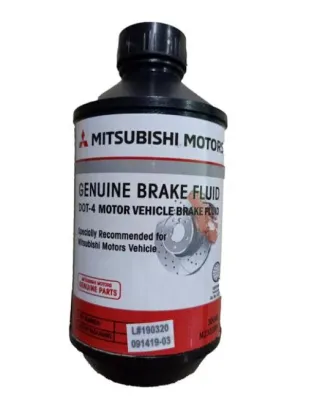
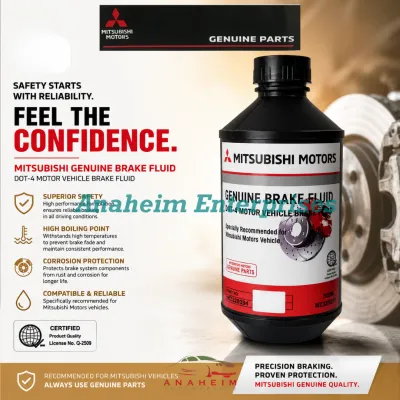
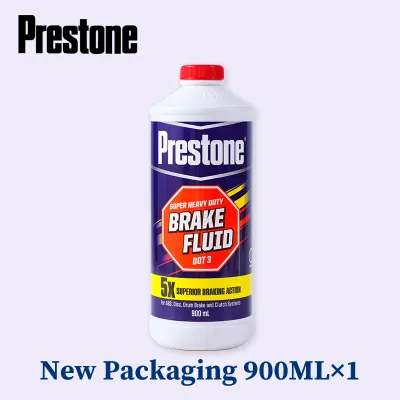
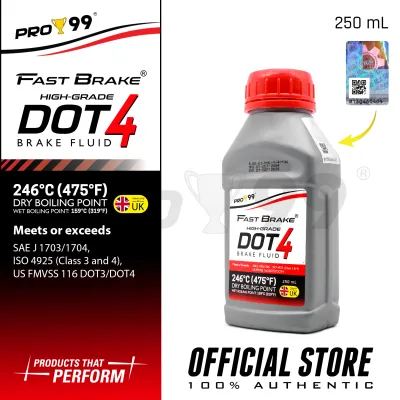
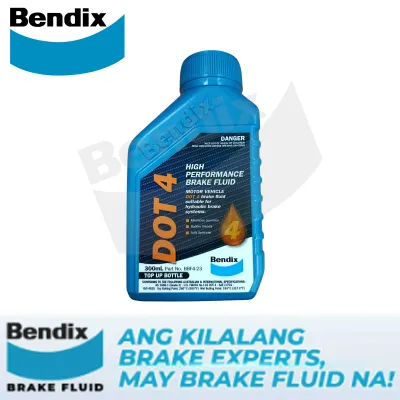
Prices are valid at publication and may change. Please refer to the product page for the latest price.
DOT3 vs DOT4: Core Specifications and Boiling Points
To understand why these two fluids perform differently, it helps to examine their chemical foundations and standardized performance ratings. Both DOT3 and DOT4 are glycol-ether-based hydraulic fluids. This shared chemical base means they are designed to lubricate the moving parts within your master cylinder and calipers while resisting compression under high pressure. However, their chemical formulations differ slightly in terms of additives and borate esters, which directly affects their heat tolerance.
The primary differentiator between these two specifications is their boiling points, which are strictly regulated by the Federal Motor Vehicle Safety Standard (FMVSS) 116. Under these international standards, DOT3 fluid must meet a minimum dry boiling point of 205°C (401°F) and a minimum wet boiling point of 140°C (284°F). In contrast, DOT4 fluid is formulated to meet a higher standard, requiring a minimum dry boiling point of 230°C (446°F) and a minimum wet boiling point of 155°C (311°F).
The distinction between “dry” and “wet” boiling points is crucial for real-world driving. The dry boiling point refers to the performance of fresh, uncontaminated fluid straight from a newly opened, sealed container. The wet boiling point represents the fluid’s performance after it has absorbed approximately 3.7% water by volume. Because glycol-based fluids are highly hygroscopic, they naturally draw moisture from the surrounding atmosphere over time.
While DOT4 fluid offers a higher thermal safety margin when fresh, its chemical composition makes it more aggressive at absorbing moisture from the air than DOT3. This rapid absorption means that a DOT4 fluid’s boiling point can degrade more quickly if the system is not serviced regularly. Consequently, choosing DOT4 requires a commitment to strict maintenance intervals to preserve its performance advantages.
How Tropical Climates and Traffic Affect Brake Fluid Performance
Operating a Mitsubishi Mirage in a tropical climate presents unique challenges for hydraulic braking systems. High ambient temperatures combined with extreme relative humidity accelerate the rate at which moisture penetrates your brake lines. This moisture typically enters through microscopic pores in the flexible rubber hoses and the reservoir cap seal, gradually lowering the boiling point of your mirage brake fluid.

Heavy stop-and-go urban traffic, such as commuting through congested metropolitan streets, places a continuous thermal load on your brakes. Every time you press the brake pedal, friction between the brake pads and rotors generates intense heat. In a subcompact car like the Mirage, this heat can quickly transfer to the calipers and the brake fluid. If the fluid has absorbed moisture and its boiling point has dropped, this localized heat can cause the water within the fluid to boil, turning into gas bubbles.
This phenomenon is known as vapor lock, and it represents a severe safety hazard. Because gas is compressible whereas liquid is not, pressing a pedal connected to boiled fluid simply compresses the gas bubbles instead of moving the caliper pistons. This results in a soft, spongy brake pedal and a dramatic loss of stopping power. The higher dry and wet boiling points of DOT4 fluid provide an invaluable safety buffer against vapor lock during demanding driving conditions.
These thermal demands are amplified when navigating steep, winding roads, such as descending from highland areas or mountain passes. Continuous braking down long declines generates sustained, extreme heat that can easily push degraded DOT3 fluid past its wet boiling point. While DOT4 fluid is highly advantageous in these scenarios, its faster moisture absorption rate in humid environments means you must inspect it regularly to ensure it has not become overly saturated with water.
Can You Mix DOT3 and DOT4 in Your Braking System?
Because both DOT3 and DOT4 fluids share a glycol-ether base, they are chemically miscible, meaning they can mix without causing immediate chemical reactions like coagulation. However, just because they can mix does not mean doing so is recommended for your vehicle’s maintenance. Mixing these two grades compromises the overall performance of your braking system.
When you add DOT3 fluid to a system that currently contains DOT4, you effectively dilute the superior properties of the higher-grade fluid. The resulting mixture will have a boiling point closer to the lower DOT3 standard, negating the thermal safety margins you sought by using DOT4. For this reason, topping off a DOT4 system with DOT3 should only be done in an absolute emergency when no other options are available.
If you decide to upgrade your Mitsubishi Mirage from DOT3 to DOT4, simply pouring the new fluid into the reservoir is highly discouraged. To transition safely, a professional technician should perform a complete brake system flush. This process involves purging all the old fluid, moisture, and contaminants from the master cylinder, lines, and calipers before introducing the fresh DOT4 fluid.
It is also critical to understand the absolute incompatibility of silicone-based fluids. You must never introduce DOT5 fluid into a system designed for DOT3 or DOT4. DOT5 is a silicone-based formula that does not mix with glycol-ether fluids. Mixing them will cause the fluid to gel, destroy the internal rubber seals of your master cylinder and calipers, and lead to catastrophic brake failure. Always read the product label carefully to ensure you are using a compatible glycol-based fluid.
Decision Framework: Which Brake Fluid Should You Choose?
To determine the best course of action for your Mitsubishi Mirage, you can evaluate your driving habits, climate, and maintenance preferences against a clear decision framework.
Choose DOT3 if:
- Your owner's manual explicitly specifies DOT3 and warns against using other grades.
- Your daily driving consists of light, standard commuting on flat city roads without heavy traffic.
- You prefer a cost-effective fluid that retains its performance properties well over its service life without absorbing moisture as rapidly as DOT4.
Choose DOT4 if:
- You frequently drive in dense, stop-and-go urban traffic or regularly navigate steep, mountainous terrains.
- You want an increased thermal safety margin to prevent brake fade and vapor lock under heavy braking loads.
- You are committed to performing a complete system flush to transition safely and are willing to adhere to strict periodic inspection schedules.
Verify first if:
- You notice that the fluid in your reservoir is dark brown, cloudy, or contains visible black particles, which indicates severe contamination and requires an immediate professional flush.
- Your vehicle is equipped with advanced electronic stability control or anti-lock braking systems that might require a specialized low-viscosity fluid formulation.
- You are unsure of the maintenance history of a pre-owned Mirage, in which case a professional inspection is the safest starting point.
To conduct a basic visual inspection, locate the semi-transparent brake fluid reservoir in your engine bay. Check the fluid level against the molded “MIN” and “MAX” lines on the side of the container without removing the cap. Keeping the cap closed prevents unnecessary exposure to humid air. The fluid should appear clear with a light amber or yellow tint. If the fluid level is low, do not simply top it off; have a professional inspect your brake pads for wear or check the system for hydraulic leaks.
When handling brake fluid, always exercise extreme caution. Brake fluid is highly corrosive and can permanently damage your vehicle’s paint, plastic trim, and rubber seals upon contact. If any fluid spills on a painted surface, wash it off immediately with copious amounts of water and soap. Because of the safety-critical nature of brakes and the risks associated with handling corrosive fluids, having a qualified mechanic perform all fluid replacements and system bleeding is highly recommended.
Frequently Asked Questions (FAQ)
How often should I change the brake fluid in my Mitsubishi Mirage?
As a general industry guideline, brake fluid should be replaced every 2 years or every 40,000 kilometers, whichever comes first. However, the extreme humidity and high ambient temperatures in tropical environments can accelerate moisture contamination. It is highly recommended to have your brake fluid inspected for moisture content during every routine periodic maintenance service (PMS). A professional technician can use a digital moisture pen or a refractometer to determine if the water content has exceeded safe limits, which indicates that a complete system flush is required.
Does using DOT4 void my Mitsubishi warranty?
Using a high-quality DOT4 brake fluid that meets or exceeds the original equipment manufacturer (OEM) specifications generally does not void your vehicle’s warranty. However, you must verify the specific terms of your warranty documentation and ensure that the fluid container explicitly states compliance with FMVSS 116 standards. To protect your warranty coverage, always use sealed, certified products from reputable brands, and keep detailed service receipts showing that the fluid change was performed correctly by a qualified professional.
Community discussion
Share your experience or ask a question. Comments are reviewed before publication.